-
FTA/Economic Cooperation
Korea, UAE Build on Special Strategic Partnership to Deepen Cooperation on Crude Oil Supplies, Nuclear Power, and Plant Projects
Minister JK (Jung-Kwan) Kim of the Ministry of Trade, Industry and Resources (MOTIR) visited the United Arab Emirates (UAE) on June 16, concluding a three-country Middle East tour to bolster energy security and economic cooperation. As Korea’s third-largest crude oil supplier, the UAE is the only Middle Eastern nation to hold a Special Strategic Partnership with Korea. During a March visit by the Special Envoy for Strategic and Economic Cooperation, UAE President Mohammed bin Zayed Al Nahyan pledged to prioritize crude oil supplies to Korea amid the global energy crisis. Minister Kim's visit aimed to review the implementation of that March agreement and discuss strategic initiatives, including joint oil stockpiling, nuclear energy, and industrial plant projects. Minister Kim met with senior officials, including Musabbeh Al Kaabi, CEO of the Upstream Division at the Abu Dhabi National Oil Company (ADNOC)—a central player in global energy supply chains, where he received confirmation that the 24 million barrels of emergency crude oil pledged by the UAE in March were arriving smoothly on schedule. Minister Kim, throughout his tour, also engaged with high-level UAE officials to discuss long-term resource security cooperation. As a result, both sides agreed to continue talks on joint crude oil stockpiling, a key priority for the UAE. Furthermore, the two sides consulted extensively on cooperation regarding the UAE’s large-scale infrastructure projects—such as pipeline expansions and underground oil storage facilities—designed to establish a supply chain bypassing the Strait of Hormuz. Minister Kim requested the UAE’s active support to aid Korean companies, which possess high-level design, construction, and operational capabilities, secure participation in major plant projects aimed at stabilizing core energy supply chains. Subsequently, Minister Kim met with high-ranking officials from key UAE nuclear energy agencies, including Sharif Salim Al Olama, Undersecretary of the Ministry of Energy and Infrastructure. To deepen full-cycle cooperation at the Barakah Nuclear Power Plant, both sides reviewed corporate progress and discussed concrete plans regarding △securing stable nuclear fuel supplies, △strengthening plant maintenance, and △expanding artificial intelligence (AI) and digital transformation (DT) in plant operations. Building on the Barakah model, they also held in-depth discussions on jointly entering strategic global nuclear power markets, focusing on △selecting candidate markets, △establishing cooperation frameworks, △defining corporate roles, and △financial and investment cooperation. In addition, following the May 17 drone attack on power transmission facilities near the Barakah Nuclear Power Plant, Korea and the UAE agreed to strengthen information sharing and technical cooperation on nuclear plant protection systems. This serves as a follow-up to a May 21 Ministerial virtual, where both Ministers reviewed repair progress and discussed safety measures for Korean employees working in the region. Minister Kim stated, “The UAE is a vital partner that has steadfastly anchored Korea’s energy supply chains despite Middle Eastern uncertainties. This visit confirmed that our oil cooperation has evolved beyond simple trade into a strategic partnership that functions effectively in any crisis.” He emphasized, “Based on this deep mutual trust, we will advance our strategic partnership by deepening full-lifecycle nuclear cooperation—including operations, maintenance, security, and joint exports to third countries—while expanding opportunities for Korean companies in key plant infrastructure sectors. date2026-06-17
-
FTA/Economic Cooperation
Roundtable with Korean Companies in the UAE
Minister JK (Jung-Kwan) Kim of the Ministry of Trade, Industry and Resources (MOTIR) chaired a roundtable with Korean companies and support organizations operating in the United Arab Emirates (UAE) in Abu Dhabi on June 16, 2026, including GS Energy, Samsung C&T, Doosan Enerbility, Korea Electric Power Corporation (KEPCO), and KOTRA. At the meeting, Minister Kim listened to key concerns and suggestions regarding business operations in the UAE and discussed follow-up plans with the participating companies and organizations. Minister Kim said Korea will build on its deep trust with the UAE to expand opportunities for Korean companies to participate in major plant infrastructure projects. date2026-06-17
-
FTA/Economic Cooperation
Meeting with ADNOC Upstream CEO
Minister JK (Jung-Kwan) Kim of the Ministry of Trade, Industry and Resources (MOTIR) met with senior officials at Abu Dhabi National Oil Company (ADNOC) in the United Arab Emirates (UAE) on June 16, 2026, including Musabbeh Al Kaabi, ADNOC Upstream CEO. The two sides confirmed that deliveries are proceeding as scheduled under the March agreement for the UAE to supply Korea with 24 million barrels of crude oil on an emergency basis. They also discussed cooperation to maintain stable crude supplies and agreed to continue talks on joint crude oil stockpiling, a key area of interest for the UAE. Minister Kim said the visit confirmed that Korea-UAE crude oil supply cooperation has moved beyond a simple trading relationship into a strategic partnership that remains effective even in times of crisis. date2026-06-17
-
FTA/Economic Cooperation
Meeting with UAE Energy and Infrastructure Undersecretary
Minister JK (Jung-Kwan) Kim of the Ministry of Trade, Industry and Resources (MOTIR) visited the UAE Ministry of Energy and Infrastructure on June 16, 2026, and met with Sharif Salim Al Olama, Undersecretary for Energy and Petroleum Affairs, and other senior officials from key UAE nuclear power institutions. The two sides reviewed ongoing Korean-UAE corporate projects to expand cooperation across the full life cycle of Barakah plant operations, including stable nuclear fuel supply, stronger maintenance cooperation, and wider use of artificial intelligence (AI) and digital transformation (DT). They also discussed next steps to further develop the projects. Minister Kim said Korea and the UAE will build on their deep trust to deepen full life-cycle nuclear cooperation, including operation and maintenance, joint entry into third-country markets, and facility protection. date2026-06-17
-
FTA/Economic Cooperation
Korea, Qatar Agree to Resume Stable LNG Imports and Expand Cooperation in Advanced Industries
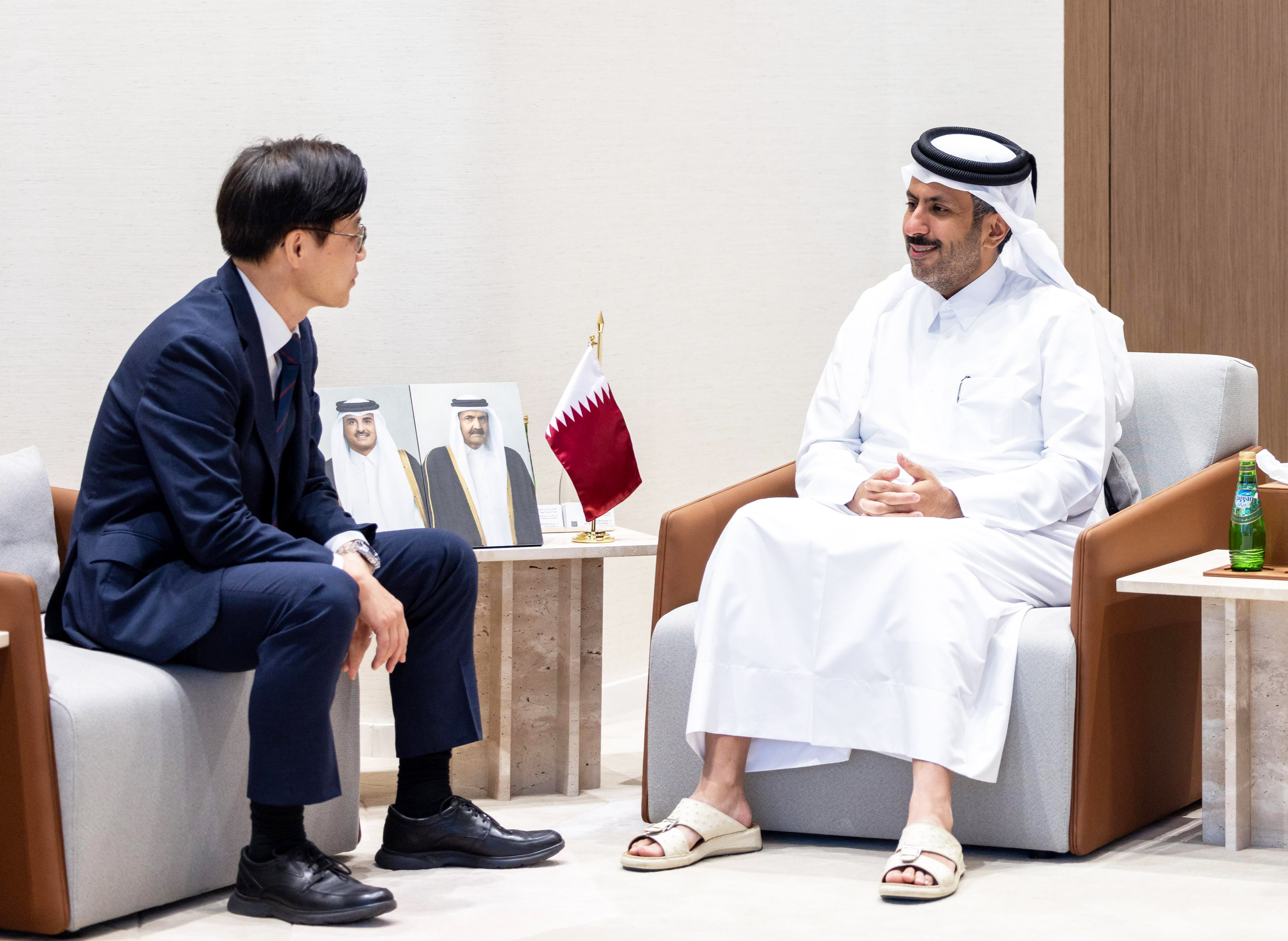
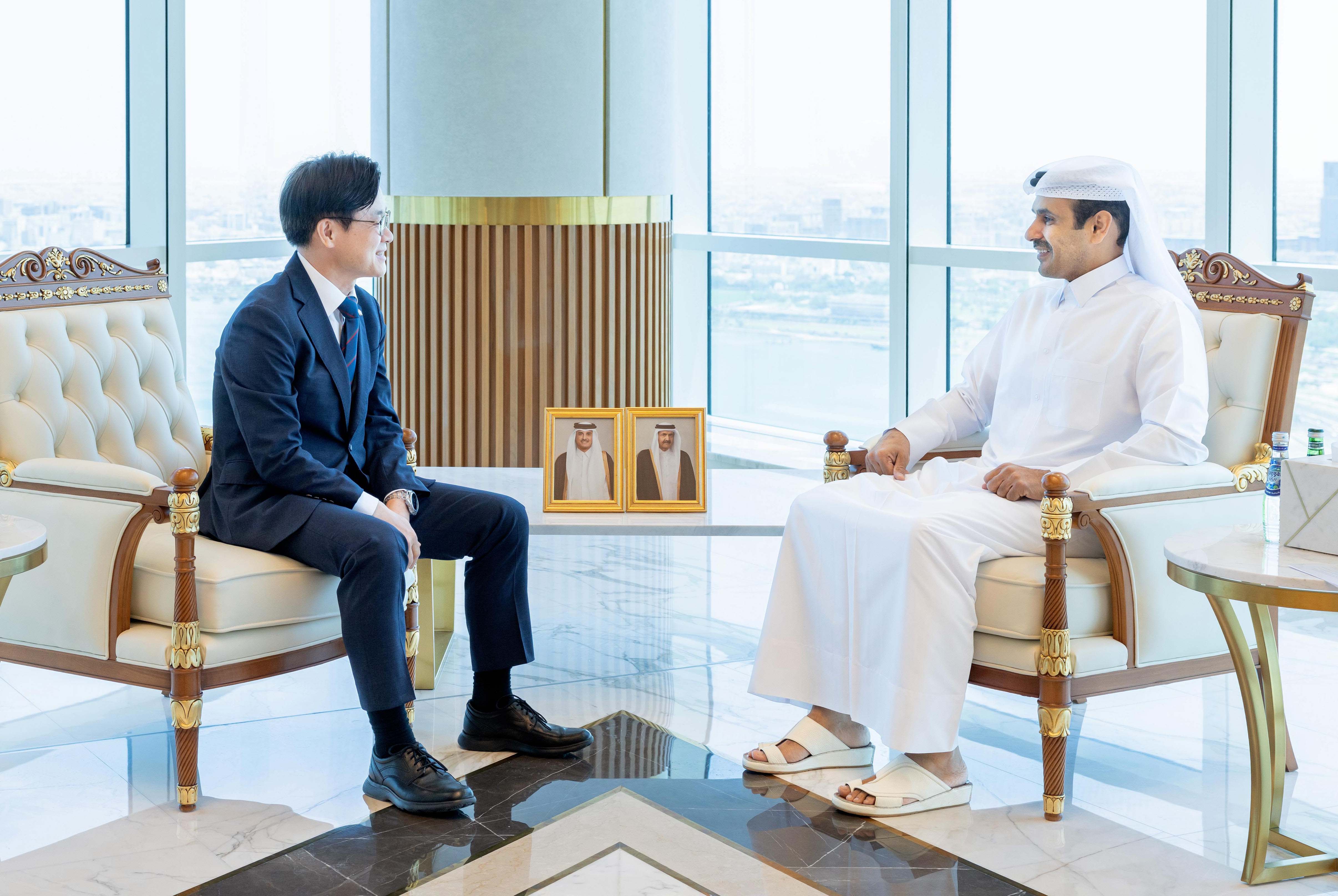
Minister JK (Jung-Kwan) Kim of the Ministry of Trade, Industry and Resources (MOTIR) visited Qatar on June 15, 2026, following his June 13–14 visit to Saudi Arabia. The visit was part of his three-country trip to the Middle East to help stabilize crude oil and gas supplies and strengthen economic and trade cooperation amid the conflict in the region. Qatar is Korea’s third-largest LNG supplier. During the April visit to Qatar by the Presidential Special Envoy for Strategic Economic Cooperation, HH Sheikh Tamim bin Hamad Al Thani, the Amir of the State of Qatar, assured Korea that Qatar would supply LNG without disruption once the Strait of Hormuz returned to normal operations. Minister Kim’s visit was arranged to reaffirm Qatar’s commitment to giving Korea top priority for LNG supplies and to discuss expanding bilateral cooperation into advanced industries. Minister Kim visited QatarEnergy headquarters and met with H.E. Saad Sherida Al-Kaabi, Minister of State for Energy Affairs and President and CEO of QatarEnergy. Minister Al-Kaabi oversees Qatar’s energy policy, including oil and gas resource development and LNG contracts. At the meeting, Minister Kim received a briefing on LNG production facilities and operating conditions at Ras Laffan Industrial City after four force majeure declarations were made following the outbreak of the war in the Middle East. The two sides then discussed cooperation on the gas supply chain amid geopolitical instability in the region. Building on strong mutual trust between the two countries, Minister Kim confirmed Qatar’s unchanged position that it would give Korea top priority for LNG and condensate supplies. He also asked Minister Al-Kaabi to give due consideration to Korean companies with strong technical capabilities and support their participation as new energy plant projects are expected to move forward in earnest once the war ends. On the same day, Minister Kim met with H.E. Sheikh Faisal bin Thani bin Faisal Al Thani, Minister of Commerce and Industry. The two sides agreed to broaden bilateral cooperation beyond energy into shipbuilding, advanced industries, and other areas. They also discussed cooperation on attracting Qatari investment to Korea’s advanced industries, including AI, biotechnology, and robotics. To strengthen the strategic partnership, the two sides agreed to hold the Korea–Qatar High-Level Strategic Cooperation Committee in Doha at an early date and use the government-wide ministerial channel to make timely progress on specific cooperation projects. “At a time of growing uncertainty in the global landscape, the solid trust and cooperation Korea and Qatar have built are important for reliable energy supplies and resilient global supply chains,” Minister Kim said. “I hope the two countries will build on stable LNG supplies to strengthen energy security, broaden cooperation in future growth areas, including advanced industries and investment cooperation, and continue high-level communication to advance the bilateral partnership.” date2026-06-16
-
FTA/Economic Cooperation
Meeting with Cambodian Deputy Prime Minister and CDC First Vice Chairman
Minister for Trade Yeo Han-koo of the Ministry of Trade, Industry and Resources (MOTIR) met with Sun Chanthol, Cambodia’s Deputy Prime Minister and First Vice Chairman of the Council for the Development of Cambodia (CDC), at the Korea Chamber of Commerce and Industry in Seoul on June 15, 2026. The two sides discussed expanding economic and trade cooperation between Korea and Cambodia, including the implementation of the Korea–Cambodia Free Trade Agreement (FTA), official development assistance (ODA), and international greenhouse gas reduction. Minister Yeo welcomed the steady growth in bilateral trade and investment since the Korea–Cambodia FTA entered into force in 2022 and bilateral relations were upgraded to a strategic partnership in 2024. date2026-06-16
-
FTA/Economic Cooperation
Minister Kim Hosts Roundtable with Korean Companies Operating in Qatar
Minister JK (Jung-Kwan) Kim of the Ministry of Trade, Industry and Resources (MOTIR) hosted a roundtable with Korean companies operating in Qatar and support institutions on June 15, 2026. The meeting was attended by representatives from Samsung C&T Corporation, Hyundai E&C, Hanwha Engine Co., Ltd., Doosan Enerbility, and the Korea Trade-Investment Promotion Agency (KOTRA). Minister Kim heard about key on-the-ground business difficulties and requests, and discussed next steps to support Korean companies’ operations in Qatar. Minister Kim said the trust and cooperation Korea and Qatar have built are important for reliable energy supplies and resilient global supply chains. date2026-06-16
-
FTA/Economic Cooperation
Minister Kim Meets Qatar Minister of Commerce and Industry
Minister JK (Jung-Kwan) Kim of the Ministry of Trade, Industry and Resources (MOTIR) visited Qatar on June 15, 2026, following up on the April visit to the Middle East by the Presidential Special Envoy for Strategic Economic Cooperation. Minister Kim met with H.E. Sheikh Faisal bin Thani bin Faisal Al Thani, Minister of Commerce and Industry. The two sides agreed to broaden bilateral cooperation beyond energy into shipbuilding, advanced industries, and other areas. Minister Kim said the two countries will build on stable LNG supplies to strengthen energy security and broaden cooperation in future growth areas, including advanced industries and investment cooperation. date2026-06-16
-
FTA/Economic Cooperation
Minister Kim Meets Qatar Minister of State for Energy Affairs and QatarEnergy CEO
Minister JK (Jung-Kwan) Kim of the Ministry of Trade, Industry and Resources (MOTIR) visited QatarEnergy headquarters in Doha, Qatar, on June 15, 2026, as follow-up to the April visit to the Middle East by the Presidential Special Envoy for Strategic Economic Cooperation. Minister Kim met with H.E. Saad Sherida Al-Kaabi, Minister of State for Energy Affairs and President and CEO of QatarEnergy. Minister Al-Kaabi oversees Qatar’s energy policy, including oil and gas resource development and LNG contracts. Minister Kim said the trust and cooperation Korea and Qatar have built are important for reliable energy supplies and resilient global supply chains. date2026-06-16
-
FTA/Economic Cooperation
Meeting with Saudi Arabia’s Minister of Industry and Mineral Resources
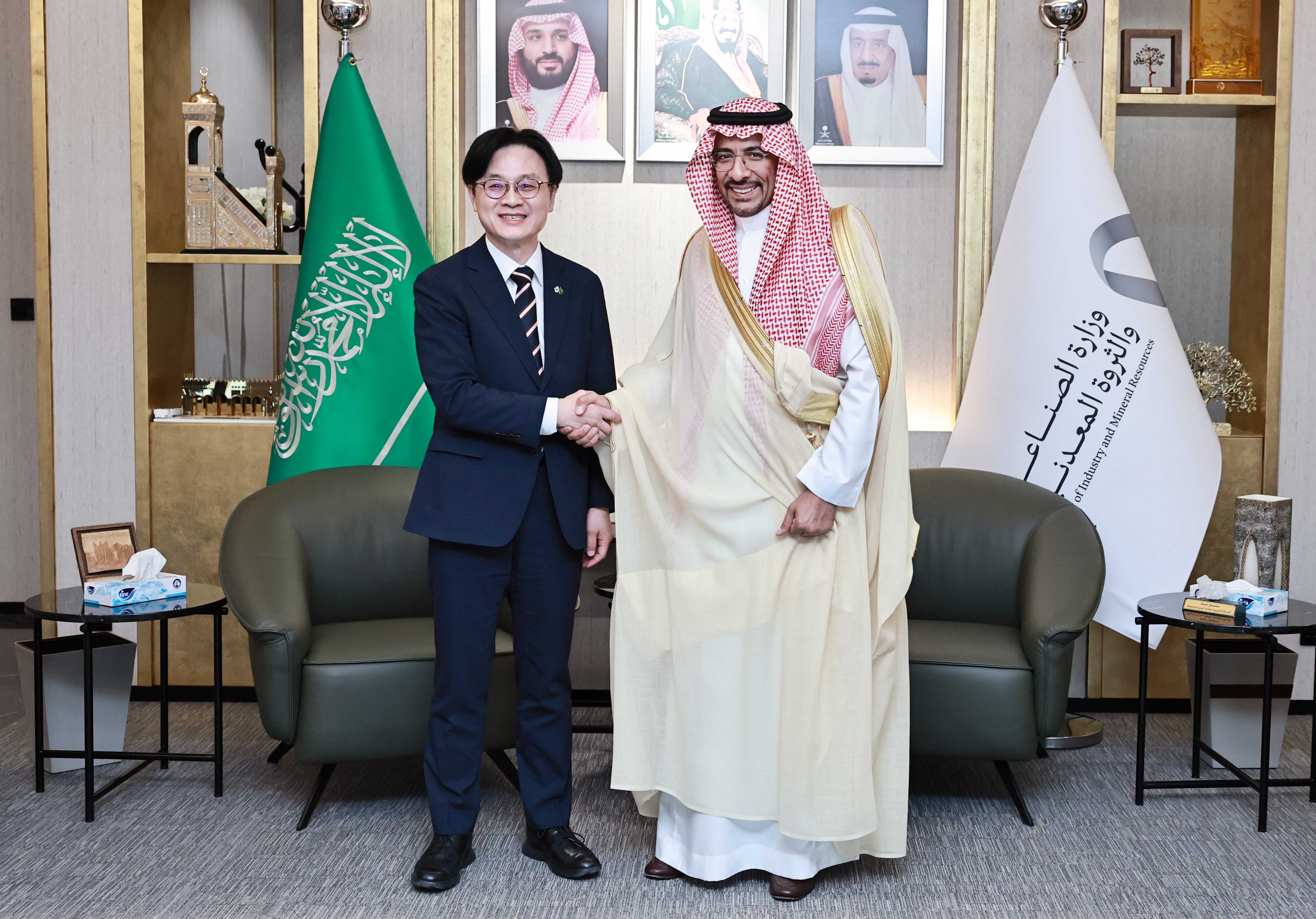
Minister JK (Jung-Kwan) Kim of the Ministry of Trade, Industry and Resources (MOTIR) met with Bandar Al-Khorayef, Minister of Industry and Mineral Resources of Saudi Arabia, in Saudi Arabia on June 14, 2026, as a follow-up to the April visit to the Middle East by the Presidential Special Envoy for Strategic Economic Cooperation. The two sides discussed trade, mineral cooperation, and industrial cooperation in automobiles, shipbuilding, steel, AI, and other areas. Minister Kim also closely reviewed progress on major industrial cooperation projects Korean companies are pursuing in Saudi Arabia. Minister Kim said Korea will continue to expand economic cooperation with Saudi Arabia across manufacturing, advanced industries, and other areas, building on the practical industrial cooperation achieved so far. date2026-06-15