-
FTA/Economic Cooperation
Korea and Five Central Asian Countries Hold First Industry Ministers’ Meeting to Discuss Multilateral Cooperation on Industry and Critical Minerals
The Ministry of Trade, Industry and Resources (MOTIR, Minister JK Kim) held the inaugural C5+1 Industry Ministers’ Meeting in Seoul on September 14, 2026, with industry ministers from Kazakhstan, Kyrgyzstan, Tajikistan, Turkmenistan and Uzbekistan. Although Korea has maintained bilateral ministerial-level channels on industrial cooperation with each of the five Central Asian countries, this marked the first time that industry ministers from all six countries met to discuss cooperation on industry and supply chains, including critical minerals. Three Priority Areas of Cooperation The industry ministers of the six countries agreed to strengthen practical cooperation in three priority areas to jointly respond to a rapidly changing global trade environment and shifting supply chains. First, to expand trade and upgrade industrial infrastructure, the ministers agreed to move beyond merchandise trade and enhance the quality of cooperation by expanding Korea’s participation in projects across Central Asia, including integrated industrial complexes, smart infrastructure and plant modernization, and by upgrading the region’s broader industrial base. Second, on building critical mineral supply chains, the ministers agreed to strengthen cooperation across the entire supply chain by combining Central Asia’s abundant mineral resources, including lithium and rare earths, with Korea’s advanced processing and materials technologies. They also plan to expand downstream value-chain cooperation beyond extraction and raw-material imports to local refining and smelting, high-value-added materials processing, and finished-product manufacturing. Third, on technology cooperation and future talent development, the ministers explored mutually beneficial ways to strengthen manufacturing competitiveness by combining Central Asia’s industrial potential with Korea’s capabilities in smart factories and data for manufacturing AI. The ministers considered how such cooperation could support the smart transformation of factories across Central Asia and accelerate the deployment of Korean manufacturing equipment and technologies in the region. They also agreed to expand exchanges among young technical talent who will lead future industries. Opening and Closing Remarks by the Chair As host and chair of the inaugural meeting, Minister JK Kim opened the meeting by referring to the pioneering spirit of the trading caravans that once connected Eurasia. “Let us forge a new path together toward an advanced industrial ecosystem, using Korea’s advanced technologies and manufacturing capabilities as a catalyst to unlock Central Asia’s vast growth potential and drive greater growth across Eurasia,” Minister Kim said. Concluding the meeting, Minister Kim said, “As a Central Asian proverb says, a long road feels far when traveled alone, but near when traveled with good friends. I hope this Industry Ministers’ Meeting will establish itself as a platform for mutually beneficial cooperation where our countries jointly identify and develop practical projects that deliver tangible benefits to businesses and people.” date2026-09-14
-
Trade/Investment
Korea’s August ICT Exports Near $60 Billion, Reach Record High
The Ministry of Trade, Industry and Resources (MOTIR, Minister JK Kim) and the Ministry of Science and ICT (MSIT, Deputy Prime Minister and Minister Bae Kyung-hoon) announced on September 14, 2026, that Korea’s ICT exports reached USD 59.98 billion in August 2026, up 162.6 percent year-on-year from $22.84 billion. Imports rose 48.8 percent from $12.51 billion to $18.61 billion, resulting in a trade surplus of $41.37 billion. Supported by expanding AI investment worldwide, ICT exports remained above $50.0 billion for a third straight month and neared $60.0 billion, reaching a record high. The ICT trade surplus also exceeded $40.0 billion for the first time, setting an all-time record. ICT exports accounted for 61.0 percent of Korea’s total exports of $98.25 billion, surpassing 60 percent for the first time and underscoring the sector’s role as a key driver of Korea’s export growth. By product, exports increased in semiconductors (up 209.0 percent), mobile phones (up 23.2 percent), computers and peripherals (up 383.1 percent), and telecommunications equipment (up 11.5 percent), while display exports declined 7.0 percent. Semiconductor exports remained above $40.0 billion for a third straight month, supported by continued demand for AI computing. Display exports declined as lower unit prices for OLED panels used in finished products, including mobile phones, reduced OLED export value. Mobile phone exports rose as parts shipments to overseas production bases grew and stronger sales of high-value new models boosted exports of finished phones. Exports of computers and peripherals reached a record high as expanding AI data processing lifted exports of mid- to large-sized computers and parts, while growth in the enterprise SSD market boosted SSD exports. Telecommunications equipment exports rose on higher demand for telecommunications equipment parts in Vietnam, automotive equipment in India, and wireless communications equipment in Japan. By destination, exports increased in all major markets: the U.S. (up 306.5 percent), China, including Hong Kong (up 227.9 percent), India (up 126.7 percent), Vietnam (up 81.4 percent), Japan (up 72.4 percent), Taiwan (up 54.3 percent), and the EU (up 49.1 percent). ICT imports totaled $18.61 billion in August 2026, up 48.8 percent from $12.51 billion a year earlier, as imports increased in several major categories, including semiconductors (up 71.4 percent), mobile phones (up 79.4 percent), and computers and peripherals (up 39.9 percent). date2026-09-14
-
FTA/Economic Cooperation
Korea, Vietnam Hold First Export Control Dialogue to Strengthen Supply Chain Stability and Support for Korean Companies in Vietnam
The Ministry of Trade, Industry and Resources (MOTIR, Minister JK Kim) will hold the inaugural Korea–Vietnam Export Control Dialogue with Vietnam’s Ministry of Industry and Trade in Seoul on September 11, 2026. The dialogue is significant as it marks the start of a regular director-general-level channel for cooperation between the two countries’ export control authorities. Vietnam introduced its export control system in October 2025 and began implementing it in June 2026. As Vietnam is a major supply chain partner for Korea and many Korean companies operate there, Korean businesses have a strong interest in the country’s export control system and a clear need to respond to its requirements. Against this backdrop, MOTIR signed an MOU on export control cooperation with Vietnam’s Ministry of Industry and Trade in Hanoi on April 23, under which the two authorities agreed to establish a regular consultation mechanism and share information. The dialogue will be held as part of bilateral cooperation under the MOU. Kim Tae-woo, Director General for Trade Security Policy at MOTIR, and Nguyen Anh Son, Director General of the Agency of Foreign Trade at Vietnam’s Ministry of Industry and Trade, will serve as the chief representatives of Korea and Vietnam, respectively. The two sides will exchange information on key export control issues and discuss matters of mutual interest in depth. Korea will also share its experience and practical know-how in operating an export control system aligned with international standards and convey the concerns of Korean companies operating in Vietnam. The dialogue will be held in conjunction with a training program in Korea for Vietnamese export control officials. From September 8 to 11, 2026, the Vietnamese delegation will complete four days of specialized training and visit sites in Korea, including Incheon Regional Customs and Samsung Electronics, an exemplary company under Korea’s Compliance Program (CP). “As Vietnam is a key supply chain partner for Korea, we will continue to strengthen bilateral export control cooperation to support the stability of advanced industrial ecosystems,” said Director General Kim. “We will continue to share Korea’s advanced export control expertise and strengthen tailored local support so Korean companies can respond quickly and smoothly to the new regulatory environment.” date2026-09-11
-
Industry
MOTIR Holds 23rd Shipbuilding and Marine Day Ceremony
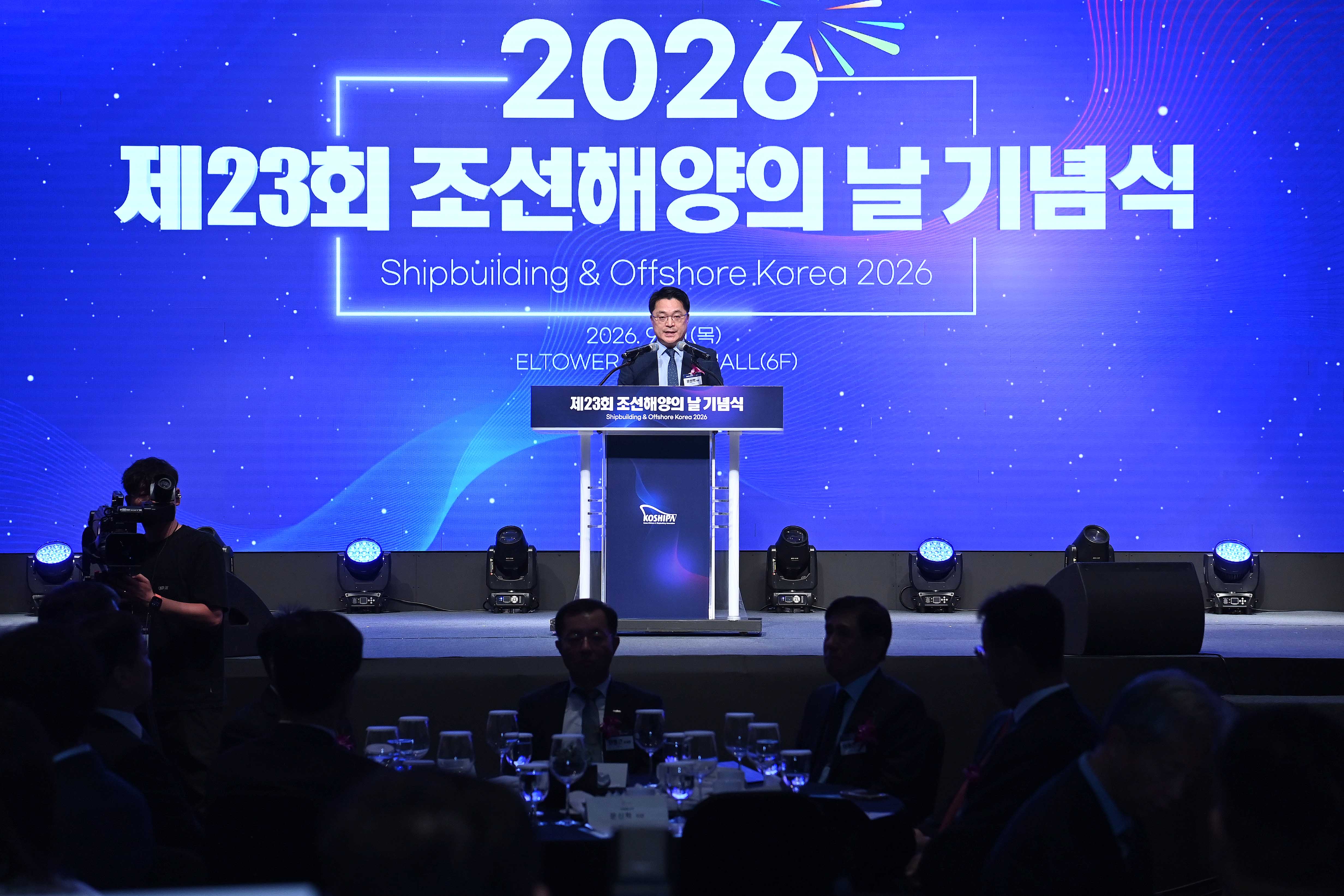
Vice Minister for Industry Moon Shin-hak attended the 23rd Shipbuilding and Marine Day in Seoul on September 10, 2026. The event brought together around 250 participants, including Lee Sang-kyun, Chairman of the Korea Offshore & Shipbuilding Association (KOSHIPA); representatives from shipbuilding and marine organizations; and award recipients. Following his remarks, Vice Minister Moon presented government awards and ministerial commendations to 35 recipients for their contributions to advancing the shipbuilding and marine industry. Vice Minister Moon stressed that K-shipbuilding’s competitiveness lies in the strength of the entire value chain spanning steel, equipment, shipping and finance, and urged industry and government to work as a team and move forward together as members of one K-shipbuilding fleet. date2026-09-10
-
Industry
K-Shipbuilding Advances Together Through Shared Growth
The Ministry of Trade, Industry and Resources (MOTIR, Minister JK Kim) held the 23rd Shipbuilding and Marine Day ceremony in Seoul on September 10, 2026. The event brought together around 250 participants, including Vice Minister Moon Shin-hak of MOTIR; Lee Sang-kyun, Chairman of the Korea Offshore & Shipbuilding Association (KOSHIPA); and other representatives from the shipbuilding and marine industries. At the ceremony, 35 individuals received government awards and ministerial commendations, including the Silver Tower Order of Industrial Service Merit, for their contributions to advancing the shipbuilding and marine industry. Notably, Park Tae-soo, CEO of DOOWON HIGHSTEEL, received the Silver Tower Order of Industrial Service Merit, becoming the first government award recipient from a shipbuilding equipment company in more than a decade. A financial institution official who has supported the issuance of refund guarantees (RGs) for small and medium-sized shipbuilders also received a Prime Minister’s Commendation. The awards highlighted contributions not only from shipyards but also from across the broader shipbuilding ecosystem that supports them. In his congratulatory remarks, Vice Minister Moon noted K-shipbuilding’s USD 32 billion in exports over the past year—the highest in eight years—its continued global lead in LNG carriers, and MASGA’s move into full-scale implementation, including the opening of the Korea–U.S. Shipbuilding Partnership Center, and thanked the industry for its role in these achievements. “No ship can be built by a shipyard alone,” Vice Minister Moon said. He stressed that K-shipbuilding’s competitiveness lies in the strength of the entire value chain spanning steel, equipment, shipping and finance, then outlined three policy directions for shared growth across the ecosystem. First, the government will promote shared growth between shipbuilding and its upstream and downstream industries, including steel and shipping. It will take an active role in developing measures for shared growth between the shipbuilding and steel industries. To help equipment suppliers establish the onboard installation track record needed for exports, the government plans to support the installation of Korean equipment on newbuild vessels ordered by Korean shipping companies. Through the Council for Shared Growth in Shipbuilding and Shipping, co-chaired by the ministers of MOTIR and the Ministry of Oceans and Fisheries (MOF), the government will also discuss ways to generate orders, including joint orders by Korean shipping companies and priority orders for public vessels. Second, the government will promote shared growth among large shipbuilders, small and medium-sized shipbuilders, and partner companies. It will expand the M.AX Alliance for Autonomous Ships, which has focused on autonomous navigation, to cover shipyard manufacturing sites and reorganize it as the AI Shipbuilding Alliance. The government will also help disseminate technologies proven by large shipbuilders to partner companies and small and medium-sized shipbuilders. To support small and medium-sized shipbuilders as their exports increase, the government plans to work with relevant ministries and financial institutions to facilitate the issuance of RGs for these shipbuilders. Third, the government will promote shared growth in overseas markets. In implementing the MASGA project, it will focus on identifying project opportunities for shipbuilding equipment suppliers and small and medium-sized shipbuilders. The government will also continue to strengthen MRO capabilities among small and medium-sized shipbuilders and support U.S. market entry by equipment suppliers. The Korea–U.S. Shipbuilding Partnership Center, which opened in Washington, D.C., in late July, will also support small and medium-sized shipbuilders and equipment suppliers in developing sales channels in the U.S. m date2026-09-10
-
Industry
MOTIR Connects Leading Middle Market Enterprises with Young Job Seekers to Support 5+3 Growth Engines
The Ministry of Trade, Industry and Resources (MOTIR, Minister JK Kim) held the Middle Market Enterprise Job Fair in Daejeon on September 8, 2026. The fair was organized to foster shared growth in the region by connecting young talent with regional middle market enterprises facing recruitment difficulties. It also aimed to help middle market enterprises grow to play a central role in regional economies and support the development of growth engines under the Five Mega-Regions and Three Special Self-Governing Provinces (5+3) initiative. The event drew 66 leading middle market enterprises and prospective middle market enterprises—including YC Corporation and Nepes Ark in semiconductors, Hanmi Pharmaceutical and Huons Group in biopharmaceuticals, and SIMPAC in machinery—and more than 2,000 job seekers. The 12 previous fairs have helped more than 9,000 people find jobs, and this year’s first- and second-half fairs are expected to connect more than 2,000 job seekers with job opportunities. Beginning this year, the government expanded eligibility for the Youth Job Leap Incentive beyond SMEs to include middle market enterprises outside the capital region. The measure is intended to ease workforce shortages at leading middle market enterprises in the regions and encourage young people to find work there. The government is also increasing the number of industrial technical personnel allocated to each middle market enterprise from two to five. Furthermore, it will continue to support middle market enterprises’ recruitment of young people with master’s or doctoral degrees and experienced technical professionals. Lee Gyu-bong, Director General for Middle Market Enterprise Policy at MOTIR, said at the opening ceremony, “Middle market enterprises account for just 1.5 percent of all companies in Korea but 13.9 percent of total employment, while providing quality jobs. In particular, I expect them, as a core force behind the regional growth engines under the 5+3 initiative, to continue driving regional economic growth and job creation.” He added, “MOTIR plans to announce its Middle Market Enterprise Growth Ladder 2030 strategy by the end of the year and put in place a systematic framework to support the growth of middle market enterprises.” date2026-09-08
-
FTA/Economic Cooperation
Meeting with France’s Minister for the Economy, Finance and Industrial, Energy and Digital Sovereignty
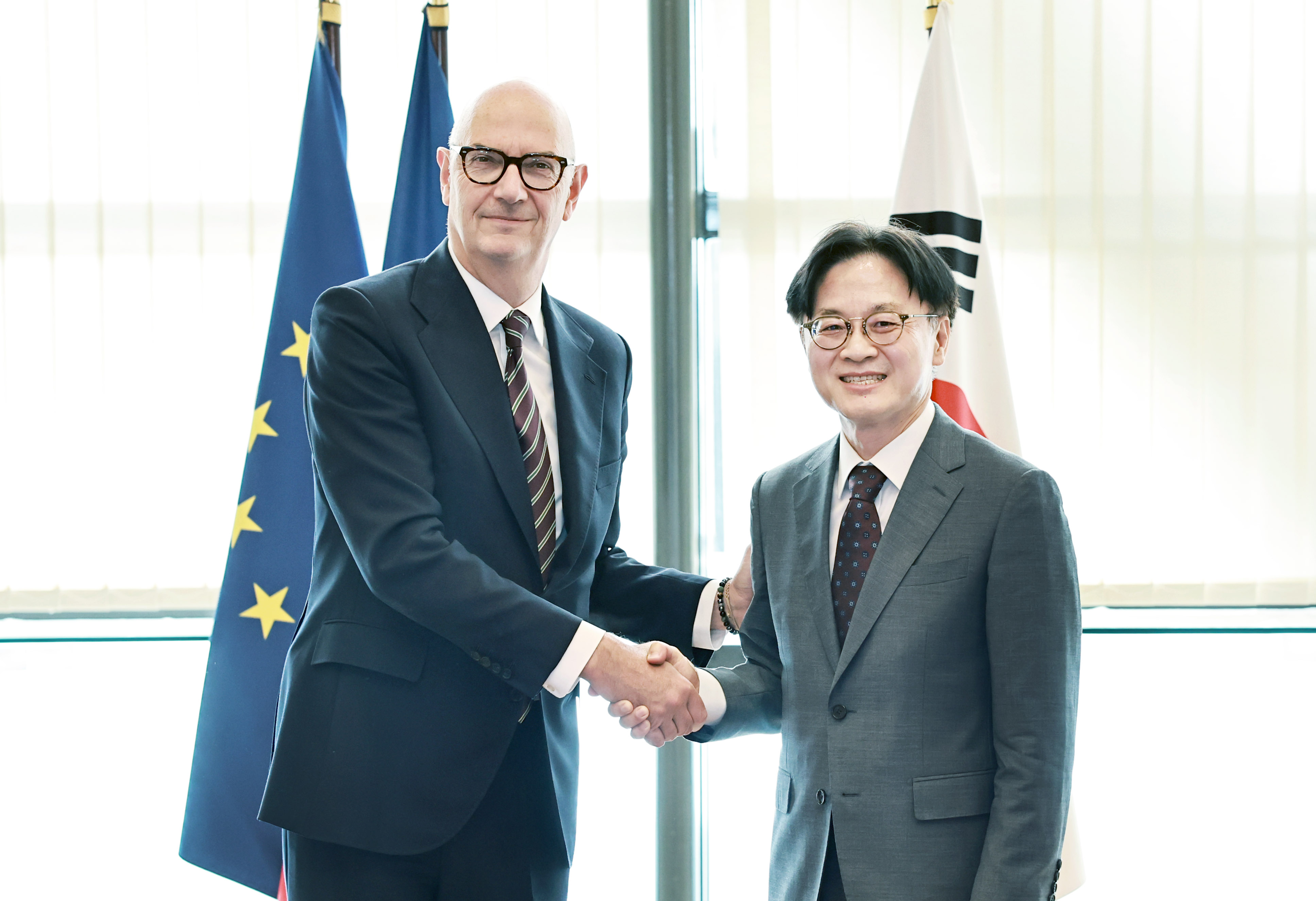
Minister JK (Jung-Kwan) Kim of the Ministry of Trade, Industry and Resources (MOTIR) met with Roland Lescure, France’s Minister for the Economy, Finance and Industrial, Energy and Digital Sovereignty, at the ministry in Paris on September 7, 2026, during President Lee Jae Myung’s visit to France. The two ministers discussed cooperation to establish a strategic framework spanning industry, trade and supply chains, including the new Korea–France Strategic Industrial Dialogue. “The new ministerial dialogue will provide Korea and France with a standing framework for regular consultations on industrial policy, trade and investment, supply chains and economic security,” Minister Kim said. date2026-09-08
-
FTA/Economic Cooperation
Korea and France Establish Strategic Framework for Cooperation Across Industry, Trade and Supply Chains
During President Lee Jae Myung’s visit to France, Minister JK (Jung-Kwan) Kim of the Ministry of Trade, Industry and Resources (MOTIR) met with Roland Lescure, France’s Minister for the Economy, Finance and Industrial, Energy and Digital Sovereignty, in Paris on September 7, 2026. The two ministers laid the institutional groundwork to take bilateral cooperation in industry, trade and supply chains to a new level. Korea–France Ministerial Meeting on Economic and Industrial Affairs The key outcome of the meeting was an agreement to establish the Korea–France Strategic Industrial Dialogue, a ministerial-level consultation channel between the two key ministries responsible for industrial policy. Korea and France will use the dialogue for regular discussions on industrial and trade policy and establish sector-specific working groups to discuss specific issues and cooperation projects in depth. The new dialogue is significant in that it provides a framework for bilateral cooperation across a broad range of industrial and trade issues, including industrial policy, industrial technology, trade and investment, supply chains and economic security, and critical minerals. Minister Kim also urged France to address key trade issues facing Korean companies in France. In particular, he requested improvements to France’s electric vehicle subsidy scheme to ensure that Korean-made EVs are not placed at a disadvantage. The two sides agreed to continue consultations on the issue through working-level groups and other channels. Minister Kim also welcomed the EU’s intention, reflected in the Industrial Accelerator Act (IAA), to extend benefits to its key partner countries. He asked for France’s close attention and support so that Korea, as a trusted key industrial partner of the EU, can receive treatment equivalent to that accorded to EU member states. “With the establishment of the ministerial-level Strategic Industrial Dialogue, Korea and France now have a standing framework for regular consultations that goes beyond addressing individual issues and covers industrial policy, trade and investment, supply chains and economic security,” Minister Kim said. “We will make full use of the new ministerial dialogue and sector-specific working groups to address trade-related difficulties facing Korean companies while continuing to identify new cooperation projects in advanced industries and supply chains.” KOTRA–Business France MOU The two countries also took steps to strengthen the basis for trade and investment cooperation at the business level. In the presence of both ministers, the Korea Trade-Investment Promotion Agency (KOTRA) and Business France signed an MOU on business cooperation. The two organizations will expand cooperation by jointly holding trade and investment seminars and supporting startups seeking to enter the other country’s market. They will also strengthen their role as effective communication channels for identifying and addressing difficulties faced by Korean and French companies operating in the other country. Meeting with Air Liquide CEO Minister Kim also met separately with François Jackow, CEO of Air Liquide, a French global industrial gas company, to discuss expanding the company’s investment in Korea. Air Liquide completed its acquisition of DIG Airgas in January 2026 and is expanding its business in Korea. During the meeting, Jackow said the company plans to finalize the details of a new investment plan in the near future. Minister Kim welcomed Air Liquide’s continued investment in Korea and said the government would provide the necessary support to ensure the investment plan proceeds smoothly. date2026-09-08
-
Industry
MOTIR Holds Third KFEZ Day 2026
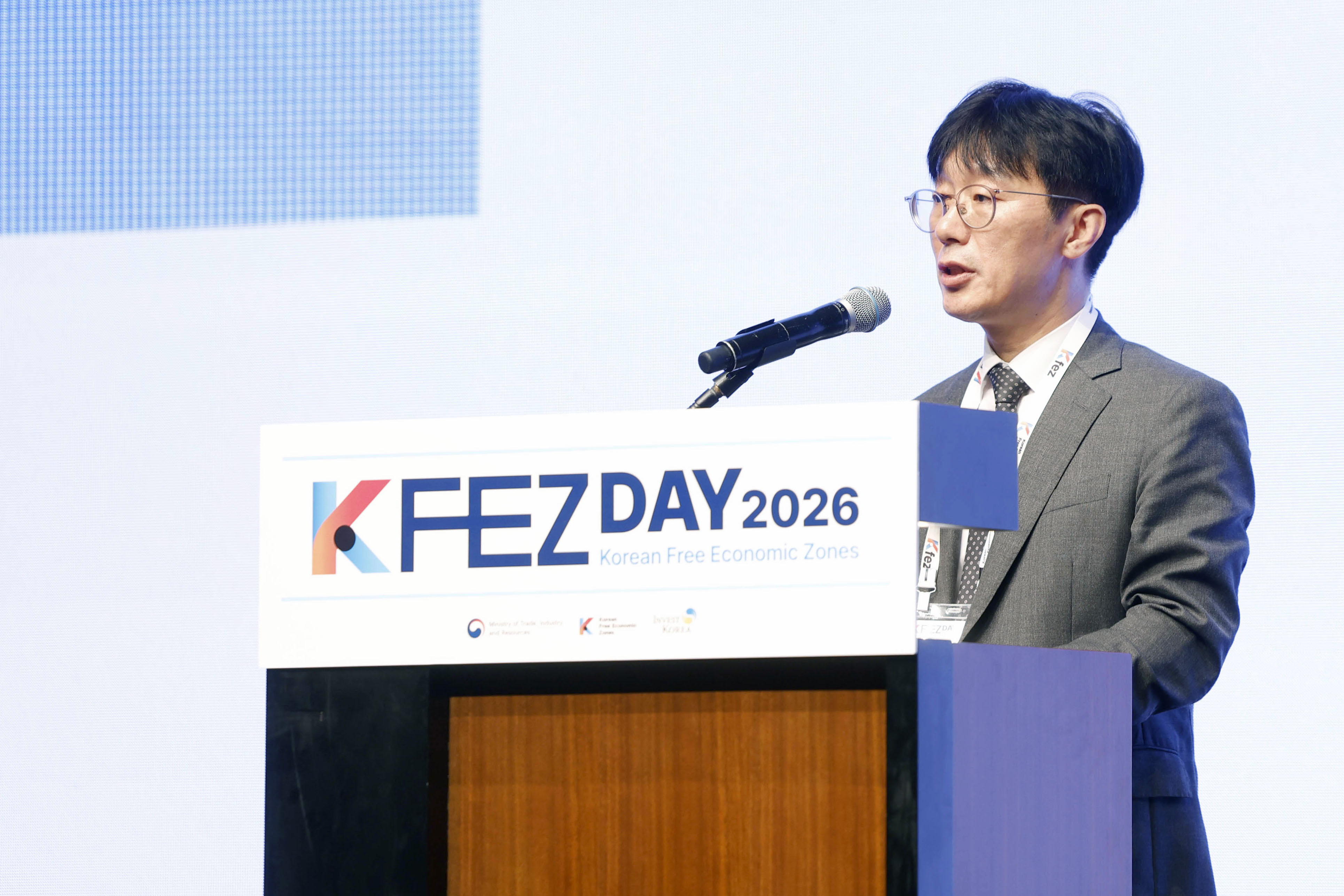
Lee Min-woo, Acting Deputy Minister for Industry and Growth at the Ministry of Trade, Industry and Resources (MOTIR, Minister JK Kim), attended Korean Free Economic Zones (KFEZ) Day 2026 in Seoul on September 2, 2026. The event brought together about 300 participants, including foreign diplomats based in Korea; representatives of foreign chambers of commerce; and executives from foreign-invested and global companies. In his remarks, Acting Deputy Minister Lee highlighted free economic zones as key hubs that put national growth strategies into practice and connect investment in advanced industries with regional growth. “Together with local governments, we will step up efforts to attract investment and support businesses so global companies can invest and grow with confidence,” Lee said. date2026-09-04
-
FTA/Economic Cooperation
G20 Innovation Ministerial Meeting
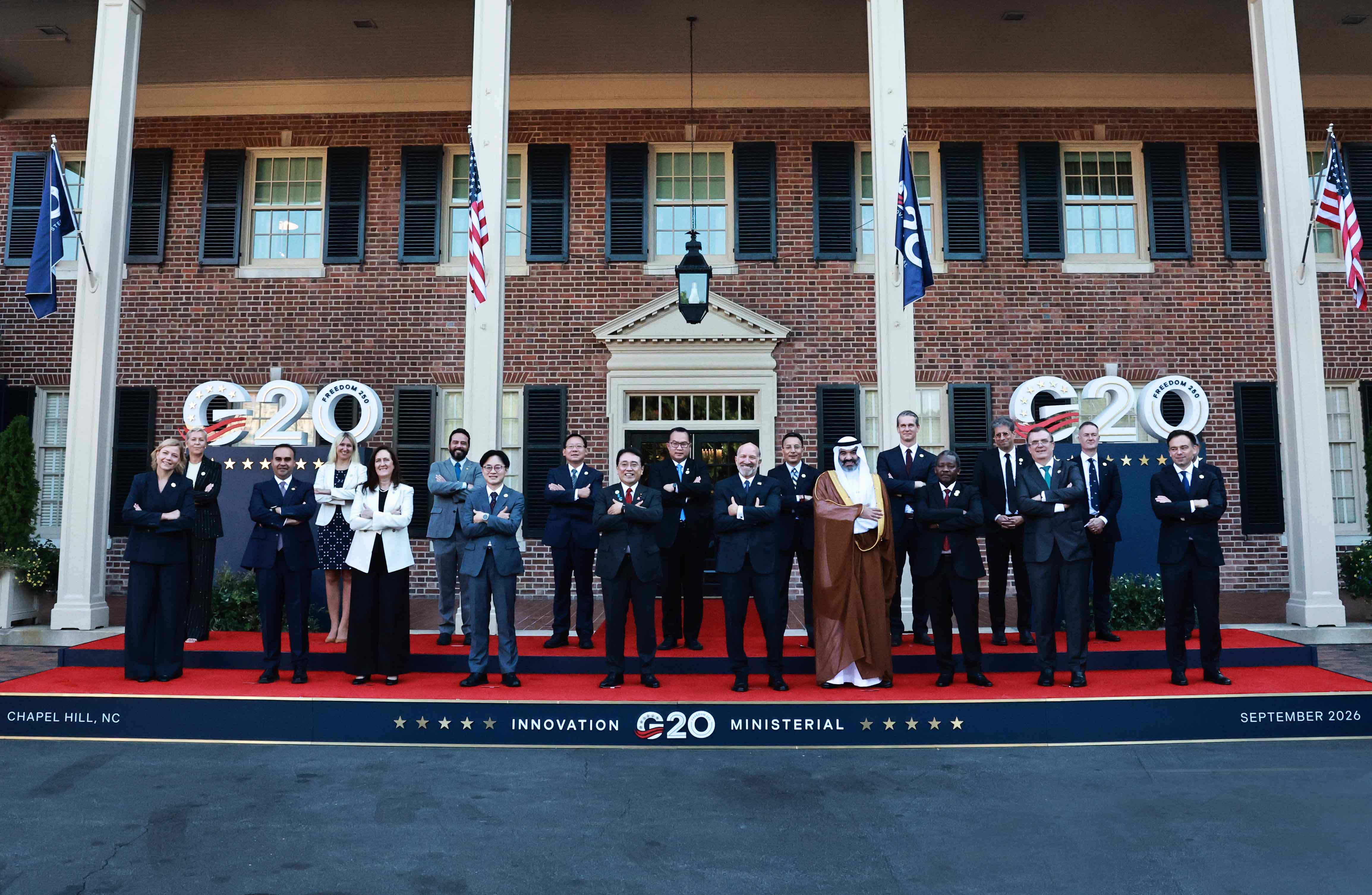
Minister JK (Jung-Kwan) Kim of the Ministry of Trade, Industry and Resources (MOTIR) attended the G20 Innovation Ministerial in Chapel Hill, North Carolina, on September 2, 2026. The meeting brought together U.S. Secretary of Commerce Howard Lutnick and industry and innovation ministers from Japan, India, Germany, and other G20 members. The attendees discussed Intellectual Property Policies for Artificial Intelligence; AI for Standards and Standards for AI; and Industrial Innovation and Investment in Supply Chains. “AI is rapidly transforming research, creation, and innovation,” Minister Kim said. “IP systems should evolve so that IP rights and AI innovation reinforce each other.” date2026-09-03