-
Industry
Manufacturing AI Transformation (M.AX) CEO Hackathon
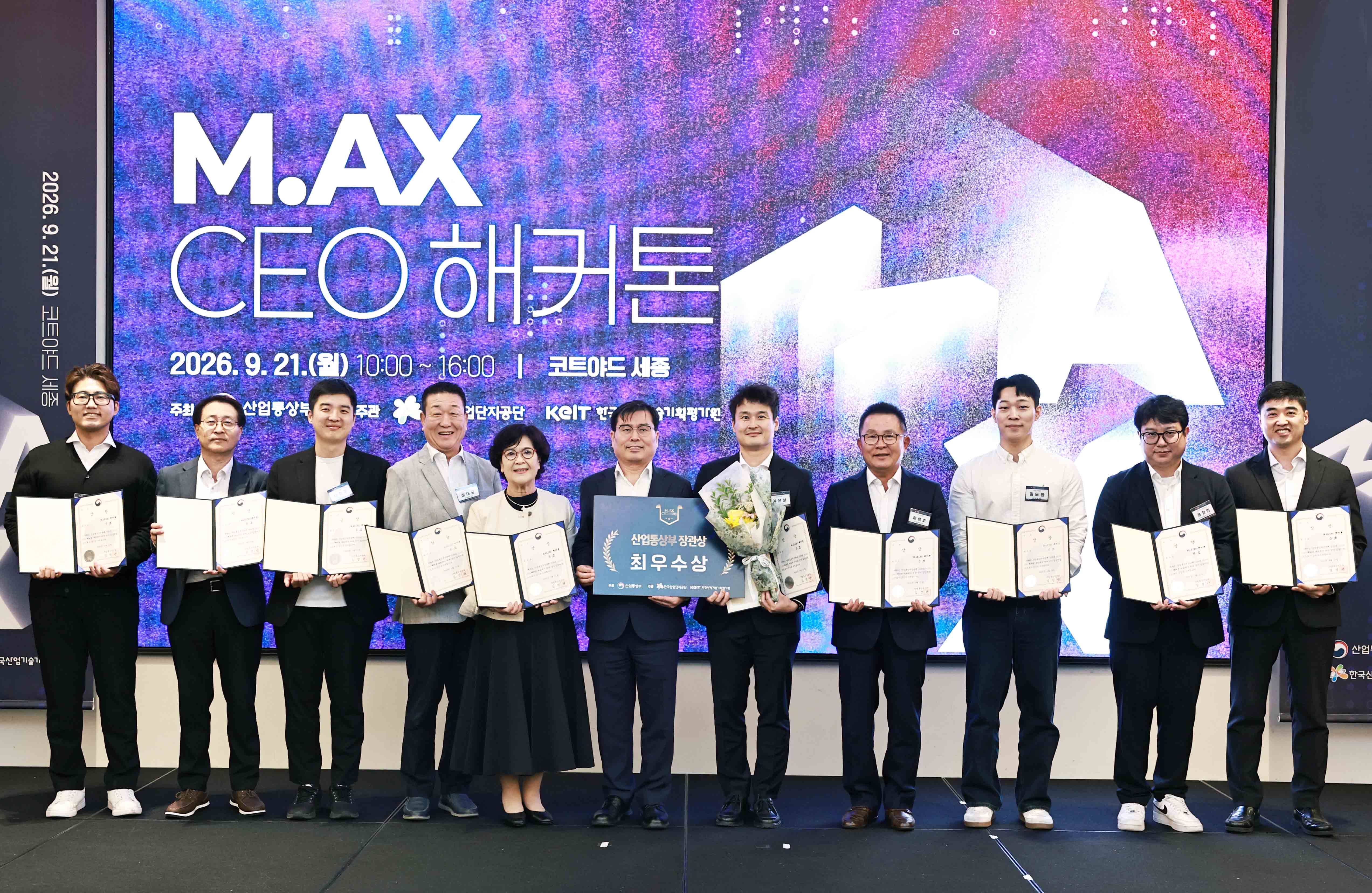
Minister JK Kim of the Ministry of Trade, Industry and Resources (MOTIR) attended the Manufacturing AI Transformation (M.AX) CEO Hackathon in Sejong on September 21, 2026. Around 100 participants attended, including CEOs of manufacturers in regional industrial complexes and representatives from AI companies and related organizations. The event was designed for CEOs to identify which problems in their factories should be addressed first with AI and work with AI companies and experts to develop practical AX projects. Ahead of the hackathon, Minister Kim delivered a keynote address on the role of CEOs in the AI era. The 10 teams, comprising manufacturing companies serving as mentors and mentees and AI companies, presented solutions for using AI to address company-specific problems. Five teams received awards from the Minister of Trade, Industry and Resources: one top prize, two Excellence Awards and two Encouragement Awards. Minister Kim stressed that AI transformation goes beyond adopting technology and requires companies to redesign how they work. He also emphasized that CEOs need to take the lead in setting company-wide priorities and turning AI into action. date2026-09-23
-
Industry
“What Should We Change First with AI in Our Factory?” CEOs Lead M.AX on the Factory Floor
The Ministry of Trade, Industry and Resources (MOTIR, Minister JK Kim) held the Manufacturing AI Transformation (M.AX) CEO Hackathon in Sejong on September 21, 2026, bringing together around 100 participants from manufacturing and AI companies and related organizations. Participants included around 50 CEOs from regional industrial complexes; AI companies; MINI Alliance members; and representatives from the Korea Industrial Complex Corporation (KICOX) and the Korea Planning & Evaluation Institute of Industrial Technology (KEIT). The event was designed for CEOs of manufacturers in regional industrial complexes to identify the most urgent problems in their own factories and work with AI companies and experts to turn them into deployable AI transformation (AX) projects. For manufacturers, AX goes beyond simply introducing AI solutions. It starts with deciding which on-site problems—such as equipment failures or shortages of skilled workers—to address first and where to concentrate personnel and investment. MOTIR organized the hackathon in recognition that CEO-level decisions and leadership are critical to making those choices and driving organizational change. Ahead of the hackathon, Minister Kim delivered a keynote address on the role of CEOs in the AI era. He stressed that AI transformation goes beyond adopting technology and is a management issue that requires companies to redesign how they work. He explained that it is ultimately the CEO’s role to bring together data scattered across departments, reconcile competing interests, and set company-wide priorities. Minister Kim then proposed the “3As”—Adapt, Adept and Adopt—as three principles to guide CEOs in the AI era. He emphasized that CEOs need to take the lead throughout the process: recognizing how change is unfolding, understanding AI, and putting it into practice. Following the keynote address, leading manufacturers shared their experience implementing AX at manufacturing sites. HD Hyundai Samho presented examples of AX in shipbuilding operations, giving participating CEOs specific ideas that could be applied to their own processes. Ohsung Steel described how it converted equipment operating know-how accumulated by individual skilled workers into data that AI could learn from and used AI simulations to shorten training time for new workers. Participants then split into 10 teams to discuss the challenges their companies face at manufacturing sites and the AX projects they want to develop. Working with AI companies and experts, each team then developed concrete solutions. The teams went beyond proposing ideas and examined which AI technologies to use, which processes to target, the scale of investment, expected benefits, and whether the projects could be linked to follow-up support, including government programs. The key AX projects discussed focused on areas directly tied to manufacturing productivity, including converting skilled workers’ tacit manufacturing know-how into data for AI training; replacing manual visual inspection with AI vision inspection; using predictive maintenance to detect equipment anomalies in advance; and applying physical AI and autonomous manufacturing to industries such as shipbuilding. Team 6, comprising Ohsung Steel, Shinhan Ceramic, TFS, Busung Steel, Daechang, NAVER Cloud, and Dfinite, won the top prize for its proposal to expand AX through general-purpose manufacturing agents in the Banwol-Sihwa Industrial Complex. An Excellence Award went to Team 3, comprising HD Hyundai Samho, JK Heavy Industries, MokwonENG, Taejin, Kosteel, and Geosoft. The team proposed advancing AX in shipbuilding processes in the Daebul Industrial Complex and extending it across the value chain to large, medium-sized, and small companies. Team 8, comprising Dong Myung Industry, LOTTE INEOS Chemical, SUNGIL, DK Materials, Hanjin Chemical, KEMP, Neolab, and PDTech, also received an Exce date2026-09-22
-
FTA/Economic Cooperation
MOTIR Seeks to Ease Burdens on Korean Companies and Expand Opportunities for Cooperation under New EU Trade Rules
The Ministry of Trade, Industry and Resources (MOTIR, Minister JK Kim) sent a delegation led by Kim Jang-hee, Director General for Emerging Trade Strategy and Policy, to Brussels, Belgium, from September 16 to 18, 2026. The delegation held a series of meetings with Executive Vice-President Stéphane Séjourné’s Cabinet and the European Commission’s Directorates-General for Justice and Consumers (DG JUST), Taxation and Customs Union (DG TAXUD), Internal Market, Industry, Entrepreneurship and SMEs (DG GROW), and Trade and Economic Security (DG TRADE). The delegation discussed major EU regulatory issues affecting Korean companies’ activities, including the Industrial Accelerator Act (IAA), Corporate Sustainability Due Diligence Directive (CSDDD), and Carbon Border Adjustment Mechanism (CBAM). The visit was a follow-up to the high-level meeting between Minister Kim and Executive Vice-President Séjourné on September 9. It was intended to directly convey Korean companies’ concerns and views as the EU develops major regulatory legislation and detailed implementation rules, and to help prevent unreasonable burdens on Korean companies when the measures are implemented. MOTIR first met with Dragoş Tudorache, Diplomatic Advisor in Executive Vice-President Séjourné’s Cabinet, and Valère Moutarlier, Deputy Director-General at DG GROW. The ministry emphasized that the IAA should be designed to take account of cooperation with trusted partners such as Korea, whose companies have invested in the EU over many years and contributed to local employment, production, and supply chains. It also set out Korea’s position that the principle of equivalent treatment for partner countries should be applied predictably and consistently across the framework, including in automobiles, steel, and nuclear power. In a meeting with Andreas Stein, Director for Justice Policies at DG JUST, MOTIR referred to the government position paper on the CSDDD submitted in July and asked that Korean industry’s views on improving clarity and implementation feasibility be fully reflected in forthcoming guidelines. As the EU develops detailed guidance on implementing the CSDDD, MOTIR also proposed a standing Korea–EU consultation channel for the two sides to continue discussing how to interpret the CSDDD and the difficulties companies face in complying with it. On the CBAM, MOTIR met with Gerassimos Thomas, Director-General of DG TAXUD, and asked the EU to minimize any unnecessary costs and administrative burdens that Korean companies may face during implementation of the mechanism, including those related to third-party verification and the extension to downstream products. In particular, for downstream products with complex supply chains, MOTIR stressed that the EU should fully consider whether companies can realistically comply when deciding the scope of products covered by the expansion and the specific timing of implementation. Beyond regulatory issues, MOTIR also discussed expanding cooperation on emerging trade areas, including digital trade and critical minerals. MOTIR and DG TRADE reviewed the remaining procedures required before the Korea–EU Digital Trade Agreement (DTA), signed in June 2026, can enter into force and discussed follow-up cooperation, including on electronic signatures. On critical minerals, the two sides exchanged views on diversifying supply chains and coordinating policies among major economies. “Changes in EU rules on industry, supply chains, and the environment are an important part of the trade environment and directly affect Korean companies’ business activities,” said Director General Kim. “We will continue consultations to ensure that Korean companies’ views are fully reflected during implementation of these measures.” date2026-09-18
-
FTA/Economic Cooperation
Korea and Five Central Asian Countries Lay Groundwork for Critical Mineral Supply Chains and Manufacturing AI Cooperation
The Ministry of Trade, Industry and Resources (MOTIR, Minister JK Kim) announced a series of economic diplomacy outcomes with five Central Asian countries—Kazakhstan, Kyrgyzstan, Tajikistan, Turkmenistan and Uzbekistan—across industry, trade and supply chains during the First Korea-Central Asia Summit 2026, held in Seoul from September 14 to 16, 2026. In conjunction with the summit, MOTIR also held a series of events: the inaugural C5+1 Industry Ministers’ Meeting on September 14; the Korea–Kazakhstan Business Roundtable, the Korea–Uzbekistan Business Forum and the Korea–Turkmenistan Business Forum on September 15; and the First Korea-Central Asia Business Summit 2026 on September 16, attended by the leaders of all six countries. Although Korea has maintained bilateral consultation channels with each of the five Central Asian countries, this marked the first time in 34 years of diplomatic relations that the five Central Asian countries came together with Korea to discuss cooperation on industry and supply chains, including critical minerals. By combining Central Asia’s abundant strategic minerals, including lithium, uranium and rare earths, with Korea’s advanced manufacturing and processing technologies, the two sides laid the groundwork for a mutually beneficial value chain that moves beyond a simple raw-material import model to link local refining and smelting with high-value-added processing and finished-product manufacturing. Intergovernmental Cooperation: New Multilateral Industry and Supply Chain Consultation Channel Established; Nine Bilateral and Multilateral Cooperation Documents Signed At the inaugural C5+1 Industry Ministers’ Meeting on September 14, the industry ministries of Korea and the five Central Asian countries signed an MOU on industry and supply chain cooperation and established a multilateral ministerial consultation channel to respond to supply chain disruptions and promote industrial diversification. MOTIR also signed eight bilateral cooperation documents on the occasion of bilateral summits and other meetings, setting out practical cooperation tailored to each country’s industrial conditions and economic needs. With Kazakhstan, Korea signed a framework agreement on crude oil cooperation to strengthen cooperation across the crude oil value chain, including oil field development and petrochemicals. The two countries also signed an MOU on nuclear energy cooperation to establish a basis for cooperation across the nuclear power life cycle. With Kyrgyzstan, the two sides revised their existing MOU on trade and investment cooperation, substantially expanding its scope to include critical minerals, halal industries and digital transformation. They also agreed to launch a regular director-general-level consultation channel. With Tajikistan, Korea signed an MOU on industrial cooperation for the first time since the two countries established diplomatic relations, laying the groundwork for broad industrial cooperation in mining and critical minerals, AI and emerging technologies, textiles and chemicals. With Turkmenistan, Korea signed an MOU on cooperation in the chemical industry and industrial plant projects, establishing a framework spanning policy, technology and workforce development and providing a basis for Korean plant engineering companies to expand into the Turkmen market. With Uzbekistan, Korea signed an MOU on a full-cycle critical minerals cooperation platform to advance processing and exploration cooperation through the Korea–Uzbekistan Rare Metals Center. They also signed an MOU on cooperation in AI transformation in manufacturing to pursue AI-driven manufacturing innovation in connection with official development assistance (ODA) projects, as well as an MOU on export capacity building to share trade policy experience and work to expand bilateral trade. Private-Sector Business Coo date2026-09-17
-
Industry
Global Materials, Parts and Equipment Companies Seek Partnership Opportunities in Korea
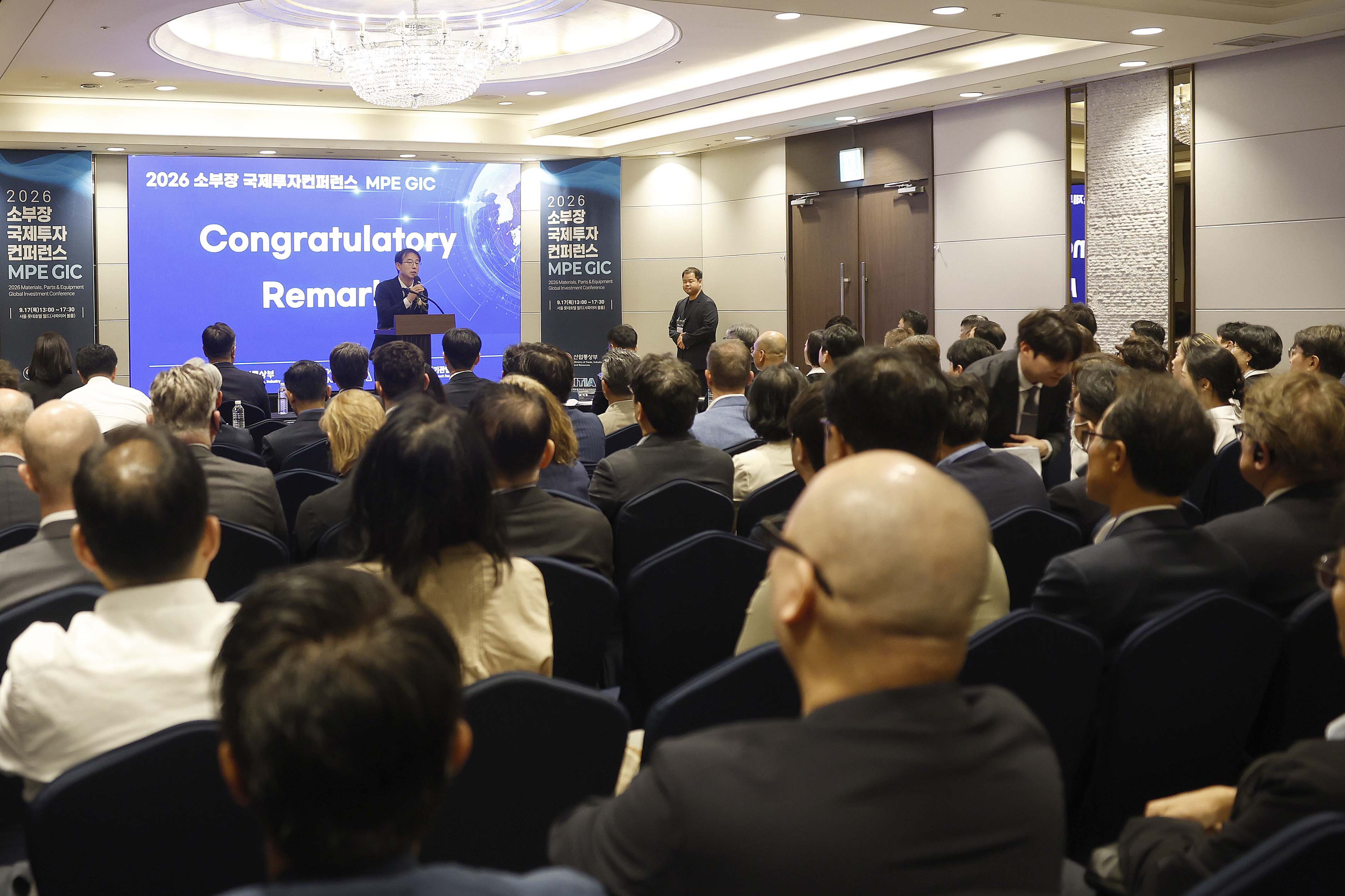
The Ministry of Trade, Industry and Resources (MOTIR, Minister JK Kim) hosted the 2026 Materials, Parts and Equipment Global Investment Conference (MPE GIC) on September 17, 2026, in Seoul, bringing together around 120 Korean and foreign materials, parts and equipment (MPE) companies in advanced industries such as semiconductors, rechargeable batteries and biohealth. As global supply chains undergo restructuring and competition in advanced technologies intensifies, companies are increasingly seeking partnerships to secure core technologies and create new business opportunities. The conference was organized to meet this growing demand by connecting Korean and foreign MPE companies and identifying new investment opportunities. Participants included MPE companies from the United States, Japan, Germany and the Netherlands that had expressed clear interest in partnering with Korean companies and investing in Korea, as well as Korean MPE companies seeking partnerships with them. The conference introduced Korea’s investment environment and policies to attract foreign investment, while foreign-invested companies Toray, Amkor and Kurita Hansu shared their investment experiences and business results in Korea. In-depth one-on-one consultations were also arranged based on the participating companies’ needs, increasing the likelihood that these exchanges would lead to concrete partnerships and investment. The conference also highlighted the expected growth in demand for MPE and related investment opportunities associated with Korea’s three megaprojects in semiconductors, physical AI and AI data centers, as well as the growth engines under the “Five Mega-Regions and Three Special Self-Governing Provinces (5+3)” initiative. Along with a presentation on the Jeonnam-Gwangju Special Metropolitan City, local governments including Gyeonggi-do, Daegu and Jeollabuk-do directly presented their industrial bases and investment conditions, giving foreign companies an opportunity to explore regional investment environments across Korea. “Korea’s industrial ecosystem and the technological capabilities of its MPE companies are key strengths in fostering partnerships with foreign companies and attracting investment from them,” said Kang Gam-chan, Deputy Minister for International Trade and Investment at MOTIR. “We hope this conference will help Korean and foreign companies discuss and develop concrete plans for various forms of cooperation, including technology cooperation and joint ventures. We will continue to enhance foreign investment incentives and actively address regulatory and on-the-ground challenges so that the opportunities for cooperation foreign companies identify in Korea can lead to actual investment.” Video Link: https://www.youtube.com/shorts/7TCVFMmN8Qg date2026-09-17
-
FTA/Economic Cooperation
Korea Discusses Early Implementation of IFDA at WTO Public Forum 2026
The Ministry of Trade, Industry and Resources (MOTIR, Minister JK Kim) held a session titled “Powering Supply Chains through Investment Facilitation” at the WTO Public Forum 2026 on September 17, 2026. This year’s Public Forum was held at WTO headquarters in Geneva, Switzerland, from September 15 to 17, 2026, under the theme “Powering the Future,” with a focus on the future of trade in services. MOTIR and the Korea International Trade Association (KITA) jointly hosted the September 17 session to highlight the importance of investment facilitation in expanding trade in services and strengthening supply chains. The discussion focused on the need for early implementation of the Investment Facilitation for Development Agreement (IFDA) and key issues to be addressed going forward. The IFDA is a plurilateral agreement designed to support greater and more sustainable investment, a major pillar of the global economy and trade, by making investment-related administrative procedures more transparent, predictable and efficient. The negotiations were concluded at the 13th WTO Ministerial Conference (MC13) in 2024, and the IFDA currently has 131 participating WTO members. Since 2017, Korea and Chile have co-chaired the IFDA negotiations and led them through to their conclusion. Korea also led discussions at the 14th WTO Ministerial Conference (MC14) on incorporating the IFDA into the WTO legal framework and continues to contribute to the agreement’s early entry into force. At Korea’s session, moderated by Professor Gabrielle Marceau of the University of Geneva, Nan Li Collins, Director of the Division on Investment and Enterprise at UN Trade and Development (UNCTAD), emphasized that implementing the IFDA could help improve conditions for investment in services. Dorothy Tembo, Deputy Executive Director of the International Trade Centre (ITC), explained that the IFDA could help attract investment and support growth, particularly in developing countries, by creating a more favorable and transparent investment environment. Ed Brzytwa, Vice President of International Trade at the Consumer Technology Association (CTA), outlined the regulatory and administrative difficulties businesses face when making investments and emphasized the importance of a predictable and transparent investment environment. “The IFDA is expected to play an important role in expanding investment worldwide, including in developing countries, by streamlining investment-related administrative procedures and improving investment conditions,” said Yoon Chang-hyun, Director General for Multilateral Trade and Legal Affairs at MOTIR. He emphasized the need to identify practical and feasible ways to bring the IFDA into force and implement it as soon as possible, and affirmed Korea’s commitment to contributing to these efforts. date2026-09-17
-
Trade/Investment
August Automobile Exports Fall 29.8% amid Fewer Working Days and Production Disruptions
The Ministry of Trade, Industry and Resources (MOTIR, Minister JK Kim) announced that Korea’s automobile exports fell 29.8 percent year-on-year to USD 3.85 billion in August 2026, amid fewer working days due to the summer holiday period and production disruptions caused by strikes at some automakers. Domestic sales and production also fell 20.8 percent and 35.8 percent, respectively, to 110,000 and 206,000 units. By region, exports declined across all major markets, including North America, down 28.2 percent, and the European Union, down 16.8 percent, as well as Asia, down 41.9 percent, and the Middle East, down 23.6 percent. Export volume also fell 26.9 percent year-on-year to 146,000 units. Eco-friendly vehicle export volume also declined, but by a smaller 16.4 percent, to 58,000 units. Domestic sales fell 20.8 percent year-on-year to 110,000 units. Eco-friendly vehicle sales reached 69,000 units, accounting for 62.6 percent of the total and showing that their share of the domestic market has continued to grow in recent months. Automobile production fell 35.8 percent year-on-year to 206,000 units. The decline was attributed mainly to an average of four fewer working days as the industry’s summer holiday period shifted from late July in 2025 to early August in 2026, as well as production disruptions caused by strikes at some automakers. With wage negotiations concluded at all major automakers, MOTIR expects the production shortfall caused by strikes to be made up during the remainder of the year, with exports and production gradually recovering. The ministry will maintain close communication with the industry and support exports and production, including by addressing on-the-ground difficulties. date2026-09-17
-
Industry
2026 Materials, Parts and Equipment Global Investment Conference
Kang Gam-chan, Deputy Minister for International Trade and Investment at the Ministry of Trade, Industry and Resources (MOTIR, Minister JK Kim), attended the 2026 Materials, Parts and Equipment Global Investment Conference (MPE GIC) in Seoul on September 17, 2026. The conference brought together representatives from local governments, the Korea Core Industrial Technology Investment Association (KITIA), and Korean and foreign materials, parts and equipment (MPE) companies in advanced industries such as semiconductors, rechargeable batteries and biohealth. The event connected Korean and foreign MPE companies to explore cooperation opportunities, including joint ventures and technology cooperation, and create more opportunities for foreign investment in Korea. “Korea’s industrial ecosystem and the technological capabilities of its MPE companies are key strengths in fostering partnerships with foreign companies and attracting investment from them,” Deputy Minister Kang said. He added that MOTIR will continue to enhance foreign investment incentives and address regulatory and on-the-ground challenges so that cooperation opportunities identified in Korea can lead to actual investment. date2026-09-17
-
FTA/Economic Cooperation
(Press Clarification) No Specific Details Finalized Yet on Nuclear Power Projects Related to U.S.-Bound Investment, Including Whether to Acquire a Stake in Westinghouse
Media Report On September 15, 2026, The Korea Economic Daily reported in an article titled “Seoul eyes 15% Westinghouse stake, board seat in US nuclear expansion” that the government is seeking to acquire an approximately 15 percent stake in Westinghouse and secure board representation. The article also reported that the government plans to use the investment as a basis to expand Korean companies’ participation in U.S. nuclear power plant construction and broaden cooperation to include joint exports to third countries. Government Response Korea and the United States are engaged in a range of discussions on nuclear power projects related to Korea’s U.S.-bound investment, but no specific details have yet been decided. As discussions between Korea and the United States are ongoing, MOTIR asks the media to exercise caution when reporting on matters that have not yet been finalized. date2026-09-16
-
FTA/Economic Cooperation
Korea and Five Central Asian Countries Hold First Industry Ministers’ Meeting to Discuss Multilateral Cooperation on Industry and Critical Minerals
The Ministry of Trade, Industry and Resources (MOTIR, Minister JK Kim) held the inaugural C5+1 Industry Ministers’ Meeting in Seoul on September 14, 2026, with industry ministers from Kazakhstan, Kyrgyzstan, Tajikistan, Turkmenistan and Uzbekistan. Although Korea has maintained bilateral ministerial-level channels on industrial cooperation with each of the five Central Asian countries, this marked the first time that industry ministers from all six countries met to discuss cooperation on industry and supply chains, including critical minerals. Three Priority Areas of Cooperation The industry ministers of the six countries agreed to strengthen practical cooperation in three priority areas to jointly respond to a rapidly changing global trade environment and shifting supply chains. First, to expand trade and upgrade industrial infrastructure, the ministers agreed to move beyond merchandise trade and enhance the quality of cooperation by expanding Korea’s participation in projects across Central Asia, including integrated industrial complexes, smart infrastructure and plant modernization, and by upgrading the region’s broader industrial base. Second, on building critical mineral supply chains, the ministers agreed to strengthen cooperation across the entire supply chain by combining Central Asia’s abundant mineral resources, including lithium and rare earths, with Korea’s advanced processing and materials technologies. They also plan to expand downstream value-chain cooperation beyond extraction and raw-material imports to local refining and smelting, high-value-added materials processing, and finished-product manufacturing. Third, on technology cooperation and future talent development, the ministers explored mutually beneficial ways to strengthen manufacturing competitiveness by combining Central Asia’s industrial potential with Korea’s capabilities in smart factories and data for manufacturing AI. The ministers considered how such cooperation could support the smart transformation of factories across Central Asia and accelerate the deployment of Korean manufacturing equipment and technologies in the region. They also agreed to expand exchanges among young technical talent who will lead future industries. Opening and Closing Remarks by the Chair As host and chair of the inaugural meeting, Minister JK Kim opened the meeting by referring to the pioneering spirit of the trading caravans that once connected Eurasia. “Let us forge a new path together toward an advanced industrial ecosystem, using Korea’s advanced technologies and manufacturing capabilities as a catalyst to unlock Central Asia’s vast growth potential and drive greater growth across Eurasia,” Minister Kim said. Concluding the meeting, Minister Kim said, “As a Central Asian proverb says, a long road feels far when traveled alone, but near when traveled with good friends. I hope this Industry Ministers’ Meeting will establish itself as a platform for mutually beneficial cooperation where our countries jointly identify and develop practical projects that deliver tangible benefits to businesses and people.” date2026-09-14