-
FTA/Economic Cooperation
Korea and Five Central Asian Countries Hold First Industry Ministers’ Meeting to Discuss Multilateral Cooperation on Industry and Critical Minerals
The Ministry of Trade, Industry and Resources (MOTIR, Minister JK Kim) held the inaugural C5+1 Industry Ministers’ Meeting in Seoul on September 14, 2026, with industry ministers from Kazakhstan, Kyrgyzstan, Tajikistan, Turkmenistan and Uzbekistan. Although Korea has maintained bilateral ministerial-level channels on industrial cooperation with each of the five Central Asian countries, this marked the first time that industry ministers from all six countries met to discuss cooperation on industry and supply chains, including critical minerals. Three Priority Areas of Cooperation The industry ministers of the six countries agreed to strengthen practical cooperation in three priority areas to jointly respond to a rapidly changing global trade environment and shifting supply chains. First, to expand trade and upgrade industrial infrastructure, the ministers agreed to move beyond merchandise trade and enhance the quality of cooperation by expanding Korea’s participation in projects across Central Asia, including integrated industrial complexes, smart infrastructure and plant modernization, and by upgrading the region’s broader industrial base. Second, on building critical mineral supply chains, the ministers agreed to strengthen cooperation across the entire supply chain by combining Central Asia’s abundant mineral resources, including lithium and rare earths, with Korea’s advanced processing and materials technologies. They also plan to expand downstream value-chain cooperation beyond extraction and raw-material imports to local refining and smelting, high-value-added materials processing, and finished-product manufacturing. Third, on technology cooperation and future talent development, the ministers explored mutually beneficial ways to strengthen manufacturing competitiveness by combining Central Asia’s industrial potential with Korea’s capabilities in smart factories and data for manufacturing AI. The ministers considered how such cooperation could support the smart transformation of factories across Central Asia and accelerate the deployment of Korean manufacturing equipment and technologies in the region. They also agreed to expand exchanges among young technical talent who will lead future industries. Opening and Closing Remarks by the Chair As host and chair of the inaugural meeting, Minister JK Kim opened the meeting by referring to the pioneering spirit of the trading caravans that once connected Eurasia. “Let us forge a new path together toward an advanced industrial ecosystem, using Korea’s advanced technologies and manufacturing capabilities as a catalyst to unlock Central Asia’s vast growth potential and drive greater growth across Eurasia,” Minister Kim said. Concluding the meeting, Minister Kim said, “As a Central Asian proverb says, a long road feels far when traveled alone, but near when traveled with good friends. I hope this Industry Ministers’ Meeting will establish itself as a platform for mutually beneficial cooperation where our countries jointly identify and develop practical projects that deliver tangible benefits to businesses and people.” date2026-09-14
-
FTA/Economic Cooperation
Korea, Vietnam Hold First Export Control Dialogue to Strengthen Supply Chain Stability and Support for Korean Companies in Vietnam
The Ministry of Trade, Industry and Resources (MOTIR, Minister JK Kim) will hold the inaugural Korea–Vietnam Export Control Dialogue with Vietnam’s Ministry of Industry and Trade in Seoul on September 11, 2026. The dialogue is significant as it marks the start of a regular director-general-level channel for cooperation between the two countries’ export control authorities. Vietnam introduced its export control system in October 2025 and began implementing it in June 2026. As Vietnam is a major supply chain partner for Korea and many Korean companies operate there, Korean businesses have a strong interest in the country’s export control system and a clear need to respond to its requirements. Against this backdrop, MOTIR signed an MOU on export control cooperation with Vietnam’s Ministry of Industry and Trade in Hanoi on April 23, under which the two authorities agreed to establish a regular consultation mechanism and share information. The dialogue will be held as part of bilateral cooperation under the MOU. Kim Tae-woo, Director General for Trade Security Policy at MOTIR, and Nguyen Anh Son, Director General of the Agency of Foreign Trade at Vietnam’s Ministry of Industry and Trade, will serve as the chief representatives of Korea and Vietnam, respectively. The two sides will exchange information on key export control issues and discuss matters of mutual interest in depth. Korea will also share its experience and practical know-how in operating an export control system aligned with international standards and convey the concerns of Korean companies operating in Vietnam. The dialogue will be held in conjunction with a training program in Korea for Vietnamese export control officials. From September 8 to 11, 2026, the Vietnamese delegation will complete four days of specialized training and visit sites in Korea, including Incheon Regional Customs and Samsung Electronics, an exemplary company under Korea’s Compliance Program (CP). “As Vietnam is a key supply chain partner for Korea, we will continue to strengthen bilateral export control cooperation to support the stability of advanced industrial ecosystems,” said Director General Kim. “We will continue to share Korea’s advanced export control expertise and strengthen tailored local support so Korean companies can respond quickly and smoothly to the new regulatory environment.” date2026-09-11
-
FTA/Economic Cooperation
Meeting with France’s Minister for the Economy, Finance and Industrial, Energy and Digital Sovereignty
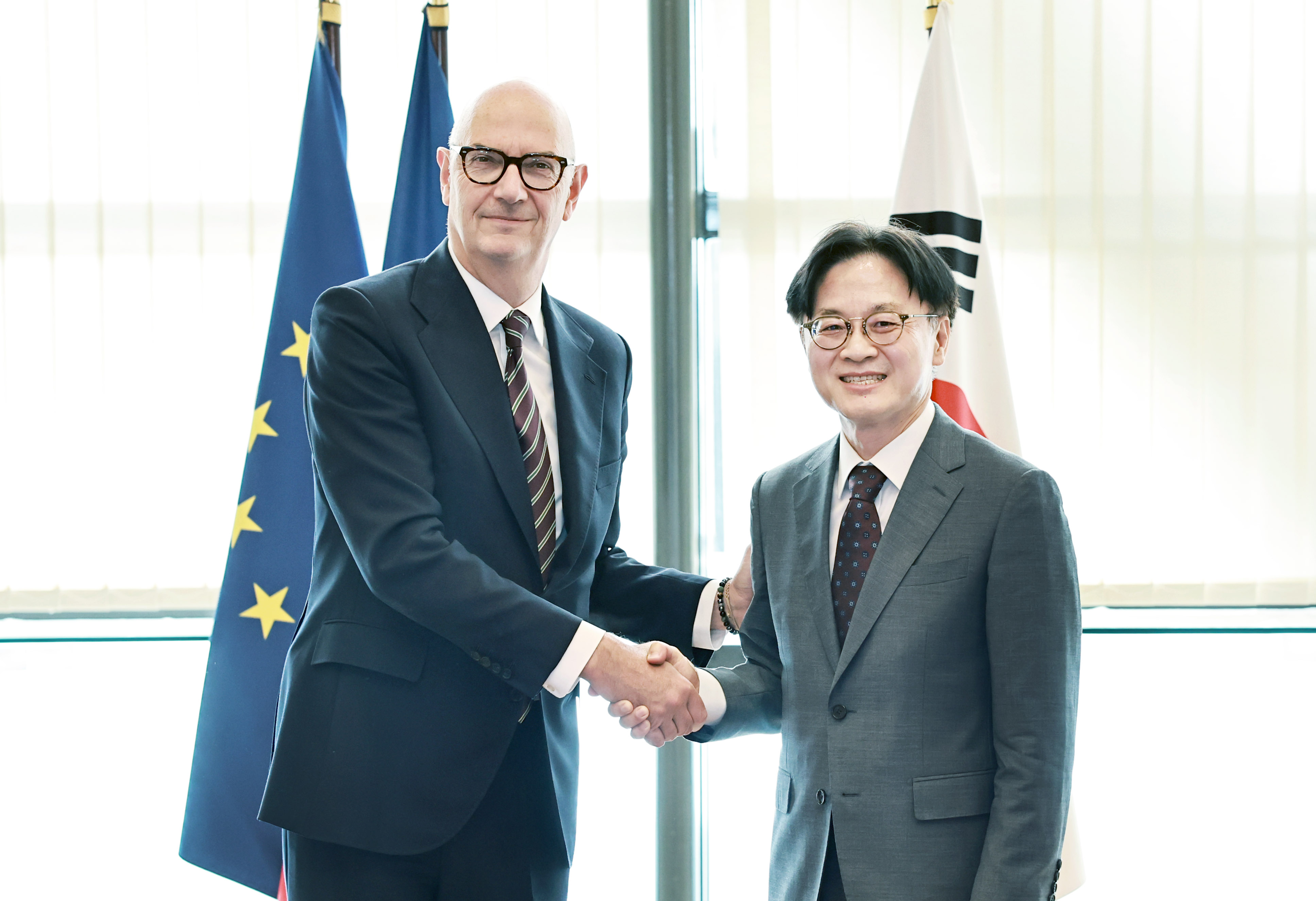
Minister JK (Jung-Kwan) Kim of the Ministry of Trade, Industry and Resources (MOTIR) met with Roland Lescure, France’s Minister for the Economy, Finance and Industrial, Energy and Digital Sovereignty, at the ministry in Paris on September 7, 2026, during President Lee Jae Myung’s visit to France. The two ministers discussed cooperation to establish a strategic framework spanning industry, trade and supply chains, including the new Korea–France Strategic Industrial Dialogue. “The new ministerial dialogue will provide Korea and France with a standing framework for regular consultations on industrial policy, trade and investment, supply chains and economic security,” Minister Kim said. date2026-09-08
-
FTA/Economic Cooperation
Korea and France Establish Strategic Framework for Cooperation Across Industry, Trade and Supply Chains
During President Lee Jae Myung’s visit to France, Minister JK (Jung-Kwan) Kim of the Ministry of Trade, Industry and Resources (MOTIR) met with Roland Lescure, France’s Minister for the Economy, Finance and Industrial, Energy and Digital Sovereignty, in Paris on September 7, 2026. The two ministers laid the institutional groundwork to take bilateral cooperation in industry, trade and supply chains to a new level. Korea–France Ministerial Meeting on Economic and Industrial Affairs The key outcome of the meeting was an agreement to establish the Korea–France Strategic Industrial Dialogue, a ministerial-level consultation channel between the two key ministries responsible for industrial policy. Korea and France will use the dialogue for regular discussions on industrial and trade policy and establish sector-specific working groups to discuss specific issues and cooperation projects in depth. The new dialogue is significant in that it provides a framework for bilateral cooperation across a broad range of industrial and trade issues, including industrial policy, industrial technology, trade and investment, supply chains and economic security, and critical minerals. Minister Kim also urged France to address key trade issues facing Korean companies in France. In particular, he requested improvements to France’s electric vehicle subsidy scheme to ensure that Korean-made EVs are not placed at a disadvantage. The two sides agreed to continue consultations on the issue through working-level groups and other channels. Minister Kim also welcomed the EU’s intention, reflected in the Industrial Accelerator Act (IAA), to extend benefits to its key partner countries. He asked for France’s close attention and support so that Korea, as a trusted key industrial partner of the EU, can receive treatment equivalent to that accorded to EU member states. “With the establishment of the ministerial-level Strategic Industrial Dialogue, Korea and France now have a standing framework for regular consultations that goes beyond addressing individual issues and covers industrial policy, trade and investment, supply chains and economic security,” Minister Kim said. “We will make full use of the new ministerial dialogue and sector-specific working groups to address trade-related difficulties facing Korean companies while continuing to identify new cooperation projects in advanced industries and supply chains.” KOTRA–Business France MOU The two countries also took steps to strengthen the basis for trade and investment cooperation at the business level. In the presence of both ministers, the Korea Trade-Investment Promotion Agency (KOTRA) and Business France signed an MOU on business cooperation. The two organizations will expand cooperation by jointly holding trade and investment seminars and supporting startups seeking to enter the other country’s market. They will also strengthen their role as effective communication channels for identifying and addressing difficulties faced by Korean and French companies operating in the other country. Meeting with Air Liquide CEO Minister Kim also met separately with François Jackow, CEO of Air Liquide, a French global industrial gas company, to discuss expanding the company’s investment in Korea. Air Liquide completed its acquisition of DIG Airgas in January 2026 and is expanding its business in Korea. During the meeting, Jackow said the company plans to finalize the details of a new investment plan in the near future. Minister Kim welcomed Air Liquide’s continued investment in Korea and said the government would provide the necessary support to ensure the investment plan proceeds smoothly. date2026-09-08
-
FTA/Economic Cooperation
G20 Innovation Ministerial Meeting
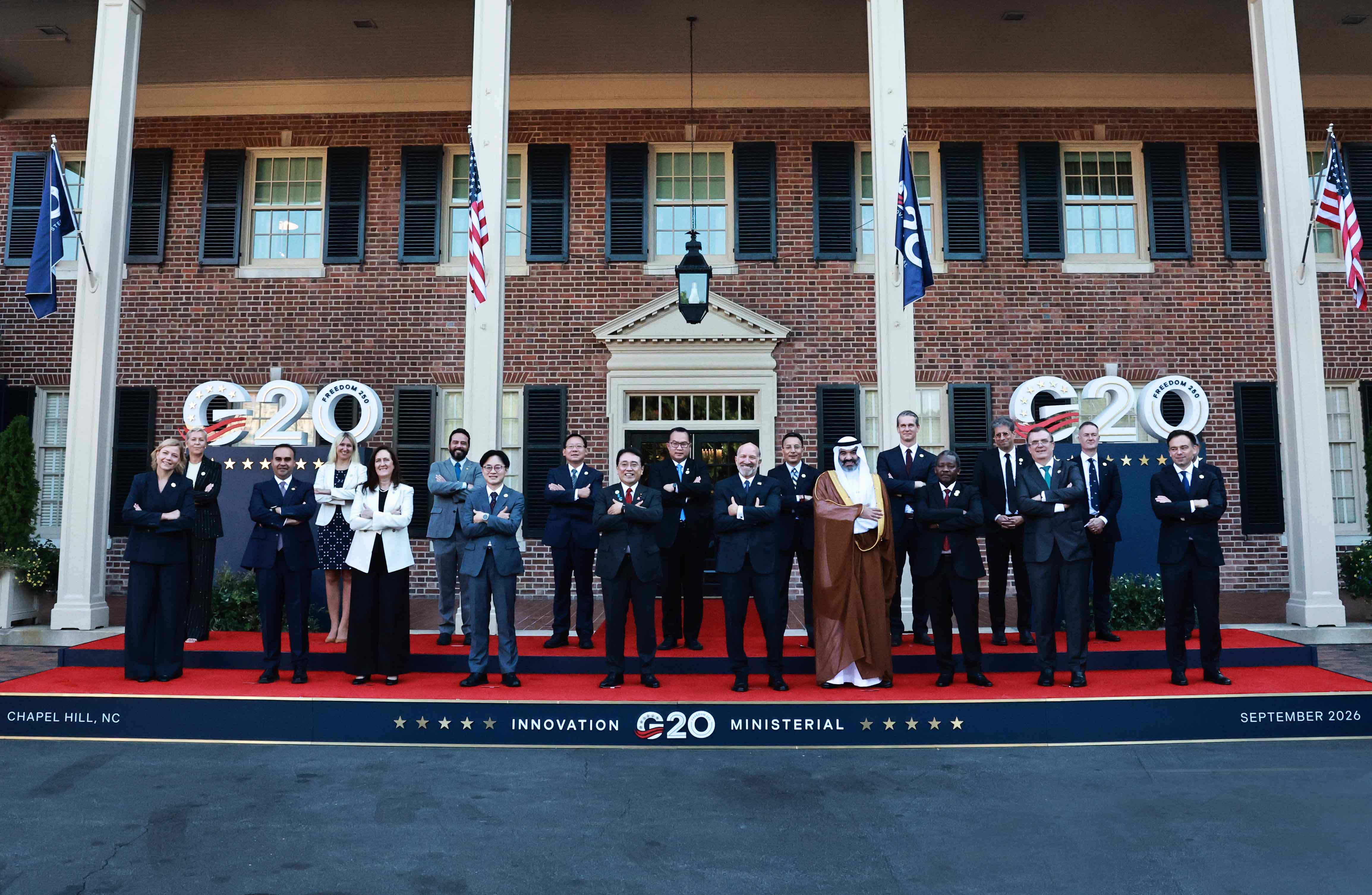
Minister JK (Jung-Kwan) Kim of the Ministry of Trade, Industry and Resources (MOTIR) attended the G20 Innovation Ministerial in Chapel Hill, North Carolina, on September 2, 2026. The meeting brought together U.S. Secretary of Commerce Howard Lutnick and industry and innovation ministers from Japan, India, Germany, and other G20 members. The attendees discussed Intellectual Property Policies for Artificial Intelligence; AI for Standards and Standards for AI; and Industrial Innovation and Investment in Supply Chains. “AI is rapidly transforming research, creation, and innovation,” Minister Kim said. “IP systems should evolve so that IP rights and AI innovation reinforce each other.” date2026-09-03
-
FTA/Economic Cooperation
G20 Members Discuss Multilateral Cooperation to Advance AI Innovation
Minister JK (Jung-Kwan) Kim of the Ministry of Trade, Industry and Resources (MOTIR) attended the 2026 G20 Innovation Ministerial Meeting in Chapel Hill, North Carolina, the United States, on September 2 (local time) as head of the Korean delegation. The United States, which holds this year’s G20 presidency, hosted the meeting, where industry and innovation ministers from G20 members discussed three topics: (1) Intellectual Property Policies for Artificial Intelligence; (2) AI for Standards and Standards for AI; and (3) Industrial Innovation and Investment in Supply Chains. The morning session, Intellectual Property Policies for Artificial Intelligence, focused on balancing AI innovation with intellectual property (IP) protection and on how patent and copyright systems should evolve as AI use expands. Minister Kim emphasized that as AI rapidly transforms research and development, creation, and innovation, IP systems should evolve so that IP rights and AI innovation reinforce each other. On patents, Minister Kim noted that broader use of AI is expanding opportunities to participate in innovation and that a reliable patent system should support this trend. On copyright, he shared Korea’s experience with the fair use principle and guidelines for AI training, emphasizing the importance of respecting creators’ legitimate rights while providing a predictable environment for AI innovation. The afternoon session covered standards for industrial AI use, as well as supply chain resilience and diversification. On AI standards, Minister Kim stressed that standards should reflect industry needs and experience in AI application. He also described Korea’s experience in working with industry to support the identification and development of relevant AI standards in key sectors, including autonomous manufacturing, AI-enabled future vehicles, and robotics. He further stressed the importance of international cooperation to improve interoperability and reliability between technologies and systems as AI technologies and services spread across borders. Based on Korea’s experience actively participating in AI standardization discussions at the International Organization for Standardization (ISO) and the International Electrotechnical Commission (IEC), he said Korea will continue to contribute to international standards that support AI innovation and adoption in global markets. On supply chains, Minister Kim emphasized that AI and manufacturing innovation can help make global supply chains more resilient as those chains become more complex. Minister Kim also shared Korea’s experience with Manufacturing AI Transformation (M.AX), explaining that expanding AI use across key manufacturing industries and applying it to production planning, demand forecasting, and supply chain management can improve companies’ capacity to respond to changes and make supply chains more efficient and flexible. He emphasized that beyond improving productivity at individual companies, these efforts could strengthen crisis response across global production networks and create new opportunities for cooperation. Minister Kim stressed that stronger supply chain resilience requires diversified sourcing, closer links among countries’ industrial strengths, and broader trust-based partnerships in critical resources, materials, and components. He also proposed that the G20 play an important role in building open and complementary global supply chains by drawing on the industrial capabilities of its members. “For AI innovation to strengthen industrial competitiveness, advances in technology must go hand in hand with progress in intellectual property systems, standards, and resilient supply chains,” said Minister Kim. “Korea will continue to actively cooperate with G20 members, drawing on practical experience gained across industry.” date2026-09-03
-
FTA/Economic Cooperation
Korea and Japan Step Up Implementation of Supply Chain Partnership Arrangement (SCPA)
The Ministry of Trade, Industry and Resources (MOTIR, Minister JK Kim) and Japan’s Ministry of Economy, Trade and Industry (METI) held their first implementation meeting for the Korea–Japan Supply Chain Partnership Arrangement (SCPA) in Tokyo on September 2, 2026, and discussed strengthening bilateral supply chain cooperation. Signed by MOTIR and METI in March 2026, the Korea–Japan SCPA covers joint responses to supply chain disruptions, cooperation on critical minerals and other resources, and coordination on global trade issues. At their summit in May 2026, the leaders of Korea and Japan agreed to further strengthen cooperation under the SCPA to make supply chains in key industries more resilient. At the meeting, the two sides shared their respective key policies for diversifying and stabilizing supply chains for critical minerals and discussed expanding bilateral and multilateral cooperation. They agreed to continue deepening cooperation to ensure stable supplies of LNG, crude oil, and petroleum products in times of crisis. They also exchanged information on their respective responses to major economies’ tightening of carbon emissions and supply chain due diligence regulations, including the Carbon Border Adjustment Mechanism (CBAM), and discussed future coordination. CBAM is designed to prevent carbon leakage by ensuring that selected carbon-intensive imports are subject to a carbon price equivalent to that applied to goods produced in the EU. “Amid continued uncertainty in global supply chains, supply chain cooperation between Korea and Japan, two countries with similar industrial structures, is becoming increasingly important,” said Kim Jang-hee, Director General for Emerging Trade Strategy and Policy at MOTIR. “We will build on this first implementation meeting to develop the SCPA into a communication channel for devising practical measures for bilateral supply chain cooperation and delivering tangible outcomes.” date2026-09-02
-
FTA/Economic Cooperation
Minister Kim Visits the U.S. to Attend G20 Innovation Ministerial and Expand Korea–U.S. Economic Cooperation
Minister JK (Jung-Kwan) Kim of the Ministry of Trade, Industry and Resources (MOTIR) will visit North Carolina, Washington, D.C., and Louisiana from September 1 to 4, 2026 (U.S. local time), to attend the G20 Innovation Ministerial, an investment declaration ceremony, and the groundbreaking ceremony for the HYUNDAI-POSCO Louisiana Steel (HPLS) mill. On September 2, Minister Kim will first attend the G20 Innovation Ministerial in Chapel Hill, North Carolina, where he will discuss global cooperation to advance AI innovation, with a focus on AI-related intellectual property rights, standards, and supply chains. On September 3, Minister Kim will then attend an investment declaration ceremony and roundtable in Washington, D.C. hosted by MOTIR and the Korea Trade-Investment Promotion Agency (KOTRA), marking the foreign direct investments into Korea from U.S. companies in the semiconductor, advanced materials, and offshore wind sectors. Minister Kim will also discuss with the U.S. companies regarding their investments in Korea and listen to their suggestions. On September 4, Minister Kim will also attend the groundbreaking ceremony for the HPLS mill in Donaldsonville, Louisiana. The mill is one of the projects under Hyundai Motor Group’s USD 26 billion U.S. investment plan, which includes USD 5.8 billion for Hyundai Steel. Hyundai Motor Group announced the plan at the White House last year, and it was later expanded by additional investment from Hyundai Motor Company. The mill will contribute to building a stable supply chain in North America. Before the ceremony, Minister Kim will meet with Louisiana Governor Jeff Landry to discuss mutually beneficial, strategic cooperation between Korea and the United States, including energy. “This visit underscores the active two-way investment cooperation between our two countries, demonstrating Korean companies’ commitment to strengthening supply chain cooperation through their investments in the United States, while also attracting U.S. investments into Korea at the same times,” Minister Kim said. date2026-09-01
-
FTA/Economic Cooperation
MOTIR Releases Draft Korean Translation of Upgraded Korea–UK FTA for Public Comment
Following the conclusion of the Korea–UK Free Trade Agreement (FTA) upgrade negotiations in December 2025, the Ministry of Trade, Industry and Resources (MOTIR, Minister JK Kim) will make the agreement text in English and a draft Korean translation available on the government’s FTA website (www.fta.go.kr) from September 1 to 11, 2026, and invite public comments. The public comment process will follow MOTIR’s procedural regulations for drafting Korean translations of trade agreements (MOTIR Directive No. 127) to make trade agreement procedures more transparent and enhance the reliability of the Korean translation. In consultation with relevant ministries and experts, MOTIR will consider the comments in the course of finalizing the Korean translation. After the Ministry of Foreign Affairs (MOFA) and the Ministry of Government Legislation (MOLEG) complete their reviews, the government plans to consult with the UK before formally signing the agreement and then seek the National Assembly’s consent to ratification under the Act on the Conclusion Procedure and Implementation of Commercial Treaties. date2026-09-01
-
FTA/Economic Cooperation
Korea and China Hold 16th Round of FTA Follow-up Negotiations on Services and Investment
The 16th round of follow-up negotiations on services and investment under the Korea–China Free Trade Agreement (FTA) will take place in Beijing from August 31 to September 4, 2026. The Ministry of Trade, Industry and Resources (MOTIR, Minister JK Kim) announced that around 30 officials from the two countries will take part in the talks. The Korean delegation will be led by Kwon Hye-jin, Deputy Minister for Trade Negotiations at MOTIR, and the Chinese delegation by Chen Chao, Director General of the Department of International Trade and Economic Affairs at China’s Ministry of Commerce. Under the Korea–China FTA, which entered into force in 2015, the two countries agreed to hold follow-up negotiations to further liberalize services and investment. They launched the talks in March 2018 and have since held 15 formal rounds. Through the follow-up negotiations, the two sides aim to facilitate trade in services and investment by opening more service sectors to each other and making market access conditions clearer and more predictable. This would lay the groundwork for bilateral trade to expand beyond goods into services. Progress in the talks would therefore carry symbolic significance, showing that bilateral economic cooperation can be sustained and continue to evolve. Against this backdrop, the leaders of Korea and China agreed in January 2026 to work toward meaningful progress in the talks within the year. The two sides have since continued their high-level dialogue on how to advance the negotiations, including at the Korea–China Trade Ministers’ Meeting in March and a June meeting between Korea’s Minister for Trade and China’s International Trade Representative. Building on this positive momentum, the Korean delegation plans to accelerate the talks and make substantive progress. “Amid continued uncertainty in the trade environment at home and abroad, concluding the Korea–China FTA follow-up talks could expand bilateral services trade and investment. MOTIR will spare no effort to secure a durable outcome that brings practical benefits to Korean companies,” Deputy Minister Kwon said. date2026-09-01