-
FTA/Economic Cooperation
Korea and India Resume CEPA Upgrade Talks Following April Summit Announcement
The Office of the Minister for Trade at the Ministry of Trade, Industry and Resources (MOTIR, Minister JK Kim) announced that Korea and India will hold negotiations in New Delhi from May 25 to 27, 2026, to upgrade the Comprehensive Economic Partnership Agreement (CEPA). The talks will be the first formal round since the two countries agreed at their April 2026 summit to resume the upgrade negotiations. After the CEPA took effect in 2010, Korea and India launched upgrade negotiations in 2016 to update the agreement in line with changes in the trade environment and build closer economic ties. The talks, however, had been effectively suspended since 2022, as they were unable to narrow their differences on major issues. Following consultations earlier in 2026, Korea and India issued a joint statement in April setting out their agreement to resume the negotiations. Around 60 delegates from the two countries will take part in the talks. Korea’s delegation will be led by Park Keunoh, Director General for Trade Agreement Policy at MOTIR, and India’s by Kapil Chaudhary, Joint Secretary for Foreign Trade (North East Asia) at the Department of Commerce, Ministry of Commerce and Industry. During the 12th round of upgrade negotiations, the two sides will hold intensive discussions across seven areas, including goods, services, rules of origin and emerging trade rules. They will seek to narrow their differences and work toward substantive results by the end of 2026 or in the first half of 2027. “We will work to modernize the CEPA to create a more business-friendly trade environment for Korean companies operating in India. The upgraded agreement will also cover emerging trade issues, including digital trade and supply chain cooperation,” said Park Geun-oh, Director General for Trade Agreement Policy at MOTIR. date2026-05-26
-
FTA/Economic Cooperation
APEC Trade Ministers Discuss Multilateralism and Cooperation on AI, Digital and Green Industries
Minister for Trade Yeo Han-koo of the Ministry of Trade, Industry and Resources (MOTIR, Minister JK Kim) represented Korea as the Head of Delegation at the Asia-Pacific Economic Cooperation (APEC) Ministers Responsible for Trade (MRT) Meeting in Suzhou, China, from May 22 to 23, 2026, and discussed ways to strengthen trade cooperation with other APEC economies. Korea, the 2025 APEC host, also joined China, the 2026 host, and Viet Nam, the 2027 host, as part of the APEC Troika, helping maintain continuity in discussions on Asia-Pacific economic cooperation. Strengthening Global Leadership Through Multilateral Cooperation 1. Importance of APEC Cooperation in Responding to Supply Chain Crisis Amid the prolonged war in the Middle East and deepening global supply chain disruptions, Minister Yeo stressed the need for Asia-Pacific economies to work together to build supply chain resilience. He noted that the crisis around the Strait of Hormuz has exposed vulnerabilities in global supply chains, causing oil price volatility, disruptions to oil and gas supplies, and higher maritime logistics costs. He also called for APEC-level discussions on regional response measures, including an emergency meeting mechanism and stronger information sharing. Minister Yeo said the recent energy supply chain disruptions have underscored the urgent need for APEC members, including Korea, to accelerate the energy transition. He called for APEC-level cooperation to accelerate the region’s transition, including expanded renewable energy, stronger grid connectivity, and carbon credit cooperation. In his intervention, Minister Yeo said, “In an unprecedented crisis, predictable progress in regionalism becomes even more critical.” He added, “Based on a shared understanding of the importance of a pragmatic approach for open plurilateralism, APEC should continue to serve as a platform for practical cooperation in the Asia-Pacific.” 2. Leading Cooperation on AI and Digital Trade Minister Yeo said the digital transition and the rapid development of AI have the potential to fundamentally reshape trade and investment. He introduced Korea’s bilateral and multilateral efforts in digital rule-making, including the Korea–Singapore Digital Partnership Agreement (DPA) and the Korea–EU Digital Trade Agreement (DTA). He also expressed regret that no agreement was reached at the 14th WTO Ministerial Conference (MC 14) on extending the moratorium on customs duties on electronic transmissions, and shared with like-minded APEC economies the view that the moratorium should be made permanent. On the sidelines of the APEC meeting, Minister Yeo attended the Digital Economy Partnership Agreement (DEPA) Ministers’ Meeting and reviewed progress in domestic procedures in Peru and Costa Rica, whose accession negotiations concluded in 2025. At the DEPA+China Ministers’ Meeting, participants also discussed China’s accession process. 3. Contributing to the Restoration of the Multilateral Trading Order, Including the WTO Minister Yeo expressed regret that, although Korea served as Minister Facilitator for the reform session at MC14 and helped make meaningful progress and build broad consensus on WTO reform, members were unable to reach an agreement due to opposition from some countries over issues related to the moratorium on electronic transmissions. He called for reform discussions to continue in Geneva and said Korea will actively contribute to the WTO reform midway review process before the 15th WTO Ministerial Conference in 2027. Minister Yeo also expressed regret that the incorporation of the Investment Facilitation for Development Agreement (IFDA), co-chaired by Korea and Chile through the conclusion of negotiations, into the WTO legal framework was not adopted due to opposition from one member, despite overwhelming support from 165 members. He stressed the need fo date2026-05-22
-
FTA/Economic Cooperation
Minister Kim Meets Kyrgyz Economy and Commerce Minister to Discuss Broader Economic Cooperation
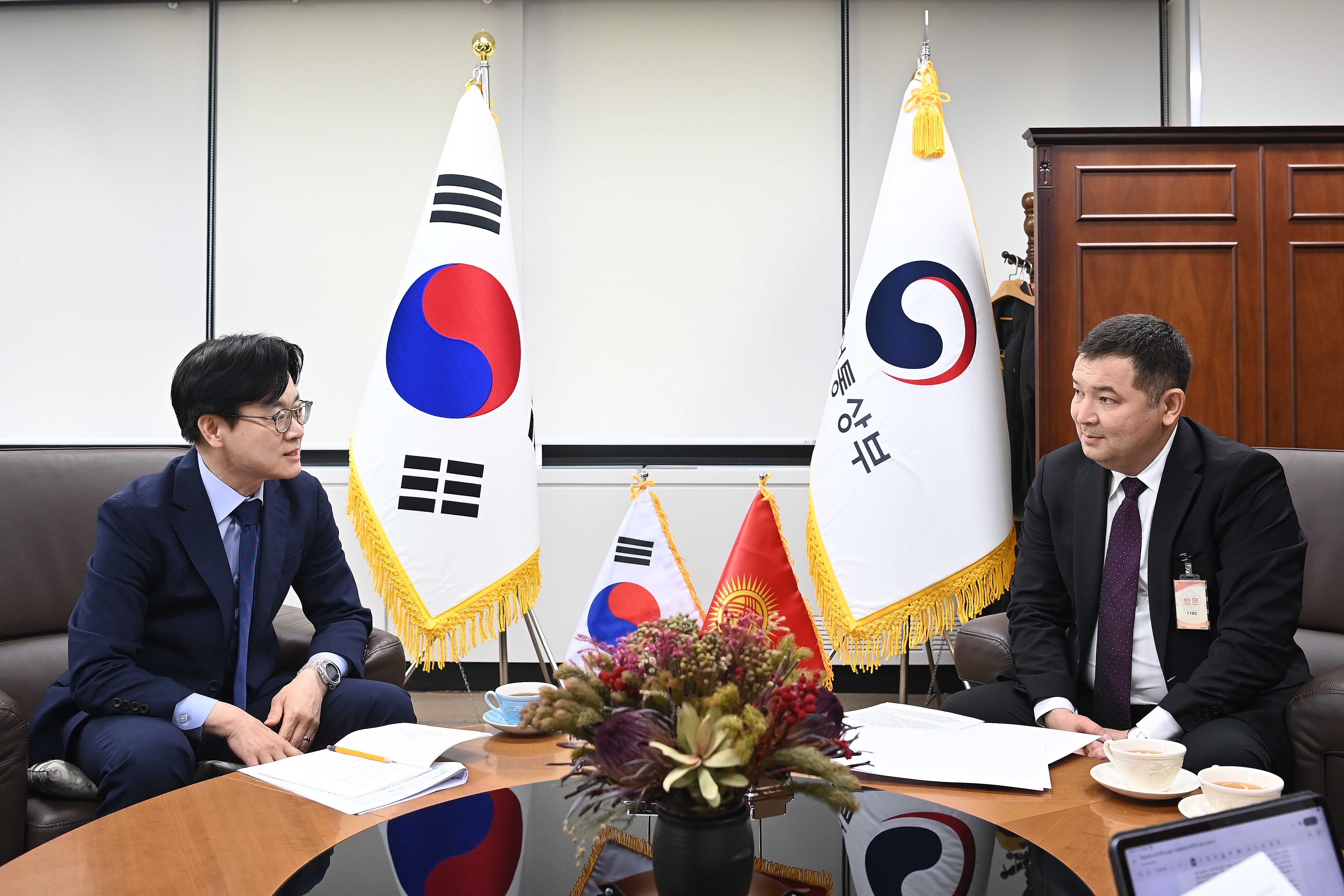
Minister JK (Jung-Kwan) Kim of the Ministry of Trade, Industry and Resources (MOTIR) met with Kyrgyz Minister of Economy and Commerce Bakyt Sydykov in Seoul on May 21, 2026, to discuss ways to expand bilateral economic cooperation in trade and investment, critical minerals and development cooperation. Both sides welcomed the recent growth in bilateral trade, which reached USD 3.5 billion in 2025, the highest level since diplomatic ties were established in 1992. They also agreed on the need to trade in a wider range of goods and expand mutually beneficial trade. On critical minerals, both sides noted that the Kyrgyz Republic has abundant resources, including antimony and tungsten, and recognized the need to work together in this area. They agreed to identify priority projects for medium- to long-term cooperation and continue discussions. On development cooperation, both sides reviewed the results of ODA projects carried out jointly by MOTIR and the Kyrgyz Republic. MOTIR provided KRW 1.3 billion over three years from 2021 for technical assistance in Kyrgyzstan’s textile sector and will provide KRW 2.1 billion over five years from 2026 for technical assistance on digital transformation (DX). Both sides agreed that ODA has helped strengthen Kyrgyzstan’s industrial capacity and build a foundation for digital transformation. “Kyrgyzstan is an important partner for Korea in trade and investment, critical minerals and development cooperation,” Minister Kim said. “I hope the Korea–Central Asia Summit in Seoul in September 2026 will help accelerate economic cooperation between our two countries.” date2026-05-22
-
FTA/Economic Cooperation
Minister Kim and UAE Energy Minister Review Barakah Plant and Korean Personnel Safety
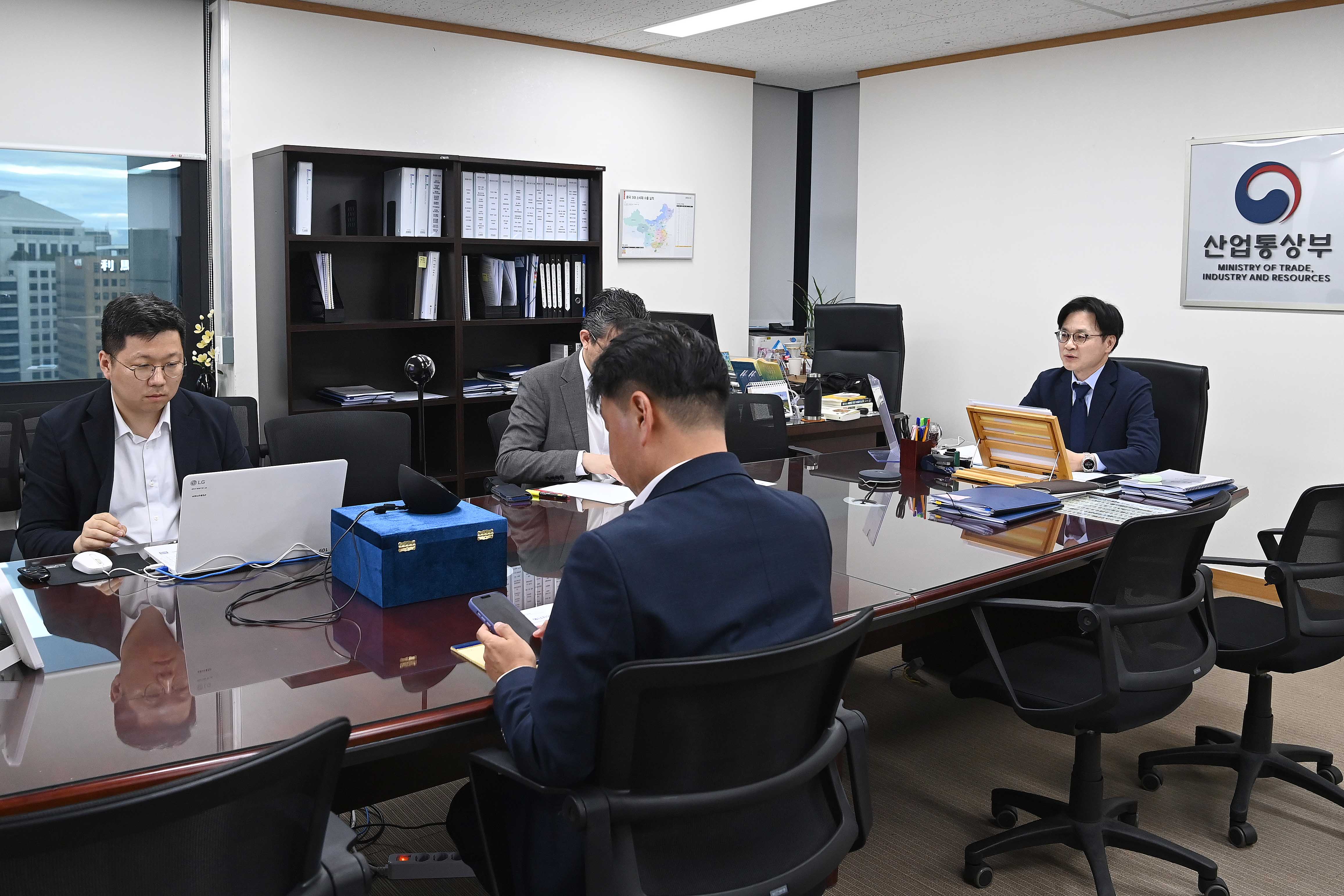
Minister JK (Jung-Kwan) Kim of the Ministry of Trade, Industry and Resources (MOTIR) held a virtual meeting with UAE Minister of Energy and Infrastructure Suhail Mohamed Faraj Al Mazrouei on May 21, 2026. The ministers reviewed repairs to transmission facilities near the Barakah Nuclear Energy Plant that were damaged in the May 17 drone attack and discussed measures to strengthen the safety of Korean personnel working in the UAE. Minister Kim thanked the UAE government for sparing no effort to support the safety of Korean personnel and their families in the UAE. He said the Korean government would also provide all possible support to help ensure repairs to the damaged facilities proceed without disruption. Minister Al Mazrouei said the UAE gives top priority to the safety of personnel working at the Barakah plant and will continue close communication and cooperation with Korea. Minister Kim also expressed appreciation for the UAE government’s cooperation in stabilizing Korea’s crude oil supplies following Presidential Chief of Staff Kang Hoon-sik’s March 2026 visit to the UAE as a special envoy. Under the Korea–UAE Special Strategic Partnership, MOTIR will maintain close communication with the UAE government and continue to deepen energy and industrial cooperation, including on nuclear power and crude oil supply stability. date2026-05-22
-
FTA/Economic Cooperation
Minister Kim Meets Kyrgyz Minister of Economy and Commerce
Minister JK (Jung-Kwan) Kim of the Ministry of Trade, Industry and Resources (MOTIR) met with Kyrgyz Minister of Economy and Commerce Bakyt Sydykov in Seoul on May 21, 2026, to discuss ways to expand economic cooperation in trade and investment, critical minerals, and development cooperation. Minister Kim said Kyrgyzstan is an important partner for Korea in trade and investment, critical minerals, and development cooperation, and that the Korea–Central Asia Summit in Seoul in September 2026 will help further accelerate economic cooperation between the two countries. date2026-05-22
-
FTA/Economic Cooperation
Virtual Meeting with UAE Minister of Energy and Infrastructure
Minister JK (Jung-Kwan) Kim of the Ministry of Trade, Industry and Resources (MOTIR) held a virtual meeting with Suhail Mohamed Faraj Al Mazrouei, UAE Minister of Energy and Infrastructure, in Seoul on May 21, 2026. The two ministers reviewed repairs to transmission facilities near the Barakah Nuclear Energy Plant that sustained damage in the May 17 drone attack. They also discussed measures to strengthen the safety of Korean personnel working in the UAE. “The UAE government is doing everything possible to protect Korean personnel and their families in the UAE, and the Korean government will provide all possible support to help ensure repairs to the damaged facilities proceed without disruption,” Minister Kim said. date2026-05-22
-
FTA/Economic Cooperation
Korea and the EU Hold Dialogue on Supply Chains and Industrial Policy
The Ministry of Trade, Industry and Resources (MOTIR, Minister JK Kim) held the second Korea–EU dialogue on supply chains and industrial policy with the European Commission’s Directorate-General for Internal Market, Industry, Entrepreneurship and SMEs (DG GROW) in Seoul on May 21, 2026. The meeting was co-chaired by Vice Minister Moon Shin-hak of MOTIR and Kerstin Jorna, Director-General of DG GROW. The dialogue was launched after Korea and the EU agreed at their summit in May 2023 to expand the existing industrial policy dialogue to cover supply chain cooperation. The first meeting was held in December 2023, and the second meeting reviewed progress in supply chain and industrial policy cooperation and discussed practical ways to advance future cooperation. The two sides first shared their policies to stabilize supply chains, as global disruptions have become a persistent risk amid escalating geopolitical tensions and threats such as the closure of the Strait of Hormuz. Korea introduced its supply chain legislation, enacted to build a government-wide support framework, and its early warning system, which quickly detects signs of supply-demand risks in key items such as materials, parts and equipment. The two sides also exchanged views on the EU’s progress and plans for its supply chain monitoring system. The two sides also discussed industrial policy trends and major legislative and policy priorities. Korea emphasized that key EU initiatives, including the Industrial Accelerator Act, should be designed and implemented to strengthen Korea–EU supply chain links. Korea also asked the EU to give careful consideration to concerns raised by Korean companies. The two sides also discussed cooperation on supply chains in strategic industries, including critical minerals and batteries. On critical minerals, they explored ways to share information, analyze risks and collaborate on investments and projects to help build stable and sustainable supply chains. On batteries, Korea explained that Korean battery companies are helping build the EU’s battery production base and strengthen its supply chains through large-scale investments in the EU. Korea also asked for Korean companies to play a larger role in battery energy storage system (BESS) projects in the EU. The two sides also discussed ways to expand investment cooperation between Korean and European companies. They agreed that combining European companies’ core technologies with Korea’s advanced manufacturing capabilities could help strengthen supply chain stability and industrial competitiveness. They also agreed to expand cooperation and investment in advanced industries. They further discussed using cooperation platforms such as the EU Business Hub to identify new partnerships in strategic sectors, including green industries, digital industries and healthcare, and to turn B2B cooperation into tangible industrial outcomes. “Korea and the EU are strategic partners that share the universal values of freedom, human rights and the rule of law. They are also economic partners with strong potential to complement each other in advanced industries and supply chains,” Vice Minister Moon said. “We hope this second dialogue will lead to practical outcomes and serve as a key channel for strengthening Korea–EU supply chain stability and industrial cooperation.” MOTIR will continue to expand supply chain cooperation with the EU in strategic industries, including critical minerals and batteries, and strengthen bilateral cooperation on economic security and industrial policy. date2026-05-21
-
FTA/Economic Cooperation
Korea and Jiangsu Province Hold Seventh Economic and Trade Cooperation Exchange
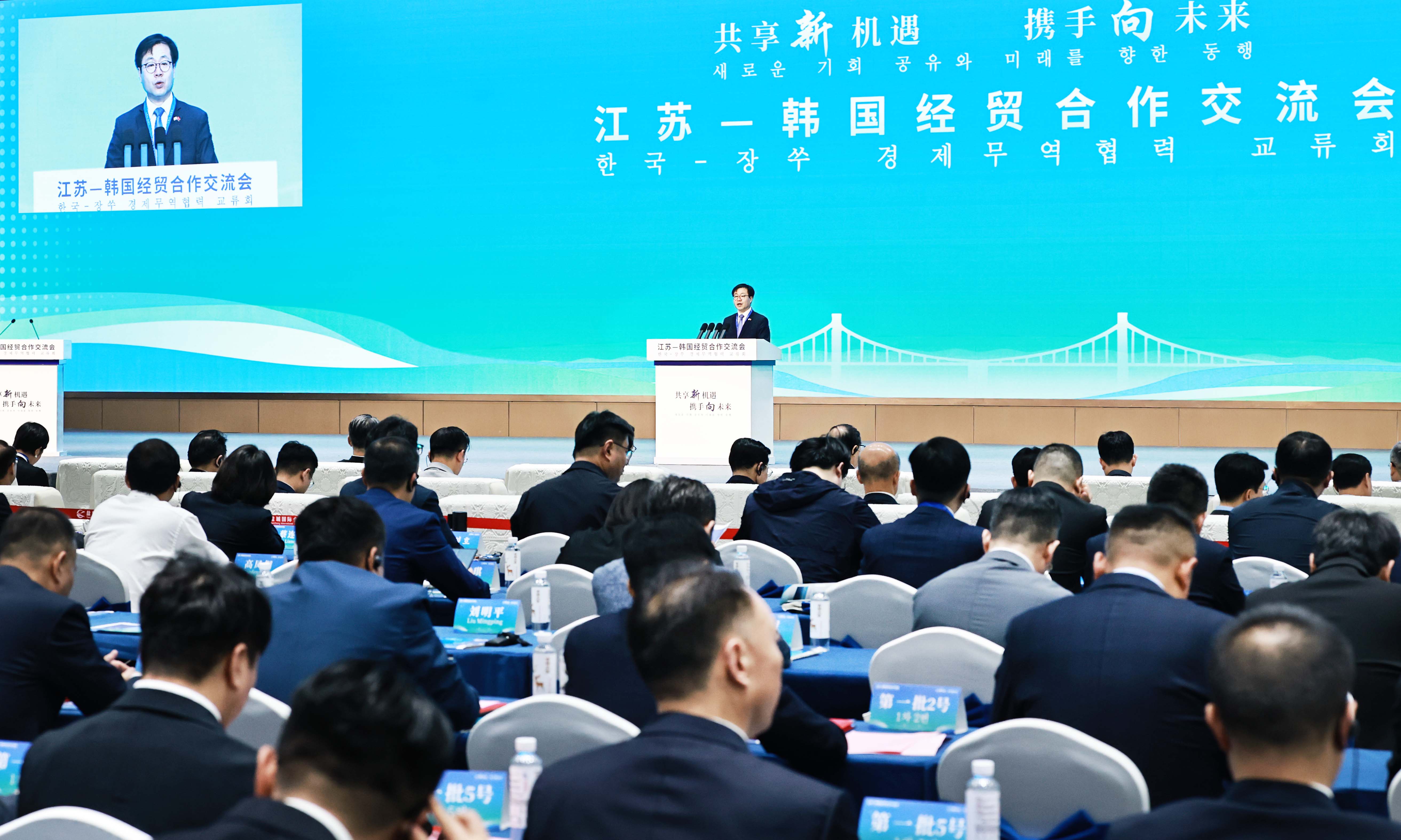
Minister for Trade Yeo Han-koo of the Ministry of Trade, Industry and Resources (MOTIR, Minister JK Kim) attended the seventh Korea–Jiangsu Province Economic and Trade Cooperation Exchange in Yancheng, Jiangsu Province, China, on May 20, 2026. The event was held under the theme of expanding future-oriented Korea–China cooperation. The event brought together approximately 400 government officials and business representatives from Korea and China, including Xia Xinmin, including Xia Xinmin, Vice Chairman of the Standing Committee of the Jiangsu Provincial People’s Congress. “We will help translate the momentum generated by the reciprocal state visits between the leaders of Korea and China into concrete results,” Minister Yeo said, noting that Korea will continue region-specific dialogue with Chinese local governments. date2026-05-21
-
FTA/Economic Cooperation
Minister Yeo Visits China–ROK Industrial Park Exhibition Hall in Yancheng
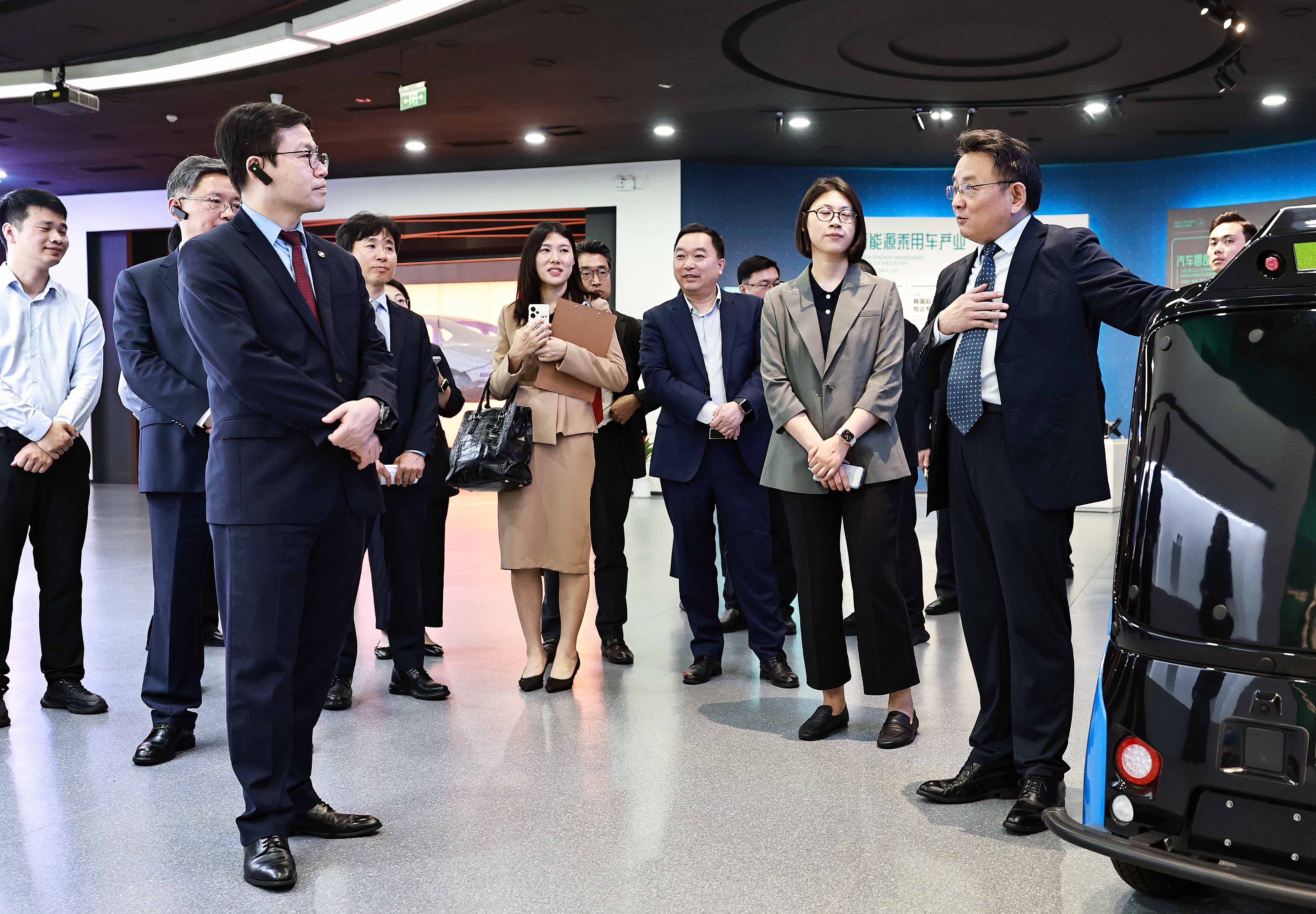
Minister for Trade Yeo Han-koo of the Ministry of Trade, Industry and Resources (MOTIR, Minister JK Kim) visited the exhibition hall at the Korea–China industrial park in Yancheng, Jiangsu Province, China, on May 19, 2026, on the occasion of the seventh Korea–Jiangsu Province Economic and Trade Cooperation Exchange. The visit took place as Korea and Jiangsu Province discussed industrial park cooperation and ways to strengthen supply chain cooperation. date2026-05-21
-
FTA/Economic Cooperation
Minister Yeo Meets with Jiangsu Vice Governor Zhao Yan
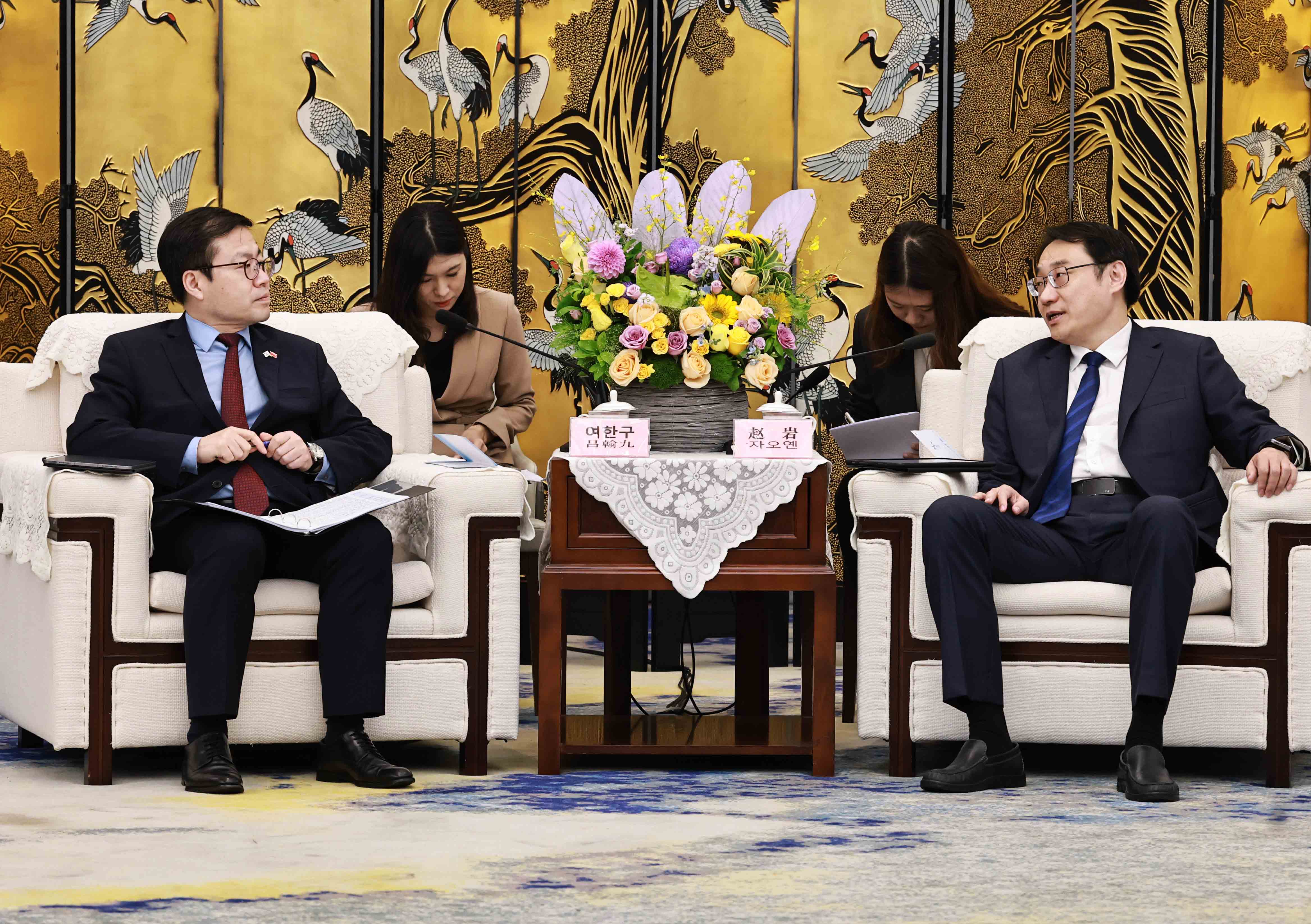
Minister for Trade Yeo Han-koo of the Ministry of Trade, Industry and Resources (MOTIR, Minister JK Kim) met with Zhao Yan, Vice Governor of Jiangsu Province, in Yancheng, Jiangsu Province, China, on May 19, 2026, on the occasion of the seventh Korea–Jiangsu Economic and Trade Cooperation Exchange Conference. The two sides discussed cooperation between Korea–China industrial parks and ways to strengthen supply chain cooperation, as Jiangsu Province continues to serve as a key base for Korean companies operating in China. “We will help translate the momentum generated by the reciprocal state visits between the leaders of Korea and China into concrete results,” Minister Yeo said, adding that Korea will continue region-specific dialogue with Chinese local governments. date2026-05-21