-
FTA/Economic Cooperation
Korea and UAE Hold Forum on Investment in AI Infrastructure and Semiconductors
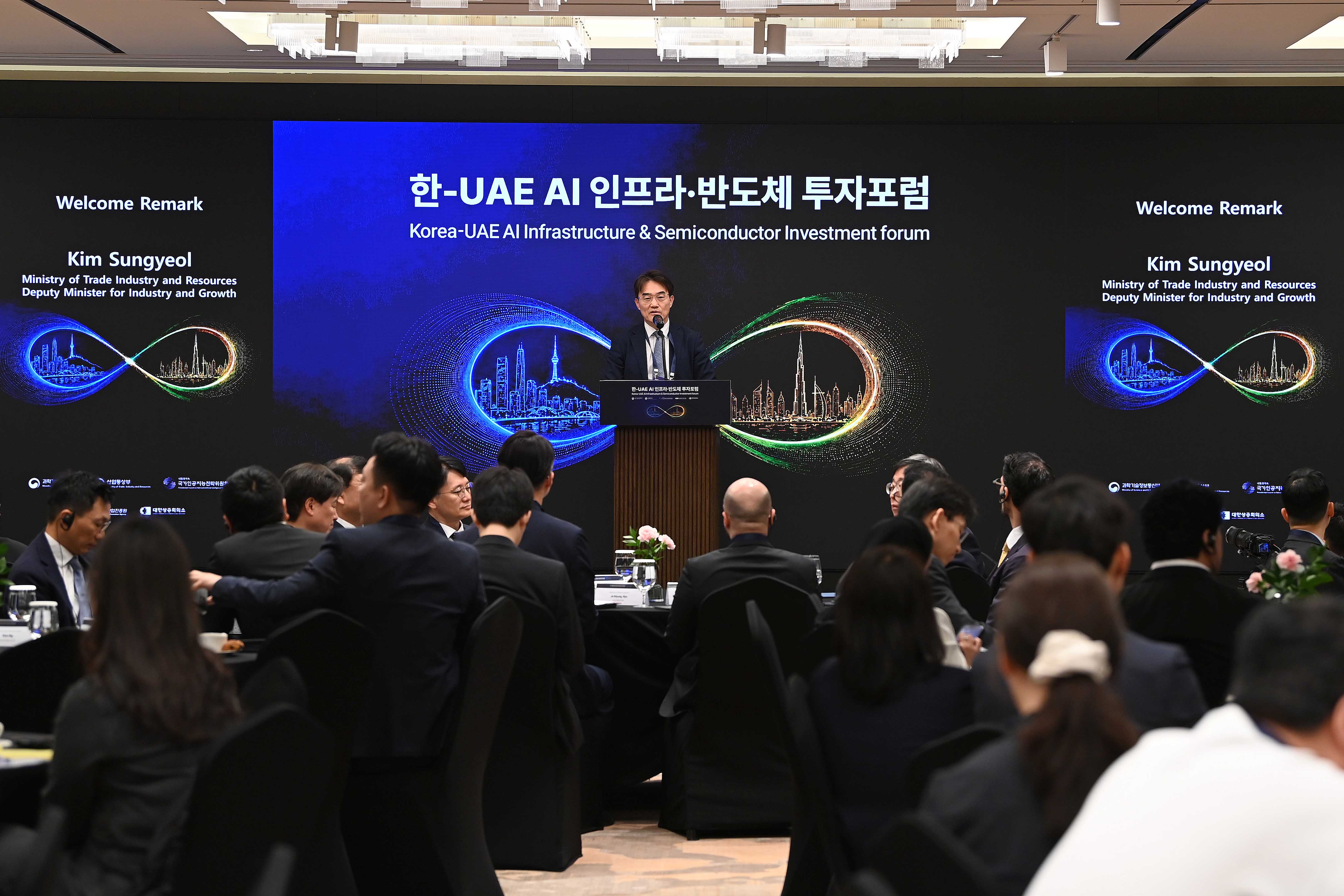
The Ministry of Trade, Industry and Resources (MOTIR, Minister JK Kim), the Ministry of Science and ICT (MSIT, Deputy Prime Minister and Minister Bae Kyung-hoon) and the National Artificial Intelligence (AI) Strategy Committee held the Korea-UAE Investment Forum on AI Infrastructure and Semiconductors in Seoul on May 13, 2026. Following Korea’s state visit to the UAE in November 2025, the two countries formed a public-private working group and have since discussed cooperation across the AI ecosystem, including infrastructure, models and services. The forum was held to build on those discussions and translate them into practical outcomes. A 25-member UAE delegation, led by H.E. Mohamed Abdul Rahman AlHawi, Undersecretary of the UAE Ministry of Investment, visited Korea for the forum. The delegation included senior representatives from Core42, MGX, the Advanced Technology Research Council (ATRC), the Technology Innovation Institute (TII), Mubadala and the Abu Dhabi Investment Authority (ADIA). H.E. Abdulla Saif Al Nuaimi, UAE Ambassador to Korea, also attended. At a high-level meeting, senior officials from both sides recognized the need for strategic cooperation to develop the AI ecosystem as global competition in AI continues to evolve rapidly. A high-level panel discussion then covered areas where the two countries can combine their strengths, including low-power, high-efficiency AI infrastructure using AI semiconductors such as neural processing units (NPUs), as well as specialized services and demonstrations based on local-language AI models. In the afternoon session, Korean companies introduced their technologies and business models through investment presentations on AI semiconductors, infrastructure and AI technologies. These were followed by business briefings, matching sessions and networking, giving companies from both countries an opportunity to discuss concrete investment cooperation. The Korean government plans to continue follow-up discussions so that the forum leads beyond a one-off exchange to tangible results, including complementary technology development and joint entry into overseas markets. “Competitiveness in the AI era depends not only on building AI infrastructure, but also on the ability to apply it in industrial settings,” said Kim Sung-youl, Deputy Minister for Industry and Growth at MOTIR. “The UAE brings strategic investment capacity and experience in large-scale projects, while Korea brings strengths in AI semiconductors, data centers and manufacturing. We will help the two sides identify practical opportunities in AI infrastructure and industrial AI, and support efforts to expand this cooperation into global markets.” “The UAE and the Republic of Korea have built a forward-looking partnership around a shared vision for future industries,” said H.E. Mohamed Abdul Rahman AlHawi, Undersecretary of the UAE Ministry of Investment. “That cooperation has gained strong momentum since the UAE announced its USD 30 billion investment commitment to Korea in 2023.” He added, “Major energy and AI projects, including Korea’s role in the Barakah Nuclear Energy Plant and Korean participation in the Stargate AI Data Center Campus project in the UAE, already show the strategic value of the partnership. This visit is expected to help extend cooperation across the AI value chain.” date2026-05-13
-
FTA/Economic Cooperation
Korea-UAE Investment Forum on AI Infrastructure and Semiconductors
Kim Sung-youl, Deputy Minister for Industry and Growth at the Ministry of Trade, Industry and Resources (MOTIR, Minister JK Kim), attended the Korea-UAE Investment Forum on AI Infrastructure and Semiconductors in Seoul on May 13, 2026. The forum brought together Ryu Je-myung, Second Vice Minister of Science and ICT at the Ministry of Science and ICT (MSIT); H.E. Mohamed Abdul Rahman AlHawi, Undersecretary of the UAE Ministry of Investment; and officials and business representatives from Korea and the UAE. “Competitiveness in the AI era depends on both AI infrastructure and the ability to apply it in industry,” Deputy Minister Kim said. “By combining the UAE’s investment capacity and large-scale project experience with Korea’s strengths in AI semiconductors, data centers and manufacturing, we will help identify practical opportunities in AI infrastructure and industrial AI and support efforts to expand this cooperation into global markets.” date2026-05-13
-
FTA/Economic Cooperation
MOTIR Holds Expert Meeting on Economic Cooperation with India, One of the World’s Leading Economies
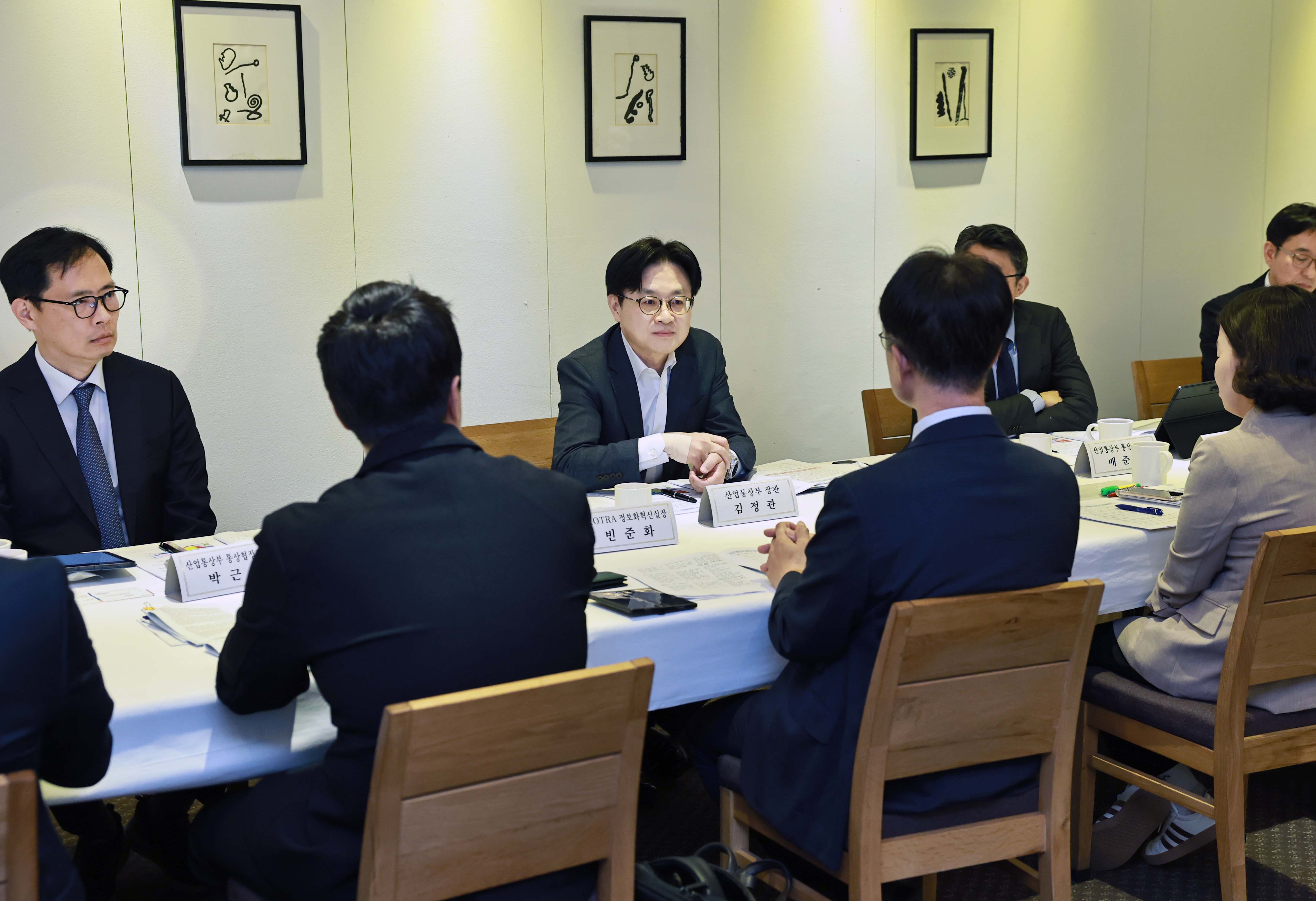
Minister JK (Jung-Kwan) Kim of the Ministry of Trade, Industry and Resources (MOTIR) held an expert meeting on May 11, 2026, to discuss ways to expand Korea-India economic cooperation. The meeting reviewed follow-up steps for the economic outcomes of President Lee Jae Myung’s state visit to India from April 19 to 21, 2026, and explored specific policy tasks to further develop bilateral economic cooperation. At the meeting, Minister Kim said, “At the summit, the two countries agreed to establish the Korea-India Industrial Cooperation Committee, their first ministerial-level platform for industry and resource cooperation. They also signed a series of investment and cooperation MOUs in areas with strong cooperation demand, including shipbuilding and steel.” Minister Kim noted, however, that the current level of Korea-India economic and industrial cooperation has yet to match the two countries’ potential and expectations. He requested practical policy suggestions from the experts based on their field experience and research. The meeting brought together experts from major economic and research institutions, including the Korea Institute for International Economic Policy (KIEP), the Korea Institute for Industrial Economics and Trade (KIET), the Korea Trade-Investment Promotion Agency (KOTRA), the Korea International Trade Association (KITA) and the Korea Industrial Complex Corporation (KICOX). The experts held in-depth discussions on practical and concrete agenda items, including ways to develop a dedicated industrial complex for Korean companies in India; other countries’ economic cooperation policies toward India; a structural analysis of India’s growing trade deficit with Korea and possible response options; and sector-specific bilateral cooperation in promising industries. Experts noted that India, with a population of about 1.43 billion and GDP exceeding USD 4 trillion, is emerging as a key production base and promising market amid the realignment of global supply chains. While large companies have made inroads into the Indian market, infrastructure and regulatory complexities can present challenges for small and medium-sized enterprises. The experts therefore stressed the need for a dedicated industrial complex for Korean companies in India to ease infrastructure and permitting burdens and strengthen the benefits of business clustering. They also shared successful cases of other countries’ entry into India and stressed the need for a more structured market-entry strategy. Experts also analyzed that Korean companies’ supply chains in India are largely built around importing intermediate goods, processing them locally and selling them in the domestic market, a structure that has contributed to India’s trade deficit with Korea. They stressed the need to reshape these supply chains over the long term to build a more sustainable basis for bilateral cooperation. This would include developing India-based production sites in promising industries into global production and export hubs, while localizing intermediate goods production. MOTIR plans to incorporate the views raised at the meeting into its policies and work closely with relevant ministries and organizations to strengthen the implementation of Korea-India industrial cooperation and help translate the outcomes of the state visit into concrete follow-up measures. date2026-05-11
-
FTA/Economic Cooperation
Expert Meeting on Expanding Korea–India Economic Cooperation
Minister JK (Jung-Kwan) Kim of the Ministry of Trade, Industry and Resources (MOTIR, Minister JK Kim) chaired an expert meeting on expanding Korea–India economic cooperation in Seoul on May 11, 2026. The meeting reviewed follow-up steps for the economic outcomes of President Lee Jae Myung’s state visit to India from April 19 to 21, 2026, and explored specific policy tasks to further develop bilateral economic cooperation. The meeting brought together experts from major economic and research institutions, including the Korea Institute for International Economic Policy (KIEP), the Korea Institute for Industrial Economics and Trade (KIET), the Korea Trade-Investment Promotion Agency (KOTRA), the Korea International Trade Association (KITA) and the Korea Industrial Complex Corporation (KICOX). “At the summit, the two countries agreed to establish their first ministerial-level platform for industry and resource cooperation and signed several MOUs in sectors with strong cooperation potential, including shipbuilding and steel,” Minister Kim said. He said bilateral economic and industrial cooperation has yet to match the two countries’ potential and expectations, and requested practical policy suggestions from the experts based on their field experience and research. date2026-05-11
-
FTA/Economic Cooperation
Signing Ceremony for MOU on the Korea–U.S. Shipbuilding Partnership Initiative
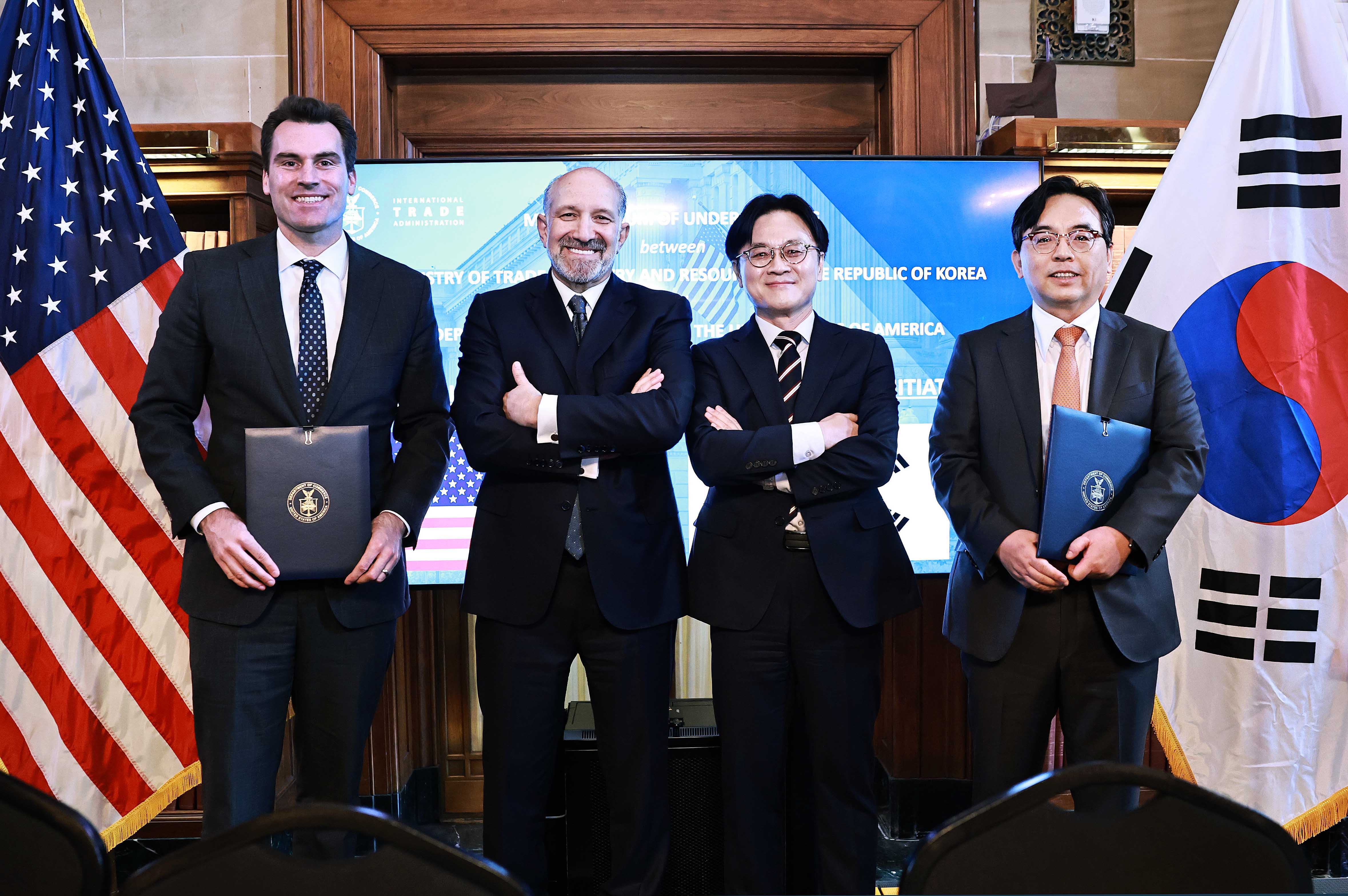
Minister JK (Jung-Kwan) Kim of the Ministry of Trade, Industry and Resources (MOTIR) attended a signing ceremony for an MOU launching the Korea–U.S. Shipbuilding Partnership Initiative (KUSPI) at the U.S. Department of Commerce in Washington, D.C., on May 8, 2026. The ceremony was held in the presence of Minister Kim and U.S. Secretary of Commerce Howard Lutnick. The MOU was signed by Deputy Minister for Trade Park Jung-sung of MOTIR and U.S. Under Secretary of Commerce for International Trade William Kimmitt. Under the MOU, the two sides agreed to establish the Korea–U.S. Shipbuilding Partnership Center to support company-to-company cooperation projects, including joint R&D, technology exchanges and direct investment. date2026-05-11
-
FTA/Economic Cooperation
Virtual Meeting with U.S. Senator Bill Hagerty
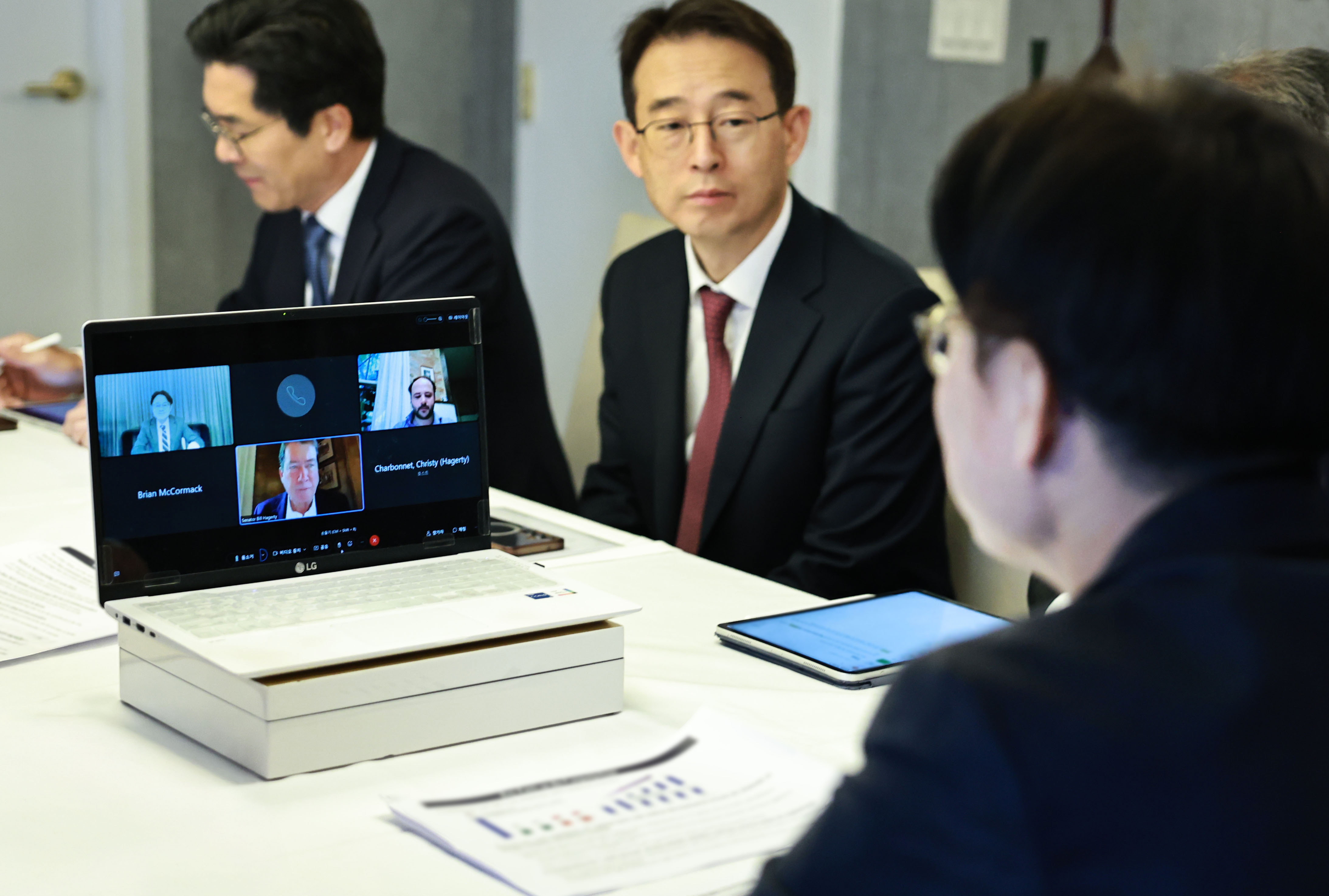
Minister JK (Jung-Kwan) Kim of the Ministry of Trade, Industry and Resources (MOTIR) held a video meeting with U.S. Senator Bill Hagerty of Tennessee from Washington, D.C., on May 8, 2026. The two sides discussed Korea–U.S. cooperation in areas of mutual interest, including nuclear power. The two sides also held talks to build mutual understanding on digital and other issues. date2026-05-11
-
FTA/Economic Cooperation
Meeting with Director of the Office of Management and Budget
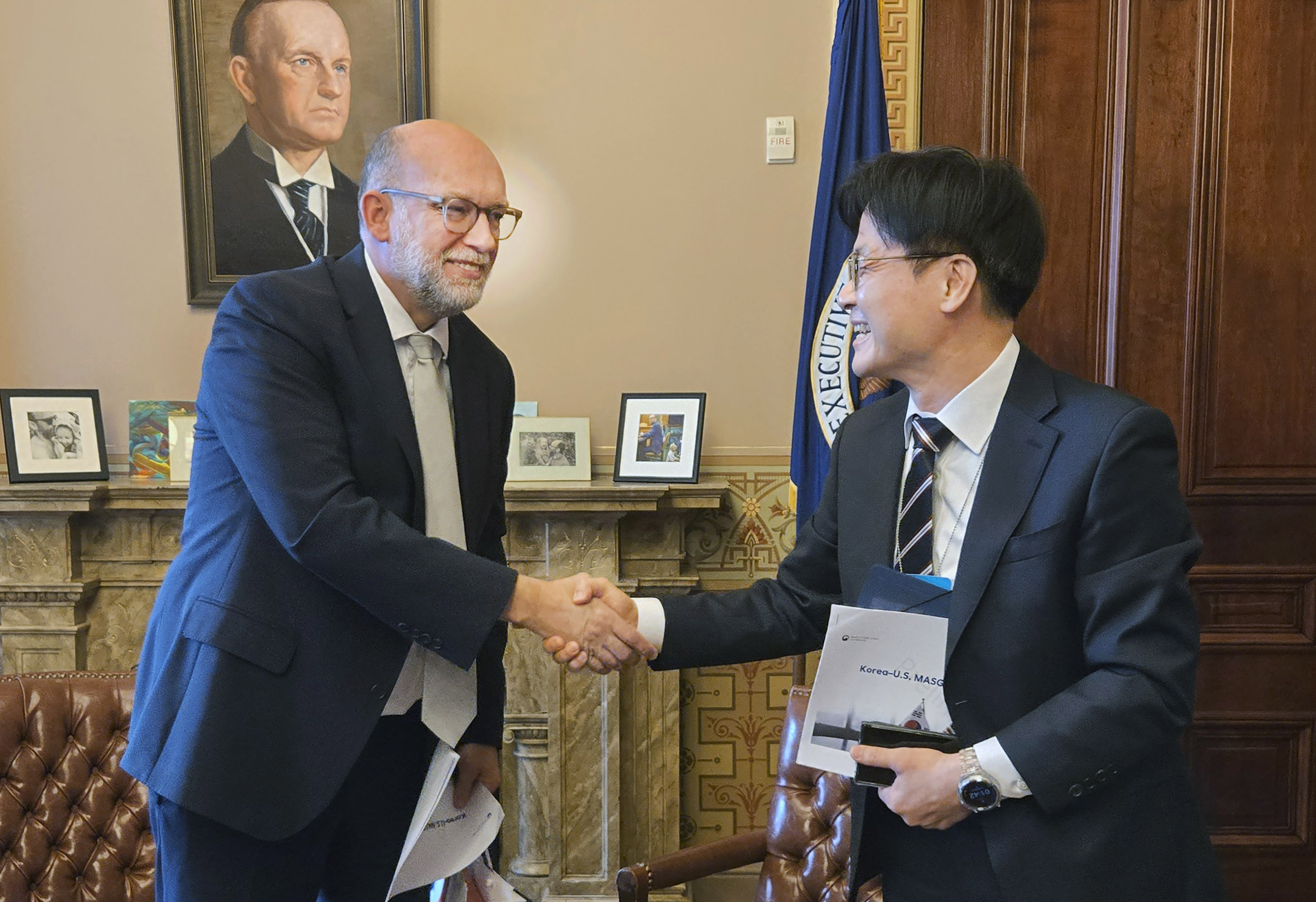
Minister JK (Jung-Kwan) Kim of the Ministry of Trade, Industry and Resources (MOTIR) met with Russell Vought, Director of the Office of Management and Budget (OMB), in Washington, D.C., on May 7, 2026. Minister Kim requested OMB’s support for Korea’s efforts to advance the MASGA project, and the two sides exchanged views on strengthening Korea–U.S. shipbuilding cooperation. date2026-05-11
-
FTA/Economic Cooperation
Meeting with U.S. Secretary of Commerce
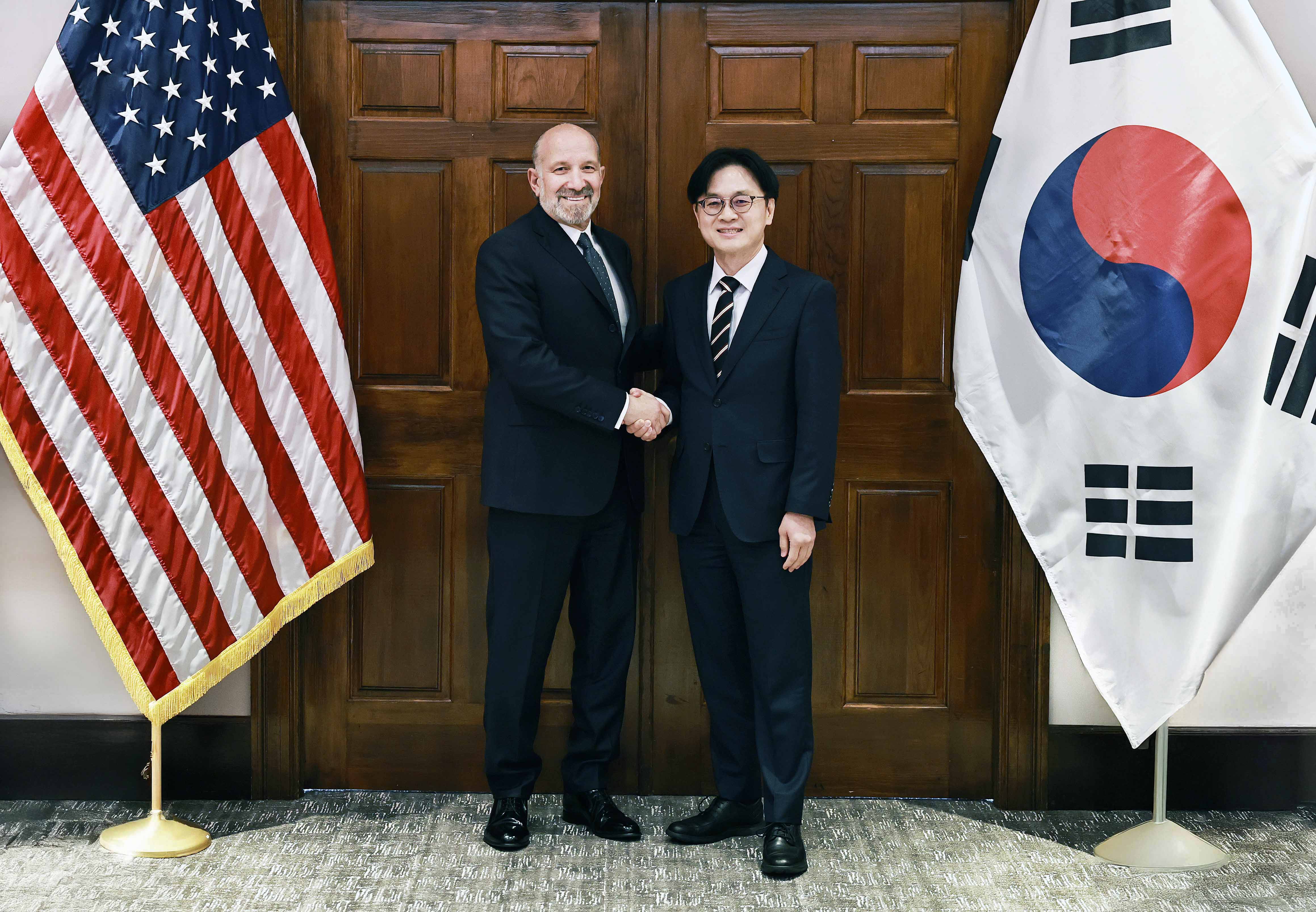
Minister JK (Jung-Kwan) Kim of the Ministry of Trade, Industry and Resources (MOTIR) met with U.S. Secretary of Commerce Howard Lutnick at the U.S. Department of Commerce in Washington, D.C., on May 8, 2026. The two sides discussed directions for investment in the United States and other key issues. Minister Kim said MOTIR will continue close communication with the U.S. side on strategic investment projects in the United States, while working to deepen Korea–U.S. cooperation in industry and energy and manage trade issues without disruption. date2026-05-11
-
FTA/Economic Cooperation
G7 Critical Minerals Ministers’ Virtual Meeting
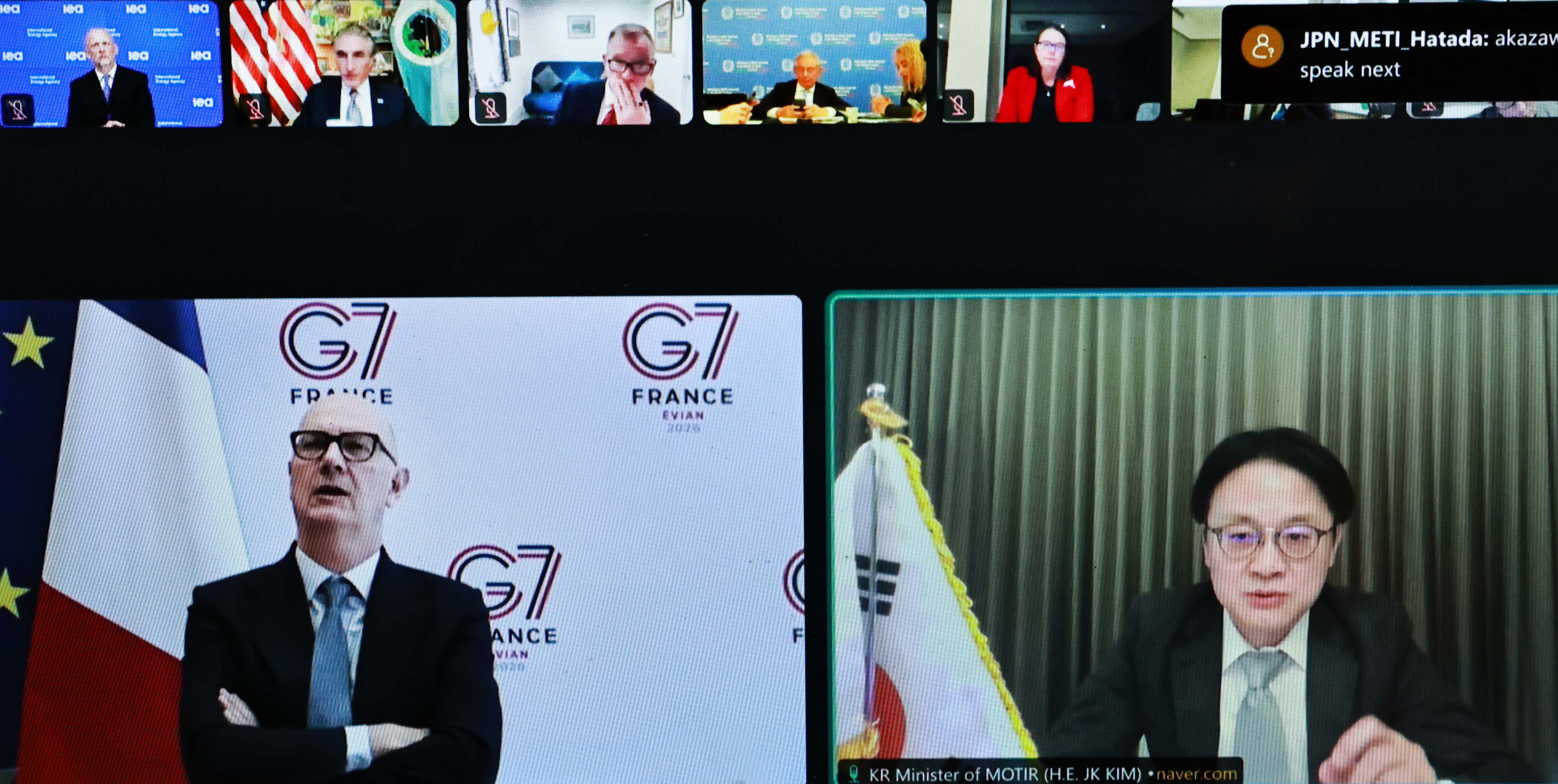
Minister JK (Jung-Kwan) Kim of the Ministry of Trade, Industry and Resources (MOTIR) participated by videoconference in the G7 Critical Minerals Ministers’ Meeting from Washington, D.C., on May 7, 2026, during his visit to the United States to discuss ways to strengthen cooperation on global critical minerals supply chains. The meeting was chaired by France, the 2026 G7 president, and attended by G7 members, including the United States, Canada, Italy, Germany, Japan and the United Kingdom. “Korea welcomes discussions on cooperation among the G7 and partner countries,” Minister Kim said. “Countries need to work together to prepare for supply chain disruptions and stabilize critical minerals supplies, using a flexible mix of policy tools suited to their circumstances.” date2026-05-11
-
FTA/Economic Cooperation
MOTIR Minister Discusses U.S. Strategic Investment and Key Issues with U.S. Administration and Congress
Minister JK (Jung-Kwan) Kim of the Ministry of Trade, Industry and Resources (MOTIR) visited Washington, D.C., from May 6 to 9, 2026, where he met with key U.S. officials and lawmakers to discuss strategic investment projects in the United States and ways to strengthen Korea–U.S. cooperation in industry and trade. Minister Kim began his visit with a meeting with U.S. Secretary of Commerce Howard Lutnick. He briefed the U.S. side on Korea’s progress in drafting implementing regulations and establishing an implementation framework for the recently passed Special Act for Korea–U.S. Strategic Investment Management. Drawing on earlier talks on shipbuilding, energy and other shared priorities, the two sides also discussed more concrete directions for strategic investment projects in the U.S. At the meeting, MOTIR and the U.S. Department of Commerce signed an MOU launching the Korea–U.S. Shipbuilding Partnership Initiative (KUSPI). The two sides agreed to establish the Korea–U.S. Shipbuilding Partnership Center to support company-to-company cooperation projects, including joint R&D and direct investment, and cooperate on workforce training and information sharing. Minister Kim also met with Russell Vought, Director of the Office of Management and Budget (OMB), which oversees the U.S. federal budget, and requested OMB’s support for Korea’s efforts to advance the MASGA project. In a separate meeting with U.S. Secretary of Energy Chris Wright, the two sides reviewed progress in Korea–U.S. energy discussions, including nuclear power, and discussed ways to expand cooperation. Minister Kim also held a video meeting with U.S. Senator Bill Hagerty of Tennessee, a leading advocate of stronger Korea–U.S. ties in Congress, to discuss cooperation in areas of mutual interest, including nuclear power. He also utilized the visit to build mutual understanding on digital and other issues. MOTIR will continue close communication with the U.S. side on strategic investment projects in the United States, while working to deepen Korea–U.S. cooperation in industry and energy and manage trade issues without disruption. date2026-05-11