-
FTA/Economic Cooperation
Korea Calls for Multilateral Discussions on WTO Reform and Extension of E-Commerce Moratorium
Kwon Hye-jin, Deputy Minister for Trade Negotiations at the Ministry of Trade, Industry and Resources (MOTIR, Minister JK Kim), attended the World Trade Organization (WTO) General Council held in Geneva, Switzerland, from May 6 to 7, 2026, as Korea’s head of delegation. Deputy Minister Kwon took part in follow-up discussions on the 14th WTO Ministerial Conference (MC14), held in Yaoundé, Cameroon, in March 2026. Korea also put forward an agenda item on collective restraint by WTO members on measures that run counter to trade liberalization. Through the item, Korea called for a coordinated multilateral response to the recent spread of trade-restrictive measures. Follow-up Discussions on MC14 Outcomes, Including WTO Reform The General Council was the first high-level multilateral meeting since MC14 and marked the start of substantive follow-up discussions on key unresolved issues that remained pending after the conference. At MC14, Korea served as ministerial coordinator for WTO reform and led efforts to forge convergence on the draft WTO reform work plan, and as the co-chair of the Investment Facilitation for Development Agreement (IFDA) alongside with Chile, Korea has led discussions on incorporating the IFDA, which was concluded in 2024 but has not yet entered into force, into the WTO legal framework. During the Council, Deputy Minister Kwon stressed the importance and urgency of restoring confidence in the multilateral trading system. She called for WTO reform discussions to advance swiftly based on the draft WTO reform work plan. Deputy Minister Kwon also expressed regret that MC14 did not extend the nearly 30-year moratorium on customs duties on electronic transmissions. She emphasized the importance of extending the moratorium to ensure stability and predictability in digital trade. On the IFDA, she proposed that members begin discussing concrete steps for its timely entry into force and implementation so that the agreement can help improve the investment environment in developing countries. Call for Restraint on Measures that Could Undermine Trade Liberalization Korea raised concerns that the recent spread of trade-restrictive measures, including import restrictions on steel and related products, could undermine trade liberalization. Deputy Minister Kwon said, “Relying on short-term tariff increases could set off a cycle of retaliation among countries.” She stressed that structural issues, including excess capacity and subsidies, should be addressed at their source, and called on WTO members to exercise joint restraint on measures that could undermine trade liberalization. Deputy Minister Kwon also held bilateral consultations with key WTO members, including the United Kingdom, Japan and Türkiye. During the consultations, Korea raised concerns over recent protectionist measures introduced by the EU and the United Kingdom, including steel safeguard tariff-rate quotas (TRQs), and exchanged views on broader trade issues. “Amid the spread of global protectionism, Korea has actively raised the TRQ challenges facing its steel industry through both multilateral and bilateral channels,” Deputy Minister Kwon said. “Korea will continue to strengthen its trade diplomacy to help restore the WTO-centered multilateral trading system and protect the rights and interests of Korean companies." date2026-05-08
-
FTA/Economic Cooperation
Meeting with Morocco’s Secretary of State to the Minister of Industry and Trade, in charge of Foreign Trade
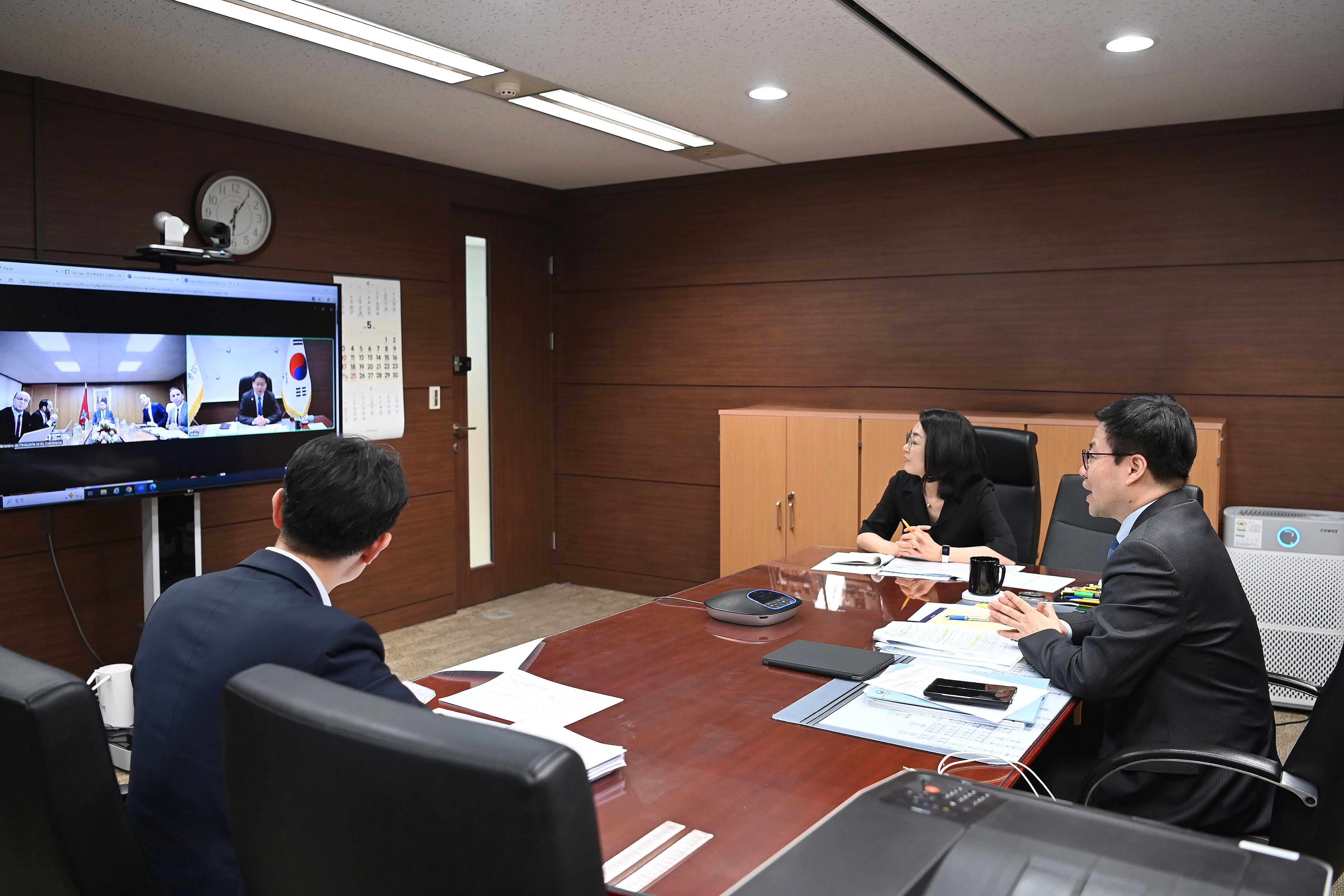
Trade Minister Yeo Han-koo of the Ministry of Trade, Industry and Resources (MOTIR, Minister JK Kim) held a virtual meeting with Omar HEJIRA, Morocco’s Secretary of State to the Minister of Industry and Trade, in charge of Foreign Trade, at the Korea Chamber of Commerce and Industry in Seoul on May 6, 2026. Trade Minister Yeo said the Korea–Morocco CEPA will help extend Korea’s trade cooperation to Africa and support Korean companies’ strategic diversification of trade and investment markets, adding that Korea will move swiftly to conclude the CEPA and accelerate trade and industrial cooperation with Morocco. date2026-05-07
-
FTA/Economic Cooperation
Meeting with Canadian Senator Hassan Yussuff
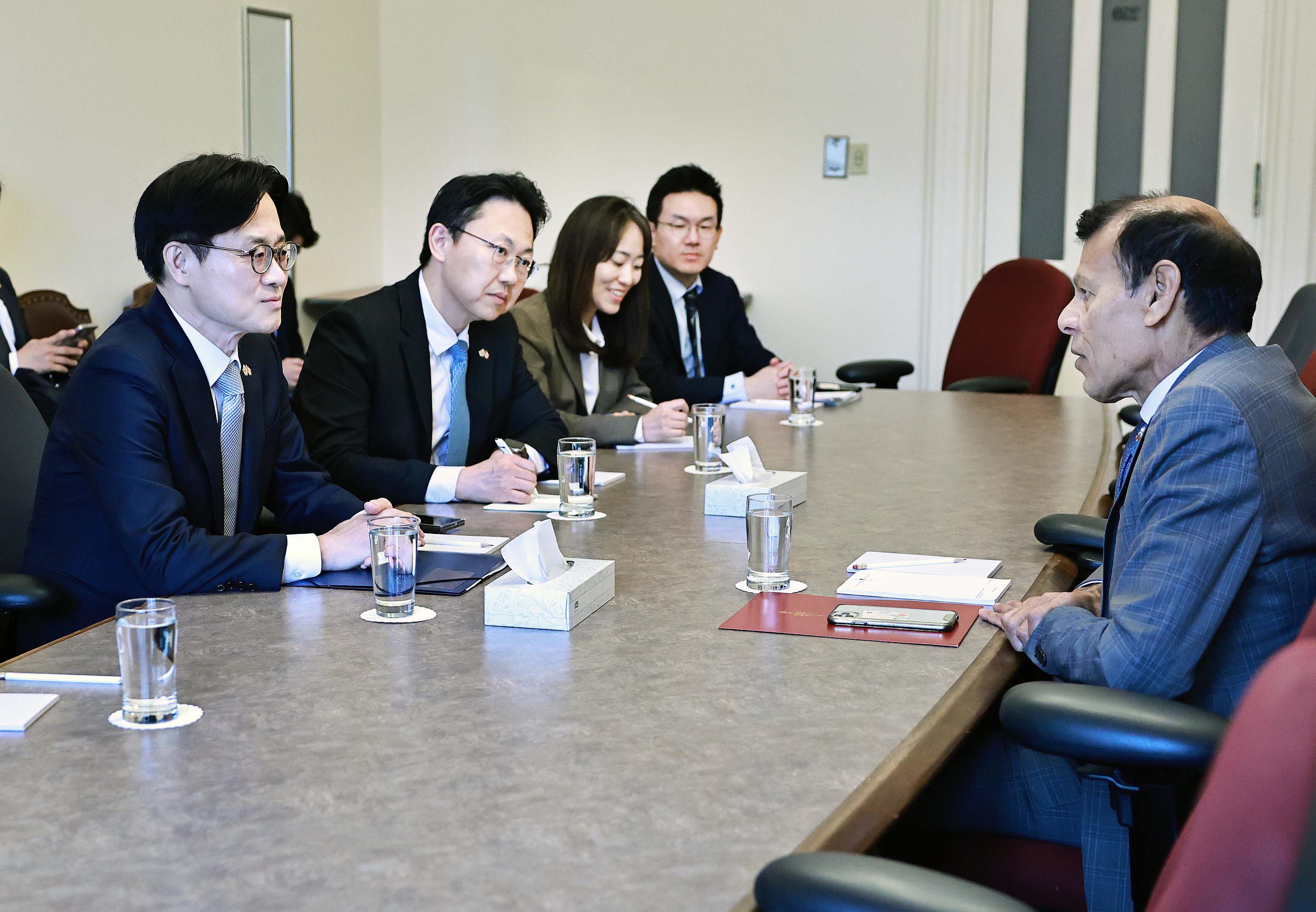
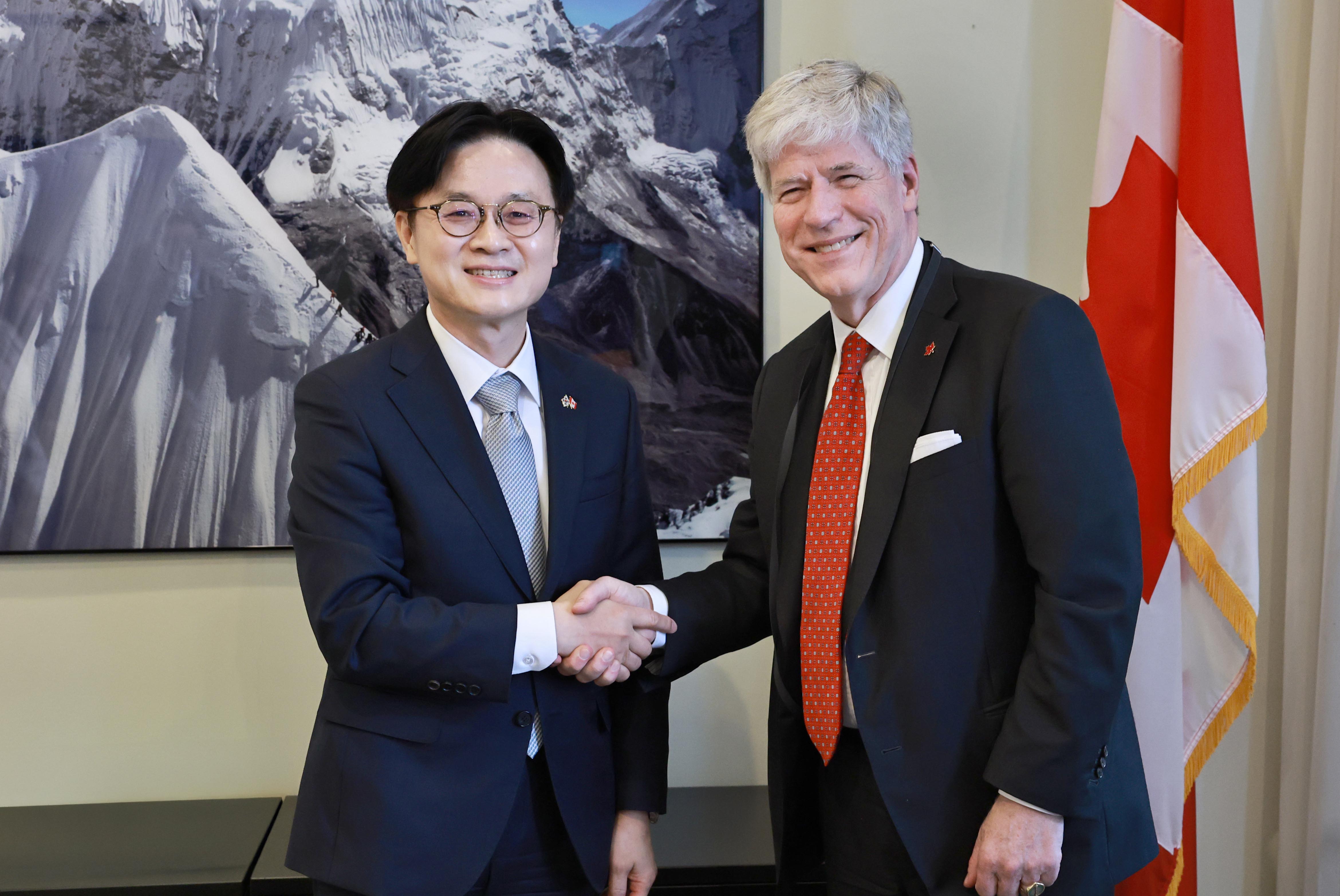
Minister JK (Jung-Kwan) Kim of the Ministry of Trade, Industry and Resources (MOTIR) met with Canadian Senator Hassan Yussuff, former Chair of the Standing Senate Committee on National Security, Defence and Veterans Affairs, in Ottawa, Canada, on May 6, 2026. The two sides discussed strategic cooperation between Korea and Canada in connection with the Canadian Patrol Submarine Project (CPSP). date2026-05-07
-
FTA/Economic Cooperation
Meeting with the President of Canada’s Automotive Parts Manufacturers’ Association
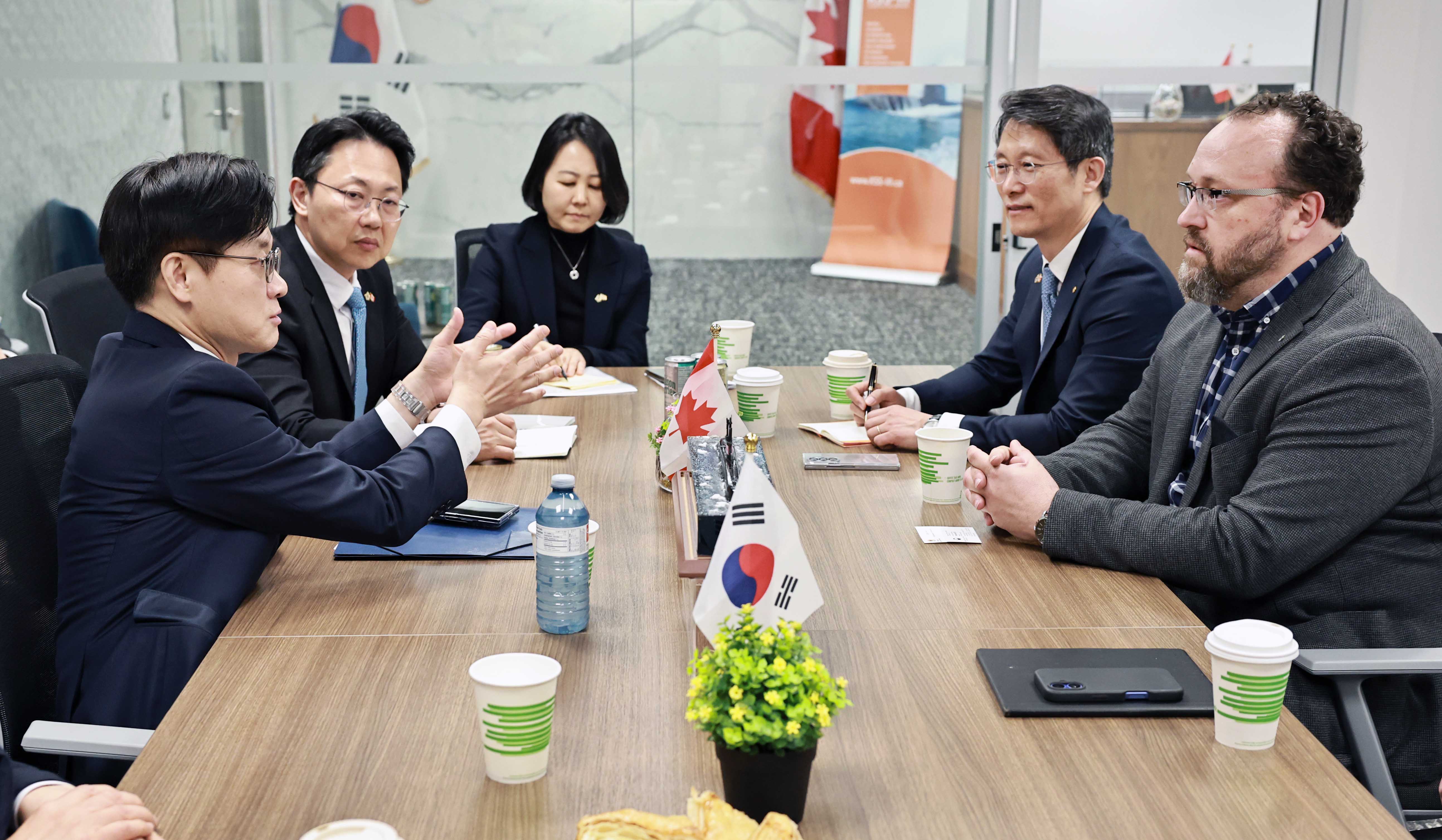
Minister JK (Jung-Kwan) Kim of the Ministry of Trade, Industry and Resources (MOTIR) met with Flavio Volpe, President of Canada’s Automotive Parts Manufacturers’ Association (APMA), in Ottawa, Canada, on May 6, 2026. The two sides discussed defense industry cooperation following APMA’s recent MOU with Korean companies. date2026-05-07
-
FTA/Economic Cooperation
Signing Ceremony for Korea–Canada MOUs on Shipbuilding and R&D
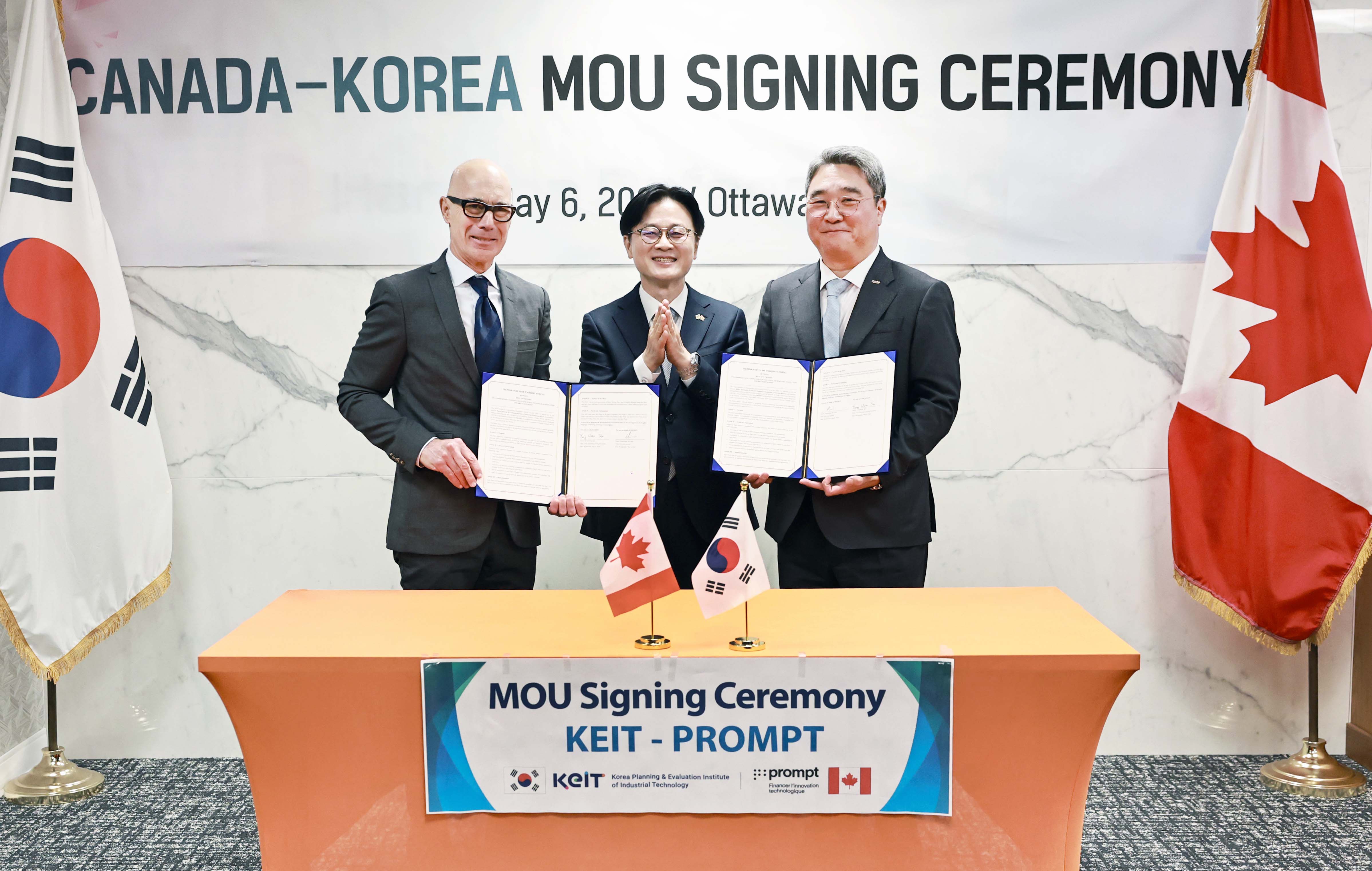
Minister JK (Jung-Kwan) Kim of the Ministry of Trade, Industry and Resources (MOTIR) attended a signing ceremony for Korea–Canada MOUs on international joint research on icebreakers and industrial technology cooperation in Ottawa, Canada, on May 6, 2026. The MOUs will lay the groundwork for practical cooperation and tangible outcomes in shipbuilding and R&D between Korea and Canada. date2026-05-07
-
FTA/Economic Cooperation
Meeting with Canada’s Minister of Energy and Natural Resources
Minister JK (Jung-Kwan) Kim of the Ministry of Trade, Industry and Resources (MOTIR) met with Tim Hodgson, Canada’s Minister of Energy and Natural Resources, in Ottawa, Canada, on May 6, 2026. The two ministers shared the view that energy and resource supply chains need to be diversified amid recent global supply chain instability. They also agreed to deepen bilateral cooperation in critical minerals through channels such as the Korea–Canada Critical Minerals Working Group (WG). date2026-05-07
-
FTA/Economic Cooperation
Meeting with Canada’s Minister of Industry
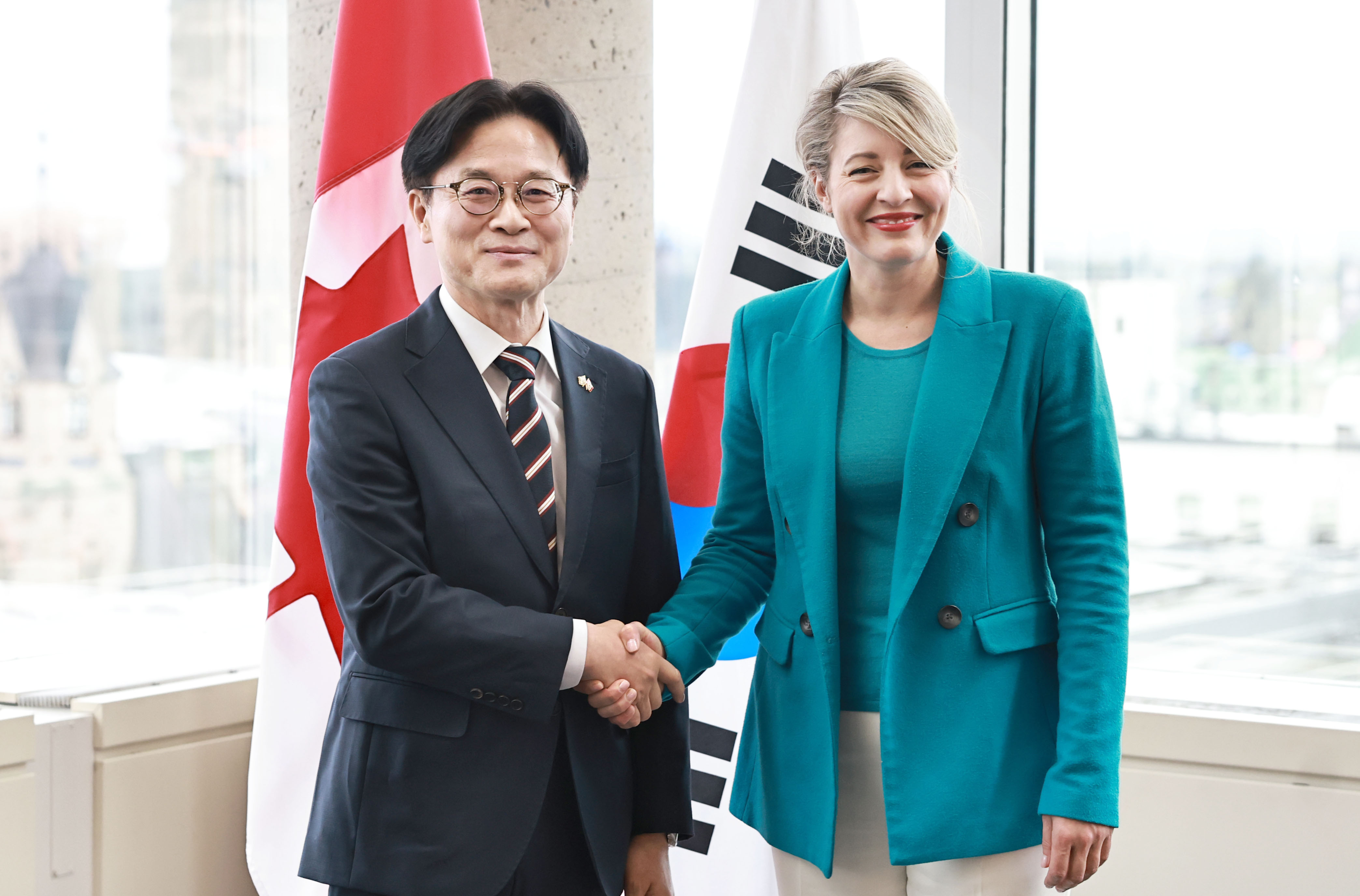
Minister JK (Jung-Kwan) Kim of the Ministry of Trade, Industry and Resources (MOTIR) met with Mélanie Joly, Canada’s Minister of Industry, in Ottawa, Canada, on May 5, 2026, during his visit to Canada. The two ministers shared progress in bilateral industrial cooperation related to Korea’s bid for the Canadian Patrol Submarine Project (CPSP), including cooperation MOUs signed between Korean and Canadian companies. They also discussed expanding industrial cooperation in hydrogen, as well as cooperation in multilateral settings. Minister Kim said the CPSP would be more than a defense procurement project and could mark an important turning point in building a long-term Korea–Canada partnership. date2026-05-07
-
FTA/Economic Cooperation
Korea and Canada Expand Industrial and Resource Cooperation Through a Partnership Built on Trust
Minister JK (Jung-Kwan) Kim of the Ministry of Trade, Industry and Resources (MOTIR) visited Ottawa, Canada, from May 5 to 6, 2026. During the visit, he met with senior Canadian officials to discuss ways to expand bilateral cooperation in industry and resources. He also focused his efforts on supporting Korea’s bid for the Canadian Patrol Submarine Project (CPSP). On May 5, 2026, Minister Kim met with Mélanie Joly, Minister of Industry and Minister responsible for Canada Economic Development for Quebec Regions. The two ministers reviewed recent progress in industrial cooperation related to the submarine bid, including cooperation MOUs signed between Korean and Canadian companies. They also discussed expanding industrial cooperation in hydrogen and other areas, as well as cooperation in multilateral settings. Minister Kim requested the Canadian government’s support for Korean companies investing in Canada. On May 6, 2026, Minister Kim met with Tim Hodgson, Minister of Energy and Natural Resources. The two ministers shared the view that energy and resource supply chains need to be diversified amid recent global supply chain instability. They also agreed to deepen cooperation in critical minerals through channels such as the Korea–Canada Critical Minerals Working Group (WG). Minister Kim also met on May 6 with Senator Hassan Yussuff, former Chair of the Standing Senate Committee on National Security, Defence and Veterans Affairs, to discuss strategic cooperation between Korea and Canada on the submarine project. He also met with Flavio Volpe, President of the Automotive Parts Manufacturers’ Association (APMA), and exchanged views on defense industry cooperation following APMA’s recent MOU with Korean companies. Minister Kim thanked APMA for its statement of support for Korea’s bid for the submarine project. Separately, two MOUs were signed with Minister Kim in attendance: one on Korea–Canada international joint research on icebreakers and the other on industrial technology cooperation. The MOUs are expected to support practical cooperation in shipbuilding and R&D. “Winning the Canadian Patrol Submarine Project would be more than a defense procurement contract. It would mark an important turning point in building a long-term partnership between Korea and Canada,” Minister Kim said. “We will bring together the full capabilities of government and industry and make every effort to support the bid.” date2026-05-07
-
FTA/Economic Cooperation
Minister JK Kim Attends G7 Critical Minerals Ministers’ Virtual Meeting
Minister JK (Jung-Kwan) Kim of the Ministry of Trade, Industry and Resources (MOTIR) attended the G7 Critical Minerals Ministers’ Virtual Meeting on May 7, 2026 (KST), during his visits to Canada and the United States. Chaired by France, this year’s G7 president, the meeting discussed cooperation to strengthen the stability and resilience of global critical minerals supply chains. The meeting was attended by ministers from G7 members, the European Union (EU), Korea, Australia and other key partner countries. Representatives from international organizations, including the International Energy Agency (IEA), the Organisation for Economic Co-operation and Development (OECD) and the World Bank (WB), also took part. Participants discussed key agenda items, including diversification of critical minerals value chains, strategic stockpiling and traceability, and cooperation among participating countries in coordination with international organizations. They shared the view that, in response to changes in the global industrial environment and rising demand for critical minerals, countries need to strengthen cooperation across the full supply chain, from production and processing to recycling, while improving market stability and predictability. At the meeting, Minister Kim said Korea, as a major consumer and processor of critical minerals, welcomes discussions on cooperation among the G7 and partner countries. He emphasized the need to continue working together to prepare for supply chain disruptions and stabilize critical minerals supplies. He also proposed a flexible mix of policy tools suited to each country’s circumstances, and stressed the need to build practical cooperation platforms in coordination with international organizations such as the IEA and OECD. Following the meeting, MOTIR will coordinate with the G7, key partner countries and international organizations to strengthen the stability and resilience of global critical minerals supply chains. The ministry will also support Korean companies’ participation in overseas projects, technology cooperation and information sharing, helping Korea secure stable critical minerals supplies. date2026-05-07
-
FTA/Economic Cooperation
Korea to Expand Trade and Industrial Cooperation with Morocco, an Emerging North African Economy
Trade Minister Yeo Han-koo of the Ministry of Trade, Industry and Resources (MOTIR, Minister JK Kim) held a virtual meeting on May 6, 2026, with Omar Hejira, Morocco’s Secretary of State to the Minister of Industry and Trade, in charge of Foreign Trade. The two sides discussed the path toward the Korea–Morocco Comprehensive Economic Partnership Agreement (CEPA) and key industrial cooperation issues. The meeting was arranged to expand trade and investment with Morocco and support local projects by Korean companies in areas including electric trains and batteries. Trade Minister Yeo noted Morocco’s strengths, including its strategic location as a bridge linking Europe, the Middle East and Africa, as well as its extensive FTA network with more than 50 countries, including the EU and the United States. He proposed combining Morocco’s growth potential with Korea’s advanced industrial capabilities to expand bilateral trade and industrial cooperation. The two sides noted that the Korea–Morocco CEPA would serve as a key legal and institutional framework for boosting bilateral trade and investment and mark an important turning point for economic cooperation. They agreed to consult closely toward the early launch of negotiations. Trade Minister Yeo also noted that Korean companies, including Hyundai Rotem in electric trains and LG Energy Solution in lithium refining, are actively expanding into Morocco. He emphasized that the CEPA would be important as an institutional foundation for expanding business cooperation. Secretary of State Hejira said Morocco regards Korea as a key strategic partner and hopes to work with Korean companies across a wide range of fields. “The Korea–Morocco CEPA will help extend Korea’s trade cooperation to Africa and support Korean companies’ strategic diversification of trade and investment markets,” Trade Minister Yeo said. “We will move swiftly to conclude the CEPA and accelerate trade and industrial cooperation with Morocco, an emerging hub in North Africa.” date2026-05-07