-
FTA/Economic Cooperation
MOTIR to Strengthen Economic and Industrial Partnerships with the United States and Canada
Minister JK (Jung-Kwan) Kim of the Ministry of Trade, Industry and Resources (MOTIR) will visit Ottawa, Canada, and Washington, D.C., from May 5 to 8, 2026, to hold a series of high-level meetings and outreach activities aimed at strengthening Korea’s economic and industrial partnerships with the United States and Canada. Minister Kim will first visit Ottawa from May 5 to 6, 2026, where he will meet with Mélanie Joly, Canada’s Minister of Industry, and Tim Hodgson, Canada’s Minister of Energy and Natural Resources, to discuss expanding bilateral cooperation in industry and resources. He will also seek the Canadian government’s support for Korea’s participation in the Canadian Patrol Submarine Project (CPSP). Minister Kim will then travel to Washington, D.C., on May 6, 2026, for preliminary Korea-U.S. consultations on strategic investment with senior U.S. government officials, including U.S. Secretary of Commerce Howard Lutnick. He will also engage with the U.S. Congress and other stakeholders to discuss Korean investment in the United States and current trade issues. “Since the National Assembly passed the Special Act for Korea–U.S. Strategic Investment Management in March 2026, MOTIR has been taking follow-up steps as planned, including preparing the enforcement decree and the launch of the Korea–U.S. Strategic Investment Corporation,” Minister Kim said. “During this visit, we will build on the discussions held so far and make preliminary talks on strategic investment projects more concrete. We will conduct the talks in a way that serves the national interest — helping Korean companies expand in the U.S. market while ensuring that the benefits flow back to Korea’s industries.” “The CPSP is an important opportunity for Korea and Canada to build a comprehensive, long-term partnership across security, economic, and industrial cooperation,” Minister Kim added. “The government will spare no effort to support Korean companies in securing the project.” date2026-05-05
-
FTA/Economic Cooperation
Korea and Pakistan to Hold First Official Round of CEPA Negotiations
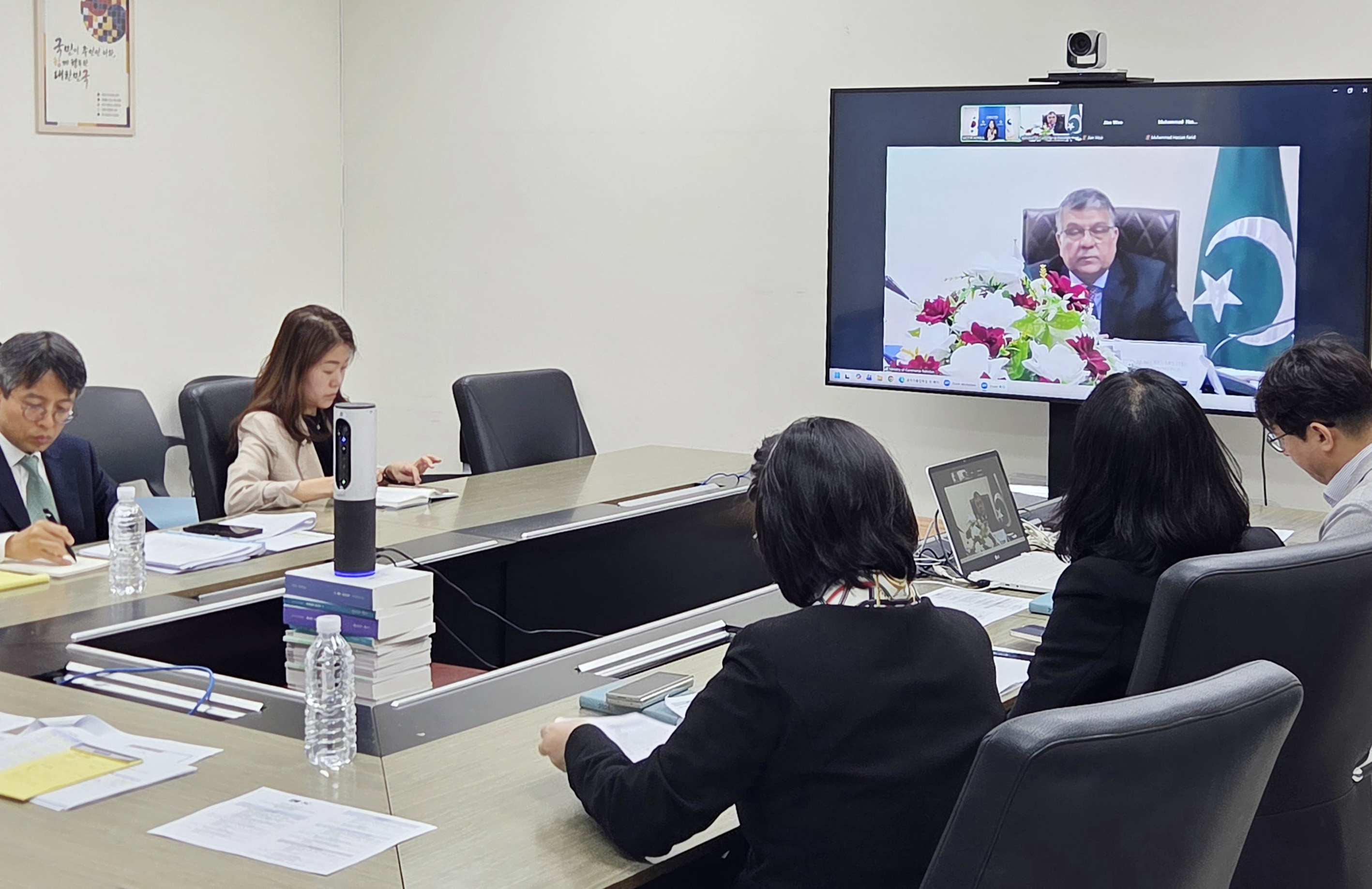
The Ministry of Trade, Industry and Resources (MOTIR, Minister JK Kim) will hold the first official round of negotiations for the Korea–Pakistan Comprehensive Economic Partnership Agreement (CEPA) by videoconference from May 4 to 7, 2026. Approximately 50 negotiators from both countries will take part, with the Korean delegation led by Kim Jang-hee, acting Director General for Trade Agreement Negotiations, and the Pakistani delegation by Nasir Hamid, Additional Secretary for Trade Diplomacy at Pakistan’s Ministry of Commerce. Pakistan is a promising market, with a population of 240 million and a vast pool of young talent. The country is also working to expand its manufacturing base and develop infrastructure. Bilateral trade, however, remains limited relative to this potential, making the CEPA an important framework for expanding trade and investment between the two countries. Since the launch of Korea–Pakistan CEPA negotiations in January 2025, the two sides have agreed on negotiating procedures and prepared a draft text for the agreement. They also held preliminary negotiations via videoconference from April 20 to 23, 2026, covering areas such as goods, rules of origin, and the environment. At an April 30, 2026, meeting between Trade Minister Yeo Han-koo of MOTIR and Pakistan’s Federal Minister for Commerce Jam Kamal Khan, the two sides agreed on the need to accelerate the negotiations. Building on that understanding, the Korean government plans to use the first official round to confirm both sides’ interests and positions in four areas: economic cooperation, investment, intellectual property rights, and trade remedies. The round will also lay the groundwork for future negotiations. “This first official round marks the formal start of Korea–Pakistan CEPA negotiations,” acting Director General Kim said. “We will approach the negotiations constructively so that the CEPA with Pakistan can serve as a practical platform for cooperation that supports expanded trade and investment between the two countries and helps Korean companies enter Southwest Asian markets.” date2026-05-04
-
FTA/Economic Cooperation
First Official Round of Korea–Pakistan CEPA Negotiations
Kim Jang-hee, acting Director General for Trade Agreement Negotiations at the Ministry of Trade, Industry and Resources (MOTIR, Minister JK Kim), attended the first official round of negotiations for the Korea–Pakistan Comprehensive Economic Partnership Agreement (CEPA) via videoconference on May 4, 2026. The meeting was joined by government negotiators from both countries, including Nasir Hamid, Additional Secretary for Trade Diplomacy at Pakistan’s Ministry of Commerce. The two sides held negotiations in seven areas, including goods, rules of origin, investment and intellectual property rights. “This first official round marks the formal start of Korea–Pakistan CEPA negotiations,” acting Director General Kim said. “We will engage constructively so that the CEPA can support expanded trade and investment and help Korean companies enter Southwest Asian markets.” date2026-05-04
-
FTA/Economic Cooperation
Virtual Meeting with Pakistan’s Federal Minister for Commerce
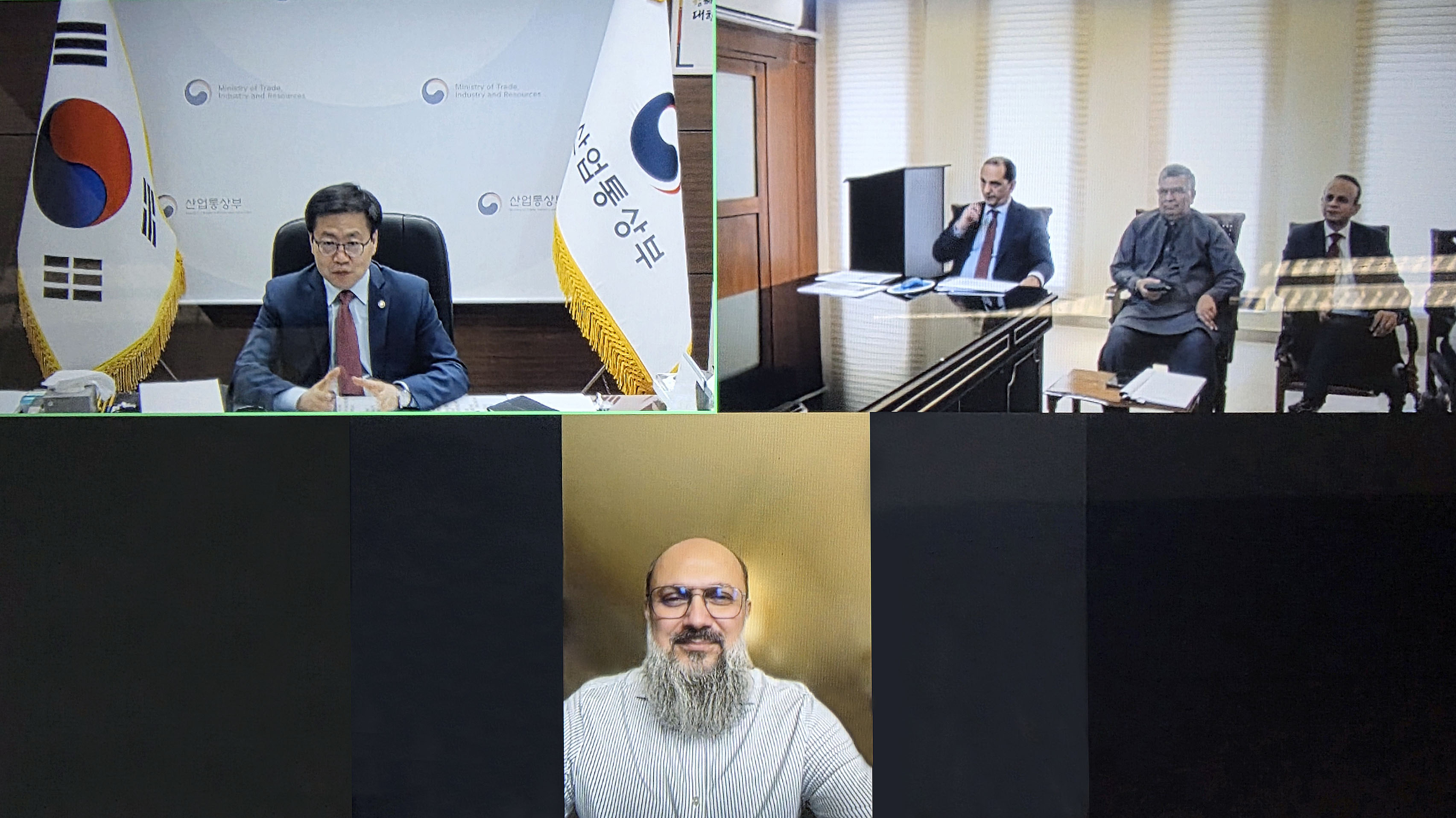
Trade Minister Yeo Han-koo of the Ministry of Trade, Industry and Resources (MOTIR, Minister JK Kim) held a virtual meeting with Pakistan’s Federal Minister for Commerce Jam Kamal Khan at the Korea Chamber of Commerce and Industry in Seoul on April 30, 2026. The two sides exchanged views on ways to advance Korea–Pakistan Comprehensive Economic Partnership Agreement (CEPA) negotiations and expand bilateral trade and investment cooperation. “This first official round marks the formal start of Korea–Pakistan CEPA negotiations,” acting Director General Kim Jang-hee said. “We will approach the negotiations constructively so that the CEPA can support expanded trade and investment and help Korean companies enter Southwest Asian markets.” date2026-05-04
-
FTA/Economic Cooperation
Trade Minister Yeo Meets Mexican Ambassador to Korea
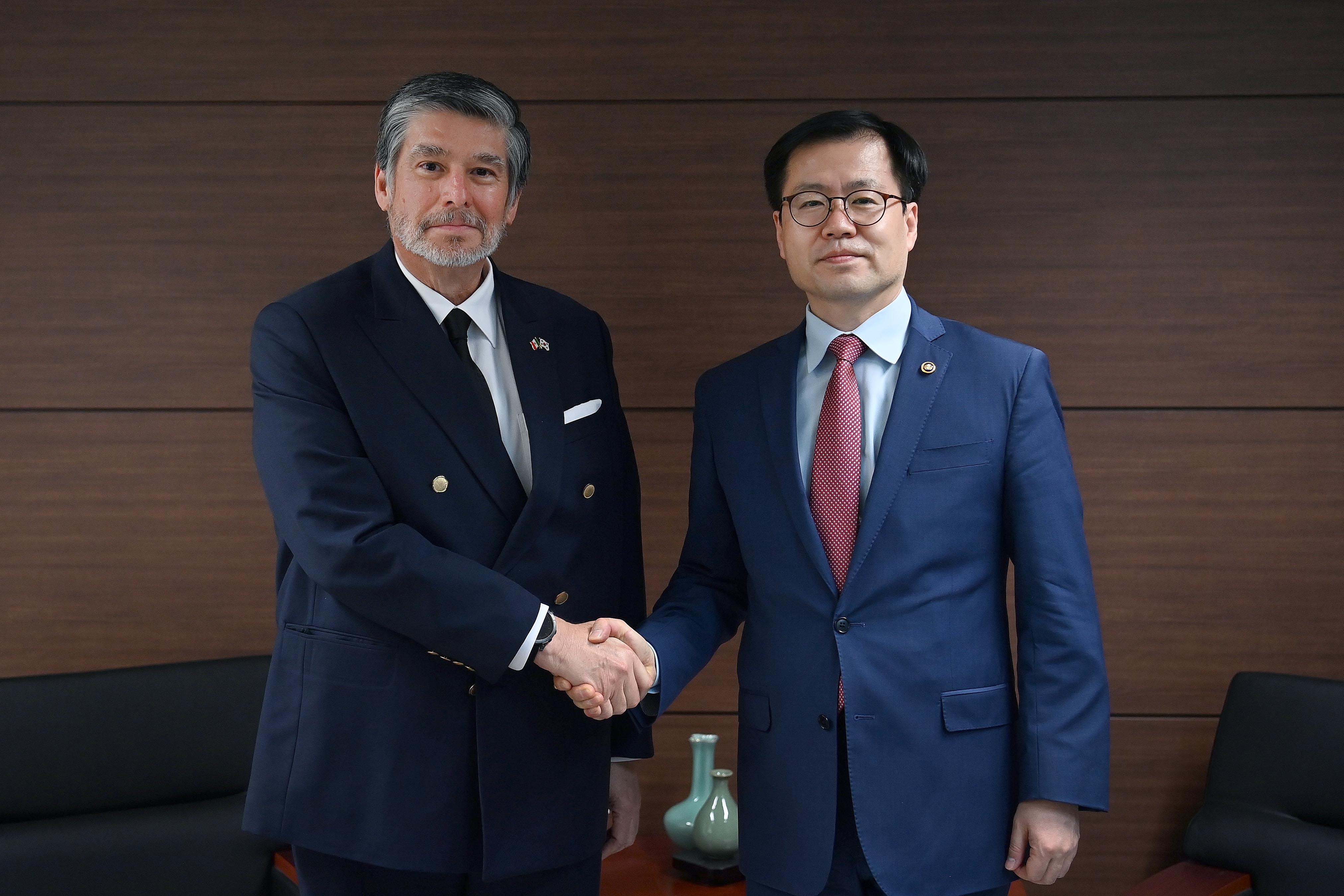
Trade Minister Yeo Han-koo of the Ministry of Trade, Industry and Resources (MOTIR, Minister JK Kim) met with Mexican Ambassador to Korea Carlos Peñafiel Soto at the Korea Chamber of Commerce and Industry in Jung-gu, Seoul, on April 30, 2026. The two sides discussed ways to strengthen economic and trade cooperation between Korea and Mexico. “Mexico is a key gateway for Korean companies to enter Latin American markets and join USMCA supply chains,” Trade Minister Yeo said. “MOTIR will work closely with Mexico to deliver practical outcomes that help Korean companies expand exports and maintain stable local operations.” date2026-05-04
-
FTA/Economic Cooperation
Korea and Mexico Discuss Accelerating Economic and Trade Cooperation
Trade Minister Yeo Han-koo of the Ministry of Trade, Industry and Resources (MOTIR, Minister JK Kim) met with Carlos Peñafiel Soto, Ambassador of Mexico to Korea, on April 30, 2026, to discuss economic and trade cooperation between Korea and Mexico. The meeting was held amid growing uncertainty in the global trade environment as protectionist measures spread. Discussions focused on expanding economic cooperation with Mexico, Korea’s largest trading partner in Latin America, and addressing business challenges facing Korean companies. Both sides agreed that a Korea–Mexico FTA would help expand bilateral trade and investment. They also agreed to continue high-level consultations to resume the negotiations, which have been suspended since 2022, as soon as possible. Trade Minister Yeo raised concerns from Korean industry over key trade issues, including Mexico’s tariff increases, which have been in effect since January 2026, and the July 2026 review of the United States–Mexico–Canada Agreement (USMCA). He requested Mexico’s close attention so that Korean companies operating in the country can continue to do business in a stable environment. “Mexico is a key gateway for Korean companies to enter Latin American markets and join USMCA supply chains,” Trade Minister Yeo said. “We will continue working closely with Mexico to deliver practical outcomes that help Korean companies expand exports and maintain stable local operations.” date2026-04-30
-
FTA/Economic Cooperation
Meeting with Qatar’s Minister of State for Foreign Trade Affairs
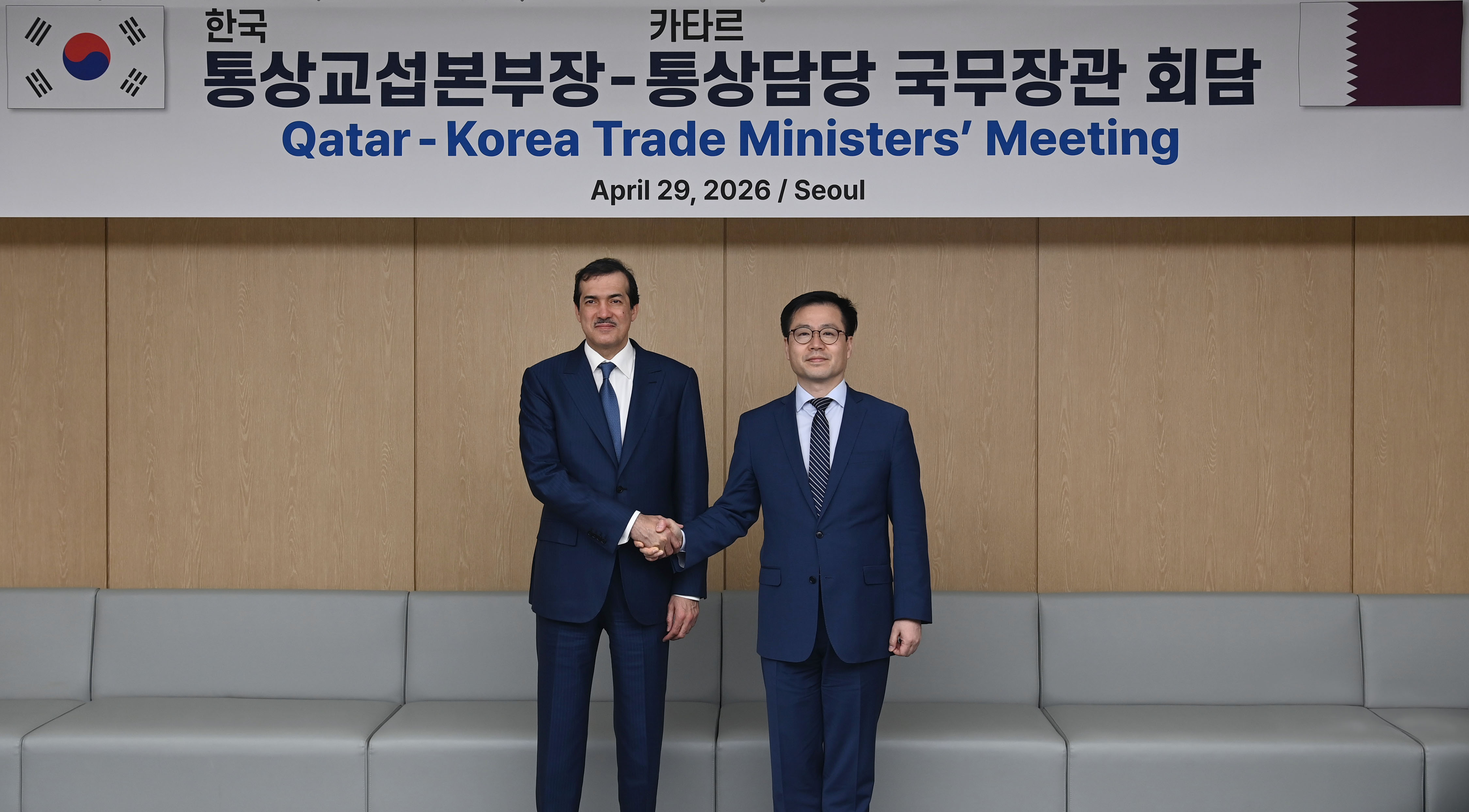
Trade Minister Yeo Han-koo of the Ministry of Trade, Industry and Resources (MOTIR, Minister JK Kim) met with H.E. Dr. Ahmed bin Mohammed Al-Sayed, Qatar’s Minister of State for Foreign Trade Affairs, at the Korea Chamber of Commerce and Industry in Seoul on April 29, 2026. The two sides discussed ways to expand Korea–Qatar investment cooperation in advanced industries, including semiconductors and biotechnology. “This meeting is an important step toward translating Korea and Qatar’s partnership into concrete investment cooperation in advanced industries,” Trade Minister Yeo said. He added that Korea will continue to strengthen energy security while expanding economic cooperation with Qatar into future industries, including manufacturing AI and biotechnology. date2026-04-30
-
FTA/Economic Cooperation
Meeting with Australian Foreign Minister
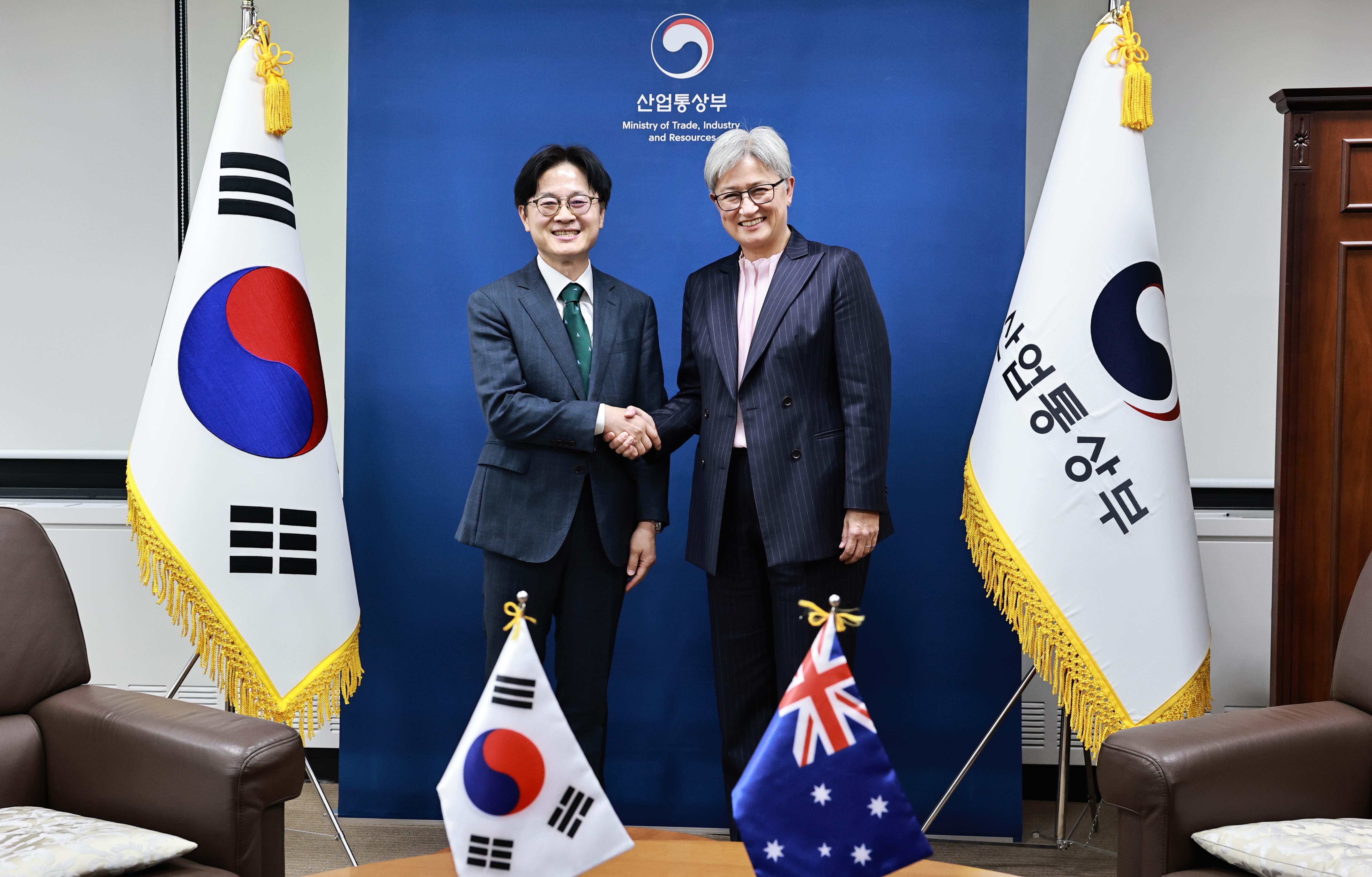
Minister JK (Jung-Kwan) Kim of the Ministry of Trade, Industry and Resources (MOTIR) met with Penny Wong, Australia’s Minister for Foreign Affairs, in the Government Complex Seoul on April 30, 2026. The two ministers discussed recent developments in the Middle East and ways to cooperate on energy supply chains and critical minerals supply chains. Minister Kim noted that Australia’s condensate and other crude oil supplies are essential to maintaining Korea’s petrochemical operations amid Middle East-related supply uncertainty. He also asked for Australia’s cooperation to ensure uninterrupted LNG exports to Korea while maintaining stable domestic natural gas supplies in Australia. date2026-04-30
-
FTA/Economic Cooperation
Korea and Australia Strengthen Energy and Resource Security Cooperation
Minister JK (Jung-Kwan) Kim of the Ministry of Trade, Industry and Resources (MOTIR) met with Penny Wong, Australia’s Minister for Foreign Affairs, in Seoul on April 30, 2026, during her visit to Korea. The two ministers discussed energy and resource security cooperation in response to global supply chain risks heightened by the conflict in the Middle East. The two ministers reaffirmed the close, complementary energy and resources partnership between Korea and Australia. Australia is Korea’s largest LNG supplier, accounting for 31.4 percent of Korea’s LNG imports in 2025, and a major supplier of condensate, which is essential for producing naphtha, a basic feedstock for Korea’s petrochemical industry. Korea, in turn, is Australia’s largest supplier of petroleum products, with a 29.1 percent market share. These stable two-way flows have underpinned both countries’ complementary economic relationship. On this strong foundation of trust, Korea and Australia issued the Joint Statement on Energy Resource Security, prepared with the participation of Korea’s five relevant ministries, including MOTIR. The statement carries particular significance as it publicly affirms the two countries’ commitment to strengthening supply chain resilience at a time of heightened uncertainty in global energy markets following the outbreak of the conflict in the Middle East. Minister Kim noted that Australian condensate and crude oil are essential to maintaining Korea’s petrochemical operations amid Middle East-related supply uncertainty. He also described Australia as “a highly reliable partner.” Minister Kim asked the Australian side to help ensure that LNG exports to Korea continue without disruption while Australia maintains stable domestic natural gas supplies. Minister Kim also reaffirmed the importance of cooperation with Australia on critical minerals essential to future advanced industries, in the context of continued supply chain uncertainty. Australia is rich in resources and is a major investment destination for Korean companies. The two sides will continue discussions on Australia’s planned Critical Minerals Strategic Reserve so that it can support a stable production base for supplier countries while serving as a reliable supply source for consumer countries. MOTIR will use high-level channels such as the Korea-Australia Joint Committee on Energy and Mineral Resources (JCEM) to help translate the joint statement into tangible business outcomes. Through these channels, MOTIR will work to implement key areas of cooperation covering crude oil, LNG, condensate and critical minerals. date2026-04-30
-
FTA/Economic Cooperation
Korea and Qatar Strengthen Investment Cooperation in Manufacturing AI, Robotics, Biotech, and Semiconductors
Trade Minister Yeo Han-koo of the Ministry of Trade, Industry and Resources (MOTIR, Minister JK Kim) met with H.E. Dr. Ahmed bin Mohammed Al-Sayed, Qatar’s Minister of State for Foreign Trade Affairs, in Seoul on April 29, 2026, to discuss expanding investment cooperation in advanced industries, including semiconductors and biotechnology. The meeting followed up on discussions held during the visit to Qatar by Korea’s special presidential envoy for strategic economic cooperation on April 13, 2026, and was arranged to help turn the two countries’ cooperation agenda into concrete outcomes. Trade Minister Yeo recognized Qatar’s resilience in maintaining stability amid heightened tensions in the Middle East. He also reaffirmed the strong foundation of bilateral cooperation built through Korea’s imports of Qatari natural gas and Korean companies’ participation in major energy infrastructure projects in Qatar. The two sides agreed to expand strategic investment cooperation in advanced industries by combining Korea’s strengths in advanced manufacturing with Qatar’s capital and industrial diversification policy. The two sides paid particular attention to opportunities in future industries, including AI transformation (AX) in manufacturing and robotics. Trade Minister Yeo introduced the M.AX Alliance, launched to advance manufacturing innovation, as well as Korea’s leading manufacturing AI companies. He expressed hope that investment cooperation would expand in AI solutions that help address challenges at manufacturing sites, as well as in robotics projects that can be linked with infrastructure development. The meeting also covered investment cooperation in biotechnology and semiconductors. Trade Minister Yeo noted that Korean companies are expanding into Qatar in health screening, including genetic analysis, as well as pharmaceuticals, and expressed hope that Qatar would further expand investment cooperation with promising Korean biotech companies. In semiconductors, he highlighted the potential of Korea’s AI semiconductor fabless companies with low-power, high-performance technologies. The two sides agreed to keep sharing information, including on companies with potential interest, and continue consultations to ensure smooth progress in investment cooperation on these prospective projects. “This meeting reaffirmed the trust built through the recent special envoy’s visit and marks an important step toward translating Korea and Qatar’s partnership into concrete investment cooperation in advanced industries,” Trade Minister Yeo said. “Korea will continue to strengthen energy security while expanding economic cooperation with Qatar into future industries, including manufacturing AI and biotechnology.” date2026-04-29