-
FTA/Economic Cooperation
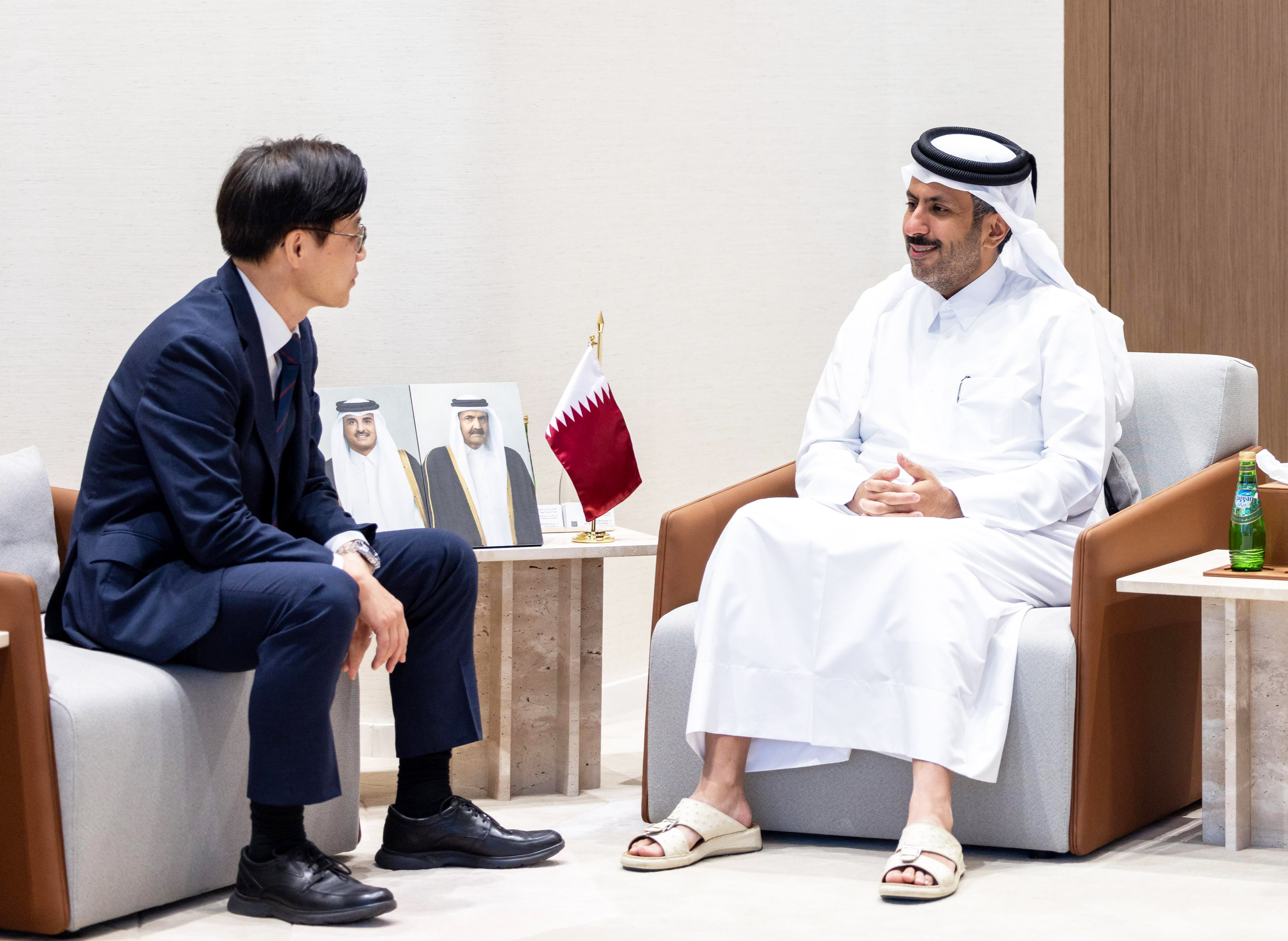
Minister Kim Meets Qatar Minister of Commerce and Industry
Minister JK (Jung-Kwan) Kim of the Ministry of Trade, Industry and Resources (MOTIR) visited Qatar on June 15, 2026, following up on the April visit to the Middle East by the Presidential Special Envoy for Strategic Economic Cooperation. Minister Kim met with H.E. Sheikh Faisal bin Thani bin Faisal Al Thani, Minister of Commerce and Industry. The two sides agreed to broaden bilateral cooperation beyond energy into shipbuilding, advanced industries, and other areas. Minister Kim said the two countries will build on stable LNG supplies to strengthen energy security and broaden cooperation in future growth areas, including advanced industries and investment cooperation. date2026-06-16
-
FTA/Economic Cooperation
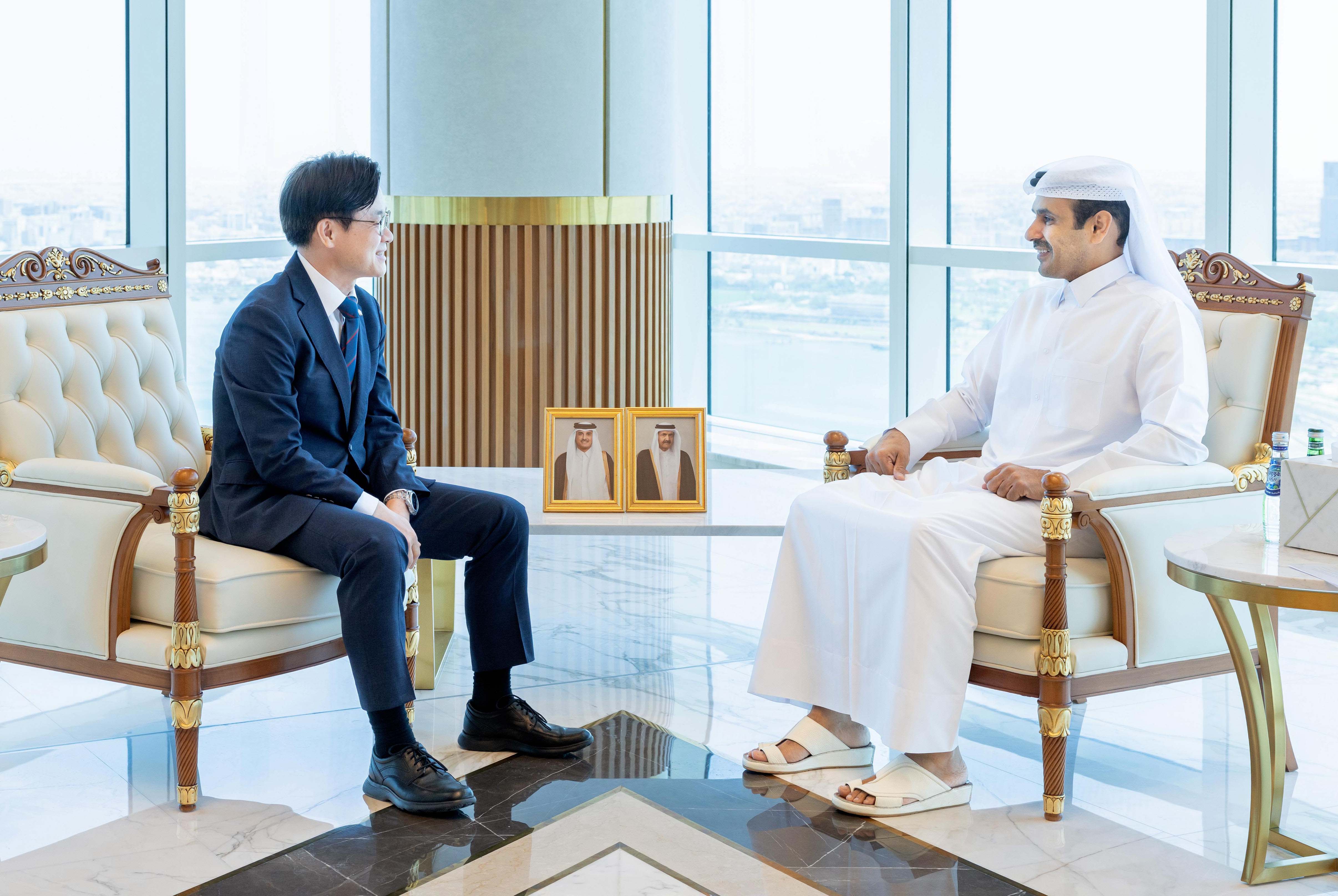
Minister Kim Meets Qatar Minister of State for Energy Affairs and QatarEnergy CEO
Minister JK (Jung-Kwan) Kim of the Ministry of Trade, Industry and Resources (MOTIR) visited QatarEnergy headquarters in Doha, Qatar, on June 15, 2026, as follow-up to the April visit to the Middle East by the Presidential Special Envoy for Strategic Economic Cooperation. Minister Kim met with H.E. Saad Sherida Al-Kaabi, Minister of State for Energy Affairs and President and CEO of QatarEnergy. Minister Al-Kaabi oversees Qatar’s energy policy, including oil and gas resource development and LNG contracts. Minister Kim said the trust and cooperation Korea and Qatar have built are important for reliable energy supplies and resilient global supply chains. date2026-06-16
-
FTA/Economic Cooperation
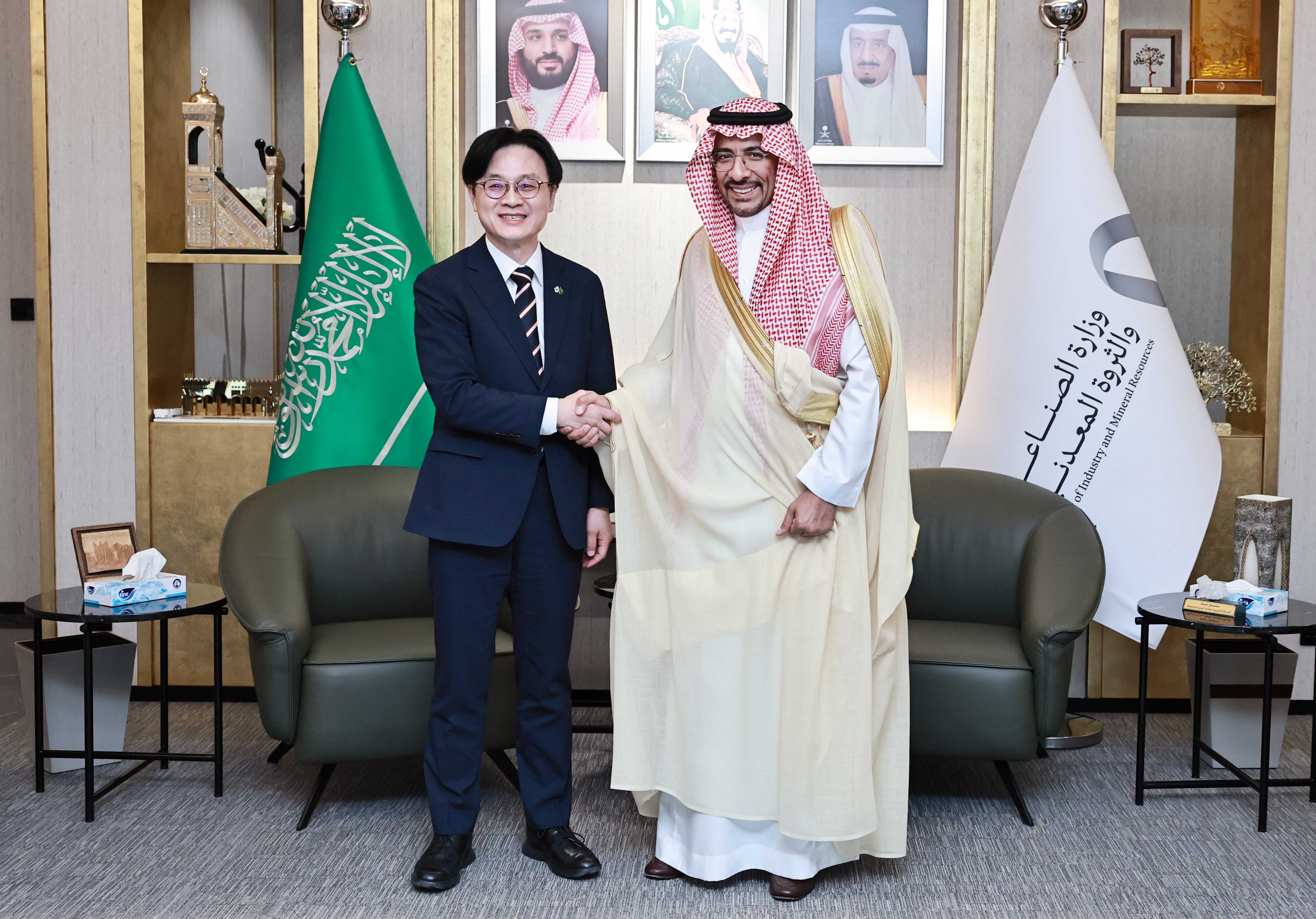
Meeting with Saudi Arabia’s Minister of Industry and Mineral Resources
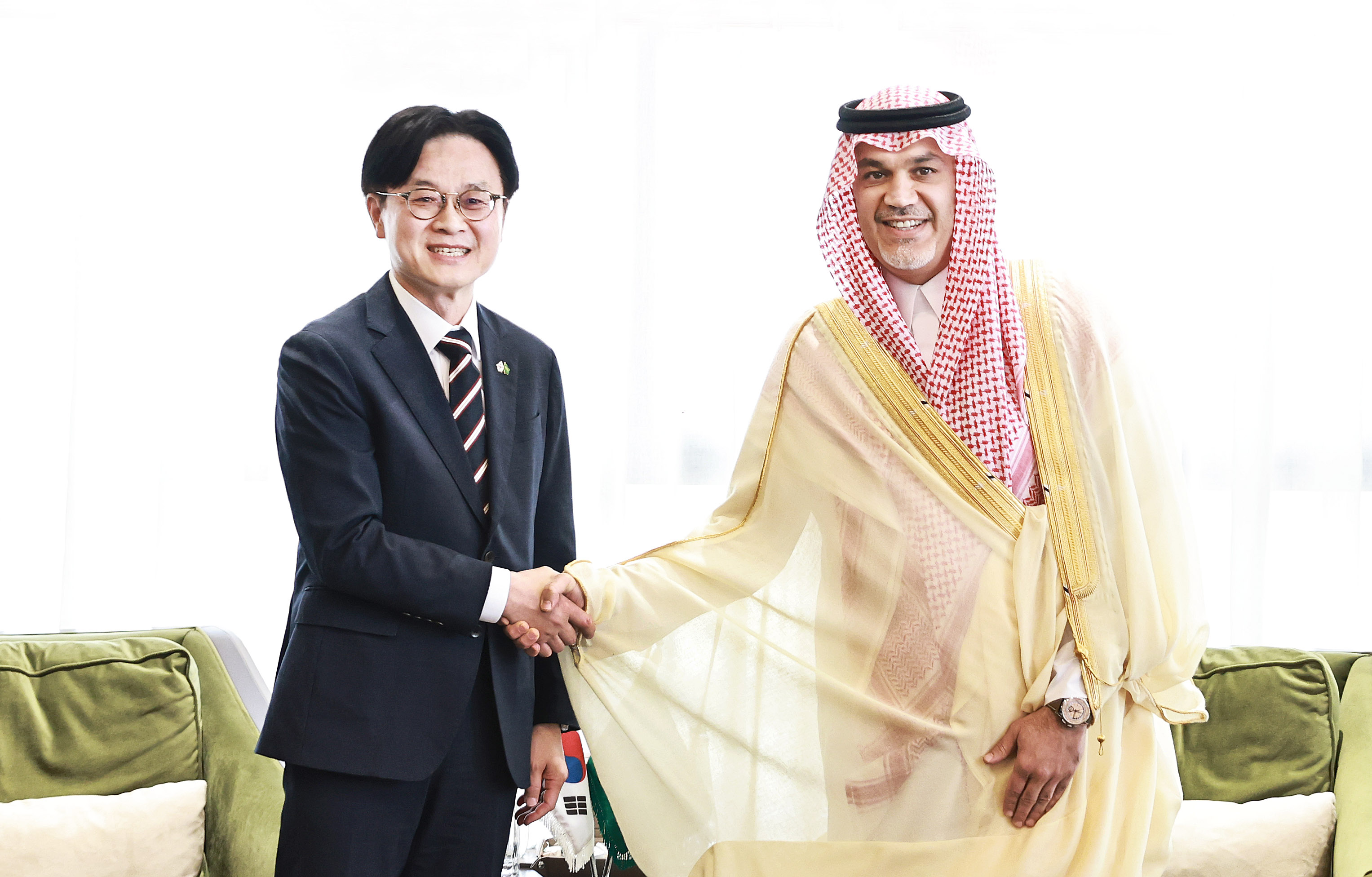
Minister JK (Jung-Kwan) Kim of the Ministry of Trade, Industry and Resources (MOTIR) met with Bandar Al-Khorayef, Minister of Industry and Mineral Resources of Saudi Arabia, in Saudi Arabia on June 14, 2026, as a follow-up to the April visit to the Middle East by the Presidential Special Envoy for Strategic Economic Cooperation. The two sides discussed trade, mineral cooperation, and industrial cooperation in automobiles, shipbuilding, steel, AI, and other areas. Minister Kim also closely reviewed progress on major industrial cooperation projects Korean companies are pursuing in Saudi Arabia. Minister Kim said Korea will continue to expand economic cooperation with Saudi Arabia across manufacturing, advanced industries, and other areas, building on the practical industrial cooperation achieved so far. date2026-06-15
-
FTA/Economic Cooperation
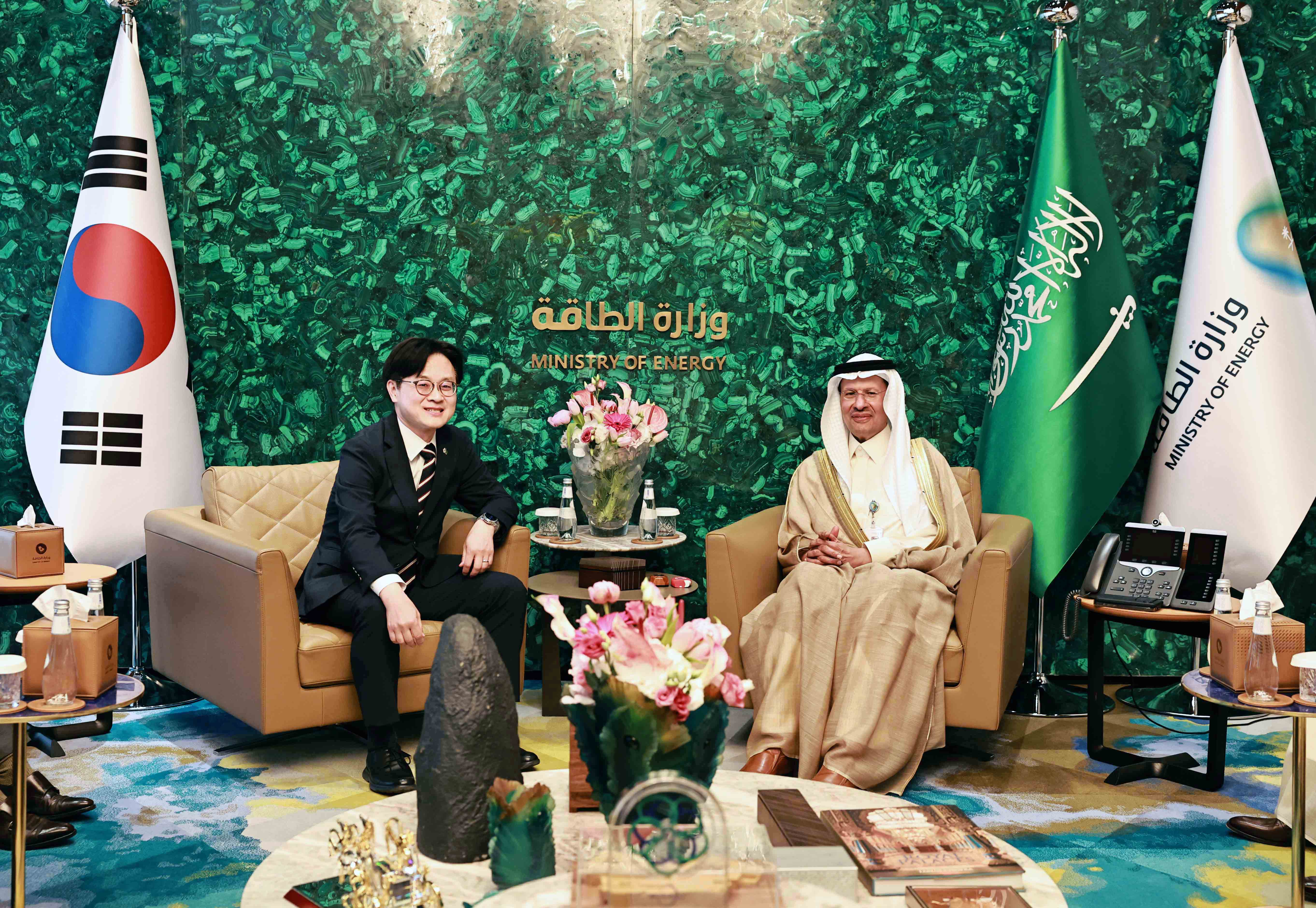
Meeting with Saudi Arabia’s Minister of Energy
Minister JK (Jung-Kwan) Kim of the Ministry of Trade, Industry and Resources (MOTIR) met with Prince Abdulaziz bin Salman, Minister of Energy of Saudi Arabia, in Saudi Arabia on June 14, 2026, as a follow-up to the April visit to the Middle East by the Presidential Special Envoy for Strategic Economic Cooperation. The two ministers reviewed progress on the crude oil and naphtha supply commitments from the envoy’s April visit and agreed to continue coordination to supply the planned volumes without disruption through the end of the year. They also signed an MOU on crude oil and gas cooperation between Korea and Saudi Arabia to establish a medium- to long-term foundation for resource cooperation beyond short-term supply arrangements. Minister Kim said the visit helped reaffirm stable supplies of key national resources, including crude oil and naphtha, amid continued global supply chain instability and strengthen the foundation for medium- and long-term resource cooperation. date2026-06-15
-
Trade/Investment
Roundtable with Korean Companies in Saudi Arabia
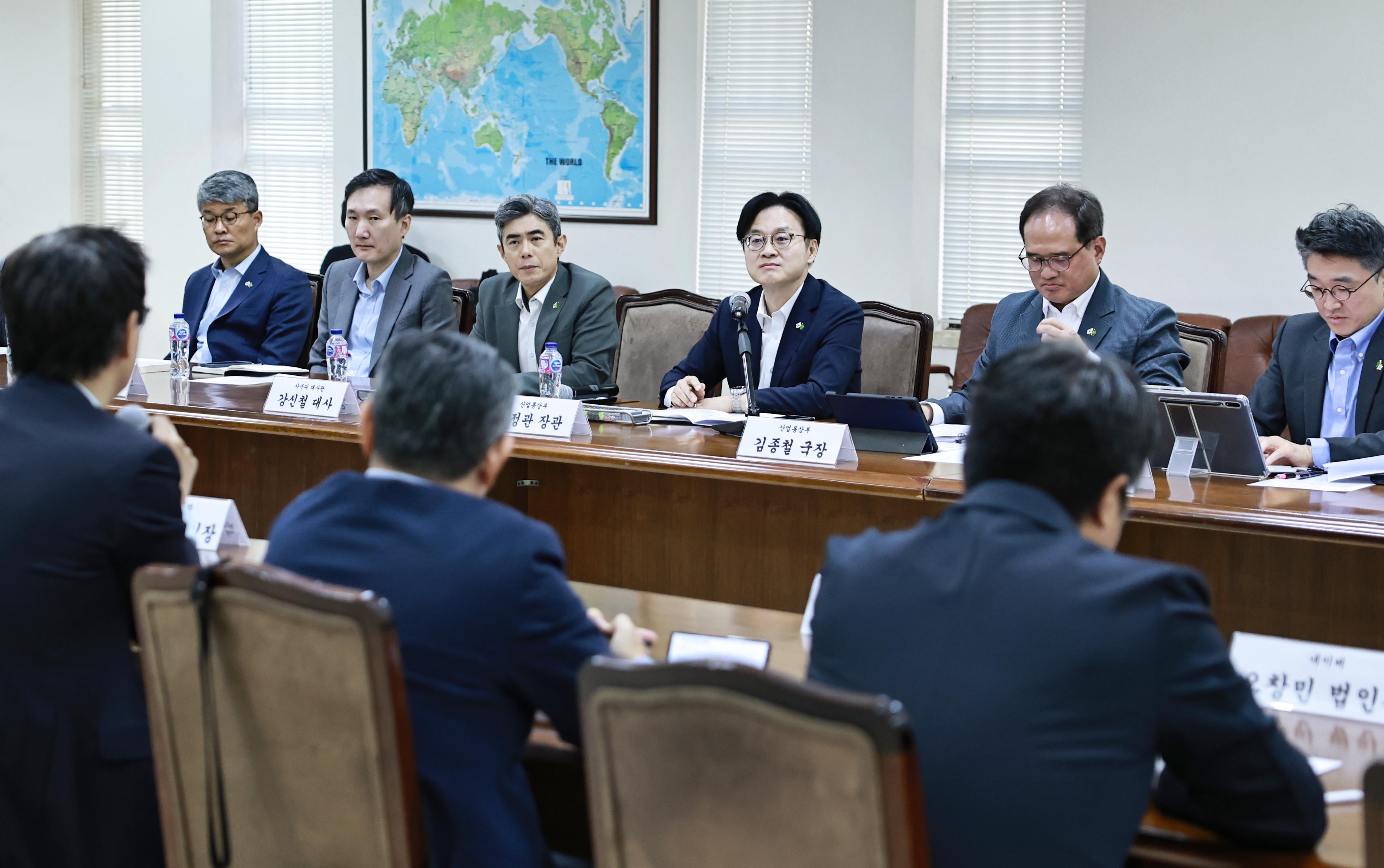
Minister JK (Jung-Kwan) Kim of the Ministry of Trade, Industry and Resources (MOTIR) chaired a roundtable with Korean companies and support organizations operating in Saudi Arabia at the Embassy of the Republic of Korea in Saudi Arabia on June 14, 2026. The meeting brought together representatives from Korea National Oil Corporation, NAVER, LG Electronics, Samsung C&T, KOTRA, and other organizations. Participants discussed key business challenges, requests, and future plans related to their operations in Saudi Arabia. Minister Kim said Korea will continue to expand economic cooperation with Saudi Arabia across manufacturing, advanced industries, and other areas, building on the practical industrial cooperation achieved so far. date2026-06-15
-
FTA/Economic Cooperation
Meeting with Saudi Arabia’s Minister of Investment
Minister JK (Jung-Kwan) Kim of the Ministry of Trade, Industry and Resources (MOTIR) met with Fahad Al-Saif, Minister of Investment of Saudi Arabia, in Saudi Arabia on June 14, 2026, as a follow-up to the April visit to the Middle East by the Presidential Special Envoy for Strategic Economic Cooperation. During the meeting, the two sides discussed trade, mineral cooperation, and industrial cooperation in automobiles, shipbuilding, steel, AI, and other areas. Minister Kim also reviewed progress on major industrial cooperation projects Korean companies are pursuing in Saudi Arabia. Minister Kim said Korea will continue to expand economic cooperation with Saudi Arabia across manufacturing, advanced industries, and other areas, building on the practical industrial cooperation achieved so far. date2026-06-15
-
FTA/Economic Cooperation
Trade Minister Yeo Meets Deputy Prime Minister Sun to Discuss Korea–Cambodia Economic Cooperation
Minister for Trade Yeo Han-koo of the Ministry of Trade, Industry and Resources (MOTIR, Minister JK Kim) met with Sun Chanthol, Cambodia’s Deputy Prime Minister and First Vice Chairman of the Council for the Development of Cambodia (CDC), at the Korea Chamber of Commerce and Industry (KCCI) in Seoul on June 15, 2026. The two sides discussed expanding economic and trade cooperation between Korea and Cambodia. The meeting was held at Deputy Prime Minister Sun’s request during his visit to Korea for the 2026 Incheon–Cambodia Investment Roadshow, held in Incheon. The two sides exchanged views on a broad range of bilateral economic issues, including the implementation of the Korea–Cambodia Free Trade Agreement (FTA), stronger economic cooperation, official development assistance (ODA), and international greenhouse gas emissions reduction. Minister Yeo welcomed the continued growth in bilateral trade and investment since the Korea–Cambodia FTA entered into force in 2022 and bilateral relations were upgraded to a strategic partnership in 2024. Minister Yeo also shared updates on MOTIR’s ODA projects for Cambodia, including the TASK (Technology Advice and Solutions from Korea) Center Project for Cambodia’s food processing sector, which has been under way since 2023, and the ASEAN Trade Officials Training Program scheduled for the second half of 2026. Deputy Prime Minister Sun said Korea’s ODA projects have contributed significantly to Cambodia’s economic development and expressed hope that they would further strengthen bilateral cooperation. The two sides also reviewed the outcomes of Korea’s first approved international greenhouse gas reduction project in the industrial sector, which was finalized in 2025 with the Cambodian government’s approval. They agreed to strengthen cooperation in future industries, including green technology, building on Cambodia’s commitment to carbon reduction and Korean companies’ technological capabilities. MOTIR will continue working with Cambodia to expand bilateral exchanges and support Korean companies seeking to enter and operate in the Cambodian market. date2026-06-15
-
FTA/Economic Cooperation
Korea and Bangladesh to Hold Fourth Round of CEPA Negotiations
Korea and Bangladesh will hold the fourth round of official negotiations toward a Comprehensive Economic Partnership Agreement (CEPA) in Dhaka from June 14 to 19, 2026. The talks come amid a growing need to expand into promising emerging markets and diversify Korea’s export destinations in response to the rapidly changing global trade environment. The Office of Trade Negotiations at the Ministry of Trade, Industry and Resources (MOTIR, Minister JK Kim) announced that around 60 delegates from the two countries will attend the negotiations. Korea’s delegation will be led by Park Geun-oh, Director General for Trade Agreement Policy at MOTIR, while Bangladesh’s delegation will be led by Ayesha Akther, Additional Secretary and Head of the Foreign Trade Agreement Wing at the Ministry of Commerce. Since declaring the launch of negotiations in November 2024, the two countries have held three official rounds of talks. In Dhaka, they plan to continue detailed discussions across 11 areas, including tariff concessions, services, and rules of origin, with the aim of building a solid basis for concluding the agreement. Bangladesh is one of South Asia’s key growth markets, with a population of 170 million and a high rate of economic growth. A CEPA with Bangladesh is expected to help Korean companies broaden their export base. As the Bangladeshi government is actively expanding national infrastructure, including power, roads, and aviation, the agreement is also expected to create more opportunities for Korean construction and engineering companies. Bangladesh is scheduled to graduate from least developed country (LDC) status in November 2026 and is pursuing market-opening policies, including accession to the Regional Comprehensive Economic Partnership (RCEP) and free trade agreements with major partners. “Bangladesh is a key South Asian market, with average annual growth of more than 6 percent. A CEPA with Bangladesh is expected to expand Korean companies’ access to the South Asian market,” said Director General Park. “Korea will take a proactive approach to the negotiations so the talks can make swift progress.” date2026-06-15
-
FTA/Economic Cooperation
Korea and Saudi Arabia Strengthen Partnership in Resources and Industry
Minister JK (Jung-Kwan) Kim of the Ministry of Trade, Industry and Resources (MOTIR) visited Saudi Arabia from June 13 to 14, 2026, as a follow-up to the April visit to the Middle East by the Presidential Special Envoy for Strategic Economic Cooperation. Saudi Arabia is Korea’s largest crude oil supplier and pledged during the April visit to give priority to supplying crude oil and naphtha to Korea. The visit was arranged to follow up on the crude oil and naphtha supply arrangements and strengthen resource security and industrial cooperation with Saudi Arabia amid the Middle East conflict. Minister Kim first met with Prince Abdulaziz bin Salman, Saudi Arabia’s Minister of Energy. The two ministers reviewed progress on the crude oil and naphtha supply arrangements made during the Special Envoy’s April visit and agreed to maintain stable supplies of the planned volumes through the end of 2026. They also signed an MOU on Cooperation in the Crude Oil and Gas sector between Korea and Saudi Arabia to establish a medium- to long-term foundation for resource cooperation beyond short-term supply arrangements. The MOU identifies specific areas for stronger cooperation across energy resources, including oil, gas, and petrochemicals. These include crude oil stockpiling; pipeline infrastructure development; innovation in energy and resource technologies using AI and digital transformation; technology development to improve environmental and economic sustainability; development and use of petrochemical materials; development of appropriate infrastructure to improve access to energy resources; and business-to-business cooperation. Minister Kim also met with Fahad Al-Saif, Minister of Investment, and Bandar Al-Khorayef, Minister of Industry and Mineral Resources, to review progress on major industrial cooperation projects Korean companies are pursuing in Saudi Arabia. The projects include Hyundai Motor and PIF’s joint vehicle plant in Saudi Arabia, a project expected to deliver tangible results as it begins full-scale mass production in 2027. They also include International Maritime Industries (IMI), a joint shipyard project between HD Korea Shipbuilding & Offshore Engineering and Aramco. IMI is the largest shipyard in the Middle East, covering 4.96 million square meters, or roughly the size of 700 soccer fields. Minister Kim asked the Saudi government to provide active support to ensure timely completion of the projects. Building on successful models in traditional manufacturing, including automobiles and shipbuilding, the two sides agreed to explore new cooperation areas such as minerals. They also agreed to expand future cooperation into advanced industries, including AI. Noting Saudi Arabia’s abundant minerals for advanced industries—including sulfur, phosphate rock, bauxite, and rare earth elements—Korea’s world-class high-purity refining and processing technologies, and strong demand for these minerals in advanced industries, the two sides agreed to pursue full-cycle cooperation spanning mining, refining and processing, and advanced industry development. The two sides agreed to explore cooperation between research institutions in both countries on mineral deposit exploration in Saudi Arabia and the development of national geological information systems. “This visit to Saudi Arabia was significant because it reaffirmed stable supplies of key national resources, including crude oil and naphtha, amid continued global supply chain instability and laid the groundwork for medium- and long-term resource cooperation,” Minister Kim said. “Building on the outcomes of practical industrial cooperation, Korea will continue to expand economic cooperation with Saudi Arabia across manufacturing, advanced industries, and other areas.” Following his visit to Saudi Arabia, Minister Kim will visit Qatar on June 15 and the United Arab Emirates (UAE) on date2026-06-15
-
FTA/Economic Cooperation
Meeting with Italy’s Minister of Enterprises and Made in Italy
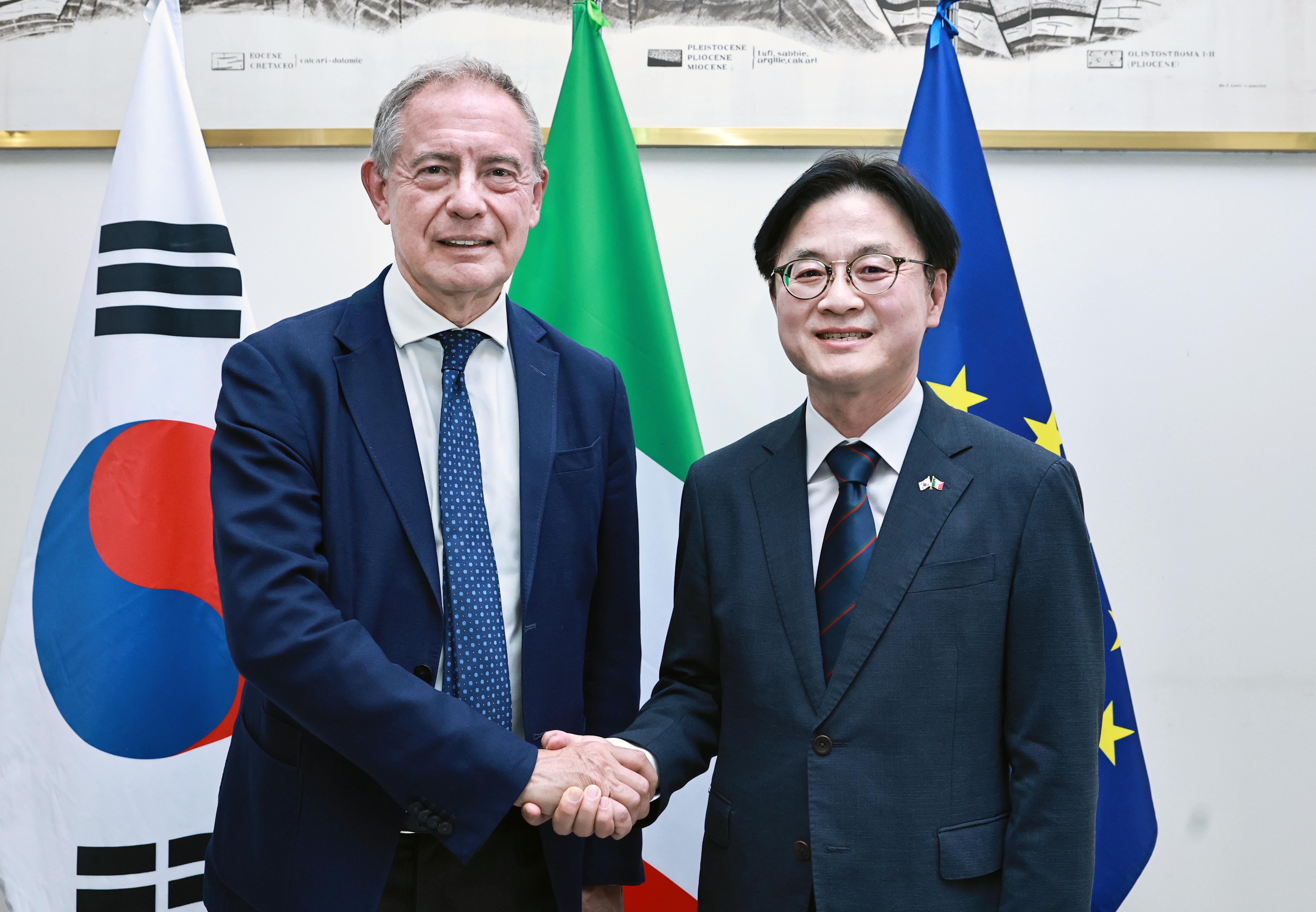
Minister JK (Jung-Kwan) Kim of the Ministry of Trade, Industry and Resources (MOTIR) met with Adolfo Urso, Italy’s Minister of Enterprises and Made in Italy, in Rome on June 11, 2026, during President Lee Jae Myung’s visit to Italy. The two ministers exchanged views on shared priorities, including developments in EU economic legislation and cooperation in high-tech industries. date2026-06-12