-
Industry
MOTIR Supports Shared Growth Across the K-Shipbuilding Supply Chain
Minister JK (Jung-Kwan) Kim of the Ministry of Trade, Industry and Resources (MOTIR) visited Hanla IMS, a shipbuilding equipment company in Busan, on May 27, 2026. Minister Kim toured the company’s manufacturing and R&D facilities and reviewed progress on its intelligent integrated system for autonomous maintenance, confirming that key equipment technologies for AI-enabled autonomous ships are already being developed on site. After the site visit, Minister Kim held a roundtable with 12 organizations, including shipbuilding equipment suppliers, small and medium-sized shipbuilders, and related institutions, to hear industry challenges and policy suggestions. The discussion focused on implementing key tasks set out at the May 13, 2026, Roundtable on the K-shipbuilding vision, including expanded equipment demonstrations, green technology development, refund guarantee (RG) support for small and medium-sized shipbuilders, and AI transformation in shipbuilding. The government plans to incorporate the practical support needs raised by industry into future policy measures. At the roundtable, Minister Kim presented three policy directions to support shipbuilding equipment suppliers and small and medium-sized shipbuilders. First, the government will accelerate Manufacturing AI Transformation (M.AX) in shipbuilding. MOTIR and the Ministry of Oceans and Fisheries (MOF, Minister Hwang Jong-woo) plan to invest around KRW 500 billion through the Autonomous Ship M.AX Alliance to develop core equipment, including engine automation systems and radar. The ministries will also support installation on ships and align the work with International Maritime Organization (IMO) standard-setting efforts. Second, MOTIR will expand overseas opportunities and financial support for shipbuilding equipment suppliers and small and medium-sized shipbuilders. As MOTIR develops the MASGA project, which played a key role in the Korea–U.S. tariff deal, one of the administration’s first-year achievements, the ministry will focus on identifying project opportunities for these companies. MOTIR will also launch support for MRO infrastructure, certification, and export channels through programs for naval vessel MRO competitiveness and U.S. market entry. In markets such as India, Viet Nam, and the Philippines, where Korean shipbuilders are expanding and demand for Korean equipment is growing, MOTIR will promote joint entry with anchor companies. It will also work with relevant ministries and financial institutions to expand RG support, as rising overseas orders increase RG demand among small and medium-sized shipbuilders. Third, the government will strengthen cooperation with the shipping industry. Through the Strategic Council for Shared Growth in Shipbuilding and Shipping, launched in April 2026, the government will promote the use of newly developed Korean equipment in newbuild vessels and channel joint orders from Korean shipping companies, as well as domestic orders for essential vessels, toward small and medium-sized shipbuilders. It will also develop strategic public procurement plans to prepare for a downturn in the shipbuilding cycle. “Shipbuilding equipment suppliers and small and medium-sized shipbuilders form the foundation of the K-shipbuilding supply chain and are critical to Korea’s maritime security,” Minister Kim said. “We will promptly address on-site needs, including equipment demonstrations, super-gap technology development, and order opportunities for small and medium-sized shipbuilders.” date2026-05-27
-
Industry
M.AX to Reshape the Global Battery Market
The Ministry of Trade, Industry and Resources (MOTIR, Minister JK Kim) visited LG Energy Solution’s smart autonomous manufacturing facility on May 26, 2026, to review Korea’s battery manufacturing competitiveness and discuss ways to strengthen public-private cooperation. Manufacturing has long been a key growth engine for Korea’s economy and helped the country develop into an advanced economy. However, the sector’s growth has recently stalled as the working-age population shrinks and the potential growth rate falls, making innovation urgent. MOTIR therefore sees M.AX as the only solution for securing a super-gap advantage in manufacturing. In September 2025, the ministry launched the M.AX Alliance to bring together manufacturers, AI companies, relevant ministries, academia, and research institutions. The Alliance now serves as a cooperation platform for more than 1,500 companies and institutions across 11 divisions, including factory, robotics, and semiconductors. In 2026, MOTIR is investing about KRW 1.8 trillion, including about KRW 1.3 trillion in government funding, in projects that help companies apply AI to processes and products, reduce work time, and improve quality. LG Energy Solution participates in the robotics division of the M.AX Alliance and is a user company in the AI factory flagship project, which supports AI transformation in processes such as quality control and predictive maintenance. An AI factory connects an AI “brain” to factory operations to support human decision-making. Under this model, manufacturers and AI specialists work as one team to collect manufacturing data, develop AI models, and apply them to production processes. The visit came as competition in the global battery market is shifting beyond volume growth toward data-driven productivity innovation. MOTIR arranged the visit to share what Korean battery companies have achieved through M.AX and explore concrete ways to scale it across industry. LG Energy Solution’s Energy Plant, a cylindrical battery manufacturing facility that won the grand prize at the 2026 LG Awards, is using digital twin technology to recreate the actual factory in a virtual space and significantly reduce trial and error in production. LG Energy Solution said the technology has increased the production speed of new equipment by more than 50 percent and cut both investment costs and line area to about half of previous levels. The company added that the flexibility to produce batteries of different specifications on a single piece of equipment will help strengthen its ability to win orders in global markets. “M.AX is now essential to survival and a critical tool for Korea’s battery industry to maintain a super-gap lead in the global market,” said Deputy Minister for Industry and Growth Kim Sung-yeol. “The government will spare no effort to provide policy support that accelerates private-sector innovation, including efforts to establish AI governance frameworks and promote the adoption of enterprise AI platforms.” date2026-05-26
-
Industry
MOTIR Holds First M.AX Conference with Industry Growth Forum
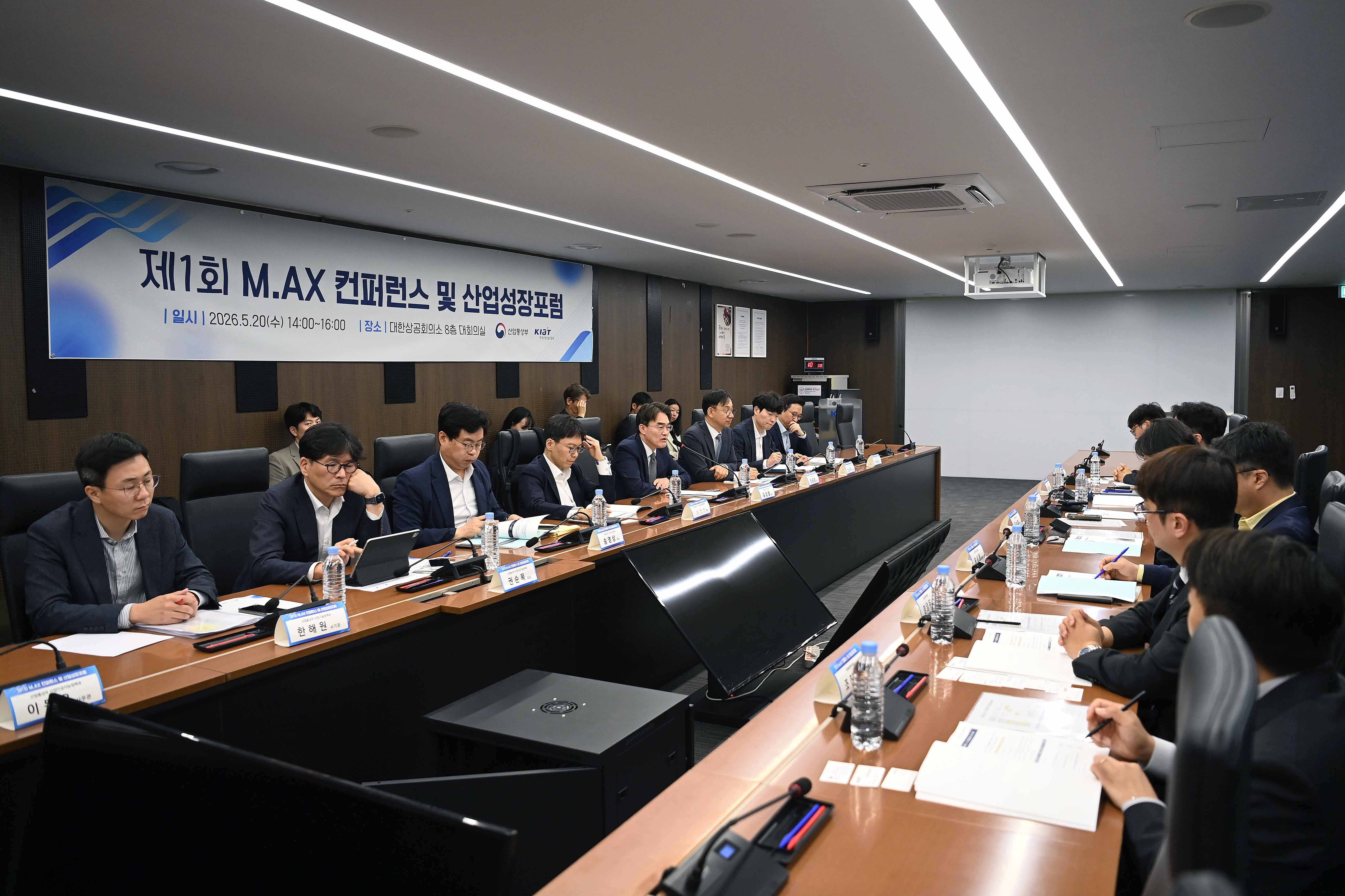
Kim Sung-youl, Deputy Minister for Industry and Growth at the Ministry of Trade, Industry and Resources (MOTIR, Minister JK Kim), attended the first M.AX conference, combined with an industry growth forum, at the Korea Chamber of Commerce and Industry (KCCI) in Seoul on May 20, 2026. The event brought together participants from companies, academia and related organizations involved in M.AX, including the Korea Institute for Advancement of Technology (KIAT), LG Production Engineering Research Institute (LG PRI) and KAIST. “M.AX, the AI transformation of manufacturing, will be a critical factor in maintaining Korea’s industrial leadership and securing future competitiveness amid the global race for technological supremacy,” Deputy Minister Kim said. “MOTIR will work with companies in the M.AX Alliance to deliver tangible results, including higher productivity and greater value added across industry.” date2026-05-21
-
Industry
Minister Yeo Visits Tongwei Solar’s Yancheng Facility
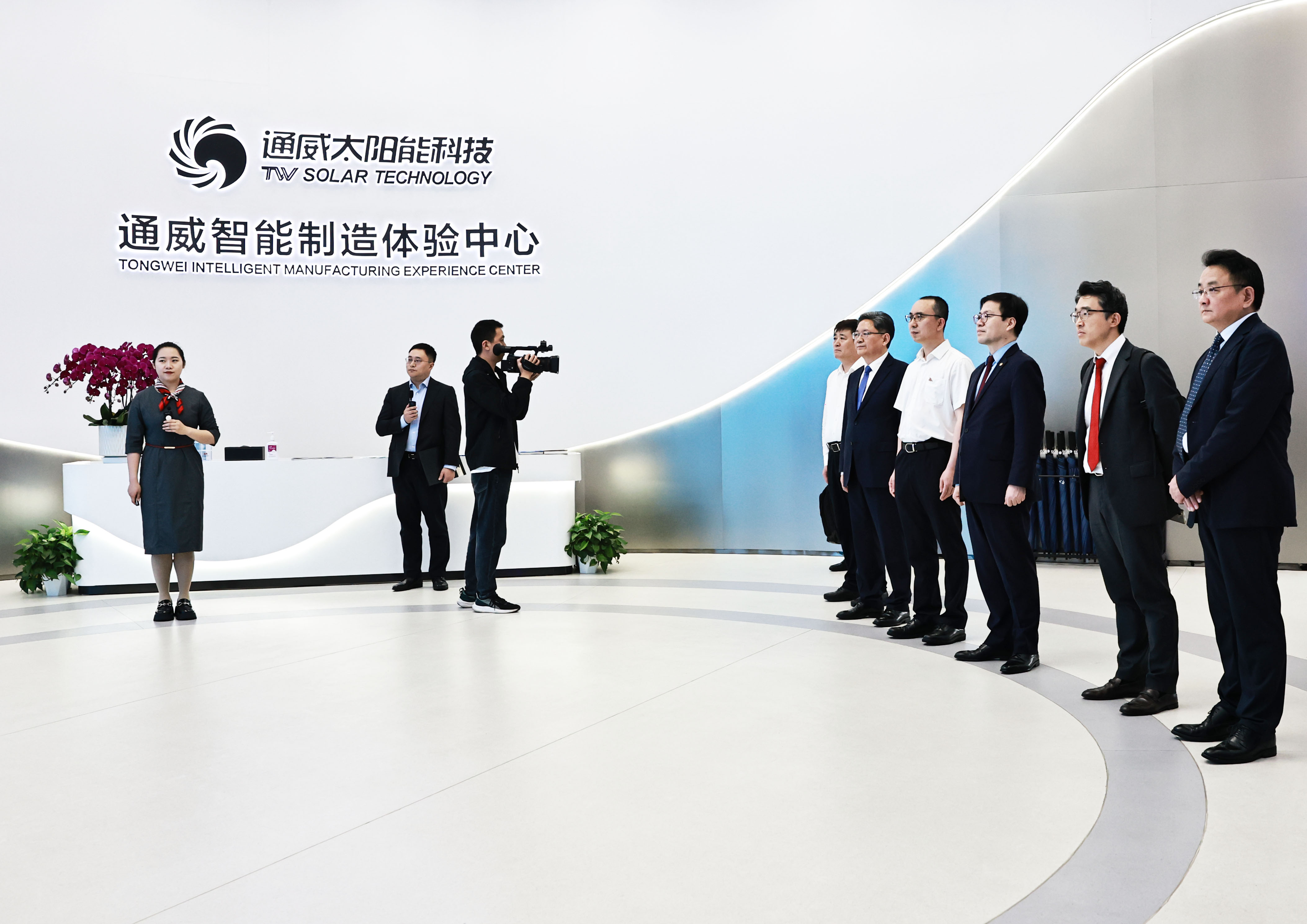
Minister for Trade Yeo Han-koo of the Ministry of Trade, Industry and Resources (MOTIR, Minister JK Kim) visited the Tongwei Solar Technology Yancheng Base in Jiangsu Province, China, on May 19, 2026, on the occasion of the seventh Korea–Jiangsu Province Economic and Trade Cooperation Exchange. During the visit, Minister Yeo toured the base’s main facilities. The visit took place as Korea and Jiangsu Province discussed ways to expand industrial and supply chain cooperation. date2026-05-21
-
Industry
Minister Yeo Holds Roundtable with Korean Companies in Jiangsu Province
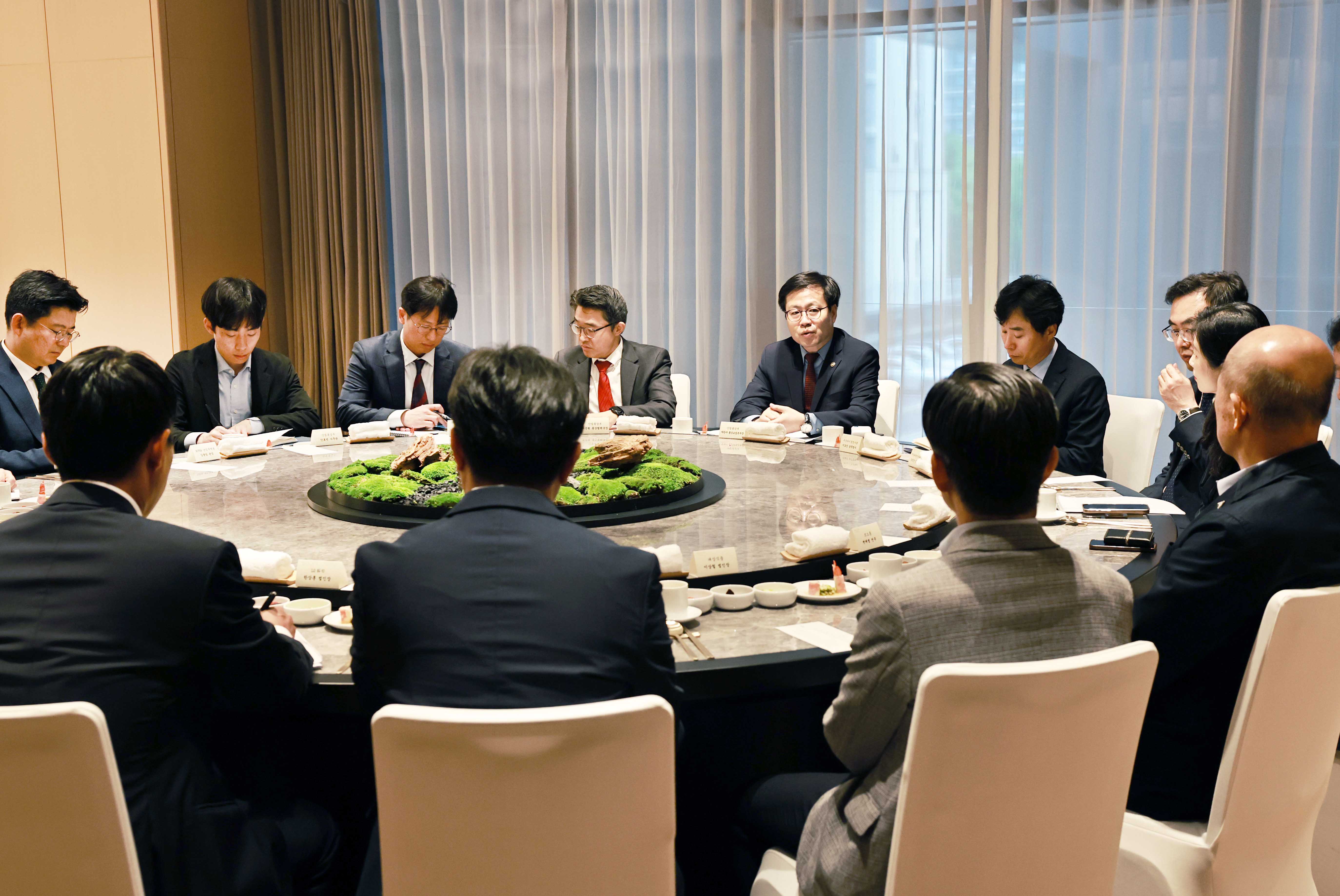
Minister for Trade Yeo Han-koo of the Ministry of Trade, Industry and Resources (MOTIR, Minister JK Kim) held a roundtable with Korean companies operating in Jiangsu Province in Yancheng, Jiangsu Province, China, on May 19, 2026, on the occasion of the seventh Korea–Jiangsu Province Economic and Trade Cooperation Exchange. The meeting was attended by representatives from companies including Kia, SK On, Sungwoo Hitech, Yancheng Dongyi Auto Parts, LG Chem and Daesang Food. Minister Yeo was briefed on their local operations and challenges in Jiangsu Province and discussed possible support measures. date2026-05-21
-
Industry
Korea to Build Circular Battery Ecosystem with Used Battery Safety Framework
The Ministry of Trade, Industry and Resources (MOTIR, Minister JK Kim) announced that the bill to enact the “Act on the Management of Used Batteries and Promotion of the Used Battery Industry,” or the Used Battery Act, was approved by the Cabinet on May 20, 2026. The act treats used batteries as strategic national resources rather than waste, providing a legal basis for their management as volumes are projected to increase sharply with the wider adoption of energy storage systems (ESS) and electric vehicles. It also fosters related industries and establishes a national framework to respond to global green trade regulations, including the EU Battery Regulation, helping create a more stable business environment for companies. Key measures include a framework for performance evaluations and safety inspections; a battery life-cycle tracking and transaction system; measures to promote recycled material use; and support for the used battery industry. First, batteries will be graded through performance evaluations before removal, and products containing used batteries will undergo safety inspections before and after distribution. This will strengthen safety management for used batteries. Second, the battery life-cycle tracking and transaction system will serve as a public platform that manages data across the full battery life cycle—from manufacturing to disposal—and facilitates transactions. It is expected to help stimulate the market, support responses to trade regulations and address gaps in used battery oversight. Third, the act will introduce target requirements for recycled material content and a certification system for the production and use of recycled materials. These measures are expected to strengthen Korea’s supply chain for key battery minerals and promote resource circulation. Fourth, the act will foster the used battery industry through recommendations for priority purchases of products equipped with used batteries, supply chain stabilization measures, and technology development support. The Act will take effect one year after promulgation. Before then, MOTIR will work with relevant ministries, experts and industry to prepare implementing rules, secure the necessary budget and design a safe, balanced system. “This act is the result of years of consultation between industry and relevant ministries,” Minister Kim said. “It will lay the foundation for a closed-loop system for Korea’s battery resources and support the growth of emerging industries.” date2026-05-20
-
Industry
Experts Discuss M.AX as the Way Forward for Korean Manufacturing
The Ministry of Trade, Industry and Resources (MOTIR, Minister JK Kim) held the first Manufacturing AI Transformation (M.AX) Conference and Industrial Growth Forum on May 20, 2026, bringing together experts in manufacturing and economics to discuss how to advance M.AX and scale up the outcomes. Participants included companies involved in M.AX, such as LG Production Engineering Research Institute (LG PRI) and INTERX, as well as academic experts from KAIST, UNIST, Sungkyunkwan University and Myongji University. Manufacturing has long anchored Korea’s economic growth. But the sector now faces tougher conditions, including a shrinking working-age population and a declining potential growth rate. As AI moves into manufacturing sites and emerges as a game changer for productivity and industrial competitiveness, advancing the M.AX has become essential. As major competitors transform manufacturing with AI through large-scale private investment and strong government-led policies, the Korean government launched the M.AX Alliance to bring together capabilities across manufacturers, AI companies, academia and research institutions. Today, more than 1,500 companies and organizations across 11 divisions are working together on the use of manufacturing data, AX in production processes and the development of AI-embodied innovative products. Key projects include AI factories, on-site demonstrations of industrial robots and humanoids in manufacturing, and on-device AI semiconductors essential for AX products such as autonomous vehicles. In 2026, MOTIR will invest KRW 1.1 trillion in its AX budget to support wider adoption. Since its launch, the Alliance has produced initial results, including productivity gains among AI factory participants through lower defect rates, more efficient predictive equipment maintenance, liquidity support for companies facing financing constraints through closer links with the National Growth Fund, and the creation of a M.AX sub-fund under the Industry Growth Fund. In February 2026, MOTIR added an industrial complex AX division, establishing a foundation for AX at regional manufacturing sites and completing the M.AX Alliance’s “Best Eleven” structure. At the forum, speakers examined how M.AX can strengthen industrial competitiveness, reviewed strategies in different countries, and discussed technical priorities for applying M.AX at manufacturing sites. Participants also discussed upgrades to AI factory technologies, the need to secure technological sovereignty in manufacturing AI, Korea’s strengths in full-stack capabilities, and the importance of strengthening AI skills among the manufacturing workforce. “M.AX, the AI transformation of manufacturing, will be a critical factor in maintaining Korea’s industrial leadership and securing the country’s future competitiveness amid the global race for technological supremacy,” said Kim Sung-youl, Deputy Minister for Industry and Growth at MOTIR. “The government will focus on bringing AI into production processes and developing new AI-embodied products and services, so that manufacturing, one of Korea’s core assets, can secure world-leading competitiveness. We will also work closely with companies in the M.AX Alliance to deliver tangible results on the ground, including higher productivity and greater value added across industry.” Deputy Minister Kim added that MOTIR will also work to address labor shortages in key manufacturing industries and create new jobs through M.AX. Future M.AX conferences will be held as a series on topics such as data and robotics, while the Industrial Growth Forum will continue discussions across advanced technologies to develop a new growth model for Korean industry. date2026-05-20
-
Industry
KATS Certifies 28 New Technologies and Products to Drive Innovative Growth
The Korean Agency for Technology and Standards (KATS, Administrator Kim Daeja) under the Ministry of Trade, Industry and Resources (MOTIR, Minister JK Kim) will certify 28 new technologies and products on May 18, 2026, as future drivers of Korea’s innovation-led growth. They were selected from 411 technologies and products after a rigorous review, with competition reaching about 15 to 1. New Excellent Technology (NET) and New Excellent Product (NEP) certifications are granted to technologies first developed in Korea or technologies that significantly improve existing ones, as well as to commercialized products built around such technologies. Certified technologies and products receive public procurement support, including mandatory purchasing by public institutions and priority purchasing of technology-developed products. They also qualify for benefits such as preferential access to SME policy loans and additional points in government program applications, helping technology-driven SMEs grow through procurement, financing, and other support. For NET certification, KATS received applications for 170 technologies and selected 12 outstanding technologies across five fields: electrical and electronics, information and communications, nuclear power and renewable energy, chemistry and life sciences, and construction and environment. In the nuclear power and renewable energy field, KATS selected a passive hydrogen recirculation ejector for fuel cells that uses the Coandă effect. The technology supplies and recirculates hydrogen without additional power, improving fuel cell efficiency and reducing maintenance costs. It is expected to help localize key fuel cell components. For NEP certification, KATS received applications for 241 products and certified 16 across five fields: electrical and electronics, information and communications, machinery and materials, chemistry and life sciences, and construction and environment. One notable product is the Magbot robot automatic tool changer, which uses switching magnetic technology. It allows a single robot to change tools on its own and perform various processes. By consuming electricity only when tools are attached or detached, the product maximizes efficiency and is expected to support manufacturing automation and expand into construction, medical services, and other industries. “The newly certified technologies and products are expected to become tangible growth drivers for the Korean economy,” KATS Administrator Kim Daeja said. “The government will continue to expand support, including priority purchasing by public institutions and overseas expansion programs, to help these companies grow into global unicorns.” date2026-05-18
-
Industry
M.AX to Drive Smarter, Safer Manufacturing at Ulsan-Mipo Industrial Complex
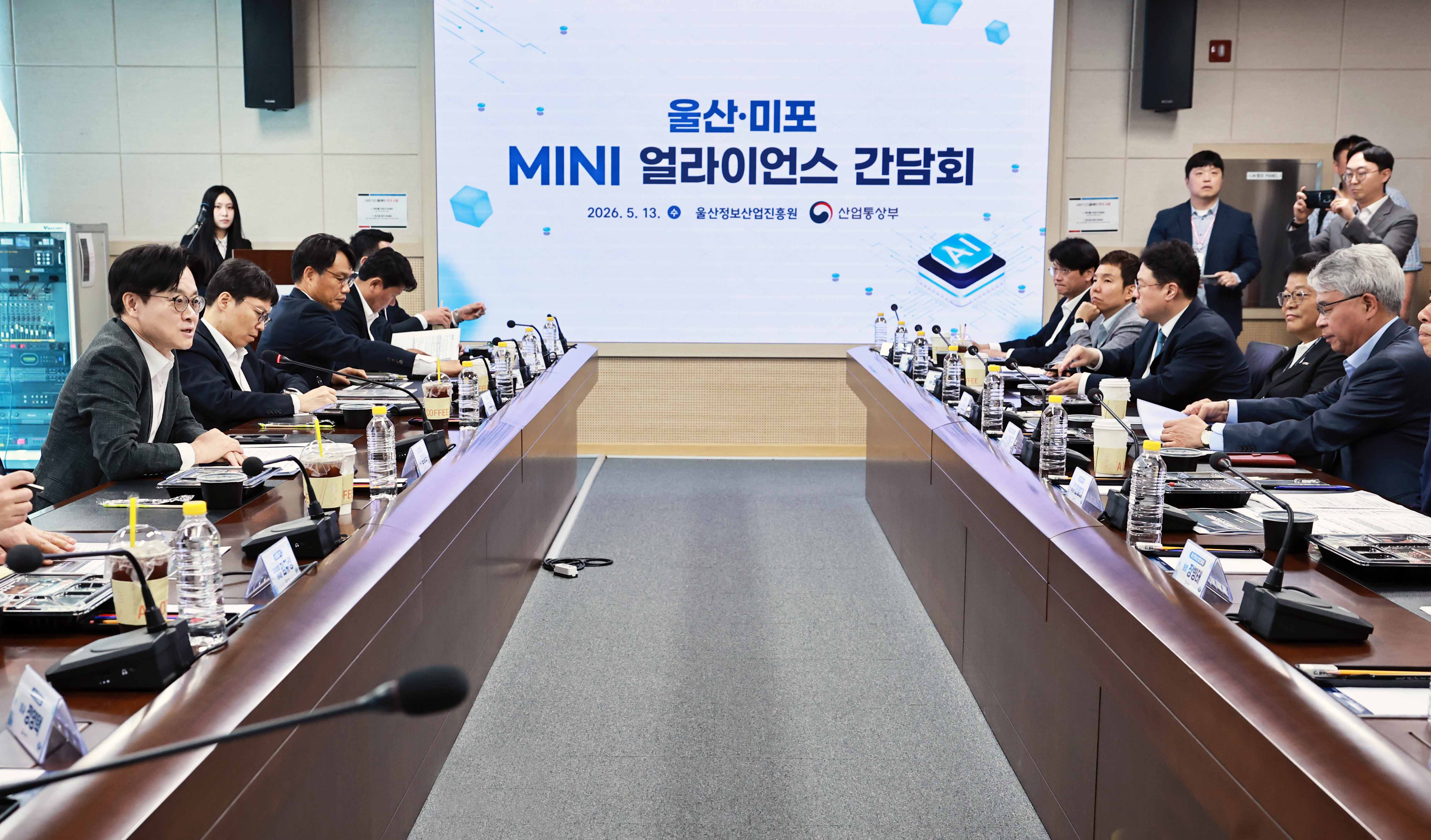
The Ministry of Trade, Industry and Resources (MOTIR, Minister JK Kim) held a meeting of the Ulsan M.AX Innovation Network in Industrial Complexes (MINI) Alliance at the Ulsan Information Industry Promotion Agency (UIPA) on May 13, 2026, to discuss the M.AX strategy for Ulsan’s petrochemical sector and ways to expand it across the region. The meeting brought together manufacturing companies, AI firms, universities, research institutes and local governments. The meeting marked the first time Minister Kim chaired a MINI Alliance meeting since MOTIR launched the Industrial Complex AX Subcommittee under the M.AX Alliance and 10 MINI Alliances in February 2026. The Ulsan-Mipo National Industrial Complex is Korea’s largest hub for automobiles, shipbuilding and petrochemicals, and has symbolized the growth of Korea’s key industries since the 1960s. It is also one of Korea’s leading petrochemical clusters, representing 48 percent of companies, 45 percent of production and 43 percent of exports across the country’s three main petrochemical complexes—Ulsan, Yeosu and Daesan—and underpinned by more than 60 years of process operation expertise and industrial data. Ahead of the meeting, Minister Kim visited SK Energy’s plant, a lead site where petrochemical AX is being demonstrated in an industrial complex setting. There, he saw firsthand how AI models could support process, equipment and safety management. SK Energy is applying AI across its operations, including an AI virtual sensor that predicts diesel quality indicators at its Fluid Catalytic Cracking (FCC) unit in real time, a predictive diagnosis algorithm that monitors vibration and temperature in rotating equipment, and on-site monitoring based on AI-powered video analysis. The Ulsan MINI Alliance is focusing on production process optimization, equipment predictive maintenance and safety management, areas where AI demand is strong across the petrochemical sector. AI models validated in Ulsan are expected to spread quickly to other industrial complexes and similar sectors nationwide. MOTIR will support the early development of leading M.AX models for petrochemicals at the Ulsan-Mipo National Industrial Complex and turn them into scalable examples. The effort is expected to strengthen the competitiveness of Korea’s petrochemical industry against immediate challenges such as global oversupply and the recent situation in the Middle East. After the site visit, Lee Dong-gu, Chair of the Ulsan MINI Alliance, and Park Min-won, Chair of the Industrial Complex AX Subcommittee, gave presentations before a participant discussion. Participants supported the government’s industrial complex AX strategy and called for faster rollout, balanced data use and security, regulatory sandboxes and specialized workforce training. “Ulsan is a core manufacturing hub for Korea, with extensive industrial data and manufacturing capabilities,” Minister Kim said. “Through the Ulsan MINI Alliance, we will deploy AI models that optimize production, improve equipment integrity and prevent accidents, creating manufacturing sites that are more precise, faster and safer. We will make Ulsan a regional base for accelerating M.AX.” date2026-05-13
-
Industry
Ulsan-Mipo MINI Alliance Meeting
Minister JK (Jung-Kwan) Kim of the Ministry of Trade, Industry and Resources (MOTIR) chaired the Ulsan-Mipo MINI Alliance Meeting at the Ulsan Information Industry Promotion Agency (UIPA) on May 13, 2026. The meeting was attended by Lee Dong-gu, Chair of the Ulsan MINI Alliance; Park Min-won, Chair of the Industrial Complex AX Subcommittee; and participants from manufacturing companies, AI firms, universities, research institutes and local governments. Minister Kim delivered opening remarks and discussed Ulsan’s petrochemical M.AX strategy and regional rollout plans. “Through the Ulsan MINI Alliance, we will deploy AI models to optimize production, improve equipment integrity and prevent accidents, making manufacturing sites more precise, faster and safer,” Minister Kim said. date2026-05-13