-
Industry
Minister JK Kim Visits SK Energy’s Ulsan Plant
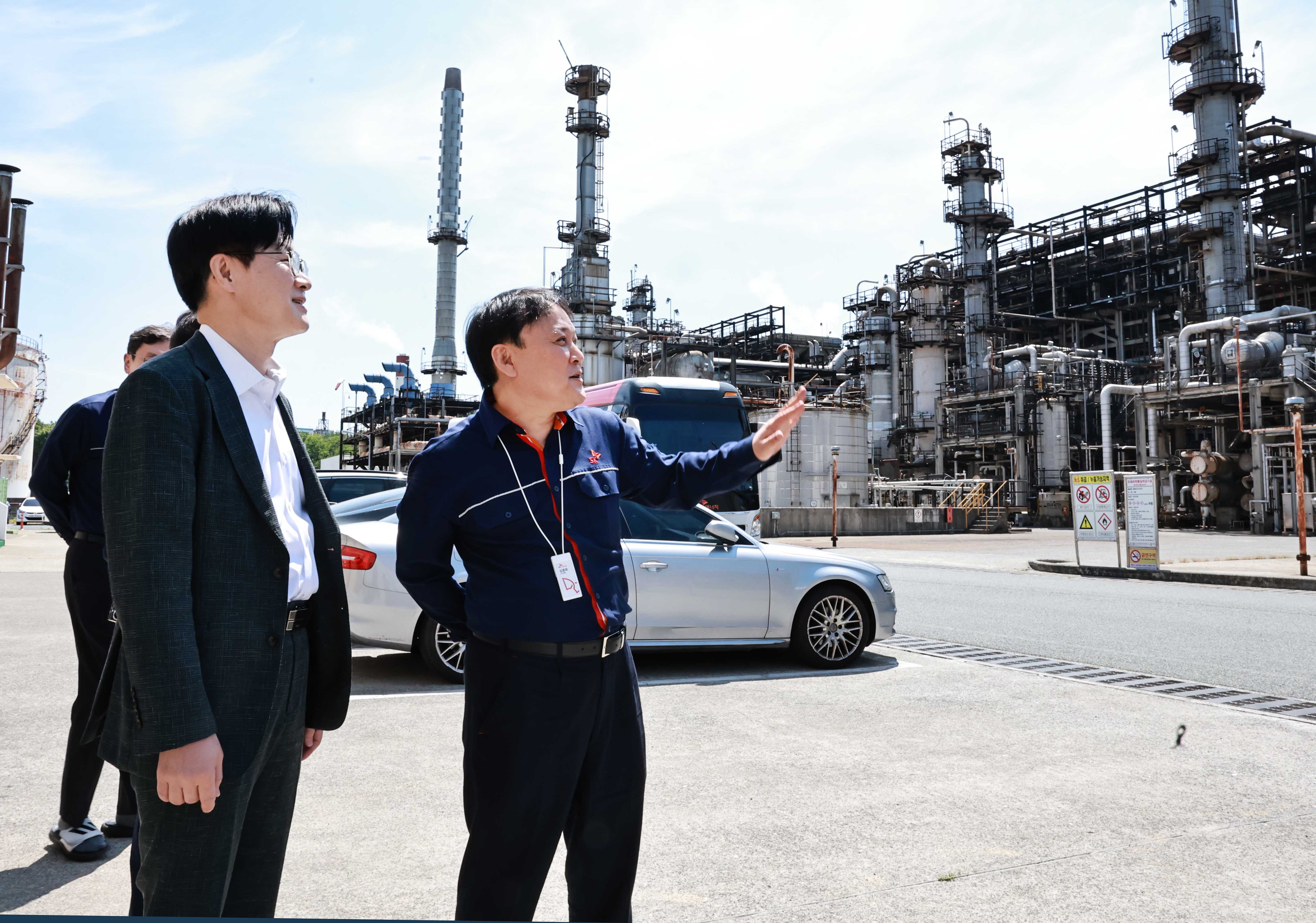
Minister JK (Jung-Kwan) Kim of the Ministry of Trade, Industry and Resources (MOTIR) visited SK Energy’s Ulsan plant on May 13, 2026. The plant is a lead site for demonstrating petrochemical AX in an industrial complex setting. During the visit, Minister Kim heard from company officials about SK Energy’s operations and on-site challenges, and reviewed firsthand how AI models could support process, equipment and safety management. SK Energy is developing AI applications including real-time diesel quality prediction at its Fluid Catalytic Cracking (FCC) unit, predictive diagnostics for rotating equipment, and AI-powered video monitoring. date2026-05-13
-
Industry
MOTIR and MOF Open the Era of Autonomous Ships with Data
The Ministry of Trade, Industry and Resources (MOTIR, Minister JK Kim) and the Ministry of Oceans and Fisheries (MOF, Minister Hwang Jong-woo) jointly held the launch ceremony for the AI Data Platform Project for Autonomous Ships in Seoul on May 7, 2026. Autonomous ships use AI models trained on data from sensors, navigation equipment and machinery systems to make operational decisions. The Project will systematically collect, standardize and make available real-world operating data generated at sea, which is essential for core functions such as collision avoidance, route optimization and fault prediction. Since December 2025, MOTIR and MOF have jointly operated the autonomous ships division of the M.AX Alliance and gathered input on the project from the shipbuilding, shipping and IT industries. Around 60 participants from industry, academia and research attended the launch ceremony, including shipbuilders, shipping companies, marine equipment suppliers, AI companies and research institutes. Participants also signed letters of intent with the project’s implementing organization, reaffirming their commitment to cooperate on sharing existing data, designating vessels for data collection and providing data-collection equipment. The Korea Research Institute of Ships and Ocean Engineering (KRISO), the implementing organization for the project, will collect around 100 types of data in eight core areas: autonomous navigation systems; navigation and maneuvering; engines and machinery; remote control and digital twins; communications and data; maritime traffic; weather; and safety and security. At the event, KRISO shared standard data formats and presented detailed plans for collecting real-world operating data. Park Dong-il, Director General for Industrial Policy at MOTIR, said, “The competitiveness of the autonomous ships that K-shipbuilding will build in the years ahead will ultimately depend on high-quality data. We should actively share and combine the data held by individual companies to build a world-class data bank.” He added, “The government will support data standardization, security and utilization systems to minimize the burden on companies.” Kim Hye-jung, Director General of the Shipping and Logistics Bureau at MOF, said, “Autonomous ships are central to the decarbonization and digitalization now reshaping the shipping and shipbuilding industries. The operational data accumulated through this project, which builds on cooperation between the two industries, will be one of the most important tools for engaging in international standard-setting.” She added, “MOF will also provide full policy support, including technology development and regulatory improvements.” The data collected under the project will be used to build high-quality datasets for training autonomous navigation AI, making them available to both large shipbuilders and small and medium-sized shipbuilders. The platform will also be linked to a KRW 600 billion technology development project for AI-enabled fully autonomous ships, scheduled to begin in 2026, and will support expanded demonstrations, commercialization and the incorporation of project outcomes into international standards. In the first half of 2026, MOTIR and MOF will also announce the first basic plan to promote the development and commercialization of autonomous ships. The plan will set out measures for technology development, demonstrations, industrial expansion, infrastructure, workforce training and leadership in international standards. Together, these measures will establish a systematic support framework for autonomous ships. date2026-05-07
-
Industry
Visit to Hyundai Motor Group Innovation Center Singapore
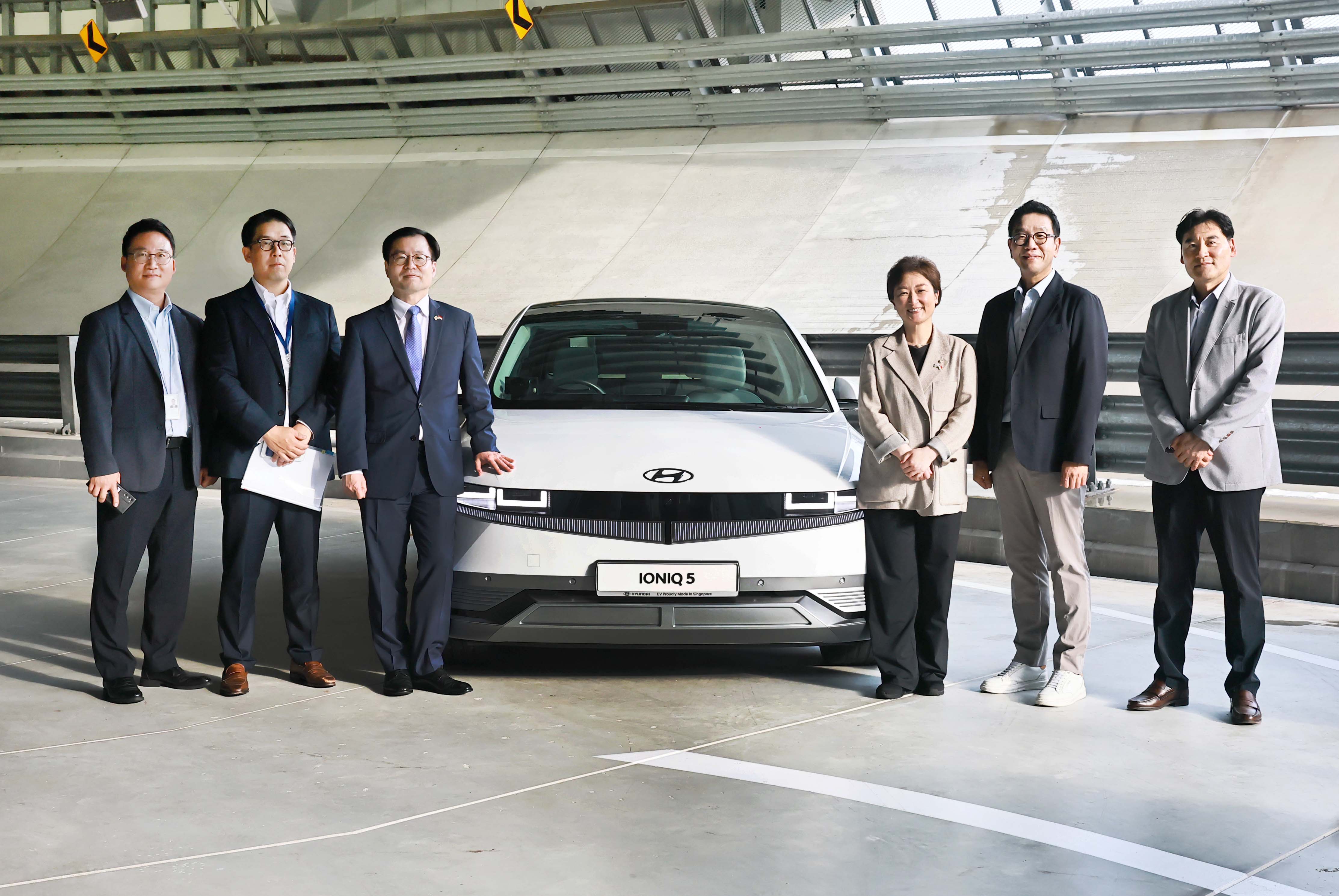
Trade Minister Yeo Han-koo of the Ministry of Trade, Industry and Resources (MOTIR, Minister JK Kim) visited Hyundai Motor Group Innovation Center Singapore (HMGICS) on April 28, 2026, together with Rep. Lee Un-ju, chair of the Korea–Singapore Parliamentary Friendship Association. The delegation reviewed manufacturing AI and logistics automation technologies and toured HMGICS facilities, including automated production lines and a digital command center. They also discussed implications for Korea’s M.AX initiative, which aims to accelerate AI transformation in manufacturing. date2026-04-29
-
Industry
Korea Launches Shipbuilding–Shipping Alliance under Next-Generation W.A.V.E. Strategy
The Ministry of Trade, Industry and Resources (MOTIR, Minister JK Kim) and the Ministry of Oceans and Fisheries (MOF, Minister Hwang Jong-woo) held a launch ceremony in Seoul on April 28, 2026, for a strategic council to promote shared growth between the shipbuilding and shipping industries. The ceremony followed the two industry associations’ December 2025 agreement at the Strategic Meeting of the M.AX Alliance for Autonomous Ships to form the council. The event brought together more than 100 participants, including the ministers of MOTIR and MOF; Korea Gas Corporation (KOGAS); the Korea Offshore & Shipbuilding Association (KOSHIPA); the Korea Shipowners’ Association (KSA); and representatives from major Korean shipbuilders and shipping companies. The council will link Korea’s shipbuilding and shipping industries and build a maritime supply chain connecting Korean-built vessels with Korean-flag shipping. Led by KOSHIPA and KSA, it brings together shipbuilders, shipping companies, government officials, and academic experts under the W.A.V.E. strategy. The W.A.V.E. strategy sets out four goals: securing world-leading technologies (World Top Class); building industry alliances across shipbuilding and shipping (Alliance); expanding the Korean-flag fleet and securing orders for Korean shipbuilders (Vessel Production); and creating a shared-growth innovation ecosystem rooted in regional economies (Ecosystem). The two industries will identify detailed tasks for each goal and prepare an implementation plan by the end of 2026. The council will operate through expert task forces on technology development, demonstrations, vessel orders, financing and regulatory improvements, with quarterly meetings tied to policy proposals. As a first step in strategic cooperation, KOSHIPA and KSA adopted a declaration on joint orders for Korean-flag vessels to support the development of Korea’s shipbuilding and offshore cluster. The declaration will strengthen order links between Korean shipping companies and shipyards, helping shipping companies expand advanced fleets at competitive prices and giving shipbuilders and marine equipment suppliers a more stable order pipeline. KOGAS, KSA, and Korea’s three major shipbuilders also signed an MOU on LNG transportation. Under the MOU, they will work together to stabilize Korea’s LNG transport system amid growing resource security concerns and the need to strengthen the country’s energy transport capacity. The government and industry agreed to strengthen a one-team framework that aligns shipbuilding and shipping under a single industrial strategy, including technology development, demonstrations, and fleet expansion. MOTIR and MOF will jointly pursue regulatory improvements, budget support, demonstration infrastructure, and links with regional industrial bases, drawing on input from the field. Through the M.AX Alliance for Autonomous Ships, the two ministries will also launch a KRW 600 billion project in 2026 to develop fully autonomous AI-powered ships. They will support future-vessel technologies, including ammonia- and electric-powered eco-friendly ships and localized LNG cargo tanks, and discuss expanding MASGA, the Korea–U.S. shipbuilding cooperation project, to shipping and ports. “Shipbuilding and shipping are industries critical to Korea’s economic security,” said Minister Kim of MOTIR. “Today’s launch is significant because it puts in place an action-oriented framework for the two industries to shape and carry out work on market demand, technology, demonstrations, and regulatory improvements. Under the W.A.V.E. strategy, I hope shipbuilding and shipping will move forward together into a new phase of growth.” Minister Kim added, “MOTIR will work closely with MOF to ensure that the cooperation announced today, including joint orders, future-vessel technology developm date2026-04-28
-
Industry
On-Site Visit and Roundtable with Reshoring Companies
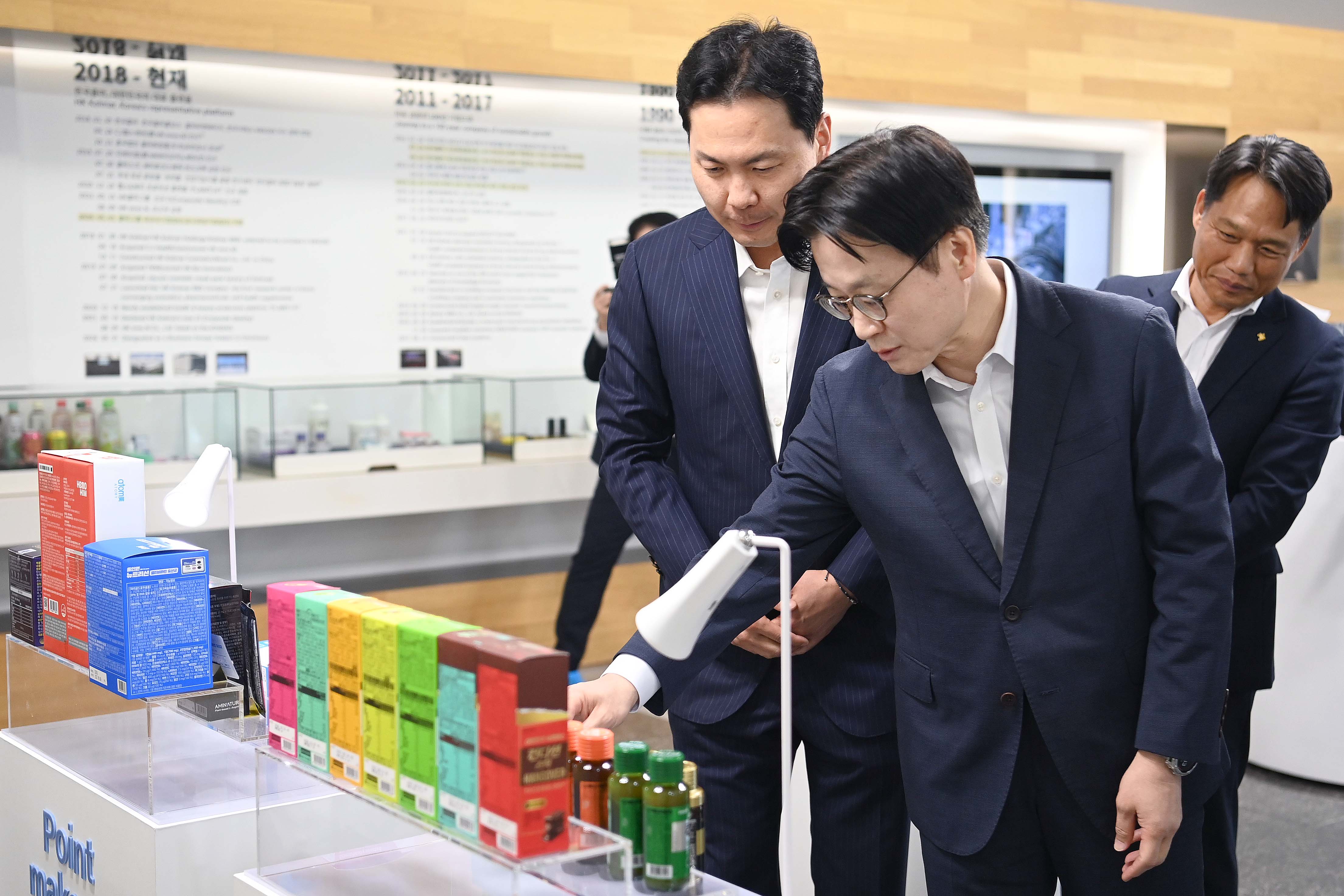
Minister JK (Jung-Kwan) Kim of the Ministry of Trade, Industry and Resources (MOTIR) visited Kolmar Korea, a cosmetics manufacturer in Jeonui-myeon, Sejong, on April 27, 2026. Kolmar Korea was selected as the first company under Korea’s 2026 reshoring program. Minister Kim toured key facilities at Kolmar Korea’s plant before chairing a roundtable with reshoring companies. The meeting was attended by representatives from related organizations and companies, including the Korea Trade-Investment Promotion Agency (KOTRA), the Korea Industrial Complex Corporation (KICOX), Hanwha Engine and Simmtech. At the roundtable, Minister Kim said secure and stable supply chains now define the competitiveness of companies and countries alike, and that the government will provide full support so that reshoring and regional investment become a more rational and attractive choice. date2026-04-28
-
Industry
M.AX Requires Speed: MOTIR Moves to Align Policy with Industry Pace
The Ministry of Trade, Industry and Resources (MOTIR, Minister JK Kim) held a special lecture for MOTIR staff on April 24, 2026, delivered by Park Min-won, president of Changwon National University and chair of the M.AX Alliance’s Industrial Complex AX Division. Held under the theme “Manufacturing, the Heart of Korea’s Economy, Opens the Future through M.AX,” the lecture was designed to help MOTIR officials build the policy capacity needed to support M.AX implementation on the ground. The Industrial Complex AX Division was established on February 26, 2026, as the 11th division of the M.AX Alliance. On April 17, 2026, it held its first meeting, with the chairs of the 10 MINI Alliances joining as division members. As industrial complex AX moves into full implementation, MOTIR invited President Park to speak to staff based on his work with the ministry at the forefront of M.AX and his efforts to bring together industry, academia and research institutions. In the lecture, President Park briefed MOTIR staff on the background to M.AX, why M.AX is urgently needed, and specific implementation plans. He noted that as global industrial leadership shifts, technology competition is intensifying, making demonstration projects essential to help reduce the investment burden on companies adopting AI technologies. He also shared direct feedback from companies on demand for AX, bringing field-level perspectives into the discussion. Minister JK Kim said, “MOTIR will use this lecture as an opportunity to narrow the gap between policy and the field, renew the sense of urgency behind M.AX policy implementation, and strengthen its internal capacity. The ministry will also continue engaging with field experts to expand opportunities for policy officials to better understand the pace and needs of industry.” date2026-04-24
-
Industry
MOTIR Reviews Technology and Infrastructure Roadmap for Next-Generation Power Semiconductor Industry
The Ministry of Trade, Industry and Resources (MOTIR, Minister JK Kim) held the Next-Generation Power Semiconductor Forum at EL Tower on April 23, 2026, with officials from relevant ministries and experts from industry, academia and research institutes. At the forum, MOTIR presented progress on the Roadmap for Developing the Next-Generation Power Semiconductor Industry, a key implementation task under the Semiconductor Industry Strategy for the AI Era announced in December 2025. The roadmap has been under development for about four months since the task force was launched. The forum also brought together anchor companies and experts to discuss future directions for large-scale R&D projects and plans for a power semiconductor innovation belt in Korea’s southern region. The roadmap sets out a medium- to long-term blueprint for securing core technologies and stabilizing supply chains in the power semiconductor industry. It covers next-generation technology development, demonstration and mass-production infrastructure, and workforce training. Moving beyond fragmented support, MOTIR is planning large-scale R&D projects that will connect demand companies in electric vehicles, defense, power grids and data centers across the full value chain, from materials, devices and modules to system-level demonstration. MOTIR will also build power semiconductor infrastructure around key regional hubs. It will upgrade the public fab at the specialized power semiconductor complex in Busan and help private companies use demonstration data from public facilities in Pohang and Naju for product mass production. Furthermore, the ministry will link regional hub universities and use local demonstration facilities for hands-on training, helping train key talent for the power semiconductor innovation belt in Korea’s southern region and support growth in both the region and the industry. Choi Woo-hyuk, Director General for High Technology Industry at MOTIR, said, “As the restructuring of global power semiconductor supply chains accelerates, MOTIR will give priority to compound semiconductors as a key development area. Together with relevant ministries, we will build an ecosystem for the power semiconductor industry, centered on the power semiconductor innovation belt in Korea’s southern region.” date2026-04-23
-
Industry
Government and Major Companies Launch K-New Deal Academy to Help Young Jobseekers Take the Next Step
The Ministry of Trade, Industry and Resources (MOTIR, Minister JK Kim), the Ministry of Employment and Labor (MOEL, Minister Kim Young-hoon), and the Korea Research Institute for Vocational Education and Training (KRIVET, President Ko Hye-won), the program’s coordinating institution, will accept applications from Wednesday, April 22 to Friday, May 22, 2026, for operations support centers and participating companies for the K-New Deal Academy. The K-New Deal Academy, introduced through the supplementary budget, is designed to help young jobseekers rebuild confidence, strengthen their skills, and enter the labor market. Under the program, major companies and other employers favored by young jobseekers will design and offer company-specific vocational training and other programs. Participating companies must be large corporations or other leading companies in their industries or regions, with competitiveness, recognition, and the capacity to run programs for young jobseekers. Companies may apply on their own or as part of a consortium. They may structure academy programs around their strengths and may offer, in addition to job training, other programs that would benefit young jobseekers. In reviewing proposals, the government will place particular weight on whether the programs are built around company-specific courses that reflect each company’s job capabilities, infrastructure, and organizational culture. The government will fund academy operating costs and provide allowances to participating young jobseekers. It also plans to provide additional support for academies open in non-metropolitan areas to encourage more young jobseekers outside the capital region to take part. Operations support centers will assist companies in running the academies and promoting the program. Eligible organizations must have the capacity to manage government-funded projects, as well as sufficient understanding and experience in vocational skills development programs. Applicants seeking to serve as operations support centers must recruit participating companies in advance and apply jointly with them. Companies seeking to run an academy must submit an academy operating plan. Organizations or institutions seeking to serve as operations support centers must submit an application for designation, together with the program operating plans of the companies wishing to participate, by 5:00 p.m. on Friday, May 22, 2026, by email to KRIVET at kndacademy@krivet.re.kr. An information session on the program will be held in Seoul on Wednesday, April 29, 2026. The public notice and detailed materials for the session are available on the websites of MOEL (http://www.moel.go.kr) and KRIVET (http://www.krivet.re.kr). Lee Min-woo, Director General for Industrial Policy at MOTIR, said, “Through the K-New Deal Academy, young jobseekers will be able to build experience for future careers without losing momentum, while companies will also be able to strengthen the job skills of their prospective talent pool. We hope companies will take an active part in helping create a virtuous cycle in which industry and talent grow together.” Pyeon Do-in, Director General for Vocational Skills Policy at MOEL, said, “The K-New Deal Academy is a meaningful opportunity to put the know-how and infrastructure of major companies directly to work in helping young people build their capabilities. We hope many large companies will take part with a sense of social responsibility and help young people build their futures.” date2026-04-21
-
Industry
MOTIR Holds the Industrial Complex Policy Hackathon
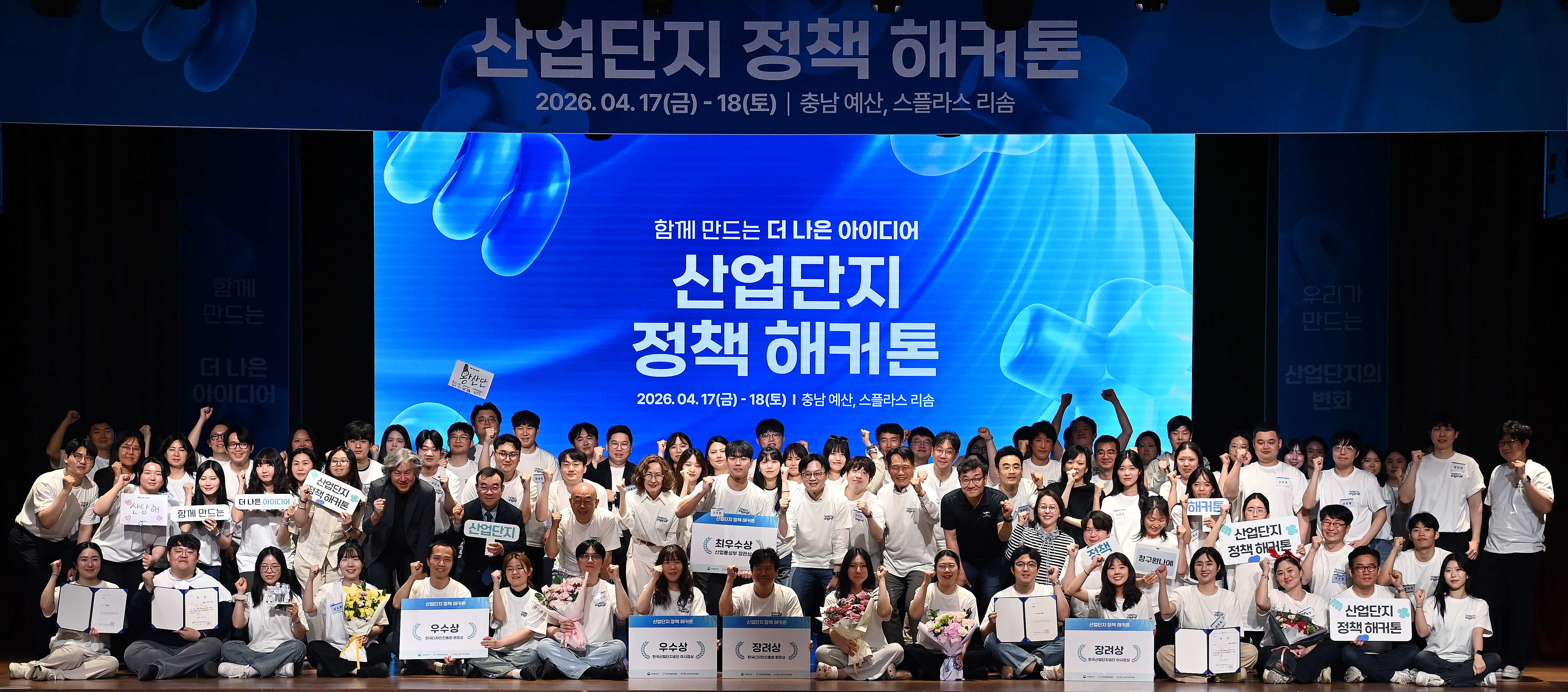
Minister JK (Jung-Kwan) Kim of the Ministry of Trade, Industry and Resources (MOTIR) attended the Industrial Complex Policy Hackathon in Yesan, Chungcheongnam-do, on April 18, 2026. Attendees included Lee Sang-hoon, chairman of the Korea Industrial Complex Corporation (KICOX), Kang Yoon-joo, president of the Korea Institute of Design Promotion (KIDP), and other participants and officials. After delivering opening remarks, Minister Kim presented the MOTIR Minister’s Award to “Bungeoppang,” the team that won the top prize. He said, “We will build M.AX ecosystems in key industrial complexes across the five mega-regions and three special self-governing provinces so that they fully serve as Korea’s growth engines, and the benefits of AI transformation reach industries across the regions.” date2026-04-20
-
Industry
First Industrial Complex AX Subcommittee Meeting
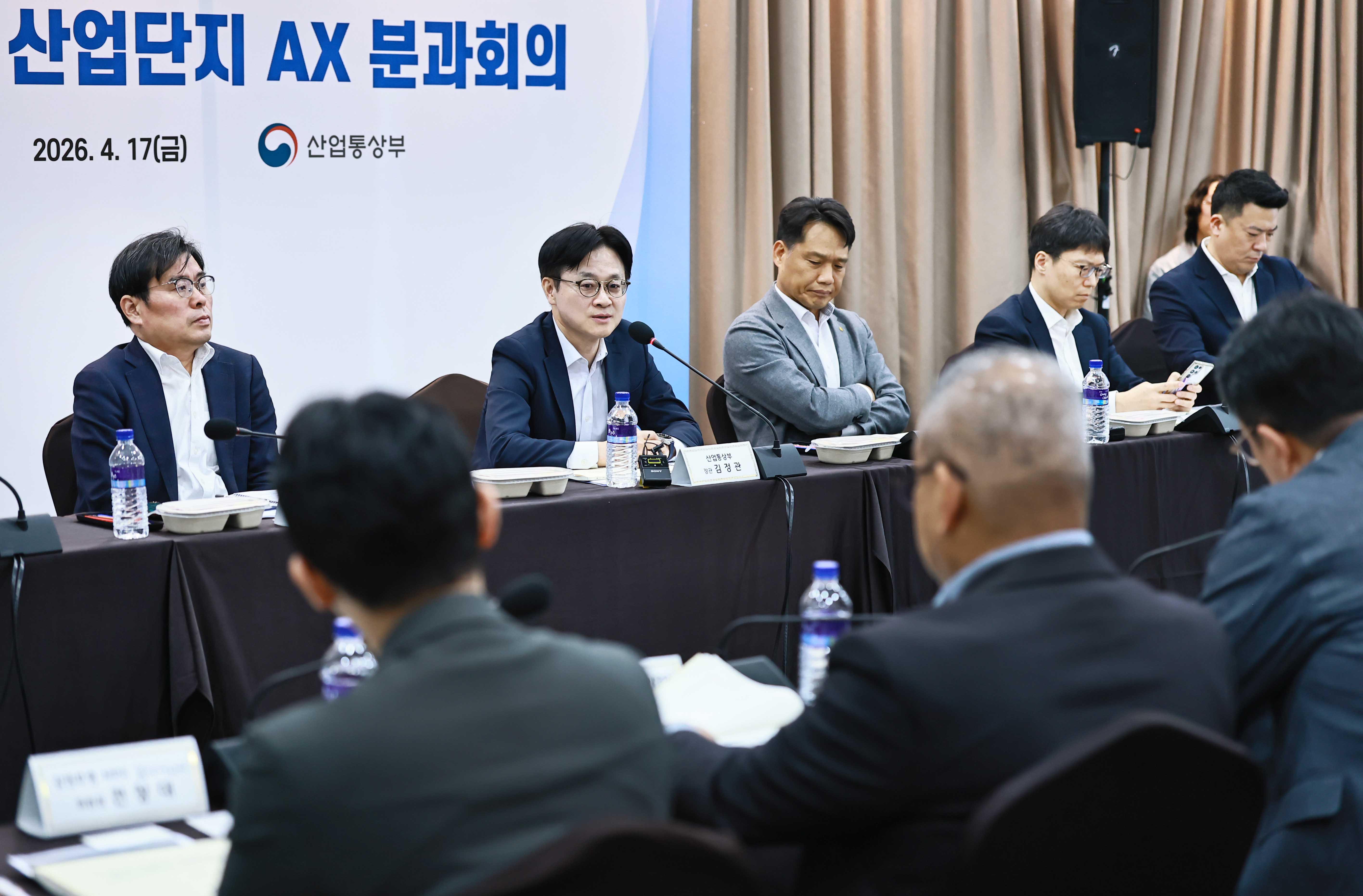
Minister JK (Jung-Kwan) Kim of the Ministry of Trade, Industry and Resources (MOTIR) chaired the first meeting of the Industrial Complex AX Subcommittee in Cheongju, North Chungcheong Province, on April 17, 2026. Attendees included Park Min-won, president of Changwon National University and chair of the Subcommittee; Lee Sang-hoon, chairman of the Korea Industrial Complex Corporation (KICOX); and other Subcommittee members. Minister Kim said, “We will build M.AX ecosystems in key industrial complexes across the five mega-regions and three special self-governing provinces so that they fully serve as Korea’s growth engines, and the benefits of AI transformation reach industries across the regions.” date2026-04-17