-
Industry
MOTIR Holds 23rd Shipbuilding and Marine Day Ceremony
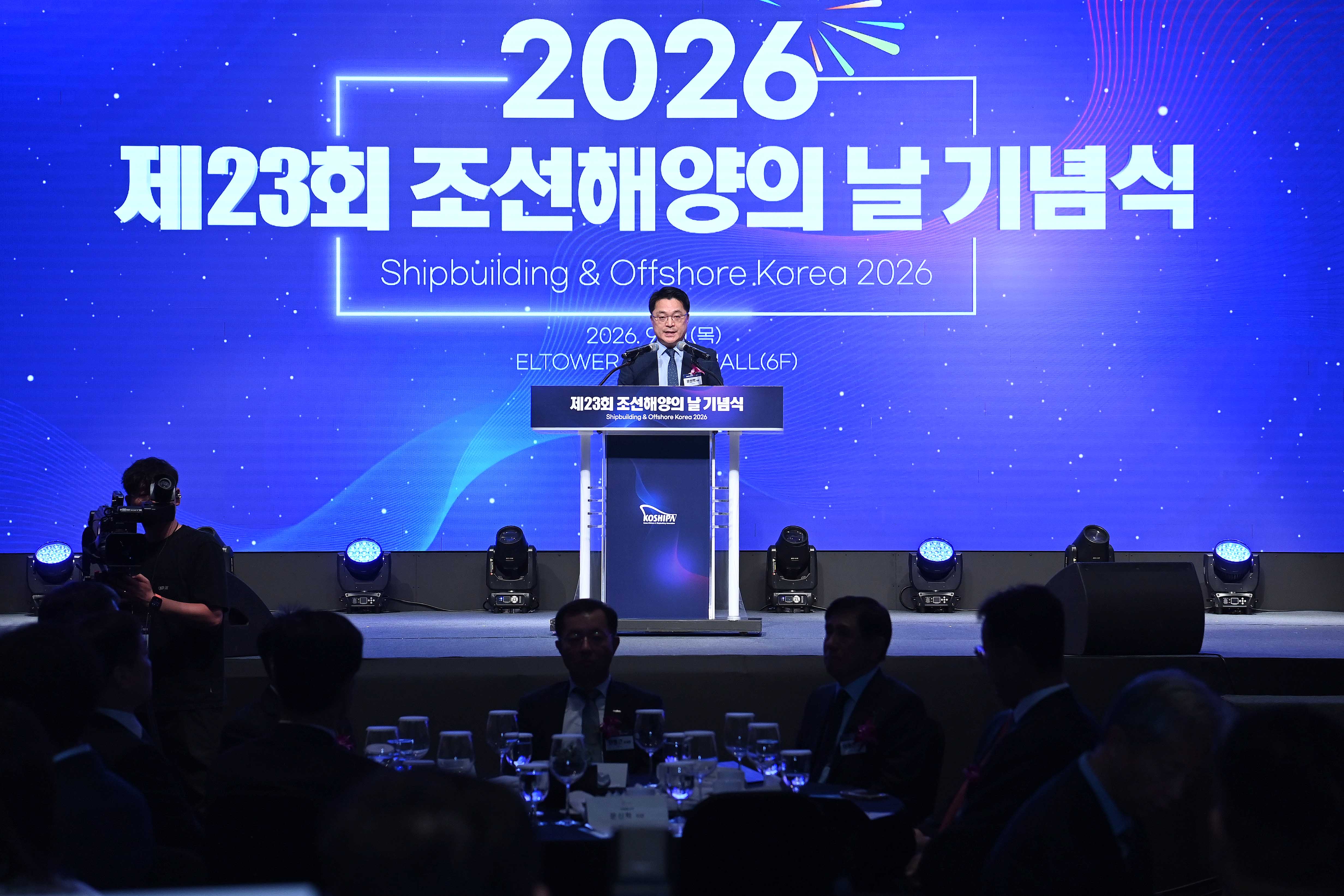
Vice Minister for Industry Moon Shin-hak attended the 23rd Shipbuilding and Marine Day in Seoul on September 10, 2026. The event brought together around 250 participants, including Lee Sang-kyun, Chairman of the Korea Offshore & Shipbuilding Association (KOSHIPA); representatives from shipbuilding and marine organizations; and award recipients. Following his remarks, Vice Minister Moon presented government awards and ministerial commendations to 35 recipients for their contributions to advancing the shipbuilding and marine industry. Vice Minister Moon stressed that K-shipbuilding’s competitiveness lies in the strength of the entire value chain spanning steel, equipment, shipping and finance, and urged industry and government to work as a team and move forward together as members of one K-shipbuilding fleet. date2026-09-10
-
Industry
K-Shipbuilding Advances Together Through Shared Growth
The Ministry of Trade, Industry and Resources (MOTIR, Minister JK Kim) held the 23rd Shipbuilding and Marine Day ceremony in Seoul on September 10, 2026. The event brought together around 250 participants, including Vice Minister Moon Shin-hak of MOTIR; Lee Sang-kyun, Chairman of the Korea Offshore & Shipbuilding Association (KOSHIPA); and other representatives from the shipbuilding and marine industries. At the ceremony, 35 individuals received government awards and ministerial commendations, including the Silver Tower Order of Industrial Service Merit, for their contributions to advancing the shipbuilding and marine industry. Notably, Park Tae-soo, CEO of DOOWON HIGHSTEEL, received the Silver Tower Order of Industrial Service Merit, becoming the first government award recipient from a shipbuilding equipment company in more than a decade. A financial institution official who has supported the issuance of refund guarantees (RGs) for small and medium-sized shipbuilders also received a Prime Minister’s Commendation. The awards highlighted contributions not only from shipyards but also from across the broader shipbuilding ecosystem that supports them. In his congratulatory remarks, Vice Minister Moon noted K-shipbuilding’s USD 32 billion in exports over the past year—the highest in eight years—its continued global lead in LNG carriers, and MASGA’s move into full-scale implementation, including the opening of the Korea–U.S. Shipbuilding Partnership Center, and thanked the industry for its role in these achievements. “No ship can be built by a shipyard alone,” Vice Minister Moon said. He stressed that K-shipbuilding’s competitiveness lies in the strength of the entire value chain spanning steel, equipment, shipping and finance, then outlined three policy directions for shared growth across the ecosystem. First, the government will promote shared growth between shipbuilding and its upstream and downstream industries, including steel and shipping. It will take an active role in developing measures for shared growth between the shipbuilding and steel industries. To help equipment suppliers establish the onboard installation track record needed for exports, the government plans to support the installation of Korean equipment on newbuild vessels ordered by Korean shipping companies. Through the Council for Shared Growth in Shipbuilding and Shipping, co-chaired by the ministers of MOTIR and the Ministry of Oceans and Fisheries (MOF), the government will also discuss ways to generate orders, including joint orders by Korean shipping companies and priority orders for public vessels. Second, the government will promote shared growth among large shipbuilders, small and medium-sized shipbuilders, and partner companies. It will expand the M.AX Alliance for Autonomous Ships, which has focused on autonomous navigation, to cover shipyard manufacturing sites and reorganize it as the AI Shipbuilding Alliance. The government will also help disseminate technologies proven by large shipbuilders to partner companies and small and medium-sized shipbuilders. To support small and medium-sized shipbuilders as their exports increase, the government plans to work with relevant ministries and financial institutions to facilitate the issuance of RGs for these shipbuilders. Third, the government will promote shared growth in overseas markets. In implementing the MASGA project, it will focus on identifying project opportunities for shipbuilding equipment suppliers and small and medium-sized shipbuilders. The government will also continue to strengthen MRO capabilities among small and medium-sized shipbuilders and support U.S. market entry by equipment suppliers. The Korea–U.S. Shipbuilding Partnership Center, which opened in Washington, D.C., in late July, will also support small and medium-sized shipbuilders and equipment suppliers in developing sales channels in the U.S. m date2026-09-10
-
Industry
MOTIR Connects Leading Middle Market Enterprises with Young Job Seekers to Support 5+3 Growth Engines
The Ministry of Trade, Industry and Resources (MOTIR, Minister JK Kim) held the Middle Market Enterprise Job Fair in Daejeon on September 8, 2026. The fair was organized to foster shared growth in the region by connecting young talent with regional middle market enterprises facing recruitment difficulties. It also aimed to help middle market enterprises grow to play a central role in regional economies and support the development of growth engines under the Five Mega-Regions and Three Special Self-Governing Provinces (5+3) initiative. The event drew 66 leading middle market enterprises and prospective middle market enterprises—including YC Corporation and Nepes Ark in semiconductors, Hanmi Pharmaceutical and Huons Group in biopharmaceuticals, and SIMPAC in machinery—and more than 2,000 job seekers. The 12 previous fairs have helped more than 9,000 people find jobs, and this year’s first- and second-half fairs are expected to connect more than 2,000 job seekers with job opportunities. Beginning this year, the government expanded eligibility for the Youth Job Leap Incentive beyond SMEs to include middle market enterprises outside the capital region. The measure is intended to ease workforce shortages at leading middle market enterprises in the regions and encourage young people to find work there. The government is also increasing the number of industrial technical personnel allocated to each middle market enterprise from two to five. Furthermore, it will continue to support middle market enterprises’ recruitment of young people with master’s or doctoral degrees and experienced technical professionals. Lee Gyu-bong, Director General for Middle Market Enterprise Policy at MOTIR, said at the opening ceremony, “Middle market enterprises account for just 1.5 percent of all companies in Korea but 13.9 percent of total employment, while providing quality jobs. In particular, I expect them, as a core force behind the regional growth engines under the 5+3 initiative, to continue driving regional economic growth and job creation.” He added, “MOTIR plans to announce its Middle Market Enterprise Growth Ladder 2030 strategy by the end of the year and put in place a systematic framework to support the growth of middle market enterprises.” date2026-09-08
-
Industry
MOTIR Holds Third KFEZ Day 2026
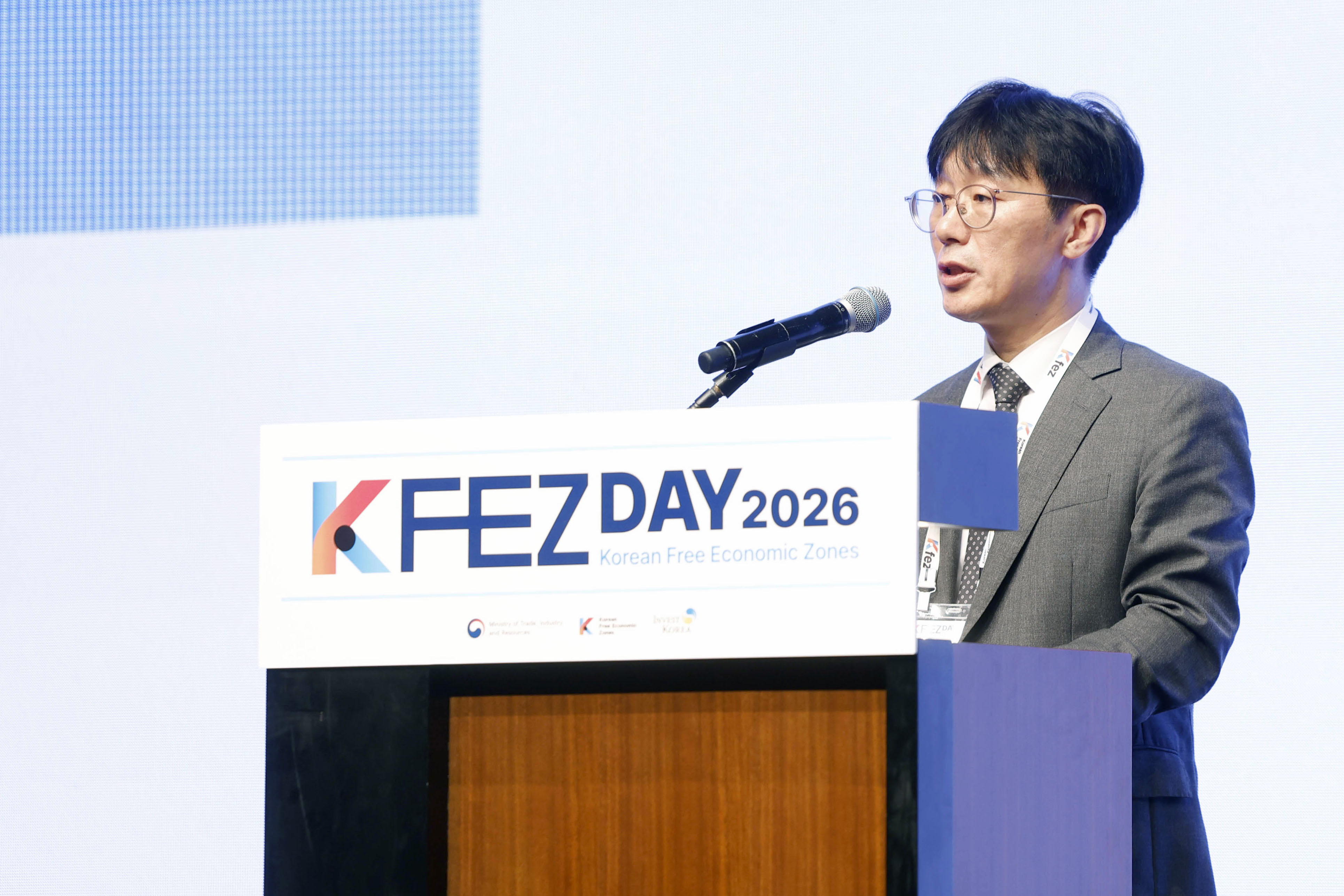
Lee Min-woo, Acting Deputy Minister for Industry and Growth at the Ministry of Trade, Industry and Resources (MOTIR, Minister JK Kim), attended Korean Free Economic Zones (KFEZ) Day 2026 in Seoul on September 2, 2026. The event brought together about 300 participants, including foreign diplomats based in Korea; representatives of foreign chambers of commerce; and executives from foreign-invested and global companies. In his remarks, Acting Deputy Minister Lee highlighted free economic zones as key hubs that put national growth strategies into practice and connect investment in advanced industries with regional growth. “Together with local governments, we will step up efforts to attract investment and support businesses so global companies can invest and grow with confidence,” Lee said. date2026-09-04
-
Industry
Korean Free Economic Zones to Become Hubs for Balanced National Growth
The Ministry of Trade, Industry and Resources (MOTIR, Minister JK Kim) hosted Korean Free Economic Zones (KFEZ) Day 2026 in Seoul on September 2, 2026. The event brought together about 300 participants, including foreign diplomats based in Korea; representatives of foreign chambers of commerce; and executives from foreign-invested and global companies. The event introduced Korea’s foreign investment policies and highlighted the country’s strategic value as a global hub for advanced industries and its appeal to investors. It also emphasized KFEZs’ roles as key hubs and the investment incentives they offer. Companies that have successfully invested in the zones also shared their experiences, showcasing the investment value of KFEZs from multiple perspectives. Since Incheon was designated Korea’s first free economic zone in March 2003, KFEZs have expanded over the past two decades to nine zones comprising 101 districts. About 8,500 companies now operate in the zones and have created some 250,000 jobs. KFEZs have strengthened Korea’s industrial competitiveness and become key hubs for attracting global investment. Going forward, KFEZs will align their plans with national growth strategies, including the Three Megaprojects, as well as regional growth engines under the Five Mega-Regions and Three Special Self-Governing Provinces (5+3) initiative. Under this approach, the zones will attract advanced strategic industries suited to each region and large-scale corporate investment to build regional industrial ecosystems and create jobs. “Free economic zones are key hubs that put national growth strategies into practice on the ground and connect investment in advanced industries with regional growth,” said Lee Min-woo, Acting Deputy Minister for Industry and Growth at MOTIR. “Together with local governments, we will step up efforts to attract investment and support businesses, creating the best possible environment for global companies to invest and grow with confidence.” date2026-09-02
-
Industry
MOTIR Steps Up Battery Triangle Belt Initiative Linking Chungcheong, Gyeongsang, and Jeolla
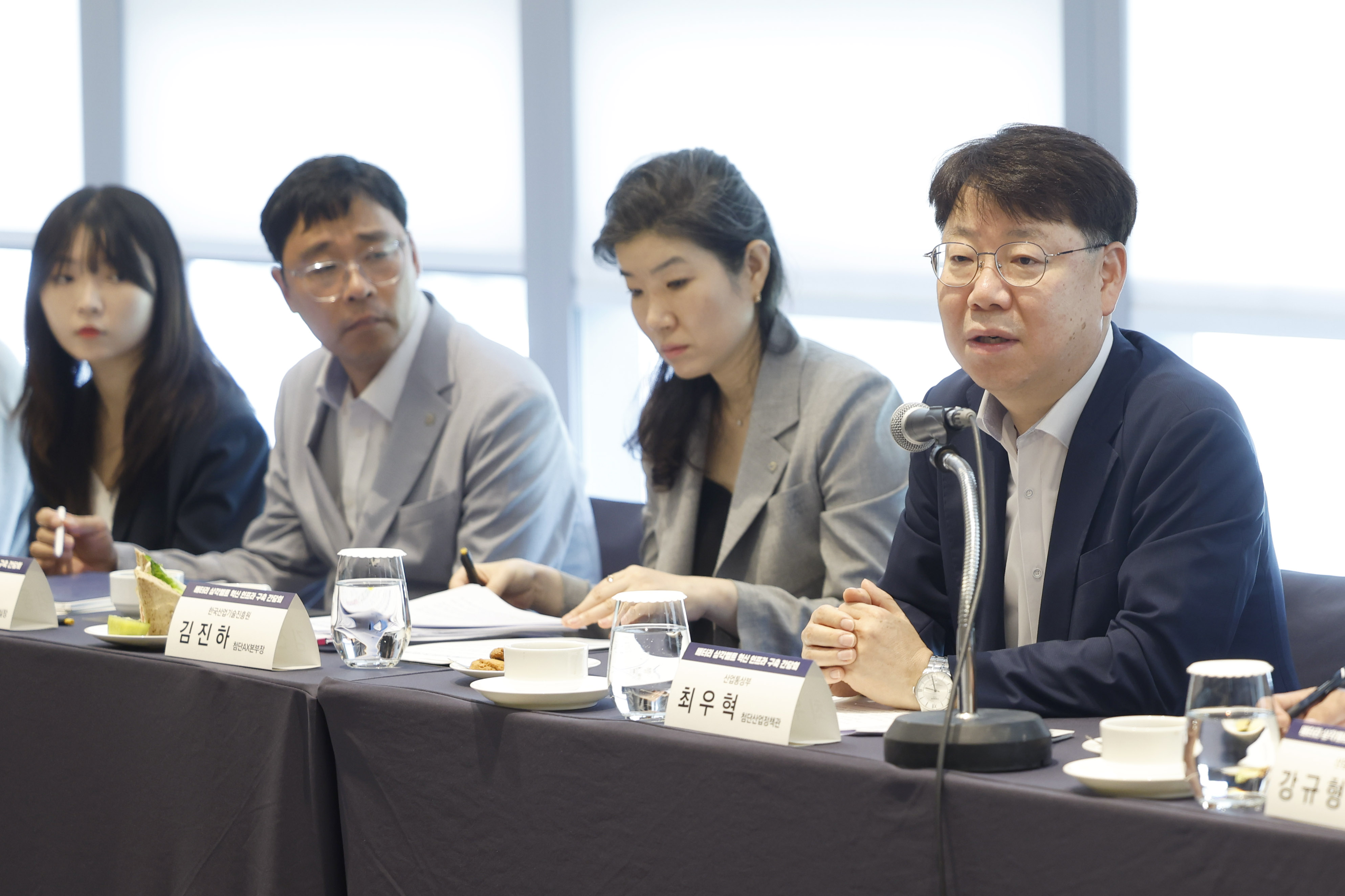
The Ministry of Trade, Industry and Resources (MOTIR, Minister JK Kim) announced that it held a meeting on September 1 at the Marriott Hotel in Sejong with local governments, including Chungcheongbuk-do, Gyeongsangbuk-do, and Jeollabuk-do, as well as relevant organizations, to discuss the development of innovation infrastructure for the Battery Triangle Belt. The Battery Triangle Belt is an integrated battery industry ecosystem that brings together Chungcheong’s battery cell base, Gyeongsang’s key materials base, and Jeolla’s raw materials production base into a single, interconnected network, with the aim of diversifying Korea’s battery supply chains and stabilizing supply and demand. The meeting was organized to comprehensively review challenges raised through regional town hall meetings and the Battery Triangle Belt consultative body, and to discuss effective infrastructure development measures tailored to the needs of each region. Based on these discussions, MOTIR decided to work with the relevant local governments to actively review and pursue the new projects they have proposed, including performance evaluation infrastructure for all-solid-state batteries, a demonstration center to support the commercialization of sodium-ion batteries, safety evaluation infrastructure for batteries using recycled materials, and power supply facilities in specialized complexes for national high-tech strategic industries. For projects requiring further work, detailed plans will be refined through December and then reviewed again. MOTIR also plans to maintain regular consultation channels with local governments to actively identify and support region-led projects that can serve as core engines of growth. “The Battery Triangle Belt is a critical national initiative that goes beyond simply developing individual regional clusters to establish an integrated national battery supply chain network,” said MOTIR’s Director General for High Technology Industry. “We will work closely with local governments to maximize the strengths of each specialized complex, and we will bring national capabilities to bear on ensuring that support projects at each hub proceed smoothly.” date2026-09-01
-
Industry
Amendments to the Public Notice on Trade of Strategic Items Take Effect on September 1
The Ministry of Trade, Industry and Resources (MOTIR, Minister JK Kim) will implement amendments to the Public Notice on Trade of Strategic Items (Public Notice) on September 1, 2026. MOTIR began the amendment process by issuing an administrative notice on the proposed changes, which ran from July 13 to August 12, 2026. The key changes are as follows. The full text of the amendment is available on the MOTIR website (https://www.motir.go.kr/) and in the Official Gazette. 1. To support international coordination on export controls, the amendment incorporates approximately 80 updates agreed upon by the four major multilateral export control regimes—the Wassenaar Arrangement (WA), the Australia Group (AG), the Nuclear Suppliers Group (NSG), and the Missile Technology Control Regime (MTCR)—into the Public Notice. The four regimes are multilateral and intergovernmental cooperative bodies established to control exports of weapons of mass destruction, including nuclear, chemical, and biological weapons; missiles; conventional arms; and strategic items that can be used in the development, production, or use of such weapons. Each year, members, including Korea, operate their export control systems by incorporating the items designated for control under each regime into their domestic laws. In particular, in recent years, growing global attention to dual-use items that can serve both civilian and military purposes has led to broader international coordination on export controls in advanced industries such as semiconductors and biotechnology. Under the amendment, Korea will also designate advanced dual-use items—including high-performance integrated circuits for AI and semiconductor manufacturing equipment—as strategic items. These items are already subject to export controls in major economies, including the United States, the European Union, and Japan. Starting September 1, 2026, exporters of these newly designated strategic items must obtain an export license from MOTIR. 2. The amendment removes and abolishes the Exporter’s Undertaking form from the documents required for a strategic item export license. It also clarifies terminology in relevant documents and forms and provides more detailed instructions on how to complete them, making the process easier for exporters of strategic items. Reflecting feedback from exporters, the amendment also revises several forms. These include the Expert Classification (Application) Form, used to request a determination on whether an export item is subject to strategic-item controls; the Comprehensive Export License (Application) and the End-User Statement, required when applying to MOTIR or another licensing authority for an export license; and others, including the Import Purpose Confirmation (Application) Form and the Statement by Ultimate Consignee and Purchaser. MOTIR will continue to help companies understand and comply with the export control system. The ministry will brief industry associations on the amendments and provide consultation services through the Export Control Issue Desk (Tel. 02-6000-6496–6499) at the Korean Security Agency of Trade and Industry (KOSTI). date2026-09-01
-
Industry
MOTIR and Local Governments Discuss Innovation Infrastructure for Battery Triangle Belt
Choi Woo-hyuk, Director General for High Technology Industry at the Ministry of Trade, Industry and Resources (MOTIR, Minister JK Kim), delivered opening remarks and chaired a meeting at Sejong on September 1, 2026, to discuss the development of innovation infrastructure for the Battery Triangle Belt. The meeting brought together officials from local governments, including Chungcheongbuk-do, Gyeongsangbuk-do, and Jeollabuk-do, as well as representatives from relevant organizations. “The Battery Triangle Belt is a critical national initiative to establish an integrated national battery supply chain network,” Director General Choi said. “We will work closely with local governments to maximize the strengths of each specialized complex and ensure that support projects at each hub proceed smoothly.” date2026-09-01
-
Industry
Korea to Promote National Land Transformation through Local-Led Growth
At the 10th Central-Local Cooperation Council chaired by the President on August 26, 2026, the Korean government announced its plan to promote local-led growth, a set of growth engines selected for each region, and its decision to pursue a new strategy for balanced growth led by local governments. National Land Transformation Strategy Minister Im Ki-geun of the Office for Government Policy Coordination (OPC) presented the plan to promote local-led growth and outlined three strategies and eight tasks under the National Land Transformation Strategy, which calls for local governments to lead the redesign of regional industries and institutional frameworks. 1. Redesigning the National Spatial Structure Establishing Sejong as a Fully Functioning Administrative Capital: The government will complete the Presidential Sejong Office by August 2029 and the National Assembly Sejong Complex by the second half of 2033. It will also build the institutional foundation needed to establish Sejong fully as the administrative capital. Developing Regional Hub Cities: The government will develop corporate-friendly high-tech cities that bring together industrial complexes, R&D facilities, and residential communities. It will also develop self-sufficient cities powered by renewable energy (including RE100 industrial complexes) linked to each region’s specialized industries, and develop Saemangeum as a future industry hub anchored by corporate investment. Expanding Nationwide Transport Links: The government will upgrade transport networks connecting hub cities to meet regional demand, including by expanding metropolitan rail and express bus services, and strengthen links between mega-regions by building out the high-speed rail network and ensuring the timely opening of major expressways. 2. Developing Strategic Industries by Region Specialized Development through Growth Engines Under the “Five Mega-Regions and Three Special Self-Governing Provinces (5+3)” Initiative: The government will designate growth engines for each region and concentrate support on them. It will also launch a government-wide support system to accelerate implementation of the three megaprojects, including those involving semiconductors and AI. Establishing Mega Special Zones: The government will work with businesses and local governments to establish Mega Special Zones linked to regional growth engines. The zones will offer special regulatory treatment—including menu-based exemptions, demand-responsive deferrals, and upgraded regulatory sandboxes—and policy support packages to drive regional growth. Developing Regional Talent for Growth Engines: The government will select and support signature colleges for regional growth engines at national flagship universities. The selected colleges will train specialists to meet business needs and serve as research hubs. The government will also utilize vocational high schools, the regional talent development system (ANCHOR), AX research centers run jointly with businesses, and Korea Polytechnics campuses to support regional talent development at every stage. 3. Laying the Foundation for Regional Vitality Promoting Investment and the Relocation of Businesses and Public Institutions: The government will expand tax incentives and subsidies for companies that relocate to or invest in the regions and ensure they have timely access to power, water, and other infrastructure. The government will also develop measures covering housing, healthcare, education, care, and culture to help employees of relocated businesses and institutions build stable lives in their new communities. Overhauling Support Systems to Prioritize the Regio date2026-08-28
-
Industry
Automobile Exports Hit Record High for July; Government and Industry Join Forces on Future-Vehicle Transition and Mutual Growth
The Ministry of Trade, Industry and Resources (MOTIR, Minister JK Kim) held an automobile industry roundtable on August 13, 2026, at the Korea Automobile & Mobility Association (KAMA), with Park Dong-il, Deputy Minister for Industrial Policy at MOTIR, in attendance. Participants included representatives of four automakers—Hyundai Motor, GM Korea, KG Mobility, and Renault Korea—and four industry and research organizations: KAMA; the Korea Auto Industries Cooperative Association (KAICA); the Korea Automotive Technology Institute (KATECH); and the Korea Institute for Industrial Economics and Trade (KIET). They discussed key issues, including automobile industry trends in July and the outlook for the second half of 2026, the transition to future vehicles, and how to foster mutually beneficial cooperation across the industry ecosystem. Automobile Industry Trends in July Korea’s automobile exports rose 7.0 percent year-on-year to USD 6.24 billion in July 2026, the highest July figure on record. Domestic sales and production also increased 0.5 percent and 11.3 percent, respectively, to 139,000 and 352,000 units. Eco-friendly vehicles led export growth, with their export value rising 25.5 percent year-on-year to $2.59 billion. Exports of electric and hydrogen vehicles increased 31.9 percent to $0.94 billion, while hybrid vehicle exports rose 22.2 percent to $1.65 billion. By contrast, exports of internal combustion engine vehicles fell 3.1 percent to $3.65 billion. By region, export growth was led by key markets, with North America up 18.0 percent year-on-year to $3.25 billion and the European Union up 23.5 percent to $0.88 billion. The increase appears to reflect more working days after major automakers moved their annual summer shutdowns from July in 2025 to August in 2026, along with solid global demand for eco-friendly vehicles and SUVs. Exports to the Middle East rose 12.7 percent to $0.43 billion, returning to year-on-year growth after eight months. Domestic sales in July rose 0.5 percent year-on-year to 139,000 units. Demand for eco-friendly vehicles remained solid, with sales reaching 84,000 units, or approximately 60 percent of the total. Sales of electric vehicles rose 47.5 percent to 36,000 units. Automobile production rose 11.3 percent year-on-year to 352,000 units, supported by additional working days after major automakers shifted their summer shutdowns. Key Roundtable Discussions Automakers called for policy support from the government, saying it is essential to maintain a stable domestic production base of at least 4 million vehicles a year to safeguard Korea’s automobile ecosystem as the rapid rise of foreign companies intensifies competition for survival in the global EV market. Participants also agreed that the parts industry needs to make an early transition to future vehicles in response to electrification and other changes reshaping the automobile industry, while building an ecosystem in which automakers and suppliers can grow together. Government and industry agreed to work together toward these goals. Deputy Minister Park said, “The global automobile industry is being reshaped by the transition to future vehicles and other changes. At this critical time, the government, automakers, and parts suppliers must work as one team to overcome the challenges.” He said MOTIR would remain in close contact with the industry, carefully monitor issues including production and export conditions, and provide hands-on support. He also asked automakers to strengthen labor-management communication and cooperation and take the lead in fostering mutually beneficial collaboration with parts suppliers as they shift their businesses toward future vehicles and undergo AI transformation (AX). ▶ View Video: https://www.youtube.com/shorts/0V6esjo3n_c date2026-08-14