-
Industry
MOTIR Selects 10 Middle Market Companies for World Class Plus Project
The Ministry of Trade, Industry and Resources (MOTIR, Minister JK Kim) announced on April 6, 2026, that it had selected 10 new projects under its World Class Plus Project program and two new projects under its technology innovation challenge program for middle market enterprises and public research institutes to help strengthen the technological competitiveness of Korea’s middle market companies. The World Class Plus Project supports middle market companies with the potential to become world-class firms, from technology development to overseas market entry. From 2011 through 2025, a total of 376 companies were selected under the program and have grown into key exporters that continue to play a leading role in Korea’s exports. In 2026, MOTIR selected 10 companies across sectors such as semiconductors and displays, future mobility, bioindustry, and energy storage systems (ESS). The ministry will support them in securing a technological edge in advanced industries and an early foothold in global markets in future-growth sectors such as bioindustry and ESS. Starting this year, the funding cap has been raised to up to KRW 4.0 billion over four years for companies in the capital region and up to KRW 5.0 billion for regional companies. The technology innovation challenge program links middle market companies with public research institutes to tackle technical hurdles in commercialization in new growth sectors. Under the program, two middle market companies will work with the Electronics and Telecommunications Research Institute (ETRI) and the Korea Institute of Industrial Technology (KITECH) to develop core technologies in construction machinery and autonomous ships. Lee Gyu-bong, Director General for Middle Market Enterprise Policy at MOTIR, stressed that technological innovation is more important than ever for Korean companies to sustain growth amid rising global uncertainty. He added that MOTIR will continue to support Korea’s middle market companies as they build on their technological strengths to compete in global markets. date2026-04-06
-
Industry
Minister JK Kim Holds Meeting with FKTU President
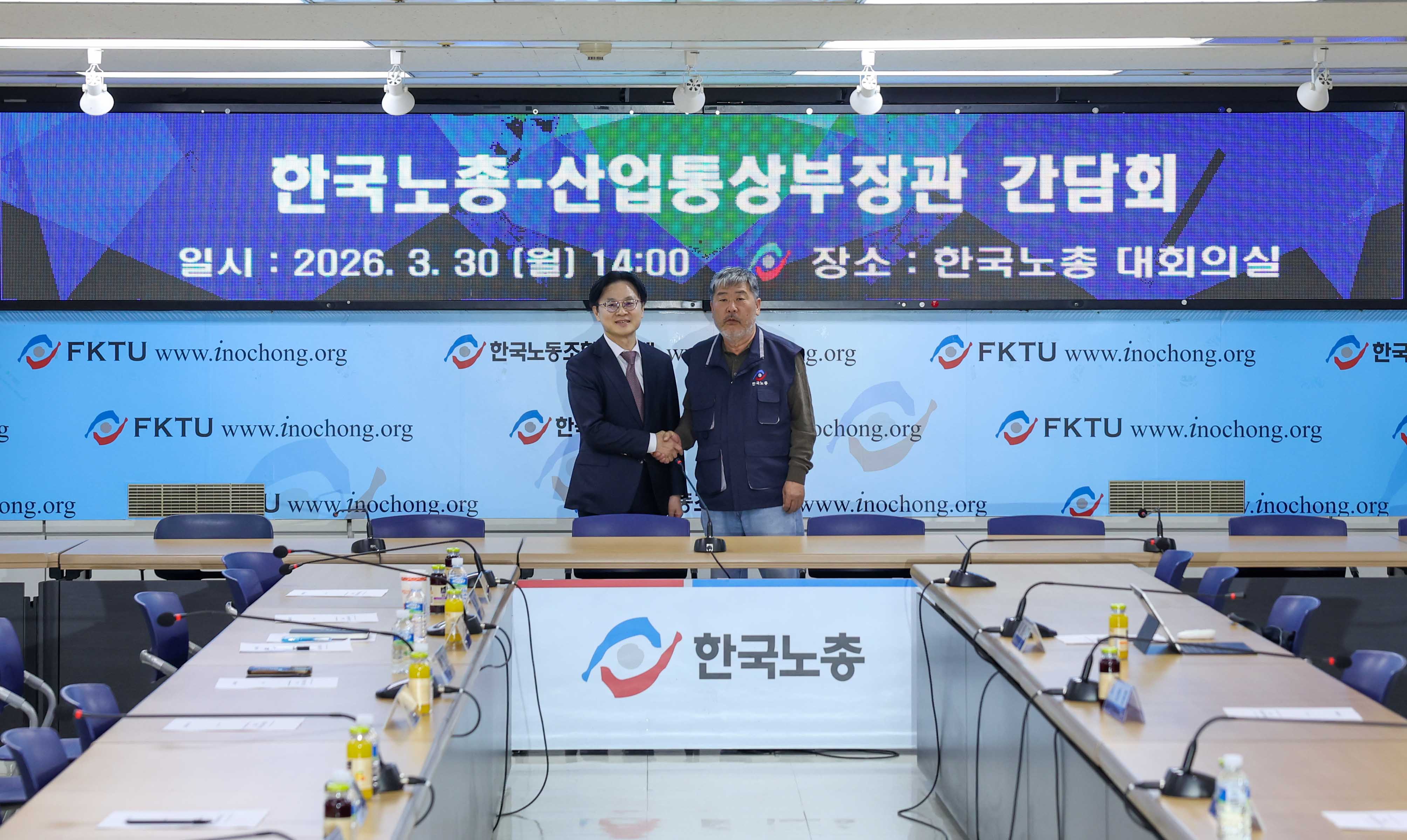
Minister JK (Jung-Kwan) Kim of the Ministry of Trade, Industry and Resources (MOTIR) met with Kim Dong-myeong, president of the Federation of Korean Trade Unions (FKTU), on March 30, 2026, at FKTU headquarters following a request from the union. The meeting was the first between Korea’s industry minister and the FKTU president since 2006. Minister Kim said, “As the war in the Middle East becomes prolonged and poses a major challenge to Korea’s economy and industry, labor and management should focus their efforts on overcoming the crisis and put unnecessary workplace disputes on hold.” He also asked labor to join energy-saving efforts to help maintain stable energy supplies. He also called for the union’s cooperation on Manufacturing AI Transformation (M.AX), noting that raising manufacturing productivity through M.AX and responding swiftly to industrial transition are essential to protecting jobs and workplaces. Minister Kim added that expanding corporate investment in the regions is key to creating stable jobs, and that the government will use stronger incentives to encourage more regional investment. He also called for continued dialogue with labor on expanding both flexibility and stability in the labor market to support quality job creation. At the meeting, the FKTU called for stronger support and job retention measures for industries undergoing transition, including petrochemicals and steel, and raised concerns about possible job losses linked to the adoption of AI. MOTIR has established communication channels with labor groups, including the FKTU and the Korean Confederation of Trade Unions (KCTU), to rebuild trust and strengthen labor-management cooperation. The ministry will continue consultations with labor on regional investment and job creation. date2026-03-31
-
Industry
Korea to Advance AI and Other Future Key Industries through K-Standards
As major economies such as the United States, China, and the EU are using national standardization strategies to drive AI and digital transformation, standards are increasingly being used as a key tool in the race for technological leadership. On March 31, 2026, the Korean government finalized the sixth basic plan for 2026–2030 National Standards, which was prepared by 18 ministries and agencies and approved by the National Standards Council chaired by Minister JK (Jung-Kwan) Kim of the Ministry of Trade, Industry and Resources (MOTIR). Under the plan, the government will develop more standards in future industries (K-standards) in line with market demand and strengthen the global competitiveness of Korean industry. With the goal of driving Korea’s innovation-led growth through K-standards, the plan sets out 129 action tasks under the following four strategies, following broad consultations with stakeholders from industry, academia, and research institutions. First, the government will focus on developing international and de facto standards in 18 future core industries, including M.AX Alliance sectors such as future vehicles and robotics, to help Korea secure a leading position in global markets. It will also link R&D more closely with standardization efforts so that research outcomes can be translated into international standards more quickly. In addition, in line with the Korea AI Action Plan announced by the National AI Strategy Committee in February 2026, the government will establish a national AI standardization governance framework and draw up a national AI standardization roadmap within 2026. Second, the government will expand standards that improve safety and convenience in daily life. It will develop standards that help prevent product accidents involving built-in batteries and new types of children’s products, and will strengthen occupational safety and health standards for industrial sites. It will also develop standards to ease day-to-day inconvenience for vulnerable groups, guide the design of performance venues, and set performance requirements for materials used in timber buildings. In addition, it will improve the management system for quantity-labeled products to help prevent shrinkflation. Third, to help exporters respond more systematically to overseas technical regulations, the government will enact legislation to support responses to technical barriers to trade (TBT) and remove unnecessary domestic technical regulations. It will also reform the KS certification system by introducing a review track that does not require factory audits, helping advanced products reach the market faster. To make Korea’s testing and certification industry more reliable and efficient, the government will strengthen the testing capabilities of Korea Laboratory Accreditation Scheme (KOLAS)-accredited bodies and give them more autonomy. Fourth, the government will strengthen strategic standards diplomacy by expanding the number of Korean experts serving in leadership positions at the International Organization for Standardization (ISO), the International Electrotechnical Commission (IEC), and the International Telecommunication Union (ITU) and by holding bilateral standards cooperation forums with countries that have strong standards systems, such as the United States and Germany. It will also continue to train master’s- and doctoral-level standards professionals, including through graduate programs in advanced fields. “Standards will play a critical role as Korea shifts to a more advanced, innovation-driven industrial structure through AI and digital transformation,” said Kim Dae-ja, President of the Korean Agency for Technology and Standards (KATS). “Together with relevant ministries, we will carry out the sixth basic plan for National Standards, accelerate AI and digital transformation, and help create a safer and more convenient everyday enviro date2026-03-31
-
Industry
MOTIR–FKTU Roundtable
Minister JK (Jung-Kwan) Kim of the Ministry of Trade, Industry and Resources (MOTIR) attended the MOTIR–FKTU meeting at the Federation of Korean Trade Unions (FKTU) headquarters in Seoul on March 30, 2026. The meeting was attended by FKTU President Kim Dong-myeong and other union officials. It marked the first meeting between Korea’s industry minister and the head of the FKTU since 2006. Minister Kim said, “The war in the Middle East continues to pose a major challenge to Korea’s economy and industry. Labor and management should focus their efforts on overcoming the crisis and set aside unnecessary labor disputes.” He also called for the union’s cooperation on M.AX (Manufacturing AX) and for continued dialogue on regional investment and job creation. date2026-03-30
-
Industry
POSCO Group Transfers 112 Technologies to 75 Companies Free of Charge
The Ministry of Trade, Industry and Resources (MOTIR, Minister JK Kim) held the 2026 MOTIR–POSCO Group Technology Sharing Event in Seoul on March 18, 2026. The event was attended by Choi Yeon-woo, Director General for Industrial Technology Convergence Policy at MOTIR; POSCO Holdings executive Chun Hyun-jin; and representatives of more than 70 recipient companies. Since 2017, six POSCO Group affiliates have participated in the technology-sharing program and offered a total of 4,569 technologies. Of those, 926 technologies have been transferred free of charge to 480 SMEs and mid-sized companies. In 2026, POSCO Group offered technologies in machinery and equipment, materials and processes, energy, and eco-friendly and resource-related fields. Of those, 112 technologies were transferred to 75 companies. In particular, machinery and equipment technologies, where POSCO Group has a strong lead, accounted for the largest number of transfers. The technology that drew the most interest was a diagnostic device for battery control systems in the energy field. The device detects abnormalities in individual battery units within a battery pack at an early stage. “MOTIR will continue to support the active transfer of outstanding technologies through the technology-sharing program so that Korean companies can pursue commercialization and market entry,” said Choi Yeon-woo, Director General for Industrial Technology Convergence Policy. date2026-03-19
-
Industry
Government and Civic Group Step Up Gas Station Price Monitoring
Minister JK (Jung-Kwan) Kim of the Ministry of Trade, Industry and Resources (MOTIR) met with Lee Seo-hye, head of the civic group Energy Consumer’s “Energy and Petroleum Market Watch,” on March 17, 2026. They discussed ways to strengthen monitoring of gas stations seeking excessive profits by raising retail prices despite the maximum price system for petroleum products, which took effect on March 13, 2026. Since the maximum price system took effect, refiners’ supply prices have fallen by more than KRW 100 per liter. But compared with March 12, 2026, retail prices at gas stations were down only KRW 66 per liter for gasoline and KRW 87 per liter for diesel as of March 16, 2026, indicating that cuts in pump prices have remained slow even four days after the system took effect. MOTIR will therefore begin the immediate price monitoring of more than 10,000 gas stations nationwide with Energy and Petroleum Market Watch, a non-governmental civic group with 14 years of experience monitoring the petroleum market from 2010 to 2024, using data from Opinet and other fuel price information systems. The government will provide real-time price data collected through Opinet and similar systems, and Market Watch will monitor gas station retail prices on a daily basis. The group will identify and publicly disclose gas stations that have raised prices excessively after the system took effect. Those that move early to lower prices and join efforts to support price stability for the public will be designated “good-price gas stations” and receive certification stickers and government commendations. “Stabilizing gas station prices is critical for the public to feel the effects of the maximum price system,” Minister Kim said. “I ask Energy and Petroleum Market Watch to conduct objective and fair monitoring from the perspective of consumers.” Meanwhile, MOTIR continues to accept 24-hour reports of illegal activity involving prices, quality, and distribution through K-Petro’s Oil Call Center (1588-5166). Gas stations suspected of illegal conduct are also being inspected daily through an interagency joint inspection team and other channels. date2026-03-18
-
Industry
Government Steps Up Efforts to Ensure Consumers Feel the Effects of the Maximum Price System at Gas Stations
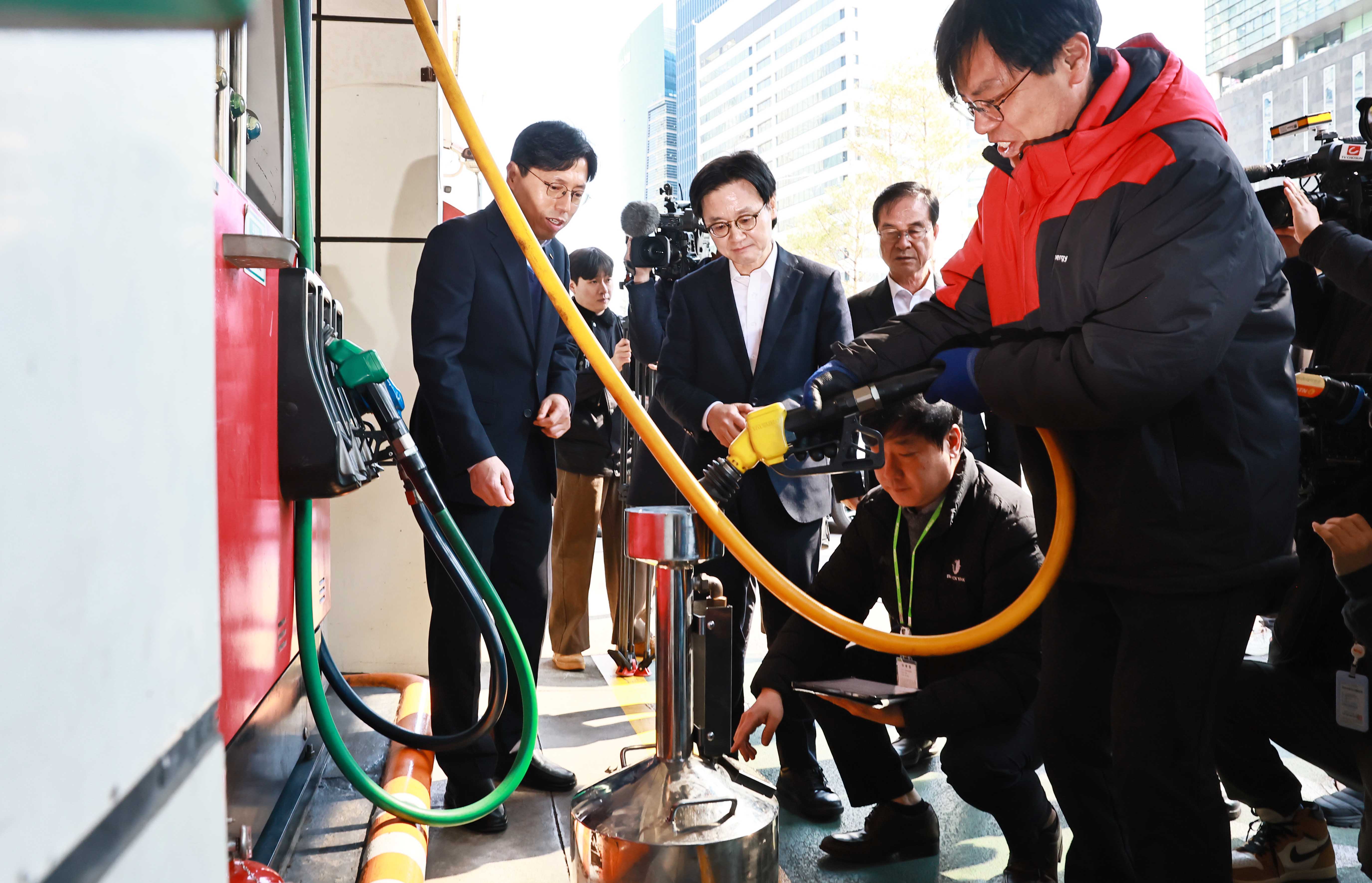
Minister JK (Jung-Kwan) Kim of the Ministry of Trade, Industry and Resources (MOTIR) visited Changhyeon Gas Station, an independently operated budget gas station in Cheongju, on the morning of March 16, 2026, to review how retail prices are responding to the maximum price system. The visit followed his trip last week to refiner-operated gas stations in Seoul. At the station, Minister Kim was briefed by the station owner and the head of stockpiling at the Korea National Oil Corporation (KNOC) on changes in supply prices, retail prices, and customer traffic before and after the system took effect. He then observed the unloading of the first tanker truck delivery placed since the system was introduced, as fuel was transferred from the truck into the station’s storage tanks. “Today marks the fourth day since the maximum price system took effect, but cuts in refiners’ supply prices still do not seem to be reaching retail prices quickly enough,” Minister Kim said. “Once stations sell through existing inventory, they will be restocking at lower prices than before. Retail prices should naturally come down.” He added that the government “will mobilize all available resources to ensure that consumers can feel the effects of the maximum price system at gas stations.” The government will continue to monitor petroleum prices, conduct on-site inspections, and operate the Oil Price Reporting Center to ensure that the system is fully reflected in retail prices. It also plans to identify good-price gas stations and provide incentives. date2026-03-18
-
Industry
Minister Kim Visits an SK Energy Gas Station
On Friday, March 13, 2026, Minister JK (Jung-Kwan) Kim of the Ministry of Trade, Industry and Resources (MOTIR) visited an SK Energy-operated gas station in Dohwa-dong, Mapo-gu, Seoul, where prices had not risen as much as at nearby stations despite the recent surge in global oil prices. During the visit, he was briefed on recent fuel price trends and observed inspections of petroleum product prices, quality, and distribution. Minister Kim asked that retail prices continue to be kept stable so that the public can directly benefit from the maximum price system. date2026-03-16
-
Industry
MOTIR Urges Oil Industry Cooperation to Stabilize Fuel Prices Under the Price Ceiling System
The price ceiling system for petroleum products took effect on March 13, 2026. On the same day, Minister JK (Jung-Kwan) Kim of the Ministry of Trade, Industry and Resources (MOTIR) held a series of meetings and site visits aimed at stabilizing fuel prices and maintaining order in the petroleum market. At the Korea Trade Insurance Corporation (K-SURE), Minister Kim chaired a morning meeting of the interagency joint inspection team. The team has been monitoring domestic and international petroleum prices, taking enforcement actions against price-fixing, and investigating suspected abuse of fuel subsidies and tax evasion. At the meeting, participants reviewed recent inspection findings and agreed to strengthen coordination on enforcement against illegal petroleum distribution. Minister Kim stated, “Illegal acts that exploit public anxiety for profit cannot be tolerated, and strong interagency enforcement is needed.” Since March 6, 2026, the team has carried out more than 800 targeted inspections at gas stations flagged as high risk for illegal petroleum distribution, uncovering 20 violations. It plans to continue intensive enforcement with more than 2,000 inspections a month. At a separate petroleum market inspection meeting held at K-SURE, industry participants, including refiners, the Korea Oil Station Association (KOSA), and the Korea National Oil Corporation (KNOC), discussed domestic and international oil price trends and response measures. Participants shared the view that domestic fuel prices have eased slightly since March 11, 2026, but the burden on the public remains high. They also agreed that refiners, gas stations, and related industry players must work together to ensure the price ceiling system works effectively in practice. Minister Kim urged gas stations to keep retail fuel prices stable so that consumers can benefit from the stable supply prices charged by refiners under the price ceiling system. After the meeting, Minister Kim met with SK Energy executives at the company’s headquarters. “The refining industry plays a critical role in ensuring that the price ceiling system for petroleum products operates smoothly in practice,” he said, calling on the industry to maintain stable production and supply despite difficult conditions. Minister Kim then visited a gas station in Mapo that had not raised prices as much as nearby stations despite the recent surge in global oil prices. After hearing from the station owner about recent fuel price trends, he asked the station to keep retail prices stable so the public can directly benefit from the price ceiling system. date2026-03-16
-
Industry
Minister Kim Chairs the Petroleum Market Inspection Meeting
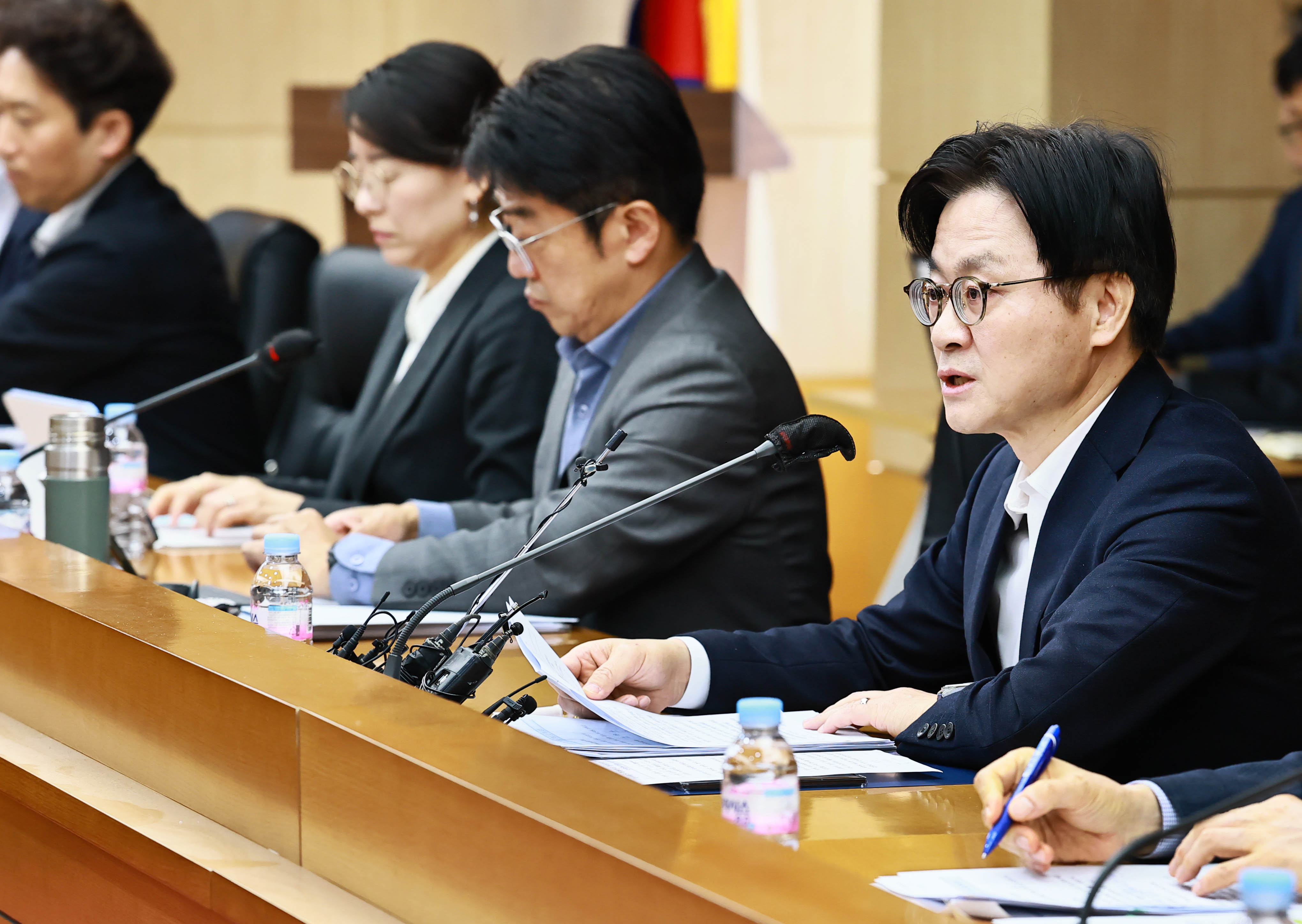
On Friday, March 13, 2026, Minister JK (Jung-Kwan) Kim of the Ministry of Trade, Industry and Resources (MOTIR) chaired the Petroleum Market Inspection Meeting at Korea Trade Insurance Corporation (K-SURE) in Jongno-gu, Seoul. The meeting was attended by officials from the Korea National Oil Corporation (KNOC), the Korea Petroleum Association, refiners including GS Caltex, S-OIL, SK Innovation, and HD Hyundai Oilbank, the Korea Petroleum Quality & Distribution Authority (K-Petro), and the Korea Oil Station Association (KOSA). After delivering opening remarks, Minister Kim discussed domestic and international oil price trends, response measures, and recent petroleum supply and pricing trends at refiners and gas stations. “As refiners’ supply prices stabilize under the maximum price system, gas stations should also help keep retail prices stable so that consumers can benefit,” Minister Kim said. date2026-03-13