-
Trade/Investment
ICT Exports Reach $42.7 Billion in April, Post Highest Year-on-Year Growth Rate Record
The Ministry of Trade, Industry and Resources (MOTIR, Minister JK Kim) and the Ministry of Science and ICT (MSIT, Deputy Prime Minister and Minister Bae Kyung-hoon) announced on May 15, 2026, that Korea’s ICT exports in April reached USD 42.7 billion, up 125.9 percent year-on-year from $18.9 billion. Imports rose 33.3 percent from $12.1 billion to $16.2 billion, resulting in a trade surplus of $26.6 billion. In April 2026, ICT exports topped $40.0 billion for a second straight month for the first time and posted the highest year-on-year growth rate on record, despite the conflict in the Middle East. The ICT trade surplus also topped $20.0 billion for a third consecutive month for the first time. ICT products accounted for nearly half, or 49.7 percent, of Korea’s total exports, which stood at $85.9 billion, reinforcing ICT’s role as a key driver of Korea’s exports. By product, exports increased for semiconductors (up 173.3 percent), mobile phones (up 14.0 percent), computers and peripherals (up 430.0 percent), and communication equipment (up 9.9 percent), but decreased for displays (down 5.3 percent). Semiconductor exports stayed above $30.0 billion for a second straight month for the first time, supported by rising memory contract prices as demand continued to exceed supply amid continued investment in AI servers and other server infrastructure. Mobile phone exports increased on higher shipments of finished products and solid sales of high-value parts, including camera modules. Computers and peripherals posted an all-time high, supported by higher demand and prices for solid-state drives (SSDs) used in AI servers. Communication equipment exports returned to growth for the first time in three months on solid demand for components shipped to Vietnam and wired communications equipment shipped to Japan. By contrast, display exports declined as higher semiconductor prices weighed on downstream demand. By destination, exports increased in all major markets: the United States (up 294.2 percent), China, including Hong Kong (up 132.1 percent), the European Union (up 58.4 percent), Taiwan (up 89.4 percent), Vietnam (up 89.3 percent), India (up 86.5 percent), and Japan (up 42.5 percent). ICT imports totaled $16.2 billion in April 2026, up 33.3 percent from $12.1 billion a year earlier, as imports increased across most major ICT categories: semiconductors (up 53.2 percent), displays (up 15.1 percent), mobile phones including parts (up 10.6 percent), and computers and peripherals (up 27.0 percent). date2026-05-15
-
Trade/Investment
MOTIR Realigns K-Nuclear Export Framework for Global Nuclear Renaissance
The Ministry of Trade, Industry and Resources (MOTIR, Minister JK Kim) convened the first Nuclear Power Plant Export Strategy Council meeting of 2026 on May 14 at the Korea Trade Insurance Corporation (K-SURE). During the session, chaired by Minister JK Kim, the Ministry unveiled a comprehensive roadmap to streamline Korea’s nuclear export framework. These measures are designed to enhance the government’s strategic coordination and support, reflecting the fundamental nature of nuclear projects as government-to-government initiatives. MOTIR’s implementation strategy follows a two-tiered approach: immediate tactical actions and long-term goals to be realized by the end of 2026. As an immediate step, MOTIR will establish a public-private Nuclear Power Plant Export Planning Committee under the Council’s jurisdiction. This committee will serve as a central hub for project planning and coordination, while significantly bolstering external oversight and advisory functions regarding economic feasibility, risk management, and other critical factors. In recognition of the significant impact of nuclear power plant exports on national security and the economy, as well as the necessity for large-scale financing, the government intends to assume a more proactive leadership role by conducting reviews and seeking guidance from external experts to enhance project performance. Market management, previously divided between Korea Electric Power Corporation (KEPCO) and Korea Hydro & Nuclear Power (KHNP), will be consolidated into a unified, collaborative framework. Under this model, KEPCO and KHNP will jointly pursue overseas project development and lead contracting. In line with efforts to leverage each company’s strength, KEPCO will spearhead negotiations with partner countries and lead equity investments, while KHNP will focus on construction and operational management. However, to maintain continuity and leverage established expertise, KHNP will retain its lead role in project development, contracting, construction, and operations for large-scale exports to the Czech Republic and the Philippines, as well as for innovative Small Modular Reactor (i-SMR) initiatives. Moving forward, as part of the Ministry’s long-term goals, MOTIR also plans to enact the "Nuclear Power Plant Export Promotion Act" (tentative title) by the end of 2026. This Act aims to evaluate the performance of KEPCO and KHNP respectively and, through public consultation, the Act will be enacted. This legislation will provide a robust statutory foundation for export support, encompassing market development, information systems, financing, government contributions, professional training, and technology certification. Furthermore, it will mandate that public institutions involved in nuclear exports consult with the government on major strategic decisions, including large-scale borrowing, investments, export contracts, and the transfer or modification of nuclear intellectual property rights. The Ministry is also evaluating the legal basis for a dedicated lead export agency responsible for the full project lifecycle—from feasibility studies and client negotiations to bidding and final contracting. Several options remain under active consideration, including consolidating functions within KEPCO or KHNP or launching a new, integrated export agency. During the meeting, KEPCO President Kim, Dong-cheol and KHNP President Kim Hoechun formalized a strategic partnership agreement for nuclear exports. The two companies agreed to bolster cooperation across all project stages and expand the exchange of information and personnel. Notably, they also agreed to amend the UAE nuclear power plant contract which allows for the dispute settlement to be arranged not in the United Kingdom but in Korea. This initiative follows the adoption of MOTIR’s proposal, aimed at reducing litigation expenses related to sett date2026-05-14
-
Trade/Investment
MOTIR Launches K-Export Star 500 to Develop 500 Key Exporters
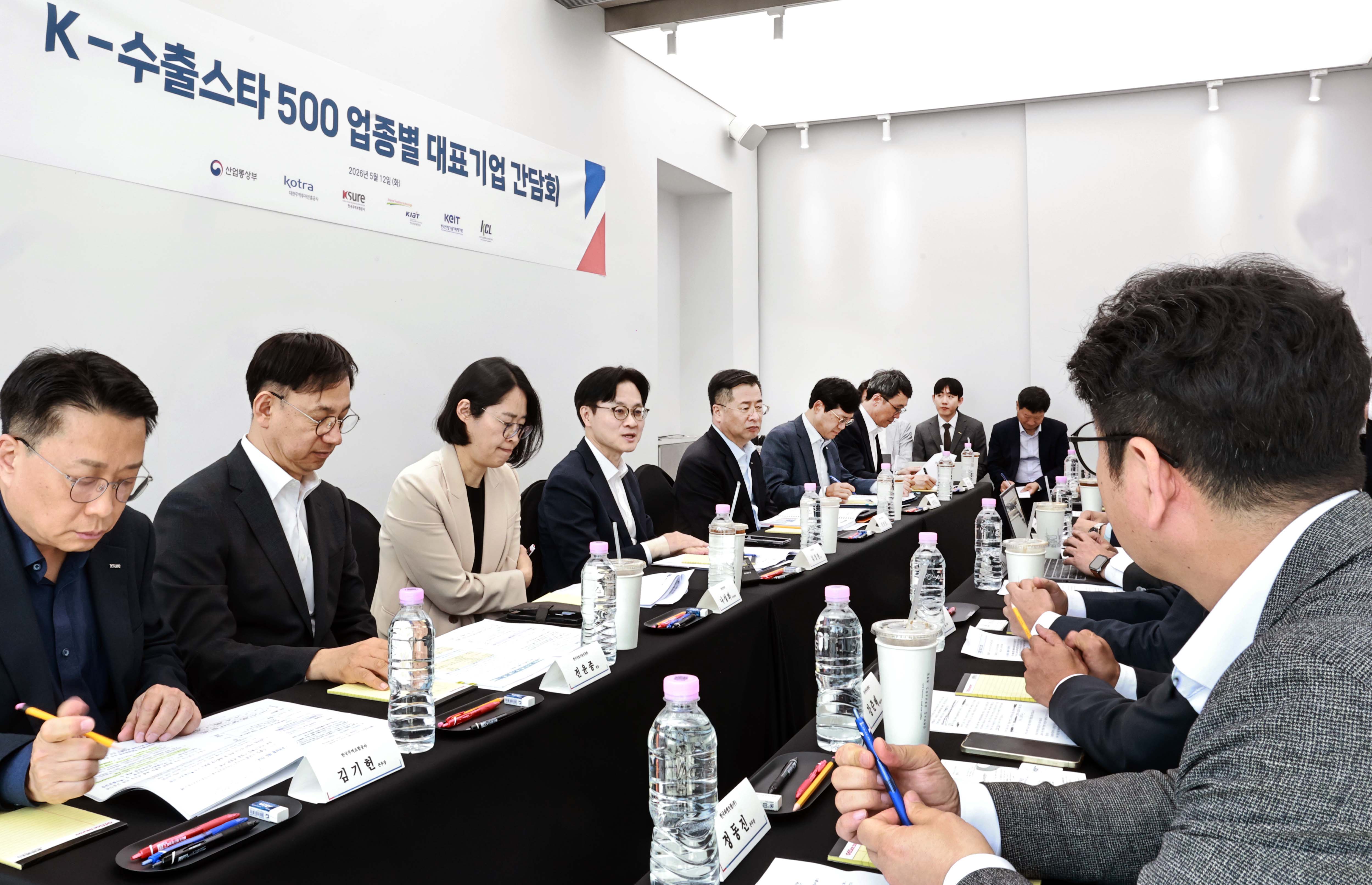
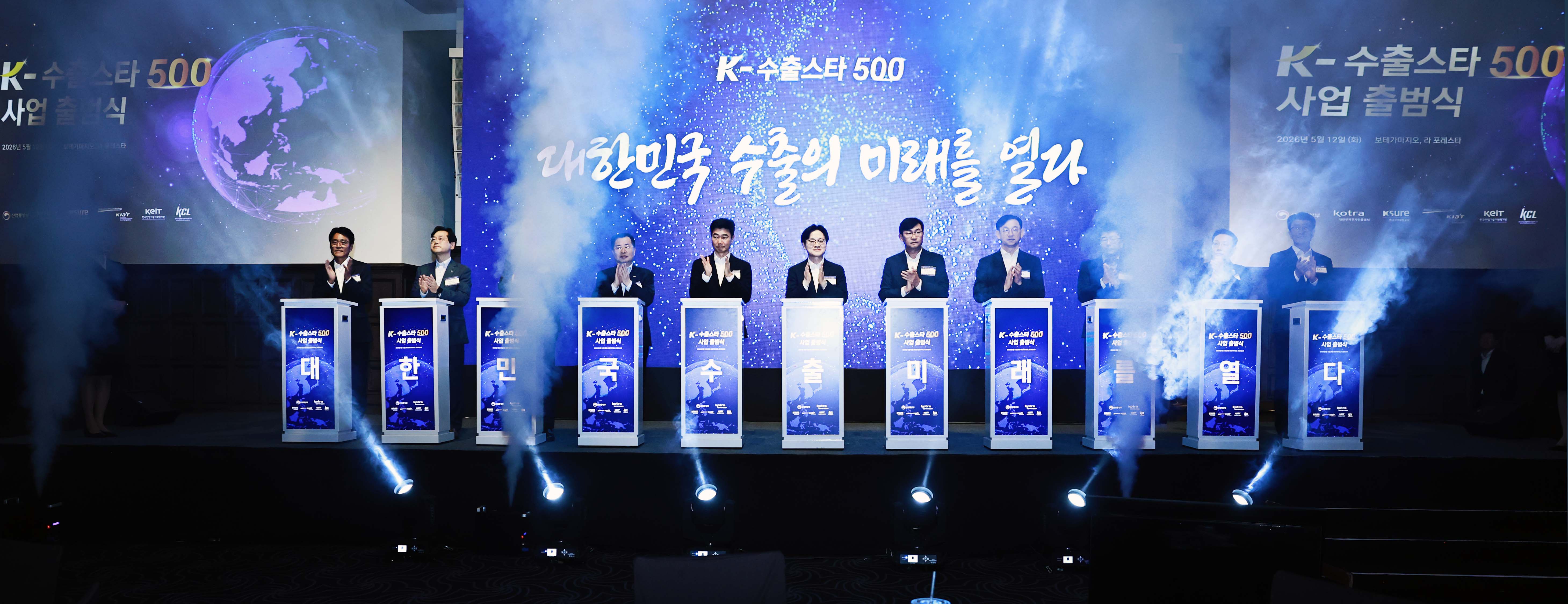
The Korean government will run a customized export support program from 2026 through 2030 to develop 500 key exporters with annual exports of at least USD 10 million. Selected companies will receive package support in marketing, finance, and certification from five export support agencies, with assistance of up to KRW 560 million per company for up to three years. The Ministry of Trade, Industry and Resources (MOTIR, Minister JK Kim) held a launch ceremony and business roundtable for the K-Export Star 500 program in Seoul on May 12, 2026. The event brought together 100 promising companies selected for this year’s program and relevant organizations. MOTIR established K-Export Star 500 this year to narrow export disparities by helping high-potential SMEs and middle market enterprises grow into “export stars” with annual exports of at least USD 10 million. Applications opened in January 2026, and 100 promising SMEs and middle market enterprises in consumer goods, mainstay industries and advanced industries were selected for support this year. The event consisted of a business roundtable to gather feedback from exporters, followed by a launch ceremony. The roundtable was held at JUNGSAEMMOOL Beauty’s Seongsu flagship store, where seven representative companies across sectors shared practical challenges in entering overseas markets, including obtaining overseas certification and conducting joint local marketing. The Korean government will work with five export support agencies—the Korea Trade-Investment Promotion Agency (KOTRA), Korea Trade Insurance Corporation (K-SURE), Korea Conformity Laboratories (KCL), Korea Institute for Advancement of Technology (KIAT) and Korea Planning & Evaluation Institute of Industrial Technology (KEIT)—to address companies’ export challenges and strengthen customized support throughout the export process. At the ceremony, the K-Export One Team digital agreement was concluded following congratulatory remarks by Minister JK Kim. The agreement launches the Export Star Makers framework, enabling participating organizations to work beyond institutional boundaries and provide integrated support in marketing, finance, certification, technology and R&D based on company demand. “Amid growing external uncertainty, it is critical to build a broader base of export stars that each generate at least USD 10 million in annual exports and form the backbone of Korea’s exports,” Minister Kim said. “The government and the five export support agencies will work as one team to build an export support system that responds quickly to company needs.” date2026-05-12
-
Trade/Investment
K-Export Star 500 Sector Roundtable
Minister JK Kim of the Ministry of Trade, Industry and Resources (MOTIR, Minister JK Kim) chaired the K-Export Star 500 sector roundtable at JUNGSAEMMOOL Beauty’s Seongsu flagship store in Seoul on May 12, 2026. The roundtable was attended by officials from K-Export Star 500 companies and export support agencies, including Kang Kyung-sung, CEO & President of the Korea Trade-Investment Promotion Agency (KOTRA); Jeon Yoon-jong, President of the Korea Institute for Advancement of Technology (KIAT); Cheon Young-ghil, President of Korea Conformity Laboratories (KCL); Yoo Jae-woong, Vice President of JUNGSAEMMOOL Beauty; Kim Seok-jin, CEO of Cha Meditech Co., Ltd.; and Kang Jun-bae, CEO of Kuna NT. After delivering opening remarks, Minister Kim discussed challenges companies face in entering overseas markets, including obtaining overseas certification and holding joint local pop-up events, and toured the flagship store. date2026-05-12
-
Trade/Investment
K-Export Star 500 Launch Ceremony
Minister JK Kim of the Ministry of Trade, Industry and Resources (MOTIR, Minister JK Kim) attended the K-Export Star 500 launch ceremony in Seoul on May 12, 2026. At the ceremony, Minister Kim delivered congratulatory remarks and took part in the K-Export Support Team digital agreement declaration. The ceremony was attended by representatives and officials from the 100 companies selected for K-Export Star 500, including JUNGSAEMMOOL Beauty, CHA Meditech and KunaNT, as well as heads of export support agencies, including the Korea Trade-Investment Promotion Agency (KOTRA), Korea Institute for Advancement of Technology (KIAT) and Korea Conformity Laboratories (KCL). Minister Kim said the government and five export support agencies will work as one team to build an export support system that responds quickly to company needs and helps more Korean firms grow into export stars with annual exports of at least USD 10 million. date2026-05-12
-
Trade/Investment
Korea’s Q1 2026 Exports Reach Record High under Revised MTI Code Standards
Revision of MTI Code Standards for Export and Import Statistics The Ministry of Trade, Industry and Resources (MOTIR, Minister JK Kim) revised the MTI code standards used to analyze export and import trends, marking the first revision of the framework since 2020. The revised framework expands Korea’s key export items from 15 to 20 by adding products that reflect the diversification of its export base. It also updates subcategories for major items to reflect current industry structures and export patterns. The framework adds five items to the list: electrical equipment, nonferrous metals, agricultural and fisheries products, cosmetics and daily consumer goods. Together, the 20 key items accounted for 86.3 percent of Korea’s total exports in 2025, compared with 77.2 percent under the previous 15-item framework. The expanded list provides broader coverage and a more detailed view of overall export trends. MOTIR also reorganized detailed product classifications to better reflect current industrial and export patterns. For biohealth, a separate MTI code was created, and the category was divided into pharmaceuticals and medical devices. For semiconductors, memory semiconductors were separated from system semiconductors, with memory semiconductors further divided into DRAM, NAND and other items. For automobiles, vehicle type was placed at the four-digit MTI level and powertrain at the six-digit level, while new and used vehicles were separated. For steel, certain items, including other steel products, raw materials and subsidiary materials, were moved from the steel category to the other steel and metal products category to align the classification with steel product categories commonly used in global markets. For batteries, a separate code was created for lithium-ion batteries, and battery materials, including cathode materials, electrolytes and separators, were consolidated under one code. For textiles, natural materials, bags, footwear, belts and other textile-related items were moved into the textile category to make the statistics more representative. For general machinery, subcategories such as manufacturing equipment, industrial machinery, energy machinery and machinery parts were aligned with actual industry classifications. To maintain statistical consistency, MOTIR will apply the revised standards retroactively to data from 2022 onward and use them in its monthly export and import trend releases from June 1, 2026. Details of the changes, along with the HSK-MTI correlation table, will be released by the Korea International Trade Association (KITA) on May 8, 2026.   Q1 2026 Export and Import Trends Exports in the first quarter of 2026 rose 37.8 percent year-on-year to USD 219.9 billion, the highest first-quarter figure on record. Average daily exports, adjusted for working days, increased 34.7 percent to $3.4 billion. Imports rose 10.9 percent to $169.4 billion, while the trade balance posted a surplus of $50.4 billion, up $43.7 billion from a year earlier. By product, exports increased in 13 of Korea’s 20 key export items. Semiconductor exports rose 139.0 percent to $78.5 billion, as AI server investment expanded and memory prices remained high. DRAM exports increased 249.1 percent to $35.8 billion, while NAND exports rose 377.5 percent to $5.4 billion. System semiconductor exports also increased 13.5 percent to $12.1 billion. Automobile exports edged down 0.3 percent to $17.2 billion. Truck exports rose 63.9 percent to $0.7 billion, while passenger car and van exports fell 2.2 percent and 31.7 percent, respectively. Biohealth exports increased 9.6 percent to $4.2 billion. Pharmaceutical exports rose 11.9 percent to $2.7 billion on continued growth in biosimilar demand in major markets, while medical device exports increased 5.5 percent to $1.5 billion. Secondary battery exports rose 9.9 percent to $2.0 billion, supported by higher lithium and other minera date2026-05-06
-
Trade/Investment
April 2026 Exports Reach $85.9 Billion, Surpassing $80 Billion for Second Consecutive Month
The Ministry of Trade, Industry and Resources (MOTIR, Minister JK Kim) announced that in April 2026, Korea’s exports rose 48.0 percent year-on-year to USD 85.9 billion, while imports increased 16.7 percent to $62.1 billion, resulting in a $23.8 billion surplus. Exports in April rose 48.0 percent to $85.9 billion, topping $80.0 billion for the second consecutive month. Average daily exports, adjusted for working days, increased 48.0 percent to $3.6 billion, exceeding $3.0 billion for the third consecutive month. By product, exports increased in eight of Korea’s 15 key export items. Semiconductor exports rose to $31.9 billion (up 173.5 percent), as continued demand from AI servers pushed up fixed memory prices. The sector topped $30.0 billion for the second straight month and set a new April record, its 13th consecutive same-month high. Automobile exports fell to $6.2 billion (down 5.5 percent), as logistics disruptions linked to the conflict in the Middle East continued and Korean automakers expanded U.S. production in response to U.S. tariff measures. Petroleum product exports rose to $5.1 billion (up 39.9 percent), as higher oil prices lifted export unit prices despite a 36.0 percent decline in export volumes. Gasoline, diesel, and kerosene export volumes fell by approximately 43.0 percent, 23.2 percent, and 99.9 percent, respectively. Petrochemical exports increased to $4.1 billion (up 7.8 percent), as export unit prices rose only modestly due to the time lag before higher oil prices are reflected in product prices. Export volumes fell 20.9 percent amid increased domestic supply. Computers rose to $4.1 billion (up 515.8 percent), setting a new monthly record for the second consecutive month, and wireless communication devices increased to $1.6 billion (up 11.6 percent). Among items outside the 15 key export categories, electrical equipment, cosmetics, and agricultural and fisheries products also reached record highs for April. By destination, exports increased in seven of Korea’s nine major markets. Exports to China rose 62.5 percent to $17.7 billion, extending their growth streak to six consecutive months, led by IT products including semiconductors, computers, and wireless communication devices. Exports to the United States rose to $16.3 billion (up 54.0 percent), as tariff-exempt items such as semiconductors and computers offset weaker exports of tariff-affected items, including automobiles, auto parts, and general machinery. Exports to ASEAN increased to $15.4 billion (up 64.0 percent), while exports to the EU rose to $7.2 billion (up 8.5 percent), extending their growth streak to five consecutive months. By contrast, exports to the Middle East fell 25.1 percent to $1.3 billion amid logistics disruptions and uncertainty linked to the conflict. Imports rose 16.7 percent year-on-year to $62.1 billion. Energy imports increased 7.5 percent to $10.6 billion, while non-energy imports rose 18.8 percent to $51.5 billion. Crude oil imports rose 13.1 percent to $7.0 billion, as higher unit prices driven by the surge in oil prices more than offset lower import volumes caused by the conflict in the Middle East. Among non-energy imports, computers rose to $1.8 billion (up 35.6 percent) and semiconductor equipment to $2.5 billion (up 59.9 percent). The trade surplus in April reached $23.8 billion, up $19.0 billion from April 2025, marking the largest April surplus on record and extending Korea’s surplus streak to 15 consecutive months since February 2025. Minister JK (Jung-Kwan) Kim stated, “This two-month milestone, achieved despite the conflict in the Middle East continuing for more than two months, was made possible by Korean companies’ proactive efforts to secure supply chains amid expanding global AI investment and higher unit prices for petroleum products driven by rising oil prices.” He added that the government will minimize the burden on exporters throug date2026-05-04
-
Trade/Investment
Major Retailer Sales Up 5.6% in March 2026
The Ministry of Trade, Industry and Resources (MOTIR, Minister JK Kim) announced that total sales at 26 major retailers (15 brick-and-mortar retailers and 11 online retailers) in March 2026 rose 5.6 percent year-on-year, with offline sales up 1.9 percent and online sales up 8.1 percent. Offline sales increased at department stores (up 14.7 percent) and convenience stores (up 2.7 percent), while hypermarkets (down 15.2 percent) and super supermarkets (SSMs) (down 8.6 percent) declined. Department stores and convenience stores extended their growth streaks to nine consecutive months since July 2025. Department store sales increased across all categories, including premium international brands, fashion and accessories, and children’s and sports goods, supported by a base effect from weak sales in March 2025, an increase in foreign tourist arrivals, and spring outing and back-to-school demand. Convenience store sales also rose across all product categories, including processed and ready-to-eat foods, tobacco and other items, and general merchandise. Hypermarket sales fell again after one month of growth, as consumer spending continued to shift online, weighing on most product categories, including food and household goods. Hypermarket sales have declined for eight consecutive quarters since the second quarter of 2024. SSM sales remained weak for a third consecutive quarter since the third quarter of 2025, as sales in their core food category remained sluggish. Online sales rose across most product categories, supported by the launch of new mobile devices in March and spring outing and back-to-school demand. Cosmetics (up 15.8 percent), food (up 10.6 percent), and household goods (up 9.5 percent) maintained steady growth, while home appliances and electronics (up 11.1 percent), children’s and baby products (up 10.7 percent), and books and stationery (up 4.1 percent) also contributed to the increase. Sales shares by channel were 60.6 percent for online retailers, 15.4 percent for department stores, 13.9 percent for convenience stores, 8.1 percent for hypermarkets, and 2.0 percent for SSMs. date2026-04-29
-
Trade/Investment
Launch Ceremony for Strategic Council on Shared Growth in Shipbuilding and Shipping
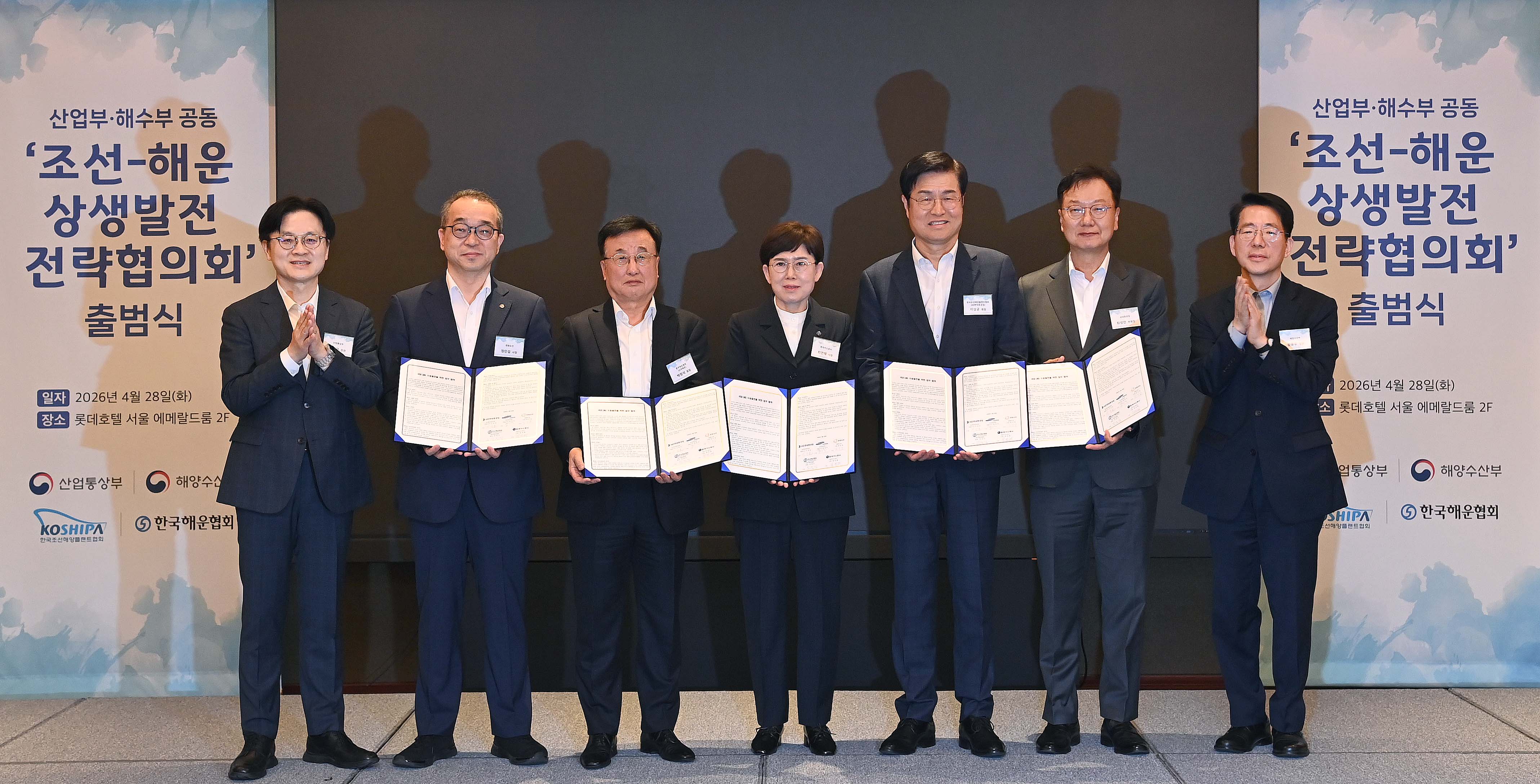
Minister JK Kim of the Ministry of Trade, Industry and Resources (MOTIR) attended the launch ceremony for a strategic council on shared growth in shipbuilding and shipping in Seoul on April 28, 2026. The event was attended by MOF Minister Hwang Jong-woo, officials from relevant ministries and institutions, and representatives from major Korean shipbuilders. “Shipbuilding and shipping are industries critical to Korea’s economic security,” Minister Kim said. “MOTIR will work closely with MOF to ensure that joint orders, future-vessel technology development and stronger industrial ecosystems lead to tangible results.” date2026-04-29
-
Trade/Investment
MOTIR Seeks to Boost Domestic Investment by Improving Reshoring Policy
Minister JK (Jung-Kwan) Kim of the Ministry of Trade, Industry and Resources (MOTIR) visited Kolmar Korea, a cosmetics manufacturer selected as the first company under Korea’s 2026 reshoring program, on April 27, 2026. Minister Kim also held an on-site roundtable with reshoring companies and discussed ways to improve Korea’s reshoring support policy. Since the enactment of the Act on Assistance to Korean Off-Shore Enterprises in Repatriation (the Reshoring Act), Korea’s reshoring policy has helped generate around KRW 7 trillion in investment and 8,000 jobs between 2014 and 2025. However, calls have grown for policy reform as new reshoring cases have slowed, with Korea’s reshoring framework not yet fully reflecting rapid changes in the global investment environment, including stronger protectionism and supply chain realignment. In particular, as major economies compete to attract investment to anchor advanced industries and critical supply chains domestically, Korea now needs to redesign its reshoring policy not simply to support the relocation of overseas operations, but to secure core industrial capabilities at home. Companies attending the roundtable also called for stronger government support for corporate investment amid global supply chain uncertainty and accelerating AI transformation. In particular, they noted that eligibility for reshoring support remains too narrow, as companies must produce the same or similar products or services at their overseas and returning domestic operations. As a result, businesses may have difficulty qualifying for support when shifting to different products, such as from auto parts to energy storage system components, or when investing in domestic R&D facilities instead of manufacturing operations. Participants also said the current maintenance requirement limits companies’ flexibility in operating their business sites. Under the rule, companies must maintain an existing domestic business site for three years. They added that employment requirements should also be made more flexible to reflect growing automation trends. In response, MOTIR said it is preparing improvements to Korea’s reshoring policy centered on three areas: expanding eligibility and refining detailed requirements; diversifying subsidy programs based on the nature of each reshoring project, including regional investment, large-scale investment and investment in strategic advanced sectors; and helping attract strategic investment while providing closer support for implementation. MOTIR will finalize and announce the measures after gathering industry feedback and consulting relevant ministries. Minister Kim thanked companies for their reshoring investments, saying, “We are now in an era in which the competitiveness of both companies and countries depends on secure and stable supply chains. The government will provide full support so that reshoring and regional investment become the most rational and attractive choice.” date2026-04-27