-
FTA/Economic Cooperation
Korea, Uzbekistan Discuss Expanding Economic Cooperation
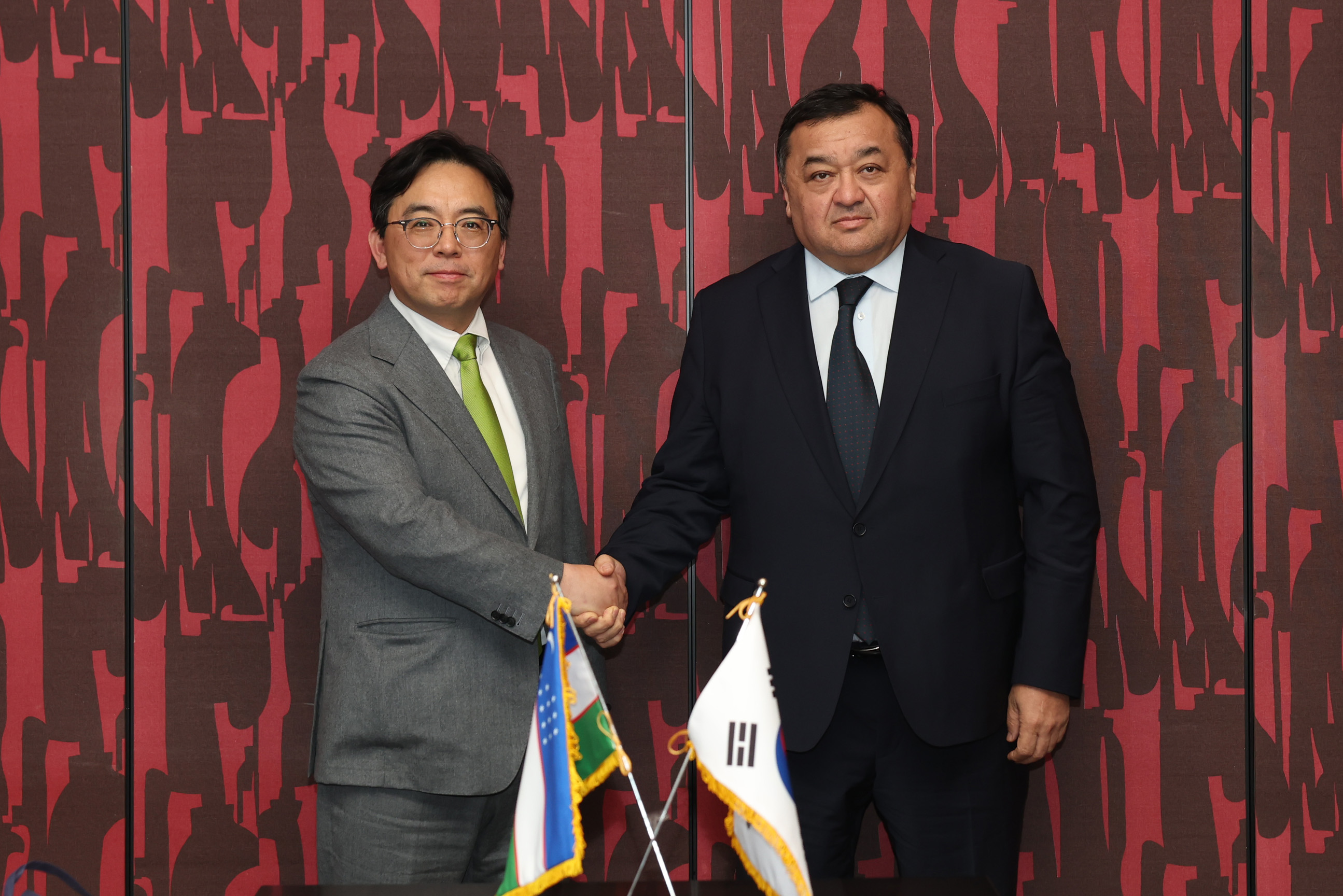
Park Jung-sung, Deputy Minister for Trade at the Ministry of Trade, Industry and Resources (MOTIR, Minister JK Kim), met with Ilzat Kasimov, Deputy Minister of Investment, Industry and Trade of Uzbekistan, in Seoul on March 31, 2026, to discuss expanding bilateral economic cooperation in industry and supply chains. The talks came ahead of the Korea–Central Asia Summit, amid growing momentum in Korea–Central Asia cooperation. The two sides shared the view that cooperation in industry, trade and investment should be expanded. They also agreed to continue developing specific agenda items through existing channels, including the Korea–Uzbekistan Joint Committee on Trade and Economic Cooperation. In addition, they discussed the need to expand cooperation on critical minerals in response to shifts in global supply chains. The Korean side noted the need to support the smooth operations of Korean companies in Uzbekistan. The Uzbek side expressed hope for increased investment by Korean companies and noted the potential for cooperation across a range of sectors, including manufacturing and infrastructure. “Uzbekistan is a key economic partner for Korea in Central Asia,” Deputy Minister Park said. “Building on the momentum in Korea–Central Asia cooperation, we will continue to broaden cooperation in industry, supply chains and investment.” Deputy Minister Park also asked for the Uzbek government’s attention and cooperation in helping Korean companies operate smoothly and address business difficulties. date2026-03-31
-
FTA/Economic Cooperation
Deputy Minister Park Meets with Deputy Minister Kasimov of Uzbekistan
Deputy Minister for Trade Park Jung-sung of the Ministry of Trade, Industry and Resources (MOTIR, Minister JK Kim) met with Ilzat Kasimov, Deputy Minister of Investment, Industry and Trade of Uzbekistan, in Seoul on March 31, 2026, to discuss bilateral cooperation, as Korea–Central Asia cooperation gains momentum ahead of the Korea–Central Asia Summit. The two sides shared the view that cooperation in industry, trade and investment should be expanded. They also agreed to continue developing the cooperation agenda through existing channels, including the Korea–Uzbekistan trade and economic cooperation committee, and discussed the need to expand cooperation on critical minerals in response to shifts in global supply chains. “Uzbekistan is a key partner for Korea in Central Asia,” Deputy Minister Park said. “Building on the momentum in Korea–Central Asia cooperation, we will broaden cooperation in industry, supply chains and investment.” Deputy Minister Park also asked for the Uzbek government’s cooperation in helping Korean companies operate smoothly and address business difficulties. date2026-03-31
-
FTA/Economic Cooperation
Korea Gains Prominence in WTO Reform Talks and Pushes IFDA’s Incorporation into the WTO Framework
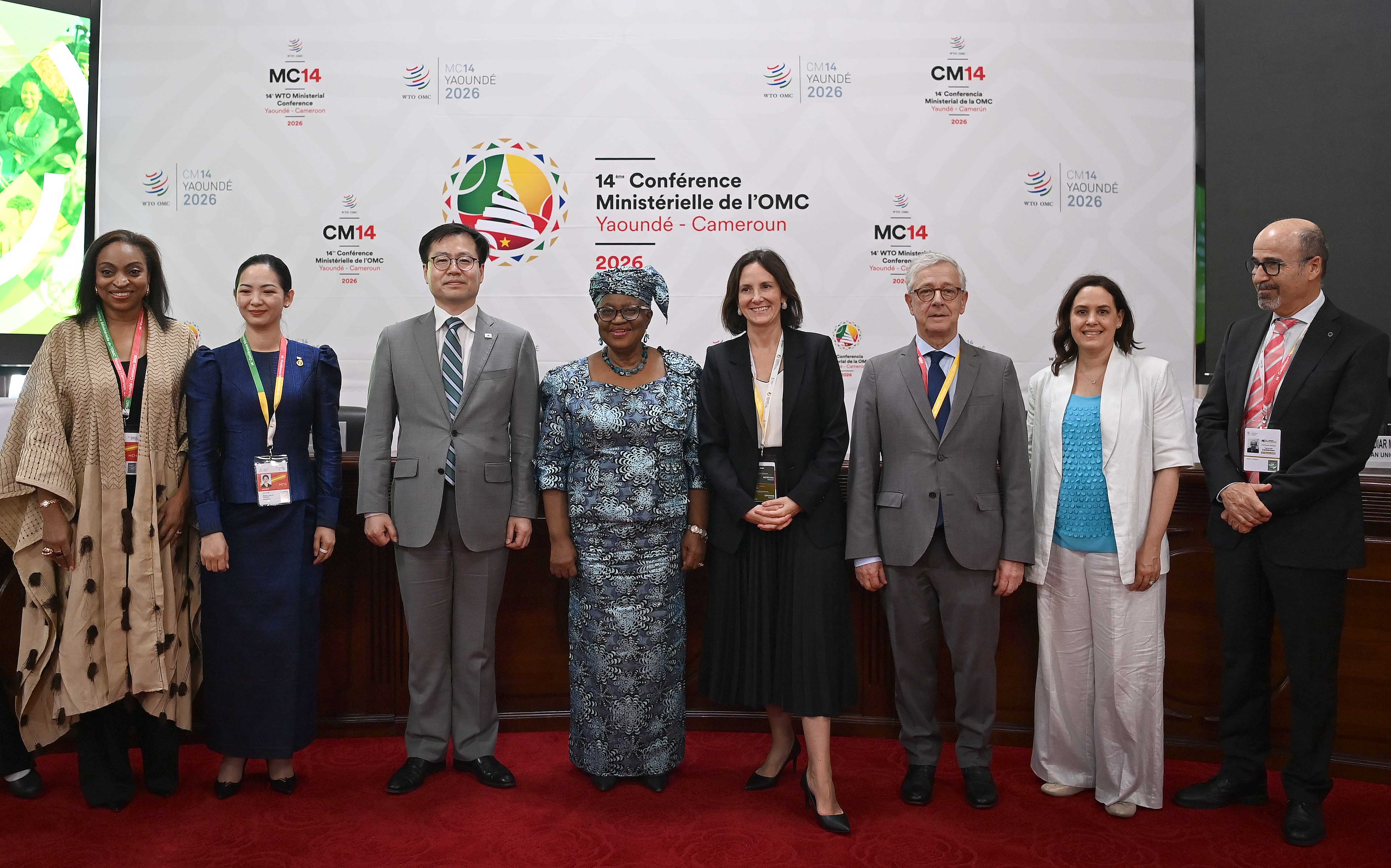
The Korean delegation, led by Trade Minister Yeo Han-koo of the Ministry of Trade, Industry and Resources (MOTIR, Minister JK Kim), is helping steer WTO reform talks, build support for incorporating the Investment Facilitation for Development Agreement (IFDA) into the WTO framework, and broaden strategic engagement with key partners at the 14th WTO Ministerial Conference (MC14) in Yaoundé, Cameroon. As the conference is seen as a pivotal moment to restoring the multilateral trading system and setting the direction of future global trade rules, Korea is playing an increasingly prominent role. Trade Minister Yeo Chairs Key WTO Reform Sessions As Minister Facilitator for WTO reform, Trade Minister Yeo Han-koo chaired four sessions on March 26 and 27, 2026, covering fundamental WTO issues, decision-making and past mandates, development and special and differential treatment, and a level playing field, structuring the key issues under each agenda item and leading constructive exchanges among member states. Türkiye Withdraws Opposition, Boosting Prospects for IFDA’s WTO Incorporation Korea is working to build support for incorporating the Investment Facilitation for Development Agreement (IFDA) into the WTO framework at MC14. As co-chair of the IFDA negotiations with Chile, Korea hosted a ministerial side event on March 25, 2026, bringing together major economies and international organizations to discuss the agreement’s value, its potential contribution to development, and support for implementation. In his opening remarks, Trade Minister Yeo highlighted Korea’s experience in improving its investment environment and stressed the importance of a predictable and transparent investment climate. He said the IFDA could provide a solid institutional foundation for attracting investment amid global uncertainty and serve as a practical model for inclusive cooperation for development. Ahead of MC14, Korea held bilateral consultations with India and Türkiye and exchanged letters with both countries in an effort to persuade them to drop their opposition. On March 26, 2026, Türkiye withdrew its opposition at the opening session of MC14, raising expectations for the IFDA’s incorporation into the WTO framework. Expanding Global Networks Through Bilateral Meetings In his role as facilitator of the WTO reform talks, Trade Minister Yeo Han-koo held a series of bilateral meetings with heads of delegation from key economies to build broader support for the multilateral trading system and address issues affecting Korean businesses. With New Zealand, Singapore, the Netherlands, France, and the United Kingdom, he coordinated positions on the WTO reform work plan and digital trade rules. With Paraguay, Uruguay, and Argentina, he discussed supply chain stability and measures to ease non-tariff barriers. “At a time of growing uncertainty in the global trading environment, the multilateral trading system faces a critical test of whether it can deliver tangible results,” Trade Minister Yeo said. He added, “As facilitator of WTO reform discussions and co-chair of the IFDA negotiations, Korea will work through the close of MC14 to help deliver concrete outcomes.” date2026-03-27
-
FTA/Economic Cooperation
Korea Hosts Ministerial Side Event on Investment Facilitation for Development Agreement (IFDA)
Trade Minister Yeo Han-koo of the Ministry of Trade, Industry and Resources (MOTIR, Minister JK Kim) hosted an IFDA side event on the sidelines of the 14th WTO Ministerial Conference (MC-14) in Yaoundé, Cameroon, on March 25, 2026, and delivered opening remarks. The event brought together trade ministers and delegations from WTO members, along with representatives from international organizations engaged in investment facilitation. Discussions focused on the IFDA’s potential to improve the global investment climate and support development. date2026-03-26
-
FTA/Economic Cooperation
Korea and Canada Hold Second Director-General-Level 2+2 Economic Security Dialogue
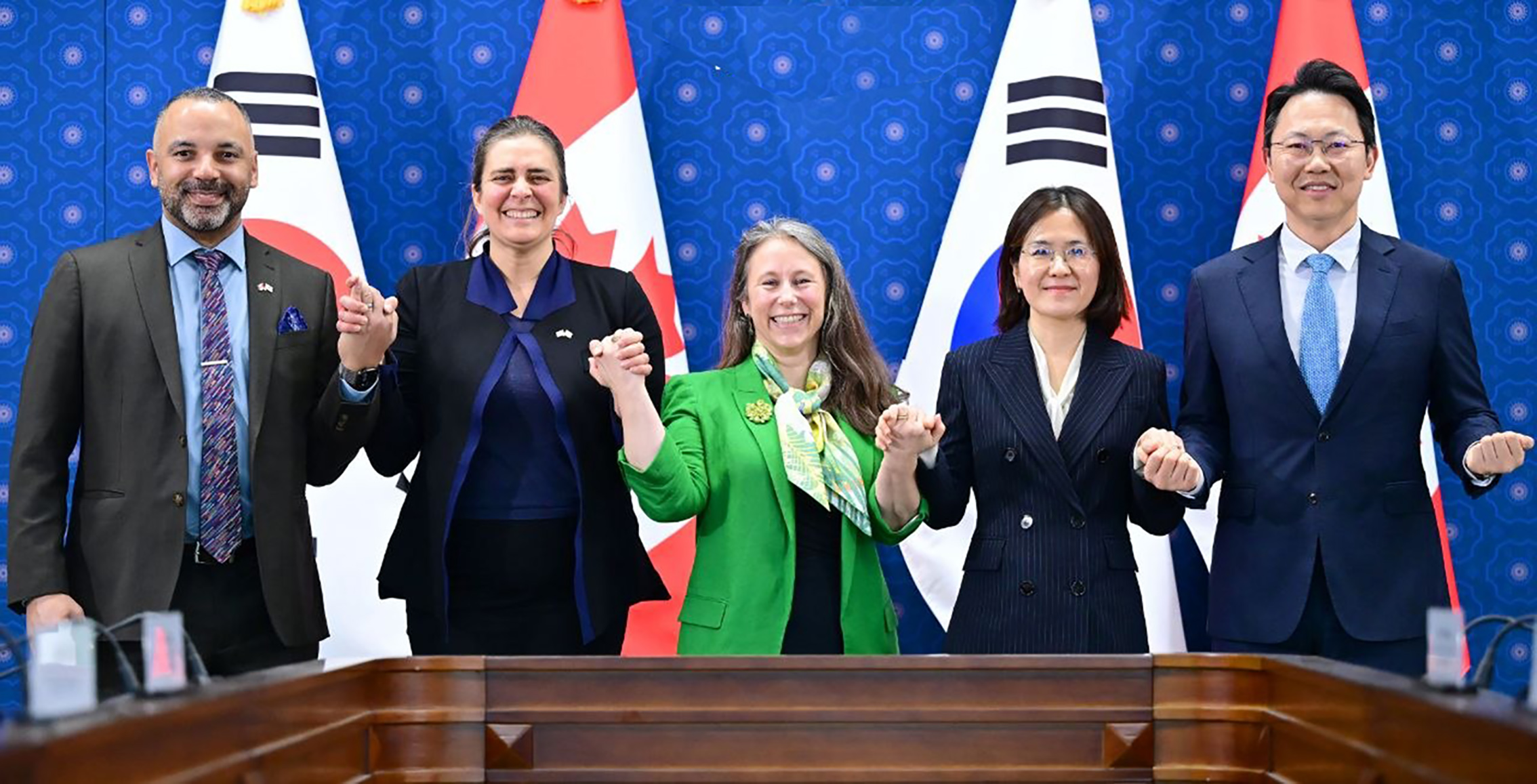
Kim Young-man, Acting Director General for Trade Policy at the Ministry of Trade, Industry and Resources (MOTIR), attended the second Director-General-level Korea–Canada 2+2 Economic Security Dialogue held at the Ministry of Foreign Affairs in Seoul on March 25, 2026. The meeting brought together Kim Sun-young, Director General for Bilateral Economic Affairs at the Ministry of Foreign Affairs (MOFA); Jamieson McKay, Director General of the Foreign Investment Review and Economic Security (FIRES) Branch at Innovation, Science and Economic Development Canada; and Joya Donnelly, Director-General for Northeast Asia at Global Affairs Canada. The two sides discussed ways to strengthen coordination in a rapidly changing global economic security environment shaped by supply chain realignment and intensifying technology competition. date2026-03-26
-
FTA/Economic Cooperation
Korea and Canada Address Risks Together, Create Opportunities Together
The Ministry of Trade, Industry and Resources (MOTIR, Minister JK Kim) and the Ministry of Foreign Affairs (MOFA, Minister Cho Hyun) held the second Director-General-level Korea–Canada 2+2 Economic Security Dialogue on March 25, 2026, with visiting officials from Innovation, Science and Economic Development Canada and Global Affairs Canada. This was the second director-general-level meeting between the two countries’ industry and foreign affairs authorities since Korea and Canada elevated ties to a Comprehensive Strategic Partnership in September 2022. The dialogue focused on ways to strengthen coordination in a rapidly changing economic security environment, marked by supply chain realignment and intensifying technology competition. The two sides reviewed key global risk factors, including shifts in the geoeconomic landscape and the spread of protectionist policies, and agreed on the need for closer coordination to address them. They also discussed joint responses to supply chain disruptions, including the use of overseas missions in an early warning system (EWS). Korea also outlined industrial cooperation related to the Canadian Patrol Submarine Project (CPSP) as a means of broadening strategic and economic ties, and conveyed its interest in working with Canada on the project. The two sides agreed to prepare thoroughly for the next Korea–Canada 2+2 Ministerial Economic Security Dialogue and to continue working closely to identify practical projects and deliver concrete outcomes. date2026-03-25
-
FTA/Economic Cooperation
Korea, Mongolia Discuss Accelerating CEPA Talks to Expand Market Access and Strengthen Critical Minerals Supply Chains
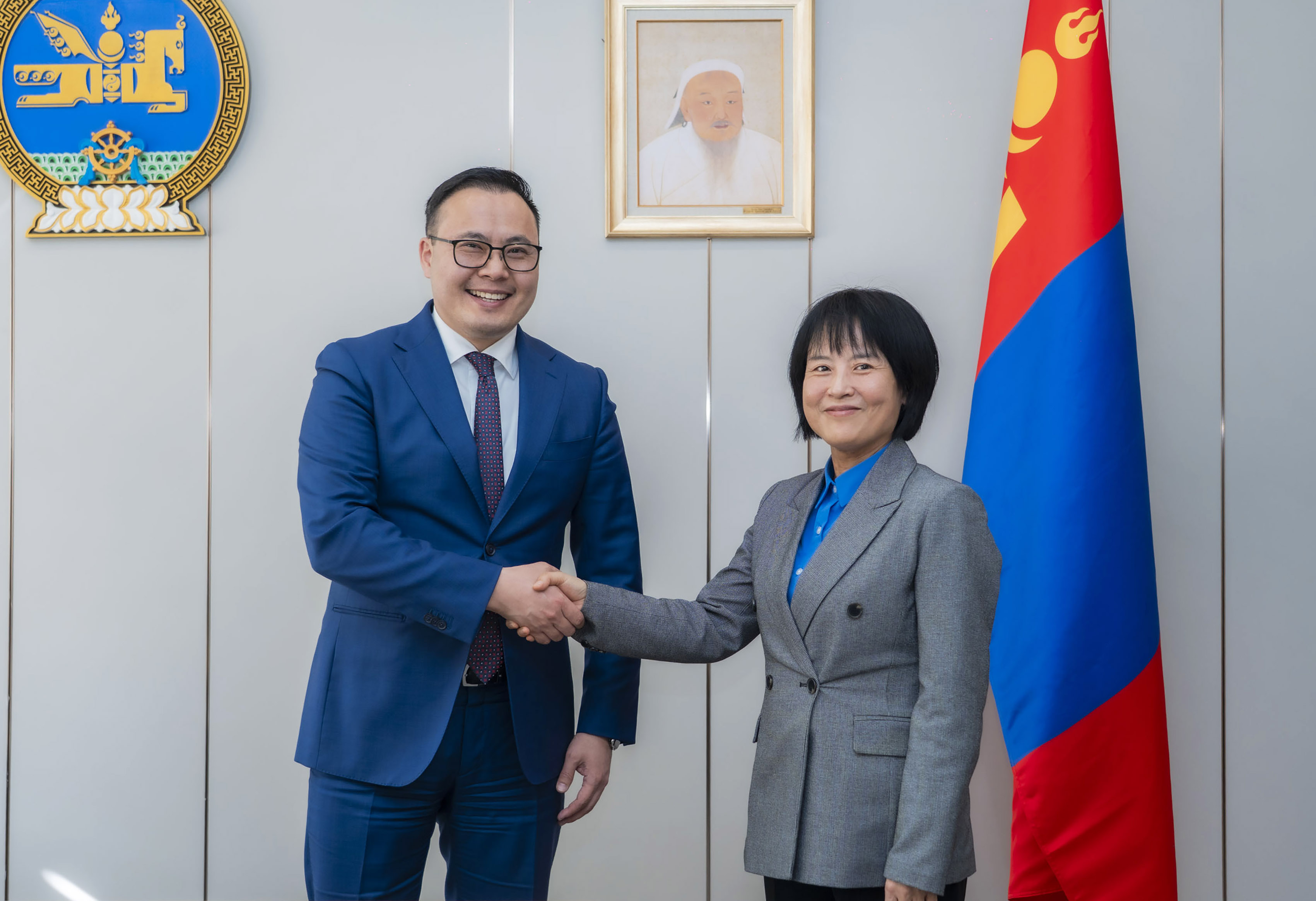
Kwon Hye-jin, Director General for Trade Negotiations at the Ministry of Trade, Industry and Resources (MOTIR, Minister JK Kim), visited Mongolia on March 24, 2026, to meet with senior officials responsible for trade and mineral resources and discuss how to accelerate the Korea–Mongolia CEPA, broaden market access, and strengthen cooperation on critical mineral supply chains. Mongolia has a relatively small consumer market of 3.5 million people, but more than 60 percent of its population is under 34, making it a promising market for Korean consumer goods. That demographic profile, coupled with the popularity of Korean culture, has driven rapid growth in Korean exports of cosmetics, food products and other consumer goods, while Korean retailers and food franchise brands are also expanding in the market. Korea’s exports of key products such as automobiles, tobacco, petrochemical products and pharmaceuticals have also continued to grow steadily since 2021. The Korea–Mongolia CEPA made progress over four formal rounds of negotiations held between December 2023 and November 2024. The talks were later paused, however, amid concerns in Mongolia about market opening and delays in reaching agreement on goods and rules of origin. In a meeting with Batkhuu Idesh, State Secretary of Mongolia’s Ministry of Economy and Development and Mongolia’s chief negotiator for the CEPA, Director General Kwon explored a broad basis for agreement on goods and rules of origin. The two sides also agreed to narrow remaining differences and accelerate the negotiations. Director General Kwon also proposed expanding the scope of the CEPA to include cooperation on critical mineral supply chains. Mongolia is rich in copper, molybdenum and rare earth elements, making it a promising partner for Korea as it seeks to diversify imports of critical minerals. In a meeting with Dashpurev Buriad, State Secretary of Mongolia’s Ministry of Industry and Mineral Resources, the two sides discussed ways to expand bilateral cooperation in critical minerals and shared the view that the CEPA should include a dedicated cooperation chapter to support that effort. Director General Kwon also held a roundtable with Korean companies operating in distribution, logistics, used cars, medical devices and tobacco to hear trade- and investment-related concerns and gather industry input to help shape the negotiations. “Mongolia is an emerging market where Korean companies have a growing presence, as well as an important partner in resource cooperation,” Director General Kwon said. “We will work to advance the CEPA quickly to support Korean companies’ expansion in the Mongolian market and to broaden cooperation on critical minerals through the agreement.” date2026-03-24
-
FTA/Economic Cooperation
14th WTO Ministerial Conference Opens as WTO Faces Challenges
Trade Minister Yeo Han-koo of the Ministry of Trade, Industry and Resources (MOTIR, Minister JK Kim) will lead a Korean government delegation to the 14th WTO Ministerial Conference (MC-14), to be held in Yaoundé, Cameroon, on March 26–29, 2026. The delegation will focus on restoring the multilateral trading system and stabilizing the trade environment for Korean industries and businesses. The delegation includes around 30 officials from MOTIR, the Ministry of Foreign Affairs (MOFA, Minister Cho Hyun), the Ministry of Agriculture, Food and Rural Affairs (MAFRA, Minister Song Mi-ryung), the Ministry of Oceans and Fisheries (MOF, Minister Hwang Jong-woo), and Korea’s Permanent Mission in Geneva. Korea Takes a Facilitator Role in WTO Reform Talks MC-14 comes at a time when the WTO faces serious challenges, with members expected to engage in intensive talks on restoring its functions and advancing institutional reform. The outcome of those discussions is likely to shape the WTO’s future role and the broader rules-based trading system. Korea will take part not only as a member but also as a key facilitator in the reform debate. Trade Minister Yeo will serve as one of the Minister Facilitators for the WTO reform session and chair four sessions, helping narrow differences among members and build consensus on tangible reform outcomes. It will be the first time Korea’s chief delegate has served a lead facilitating role in an official session of a WTO Ministerial Conference. Korea Pushes for Outcomes on the E-Commerce Moratorium and IFDA At MC-14, Korea will serve as a bridge on key issues, including the incorporation of the Investment Facilitation for Development Agreement (IFDA) into the WTO legal framework, extension of the moratorium on customs duties on electronic transmissions, and implementation of the e-commerce agreement. On March 25, 2026, Korea will host a ministerial side event on the IFDA—bringing together ministers from key economies and officials from major international organizations—to highlight how the agreement can improve the global investment climate and promote development. Korea will also step up consultations with key economies on extending the moratorium and expediting implementation of the e-commerce agreement. These steps would lower digital trade costs and widen access to global markets for Korean companies. They would also help Korean films, television dramas, music, games, and other digital content stay competitive overseas without additional tariff burdens, while facilitating overseas expansion for small and mid-sized digital firms and supporting growth in exports of digital services and content. Korea will also support early entry into force and full implementation of the Fisheries Subsidies Agreement, progress in follow-up negotiations, and discussions aimed at building a more inclusive trading system, including the extension of preferences after least developed countries (LDCs) graduate from LDC status. Korea Seeks to Turn a Broader Role into Tangible Results “Restoring the multilateral trading system is essential at a time when global supply chains are being reshaped and the rules-based trade order is under strain,” Trade Minister Yeo said. “As a middle power that advanced through trade liberalization and the multilateral system, Korea will work at MC-14 to move reform talks forward, deliver tangible outcomes, and help create a more stable trade environment for Korean businesses.” “Korea is serving for the first time as a facilitator for a core WTO reform session at a WTO Ministerial Conference,” he added. “We will do our part as a responsible middle power to help rebuild trust among members and restore the WTO’s normal functioning.” Bilateral Meetings to Address Trade Issues and Business Bottlenecks During MC-14, the Korean government will hol date2026-03-24
-
FTA/Economic Cooperation
Meeting with Mongolia’s State Secretary of Economy and Development
Kwon Hye-jin, Director General for Trade Negotiations at the Ministry of Trade, Industry and Resources (MOTIR, Minister JK Kim), met with Batkhuu Idesh, State Secretary of Mongolia’s Ministry of Economy and Development, in Mongolia on March 24, 2026. The two sides discussed ways to accelerate negotiations on the Korea–Mongolia CEPA in order to expand bilateral market access and strengthen cooperation on critical mineral supply chains. “Mongolia is an emerging market where Korean companies have a growing presence, as well as an important partner in resource cooperation,” Director General Kwon said. “We will work to advance the CEPA quickly to support Korean companies’ expansion in the Mongolian market and to broaden cooperation on critical minerals through the agreement.” date2026-03-24
-
FTA/Economic Cooperation
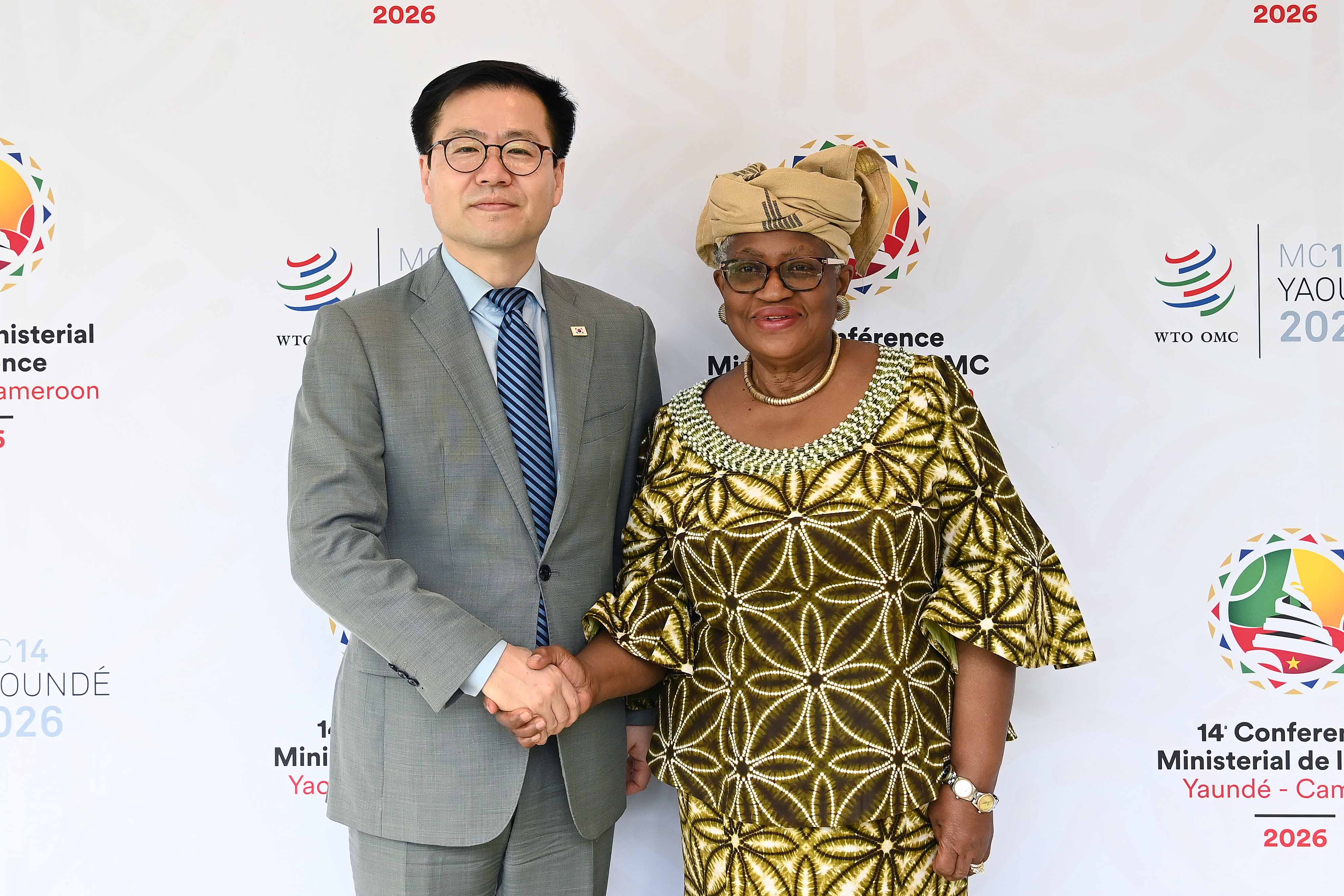
Trade Minister Yeo Meets with WTO Director-General Ngozi Okonjo-Iweala
Trade Minister Yeo Han-koo of the Ministry of Trade, Industry and Resources (MOTIR, Minister JK Kim) met with WTO Director-General Ngozi Okonjo-Iweala in Yaoundé, Cameroon, on March 24, 2026, on the sidelines of the 14th WTO Ministerial Conference (MC-14). The two discussed the MC-14 agenda and ways to restore the multilateral trading system. Korea is taking part not only as a member but also as a key facilitator in the reform talks, with Trade Minister Yeo serving as one of the Minister Facilitators for the WTO reform session. “Restoring the multilateral trading system is essential at a time when global supply chains are being reshaped and the rules-based trade order is under strain,” Trade Minister Yeo said. “Korea will work at MC-14 to move reform talks forward and deliver tangible outcomes.” date2026-03-24