-
FTA/Economic Cooperation
Virtual Meeting with UAE Minister of Energy and Infrastructure
Minister JK (Jung-Kwan) Kim of the Ministry of Trade, Industry and Resources (MOTIR) held a virtual meeting with Suhail Mohamed Faraj Al Mazrouei, UAE Minister of Energy and Infrastructure, in Seoul on May 21, 2026. The two ministers reviewed repairs to transmission facilities near the Barakah Nuclear Energy Plant that sustained damage in the May 17 drone attack. They also discussed measures to strengthen the safety of Korean personnel working in the UAE. “The UAE government is doing everything possible to protect Korean personnel and their families in the UAE, and the Korean government will provide all possible support to help ensure repairs to the damaged facilities proceed without disruption,” Minister Kim said. date2026-05-22
-
Industry
MOTIR Holds First M.AX Conference with Industry Growth Forum
Kim Sung-youl, Deputy Minister for Industry and Growth at the Ministry of Trade, Industry and Resources (MOTIR, Minister JK Kim), attended the first M.AX conference, combined with an industry growth forum, at the Korea Chamber of Commerce and Industry (KCCI) in Seoul on May 20, 2026. The event brought together participants from companies, academia and related organizations involved in M.AX, including the Korea Institute for Advancement of Technology (KIAT), LG Production Engineering Research Institute (LG PRI) and KAIST. “M.AX, the AI transformation of manufacturing, will be a critical factor in maintaining Korea’s industrial leadership and securing future competitiveness amid the global race for technological supremacy,” Deputy Minister Kim said. “MOTIR will work with companies in the M.AX Alliance to deliver tangible results, including higher productivity and greater value added across industry.” date2026-05-21
-
FTA/Economic Cooperation
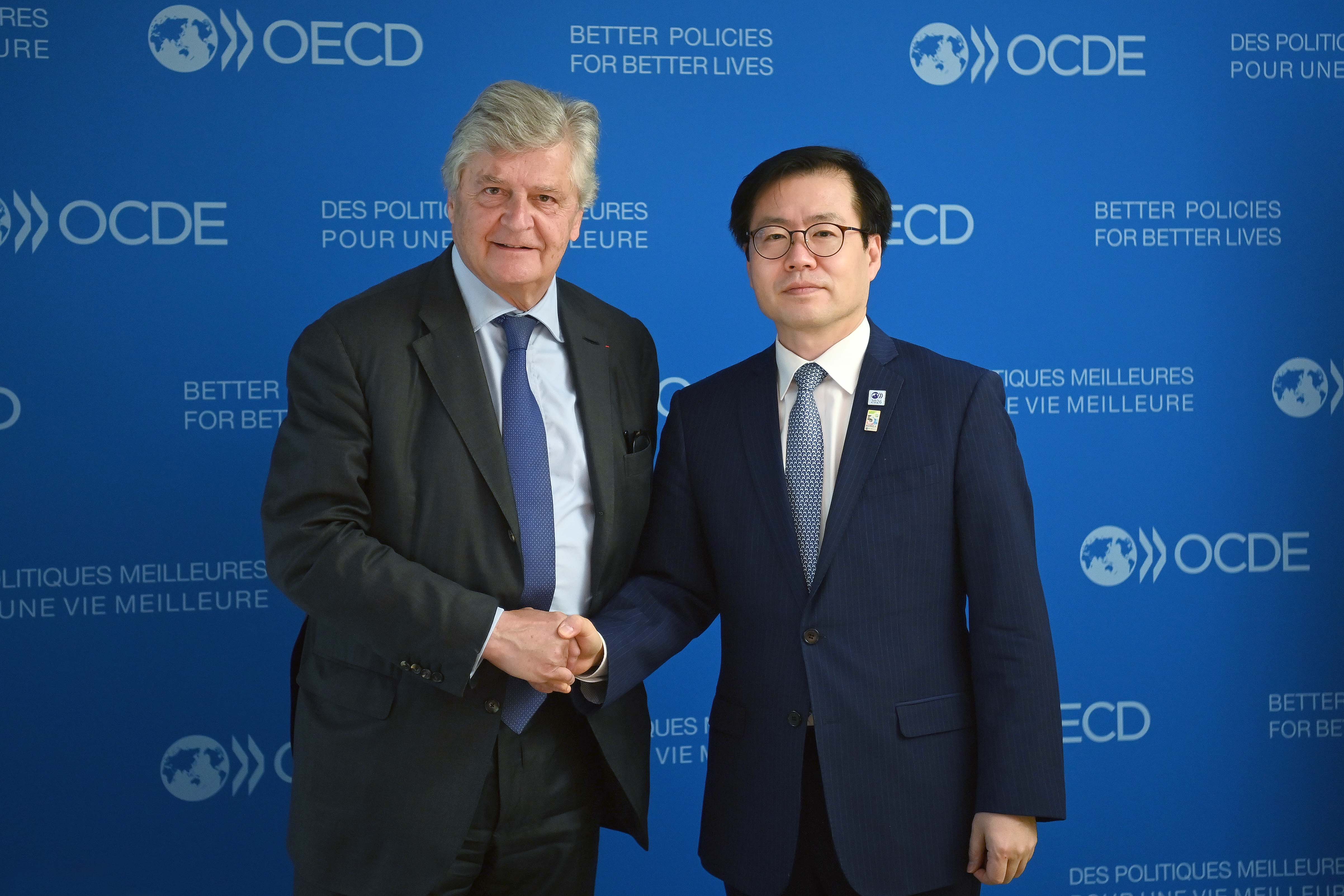
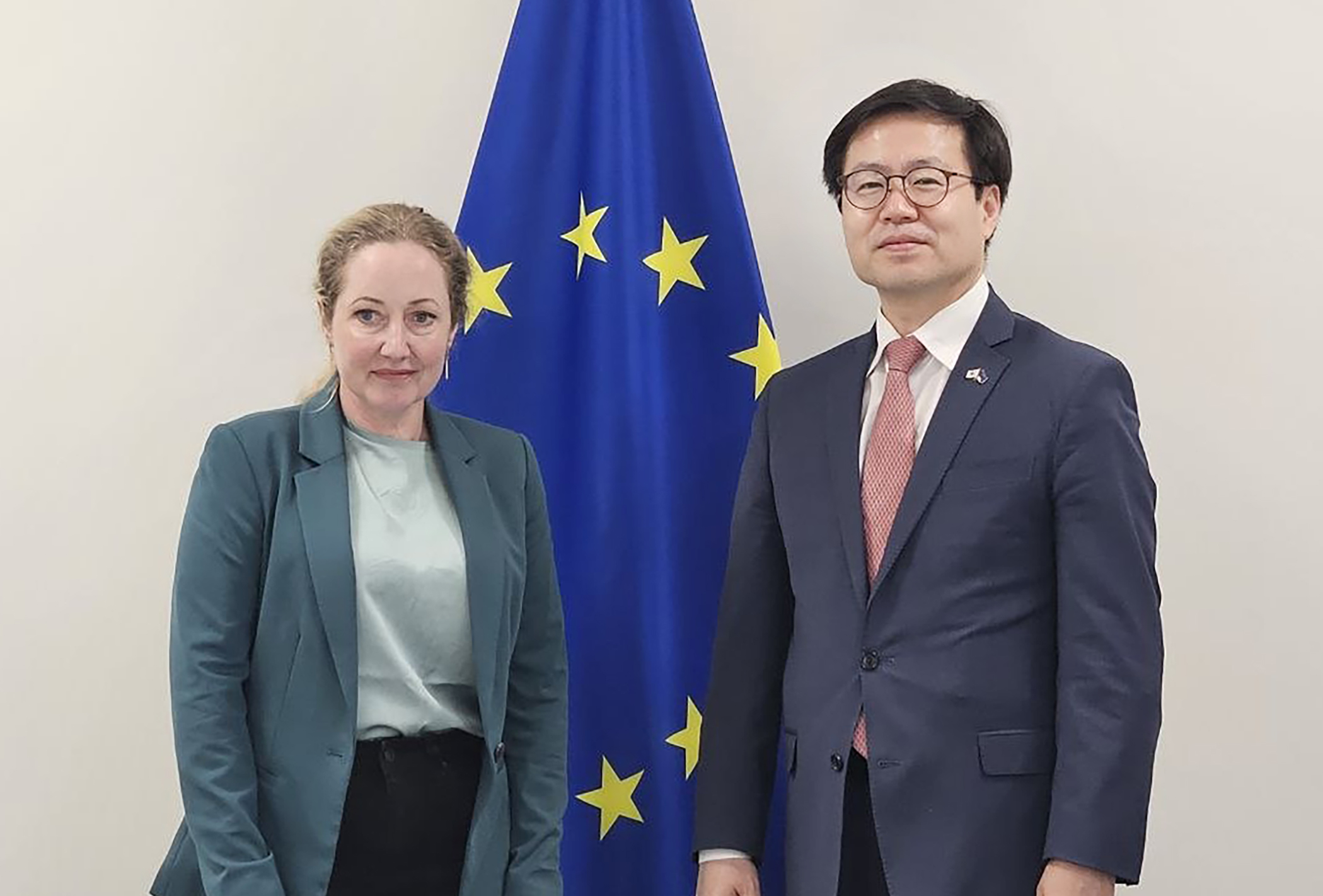
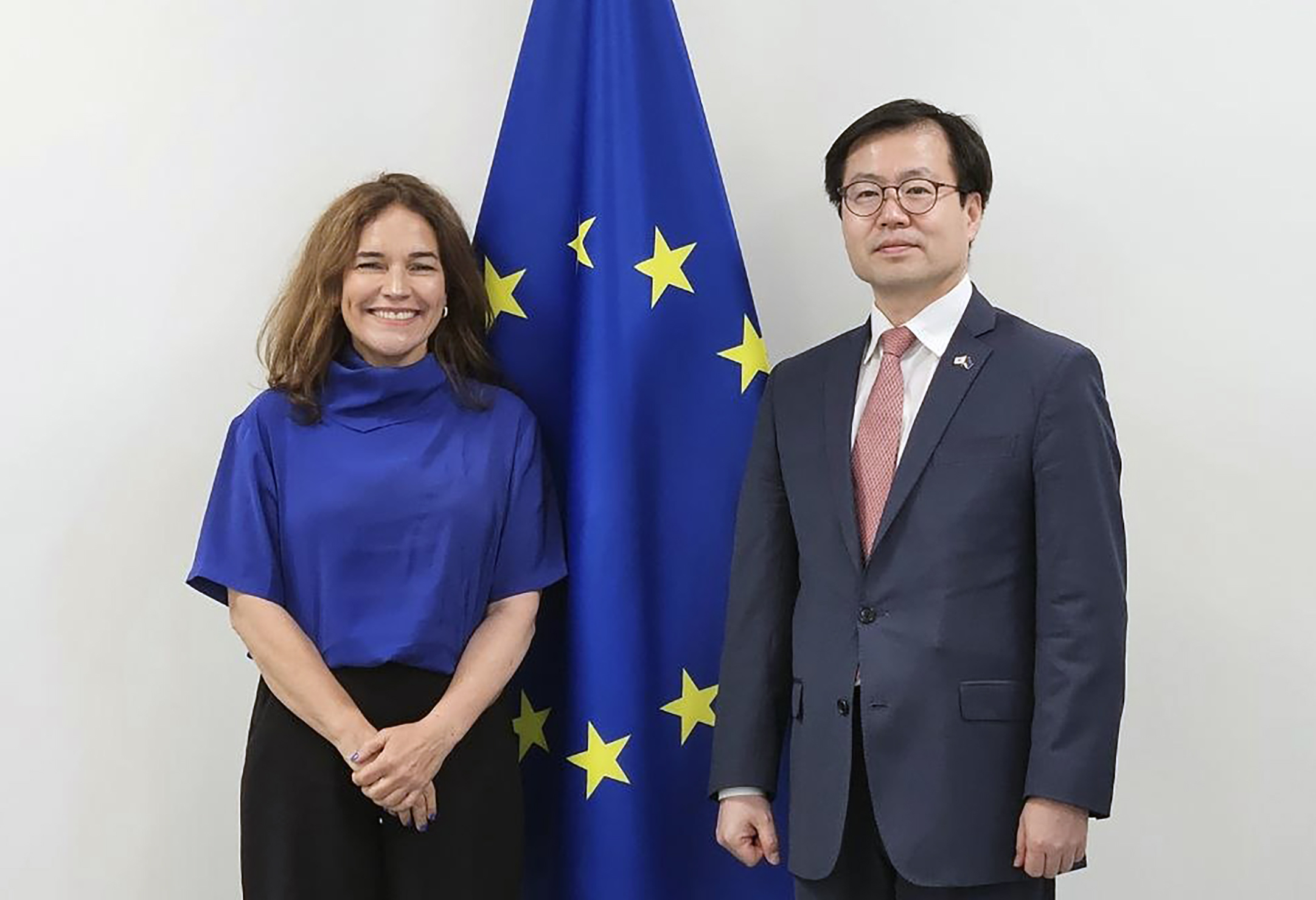
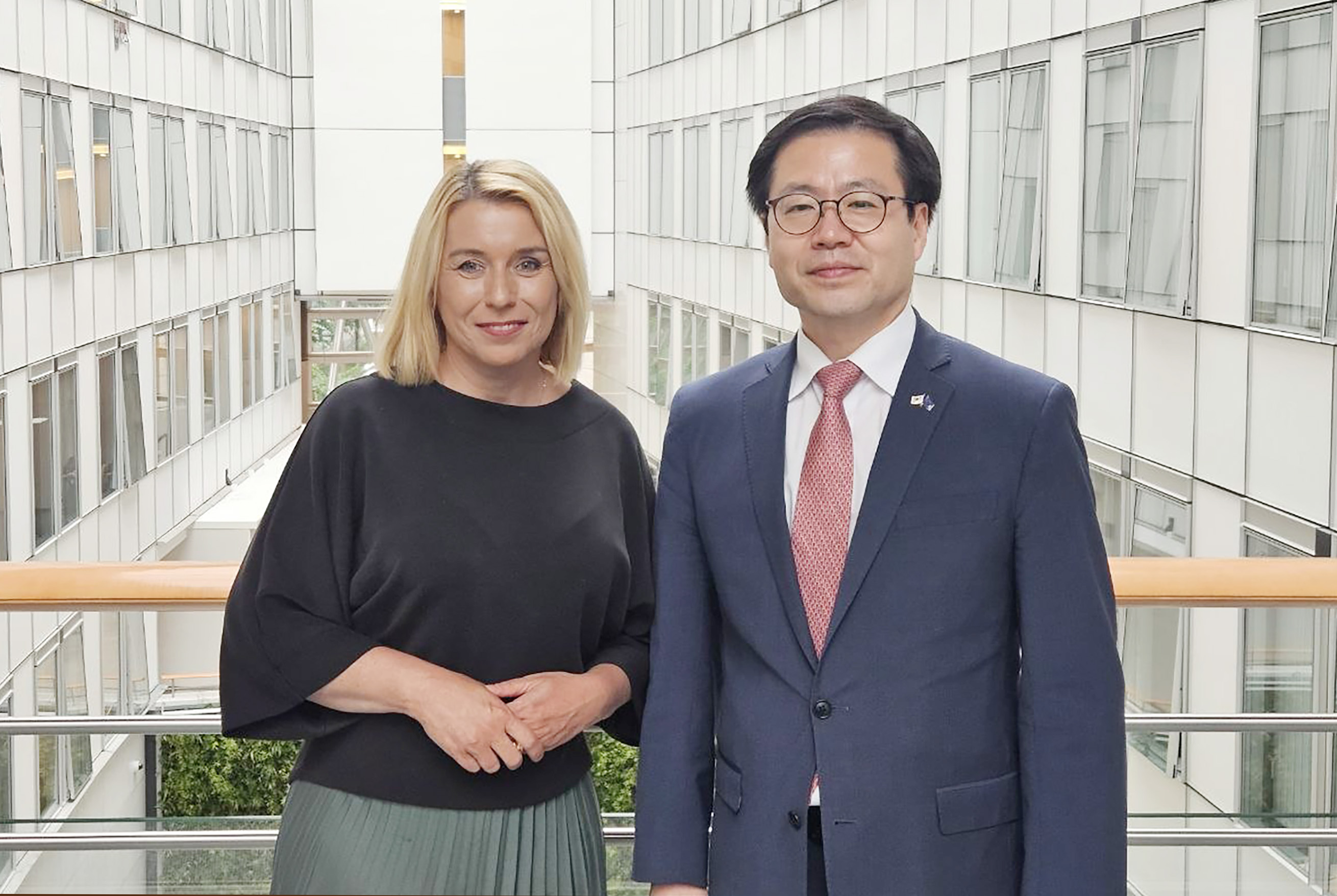
Korea and the EU Hold Dialogue on Supply Chains and Industrial Policy
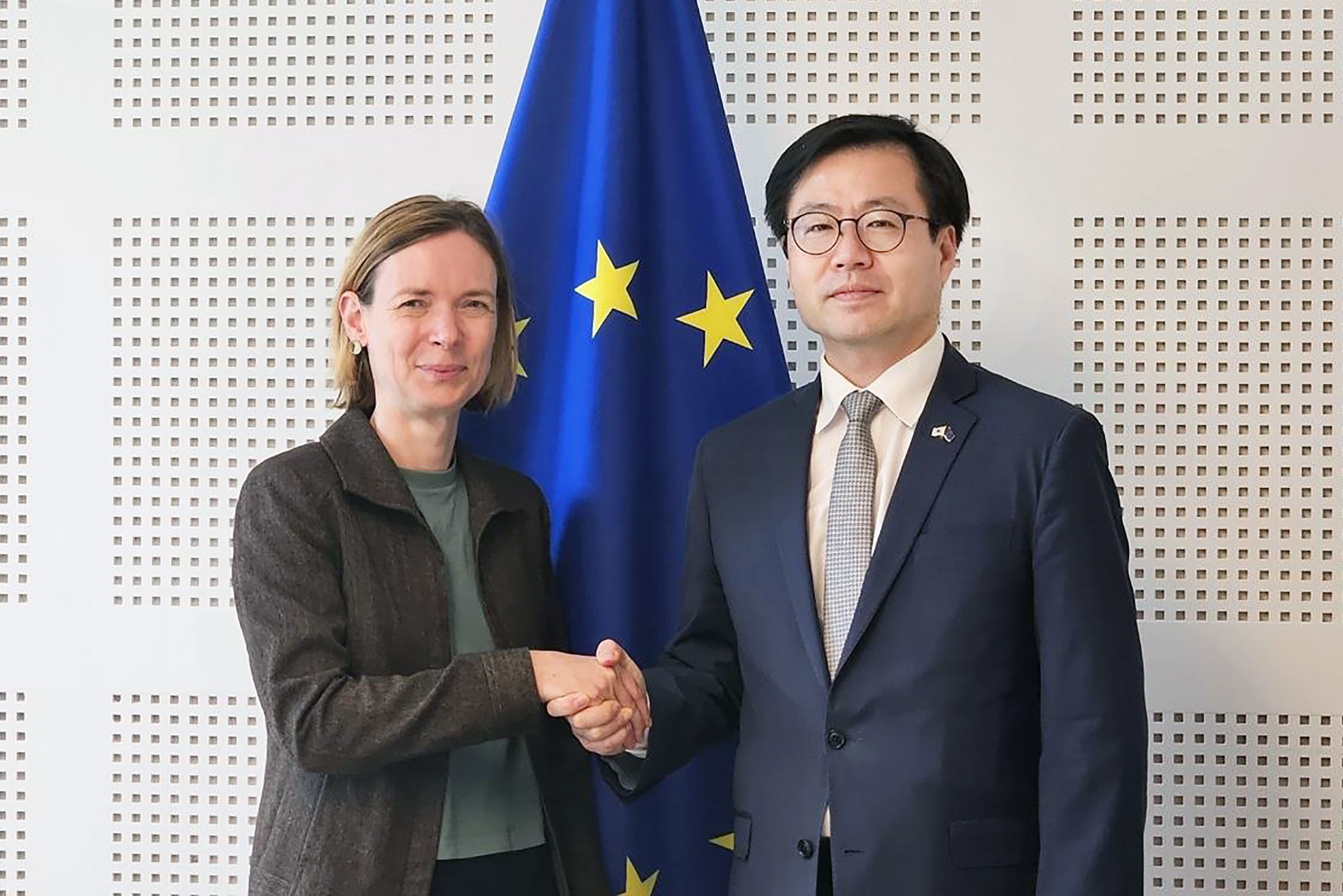
The Ministry of Trade, Industry and Resources (MOTIR, Minister JK Kim) held the second Korea–EU dialogue on supply chains and industrial policy with the European Commission’s Directorate-General for Internal Market, Industry, Entrepreneurship and SMEs (DG GROW) in Seoul on May 21, 2026. The meeting was co-chaired by Vice Minister Moon Shin-hak of MOTIR and Kerstin Jorna, Director-General of DG GROW. The dialogue was launched after Korea and the EU agreed at their summit in May 2023 to expand the existing industrial policy dialogue to cover supply chain cooperation. The first meeting was held in December 2023, and the second meeting reviewed progress in supply chain and industrial policy cooperation and discussed practical ways to advance future cooperation. The two sides first shared their policies to stabilize supply chains, as global disruptions have become a persistent risk amid escalating geopolitical tensions and threats such as the closure of the Strait of Hormuz. Korea introduced its supply chain legislation, enacted to build a government-wide support framework, and its early warning system, which quickly detects signs of supply-demand risks in key items such as materials, parts and equipment. The two sides also exchanged views on the EU’s progress and plans for its supply chain monitoring system. The two sides also discussed industrial policy trends and major legislative and policy priorities. Korea emphasized that key EU initiatives, including the Industrial Accelerator Act, should be designed and implemented to strengthen Korea–EU supply chain links. Korea also asked the EU to give careful consideration to concerns raised by Korean companies. The two sides also discussed cooperation on supply chains in strategic industries, including critical minerals and batteries. On critical minerals, they explored ways to share information, analyze risks and collaborate on investments and projects to help build stable and sustainable supply chains. On batteries, Korea explained that Korean battery companies are helping build the EU’s battery production base and strengthen its supply chains through large-scale investments in the EU. Korea also asked for Korean companies to play a larger role in battery energy storage system (BESS) projects in the EU. The two sides also discussed ways to expand investment cooperation between Korean and European companies. They agreed that combining European companies’ core technologies with Korea’s advanced manufacturing capabilities could help strengthen supply chain stability and industrial competitiveness. They also agreed to expand cooperation and investment in advanced industries. They further discussed using cooperation platforms such as the EU Business Hub to identify new partnerships in strategic sectors, including green industries, digital industries and healthcare, and to turn B2B cooperation into tangible industrial outcomes. “Korea and the EU are strategic partners that share the universal values of freedom, human rights and the rule of law. They are also economic partners with strong potential to complement each other in advanced industries and supply chains,” Vice Minister Moon said. “We hope this second dialogue will lead to practical outcomes and serve as a key channel for strengthening Korea–EU supply chain stability and industrial cooperation.” MOTIR will continue to expand supply chain cooperation with the EU in strategic industries, including critical minerals and batteries, and strengthen bilateral cooperation on economic security and industrial policy. date2026-05-21
-
FTA/Economic Cooperation
Korea and Jiangsu Province Hold Seventh Economic and Trade Cooperation Exchange
Minister for Trade Yeo Han-koo of the Ministry of Trade, Industry and Resources (MOTIR, Minister JK Kim) attended the seventh Korea–Jiangsu Province Economic and Trade Cooperation Exchange in Yancheng, Jiangsu Province, China, on May 20, 2026. The event was held under the theme of expanding future-oriented Korea–China cooperation. The event brought together approximately 400 government officials and business representatives from Korea and China, including Xia Xinmin, including Xia Xinmin, Vice Chairman of the Standing Committee of the Jiangsu Provincial People’s Congress. “We will help translate the momentum generated by the reciprocal state visits between the leaders of Korea and China into concrete results,” Minister Yeo said, noting that Korea will continue region-specific dialogue with Chinese local governments. date2026-05-21
-
Industry
Minister Yeo Visits Tongwei Solar’s Yancheng Facility
Minister for Trade Yeo Han-koo of the Ministry of Trade, Industry and Resources (MOTIR, Minister JK Kim) visited the Tongwei Solar Technology Yancheng Base in Jiangsu Province, China, on May 19, 2026, on the occasion of the seventh Korea–Jiangsu Province Economic and Trade Cooperation Exchange. During the visit, Minister Yeo toured the base’s main facilities. The visit took place as Korea and Jiangsu Province discussed ways to expand industrial and supply chain cooperation. date2026-05-21
-
Industry
Minister Yeo Holds Roundtable with Korean Companies in Jiangsu Province
Minister for Trade Yeo Han-koo of the Ministry of Trade, Industry and Resources (MOTIR, Minister JK Kim) held a roundtable with Korean companies operating in Jiangsu Province in Yancheng, Jiangsu Province, China, on May 19, 2026, on the occasion of the seventh Korea–Jiangsu Province Economic and Trade Cooperation Exchange. The meeting was attended by representatives from companies including Kia, SK On, Sungwoo Hitech, Yancheng Dongyi Auto Parts, LG Chem and Daesang Food. Minister Yeo was briefed on their local operations and challenges in Jiangsu Province and discussed possible support measures. date2026-05-21
-
FTA/Economic Cooperation
Minister Yeo Visits China–ROK Industrial Park Exhibition Hall in Yancheng
Minister for Trade Yeo Han-koo of the Ministry of Trade, Industry and Resources (MOTIR, Minister JK Kim) visited the exhibition hall at the Korea–China industrial park in Yancheng, Jiangsu Province, China, on May 19, 2026, on the occasion of the seventh Korea–Jiangsu Province Economic and Trade Cooperation Exchange. The visit took place as Korea and Jiangsu Province discussed industrial park cooperation and ways to strengthen supply chain cooperation. date2026-05-21
-
FTA/Economic Cooperation
Minister Yeo Meets with Jiangsu Vice Governor Zhao Yan
Minister for Trade Yeo Han-koo of the Ministry of Trade, Industry and Resources (MOTIR, Minister JK Kim) met with Zhao Yan, Vice Governor of Jiangsu Province, in Yancheng, Jiangsu Province, China, on May 19, 2026, on the occasion of the seventh Korea–Jiangsu Economic and Trade Cooperation Exchange Conference. The two sides discussed cooperation between Korea–China industrial parks and ways to strengthen supply chain cooperation, as Jiangsu Province continues to serve as a key base for Korean companies operating in China. “We will help translate the momentum generated by the reciprocal state visits between the leaders of Korea and China into concrete results,” Minister Yeo said, adding that Korea will continue region-specific dialogue with Chinese local governments. date2026-05-21
-
Trade/Investment
Land Ownership to Be Allowed in Free Trade Zones
The Korean Cabinet approved a bill to amend the Act on Designation and Management of Free Trade Zones on May 20, 2026. The amendment is designed to modernize aging production facilities in free trade zones and update their manufacturing-centered industrial structure so they can respond to rapid changes in the global industrial environment. It focuses on detailed rules for selling state- and public-owned land, giving companies a path to land ownership that can support new investment, while expanding digital transformation (DX) support to promote higher-value business activities. 1. Detailed Rules for Land Sales and Stronger Follow-Up Controls Until now, the law allowed land sales in free trade zones, but no detailed procedures were in place. In practice, the zones operated on a lease-only basis, leaving resident companies without land ownership and limiting their ability to secure collateral, hindering new investments. To address these constraints, the amendment sets out procedures and conditions for selling state-owned or public land and factory facilities, including sales prices and purchase eligibility. A restriction period on property disposal is introduced as a measure to prevent real estate speculation, as well as compliance enforcement fines for violations, such as failure to sign an occupancy contract or unauthorized disposal. 2. Support for Higher-Value Activities and Industrial Competitiveness Since their introduction in 1970, free trade zones have operated mainly as manufacturing bases, limiting their ability to keep pace with changes in the industrial environment. The amendment grants occupancy eligibility to export companies in knowledge services, including information processing and R&D, to promote digital transformation among resident companies and attract higher-value businesses. It also lowers entry barriers by allowing exceptions to the standard building area ratio requirement, reflecting the fact that knowledge service companies do not require large factories. In addition, the amendment expands special provisions under the Customs Act beyond goods clearance to customs assessment and duty reductions or exemptions. It also introduces raw material taxation, strengthening tax benefits for companies in free trade zones. The amendment is scheduled to take effect in May 2027 after revisions to the Enforcement Decree and related regulations. The Ministry of Trade, Industry and Resources (MOTIR, Minister JK Kim) will continue to support free trade zones so they can remain at the forefront of Korea’s exports and move beyond traditional manufacturing and logistics bases into advanced strategic hubs that bring together digital and service industries. date2026-05-20
-
Industry
Korea to Build Circular Battery Ecosystem with Used Battery Safety Framework
The Ministry of Trade, Industry and Resources (MOTIR, Minister JK Kim) announced that the bill to enact the “Act on the Management of Used Batteries and Promotion of the Used Battery Industry,” or the Used Battery Act, was approved by the Cabinet on May 20, 2026. The act treats used batteries as strategic national resources rather than waste, providing a legal basis for their management as volumes are projected to increase sharply with the wider adoption of energy storage systems (ESS) and electric vehicles. It also fosters related industries and establishes a national framework to respond to global green trade regulations, including the EU Battery Regulation, helping create a more stable business environment for companies. Key measures include a framework for performance evaluations and safety inspections; a battery life-cycle tracking and transaction system; measures to promote recycled material use; and support for the used battery industry. First, batteries will be graded through performance evaluations before removal, and products containing used batteries will undergo safety inspections before and after distribution. This will strengthen safety management for used batteries. Second, the battery life-cycle tracking and transaction system will serve as a public platform that manages data across the full battery life cycle—from manufacturing to disposal—and facilitates transactions. It is expected to help stimulate the market, support responses to trade regulations and address gaps in used battery oversight. Third, the act will introduce target requirements for recycled material content and a certification system for the production and use of recycled materials. These measures are expected to strengthen Korea’s supply chain for key battery minerals and promote resource circulation. Fourth, the act will foster the used battery industry through recommendations for priority purchases of products equipped with used batteries, supply chain stabilization measures, and technology development support. The Act will take effect one year after promulgation. Before then, MOTIR will work with relevant ministries, experts and industry to prepare implementing rules, secure the necessary budget and design a safe, balanced system. “This act is the result of years of consultation between industry and relevant ministries,” Minister Kim said. “It will lay the foundation for a closed-loop system for Korea’s battery resources and support the growth of emerging industries.” date2026-05-20