-
FTA/Economic Cooperation
Minister for Trade Yeo Han-koo Meets U.S. Trade Representative Jamieson Greer
Minister for Trade Yeo Han-koo of the Ministry of Trade, Industry and Resources (MOTIR, Minister JK Kim) met with U.S. Trade Representative Jamieson Greer in Paris, France, on June 3, 2026, on the sidelines of the 2026 OECD Ministerial Council Meeting (MCM). The two sides discussed a range of bilateral trade issues, including the results of U.S. Section 301 investigations. At the meeting, Minister Yeo heard directly from USTR about the background to its June 2, 2026, Section 301 findings on import prohibitions for goods produced with forced labor. The two sides also discussed USTR’s ongoing Section 301 investigations into structural excess capacity and production in manufacturing sectors. Minister Yeo emphasized the need to preserve the balance of benefits under the existing Korea–U.S. tariff agreement, and the U.S. side reaffirmed its intention to comply with the agreement. The two sides also reviewed progress in implementing the commitments set out in the joint fact sheet announced by the two leaders in November 2025. They agreed to maintain close communication to ensure that related follow-up measures proceed smoothly. “We made clear to the U.S. side that Korea’s position is that the latest Section 301 findings, as well as any future bilateral trade issues, should be discussed within the framework of the Korea–U.S. tariff agreement, rather than through new tariff actions,” Minister Yeo said. “Korea will take a steady approach to the remaining Section 301 procedures and continue close communication with the United States to keep bilateral trade issues on a stable track.” date2026-06-04
-
FTA/Economic Cooperation
Korea–Canada Advanced Industry Cooperation Business Roundtable
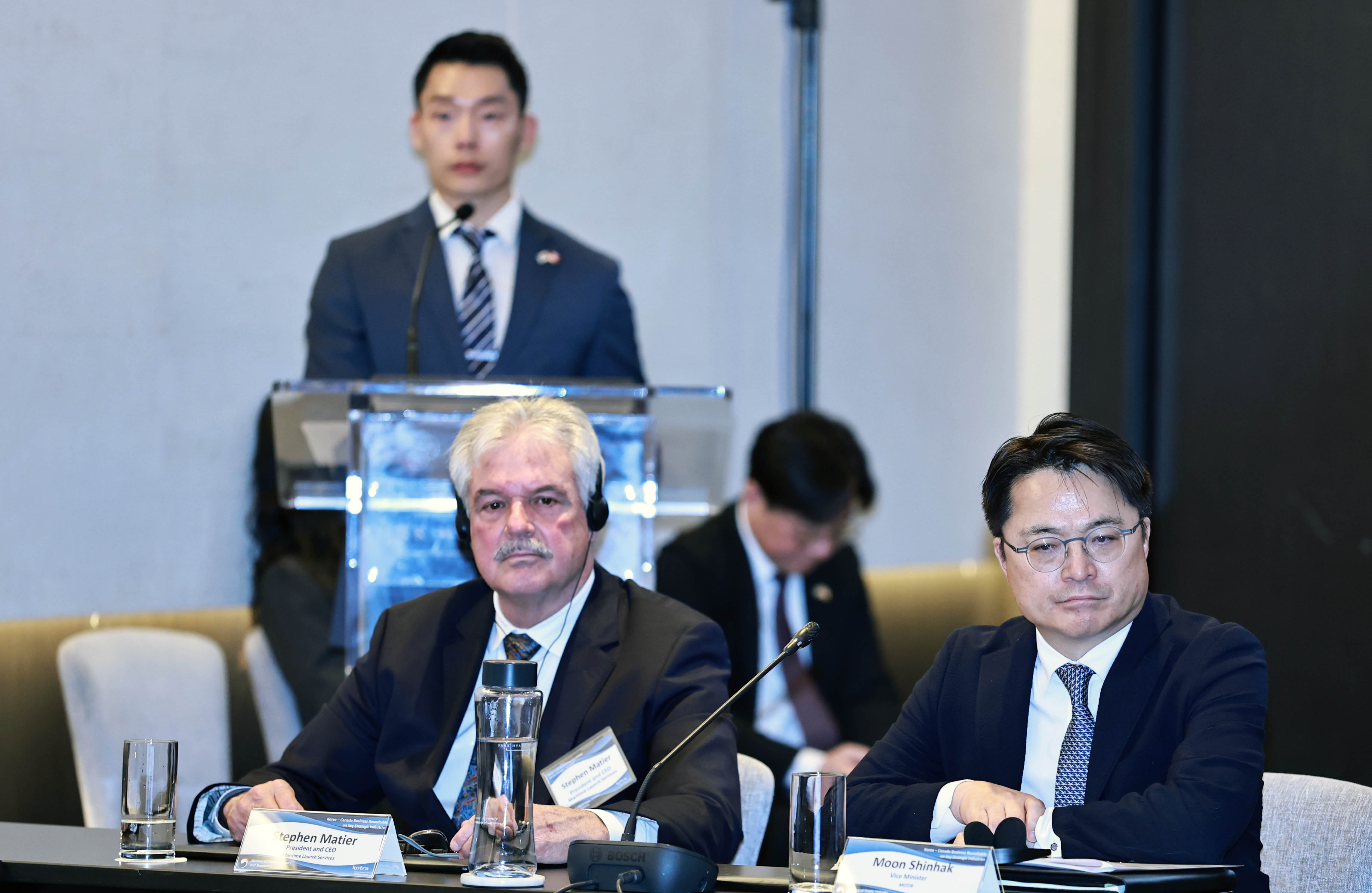
MOTIR Vice Minister Moon Shin-hak attended the Korea–Canada Advanced Industry Cooperation Business Roundtable in Toronto, Canada, on June 1, 2026. The event was organized by the Korea Trade-Investment Promotion Agency (KOTRA) and brought together Kang Hoon-sik, Chief of Staff to the President and the President’s special envoy for strategic economic cooperation; Lee Yong-cheol, Minister of the Defense Acquisition Program Administration (DAPA); Stephen Lecce, Ontario’s Minister of Energy and Mines; and approximately 50 business leaders from major Korean and Canadian defense, space, and hydrogen companies. “By combining Canada’s abundant resources and advanced technologies with Korea’s world-class manufacturing capabilities, the two countries can lead global markets in advanced industries,” Special Envoy Kang said. “Industrial cooperation between Korea and Canada should go beyond simple buying and supplying and develop into a broader ecosystem that connects technology, security, and talent.” date2026-06-02
-
FTA/Economic Cooperation
Video Meeting with Chairman of Oman’s Public Authority for Special Economic Zones and Free Zones
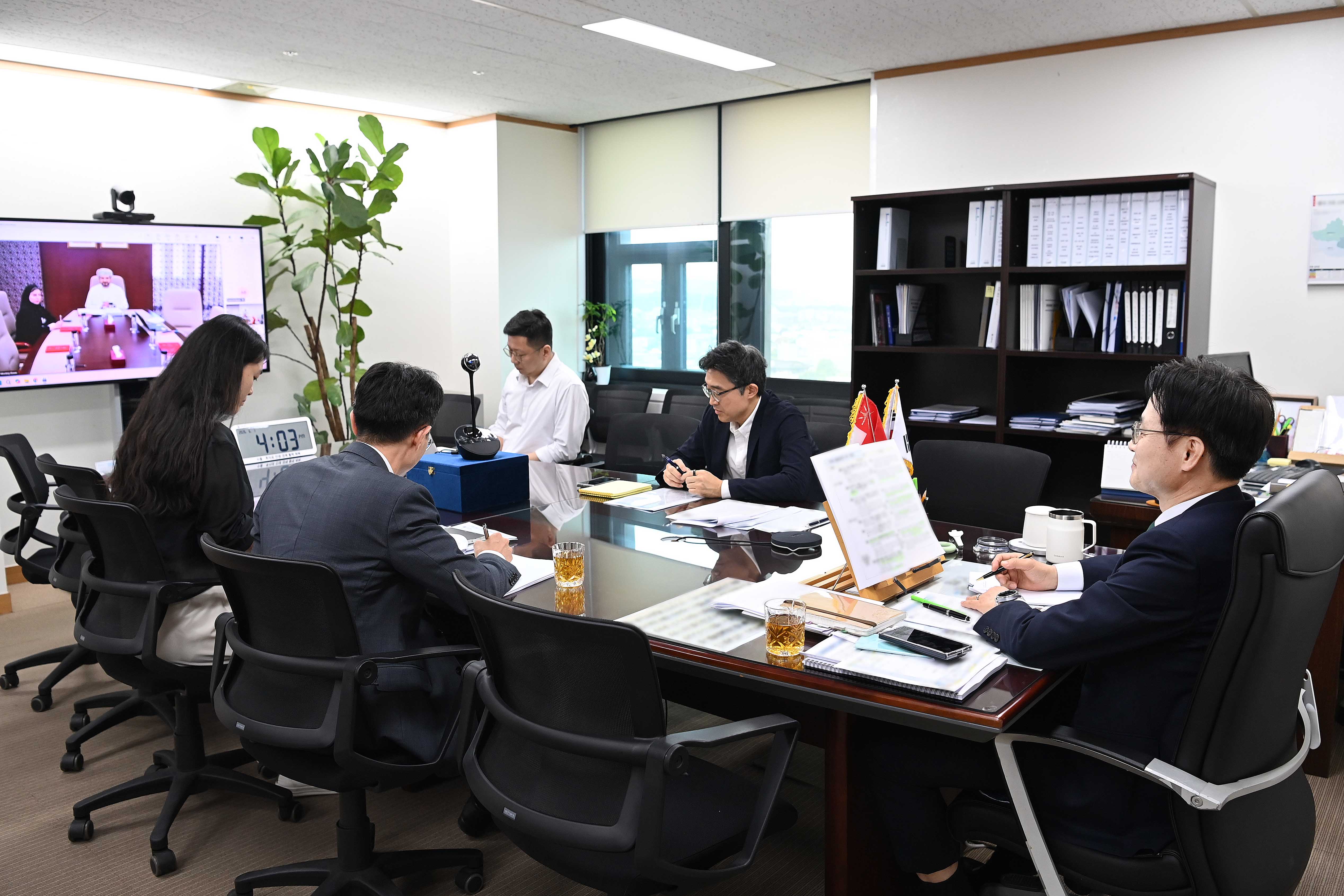
On June 1, 2026, Minister JK (Jung-Kwan) Kim of the Ministry of Trade, Industry and Resources (MOTIR) held a video meeting with H.E. Qais bin Mohammed Al Yousef, Chairman of the Public Authority for Special Economic Zones and Free Zones (OPAZ) of Oman, from his office at the Government Complex Seoul. The two sides discussed key areas of Korea–Oman economic cooperation, including stable resource supplies, Korean companies’ participation in plant projects, and ways to facilitate logistics flows. Minister Kim said Oman is an important partner in the Middle East, given its location outside the Strait of Hormuz and abundant energy resources, and that Korea will work with Oman to expand cooperation in resource security, plant projects, and logistics. date2026-06-02
-
FTA/Economic Cooperation
The Republic of Korea and Canada Deepen Co-operation on Energy Resources and Critical Minerals
Today, Republic of Korea’s Chief of Staff to the President and Special Envoy for Strategic Economic Cooperation, Kang Hoon-Sik, met with the Canada’s Minister of Energy and Natural Resources, Tim Hodgson. They highlighted significant opportunities to expand the Korea–Canada commercial relationship in energy and natural resources, with Canada positioned to be a stable, reliable and predictable partner for the Republic of Korea. Energy resources and critical minerals co-operation remain central to our bilateral relationship, anchored by the existing Memorandum of Understanding between Natural Resources Canada and Innovation, Science and Economic Development Canada and the Ministry of Trade, Industry and Resources of the Republic of Korea on Cooperation in Critical Mineral Supply Chains, the Clean Energy Transition and Energy Security. The Republic of Korea and Canada continued discussions on priority areas, including joint stockpiling of critical minerals, investments in strategic natural resources projects and policy measures to stabilize energy supplies. They agreed that the Republic of Korea’s Ministry of Trade, Industry and Resources and Natural Resources Canada will develop a joint plan on critical minerals stockpiling by the end of 2026 as part of a shift to a more integrated supply chain partnership. They welcomed an implementation agreement between the Geological Survey of Canada (GSC) and the Korea Institute of Geoscience and Mineral Resources (KIGAM) to advance research and development collaboration on naturally occurring hydrogen. The Republic of Korea and Canada are also deepening energy trade, including increasing Canadian exports of liquefied petroleum gas and liquefied natural gas to Korea. The Korea Gas Corporation remains a key investor in LNG Canada Phase I and a prospective partner for Phase II. A final investment decision for Phase II is expected later this year, after recent progress was made by the Governments of Canada and British Columbia. Once the decision is made and LNG Phase II enters full production — which is expected in the early 2030s — the Republic of Korea plans to import at least 1.4 million tons of Canadian LNG annually for more than 30 years. The Republic of Korea also plans to significantly increase imports of Canadian crude in the coming years and has agreed to facilitate the application of preferential tariff treatment on Canadian crude imports within the framework of the Korea–Canada Free Trade Agreement, furthering strengthening our energy ties. The Republic of Korea and Canada will continue to build on a strong, forward-looking partnership in energy and natural resources, grounded in shared priorities of resource security, the clean energy transition and sustainable critical mineral development. Quotes “Amidst geopolitical risks, Korea and Canada stand as deeply reliable partners. Built on this trust, our co-operation strengthens our mutual resource security while synergizing perfectly with our resilient industrial base. Moving forward, we are committed to elevating this foundation into a fully integrated energy supply chain partnership.” Kang Hoon-Sik Republic of Korea’s Chief of Staff to the President and Special Envoy for Strategic Economic Cooperation “Canada and the Republic of Korea share a strong and growing partnership built on our mutual interest in energy security, accelerating and diversifying critical minerals supply chains, and responsibly advancing the clean energy transition. As global demand rises, Canada is proud to be a stable and dependable partner to Korea and beyond, ready to deepen collaboration and unlock new opportunities for sustainable economic growth in both our countries.” The Honourable Tim Hodgson Canada’s Minister of Energy and Natural Resources date2026-06-02
-
FTA/Economic Cooperation
Korea, Canada Move Beyond Trade to Build Advanced Industry Partnership
The Ministry of Trade, Industry and Resources (MOTIR, Minister JK Kim) held the Korea–Canada Advanced Industry Cooperation Business Roundtable (BRT) in Toronto on June 1, 2026. Organized by the Korea Trade-Investment Promotion Agency (KOTRA), the roundtable brought together Kang Hoon-sik, Chief of Staff to the President of the Republic of Korea and Special Envoy for Strategic Economic Cooperation; MOTIR Vice Minister Moon Shin-hak; Lee Yong-cheol, Minister of the Defense Acquisition Program Administration (DAPA); Stephen Lecce, Ontario’s Minister of Energy and Mines; and more than 50 business leaders from major defense, space, and hydrogen companies in Korea and Canada. The roundtable focused on practical cooperation projects between companies in future growth industries with significant potential for strategic cooperation between Korea and Canada, including defense, space, and hydrogen. Participants also explored how both governments could support these efforts. Hanwha presented possible defense and space cooperation, while Hyundai Motor outlined hydrogen cooperation opportunities, including projects in Canada. “By combining Canada’s abundant resources and advanced technologies with Korea’s world-class manufacturing capabilities, the two countries can lead global markets in advanced industries,” Special Envoy Kang said. “Industrial cooperation between Korea and Canada should go beyond simple buying and supplying and develop into a broader ecosystem that connects technology, security, and talent.” The delegation then visited Martinrea International Inc., a key party to the MOU signed in April 2026 between Hanwha and the Automotive Parts Manufacturers’ Association (APMA) of Canada. APMA President Flavio Volpe and executives from eight leading Canadian auto parts companies also joined the visit, showing strong interest in defense manufacturing cooperation with Korea. Special Envoy Kang said cooperation between Hanwha and APMA marks an important step for Canada’s automotive industry, a cornerstone of the Ontario economy, to expand into defense. “I hope companies from both countries will build new models for success in Canada and create new opportunities to jointly expand into third-country markets,” he said. MOTIR also announced that Korean and Canadian companies signed three MOUs in space and defense on the sidelines of the roundtable and site visit, covering satellite communications, launch facilities, and defense vehicles. date2026-06-02
-
Industry
Minister Yeo Holds Roundtable with Ulsan Exporters
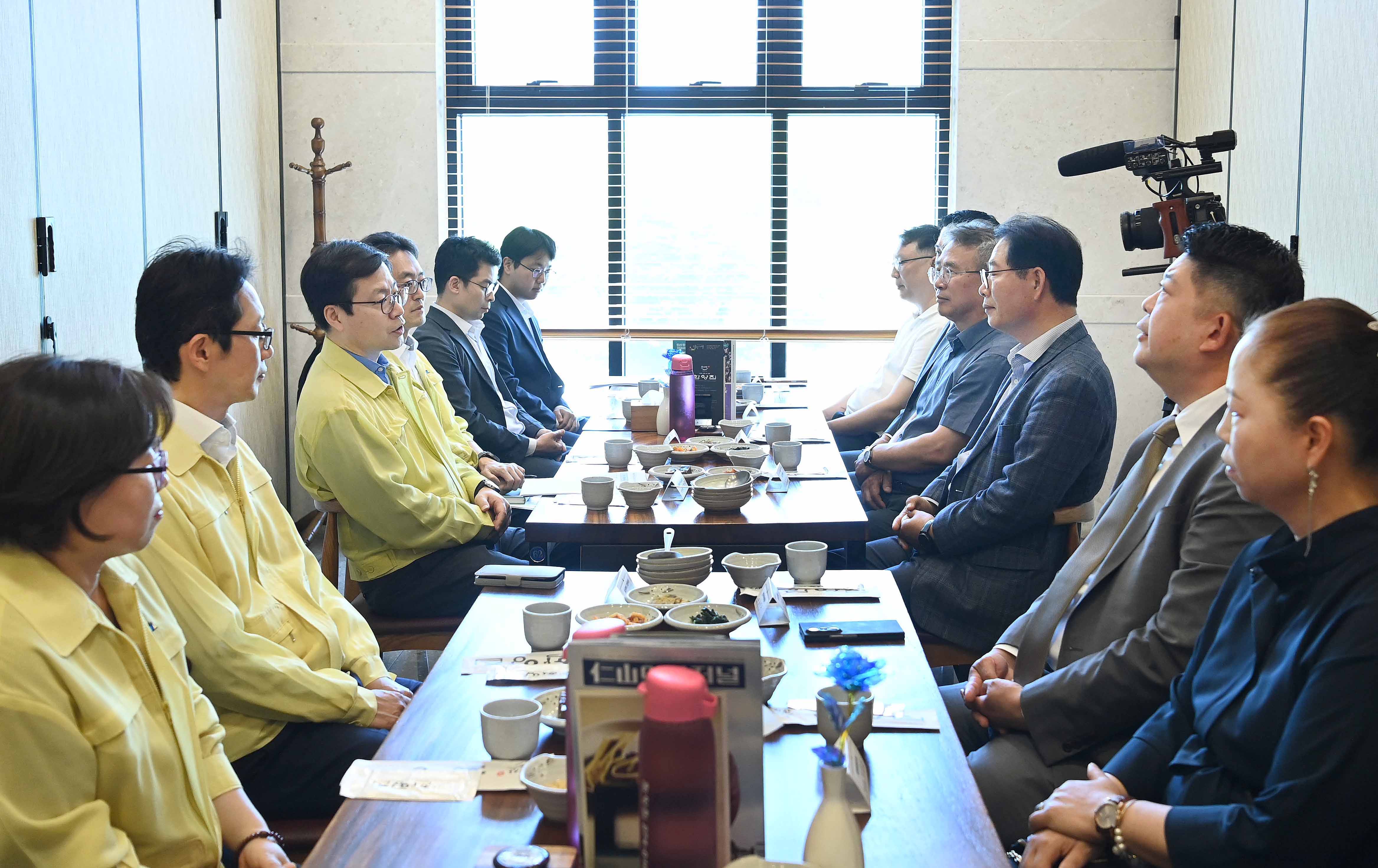
Minister for Trade Yeo Han-koo of the Ministry of Trade, Industry and Resources (MOTIR, Minister JK Kim) chaired a roundtable with Ulsan exporters in Ulsan on May 29, 2026. The meeting was attended by representatives from local companies, including Hanjoo Light Metal, YK-INPRO E&C, and LIHAON. After delivering opening remarks, Minister Yeo discussed production conditions, export trends, and business concerns among major companies in Ulsan. Minister Yeo said MOTIR will continue helping local and small businesses enter export markets and provide sustained support for promising SMEs with the potential to play a central role in Korea’s exports. date2026-06-01
-
Industry
Minister Yeo Visits HD Hyundai Electric and Meets with Power Equipment Exporters
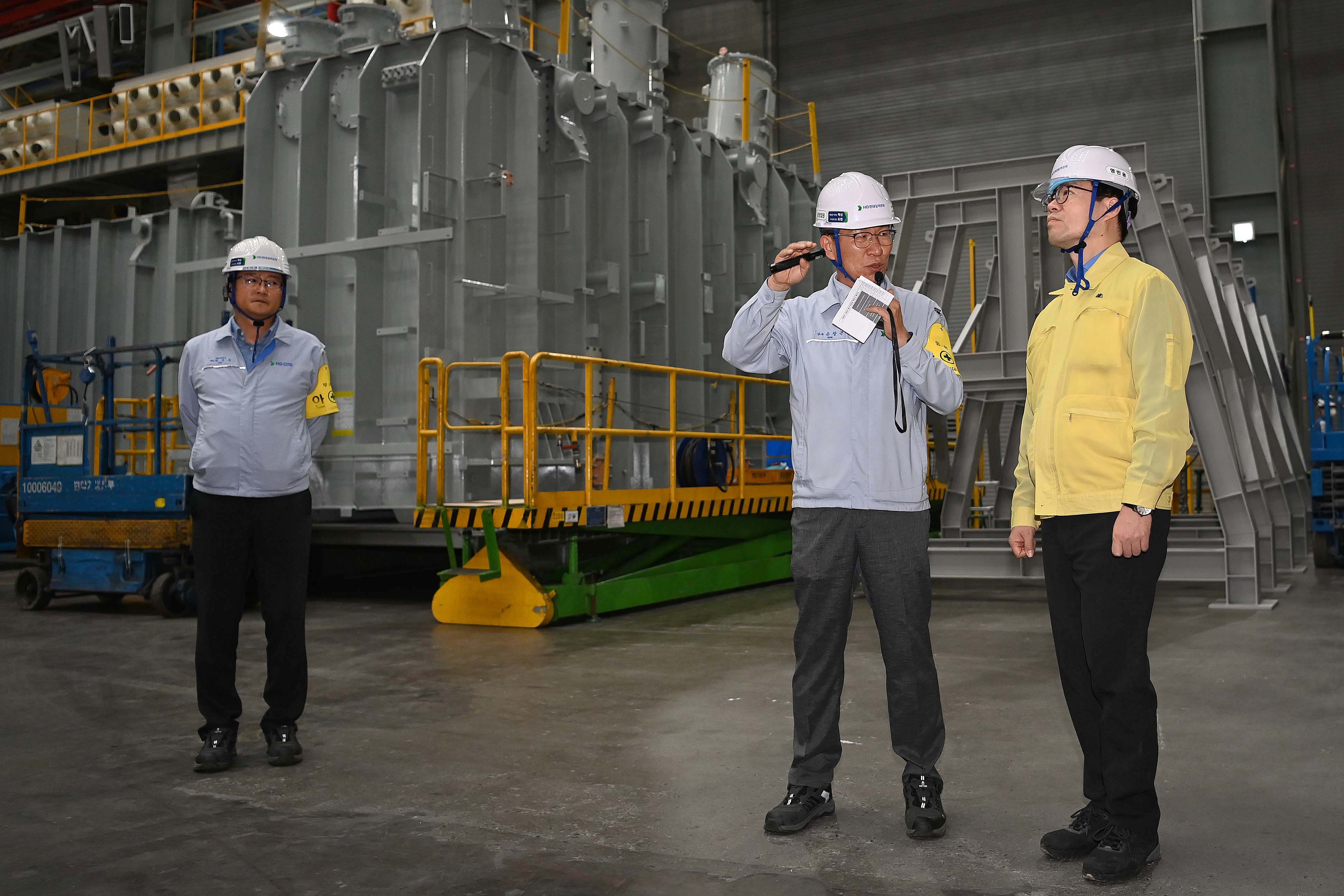
Minister for Trade Yeo Han-koo of the Ministry of Trade, Industry and Resources (MOTIR, Minister JK Kim) visited HD Hyundai Electric in Ulsan on May 29, 2026, to support continued growth in Korea’s exports. During the visit, Minister Yeo toured key production lines, including transformer lines, and met with executives and officials from power equipment exporters, including HD Hyundai, Sam Dong, and Inheung Industries. They discussed government support for expanding Korean power equipment exports. date2026-06-01
-
FTA/Economic Cooperation
MOTIR Discusses Accelerating Economic Cooperation with Oman in Resources, Plant Projects, and Logistics
Minister JK (Jung-Kwan) Kim of the Ministry of Trade, Industry and Resources (MOTIR) held a video meeting with H.E. Qais bin Mohammed Al Yousef, Chairman of Oman’s Public Authority for Special Economic Zones and Free Zones (OPAZ), on June 1, 2026. The two sides discussed key economic issues, including stable resource supplies, plant project opportunities for Korean companies, and facilitating logistics flows. Amid continued uncertainty in the Middle East, the Korean government has taken broad measures to secure stable resources and mitigate potential impacts on supply chains and exports, helping establish a stable supply base for crude oil and naphtha. The meeting built on this progress and sought to accelerate cooperation with Oman, which is located outside the Strait of Hormuz and has potential as both an alternative logistics hub and resource supplier. Minister Kim recognized Oman as a key energy and resource partner for Korea and noted its contribution to stable crude oil and naphtha supplies. He thanked the Omani government for its cooperation following the April 2026 visit by Korea’s Special Envoy for Strategic Economic Cooperation and asked for continued support to ensure that the crude oil and naphtha supplies discussed during the visit proceed without disruption. Minister Kim noted that Korean companies have successfully carried out major plant projects in Oman, including the Duqm Refinery and Manah Solar Power Plant. He asked for Oman’s interest and support in facilitating Korean companies’ participation in new projects in the country, drawing on their proven technology and project experience. The meeting also covered ways to utilize Oman’s major ports as alternative logistics hubs that bypass the Strait of Hormuz. Minister Kim explained that Korean companies shipping cargo to Saudi Arabia through the Port of Duqm face procedural difficulties, including customs payment and refund procedures in Oman and duplicate inspection and quarantine checks at the Saudi border. He asked Oman to help streamline procedures so that cargo transiting through Oman can move quickly to Saudi Arabia and other final destinations. The two sides noted that the Korea–Oman Economic Cooperation Committee, which has served as a forum for discussions on trade, investment, resources, technology, and other key economic issues, has not met since its fifth meeting in 2016. They agreed to continue consultations on the timing and agenda so that the committee can resume at an early date and help expand bilateral cooperation. “Oman is an important partner in the Middle East, given its location outside the Strait of Hormuz and its abundant energy resources,” Minister Kim said. “Korea will build on this meeting and the resumption of the Economic Cooperation Committee to give new momentum to bilateral cooperation and identify practical ways to work together in resource security, plant projects, and logistics.” date2026-06-01
-
Trade/Investment
May 2026 Exports Reach Monthly Record of $87.8 Billion
The Ministry of Trade, Industry and Resources (MOTIR, Minister JK Kim) announced that in May 2026, Korea’s exports rose 53.2 percent year-on-year to USD 87.8 billion, while imports increased 20.8 percent to $60.8 billion, resulting in a $27.0 billion trade surplus. Exports in May reached a monthly record and topped $80.0 billion for the third consecutive month. Semiconductor exports rose 169.4 percent, while exports excluding semiconductors increased 16.0 percent. Average daily exports, adjusted for working days, rose 60.7 percent to $4.3 billion, exceeding $4.0 billion for the first time. By product, exports increased in 12 of Korea’s 20 key export items. Semiconductor exports reached $37.2 billion, up 169.4 percent, setting a new monthly record and topping $30.0 billion for the third consecutive month. DRAM exports rose to $18.6 billion, up 369.8 percent, and NAND exports to $1.7 billion, up 206.8 percent. Other IT items also increased, with computers rising to $4.2 billion, up 290.7 percent; wireless communication devices to $1.5 billion, up 12.6 percent; and displays to $1.5 billion, up 9.4 percent. Automobile exports fell to $5.8 billion, down 5.9 percent, while ship exports rose to $2.6 billion, up 16.7 percent. Petroleum product exports increased to $5.3 billion, up 46.6 percent, although export volumes fell 23.8 percent. Petrochemical exports rose to $3.7 billion, up 11.1 percent, while export volumes declined 25.5 percent. Steel exports edged down to $2.0 billion, down 2.1 percent; nonferrous metals rose to $1.7 billion, up 41.5 percent; and general machinery fell to $3.8 billion, down 6.3 percent. Among consumer goods, biohealth exports rose to $1.4 billion, up 5.2 percent; cosmetics increased to $1.2 billion, up 24.2 percent, setting a new May record; and agricultural and fisheries products rose to $1.1 billion, up 4.7 percent. By destination, exports increased in seven of Korea’s nine major markets. Exports to China rose to $18.9 billion, up 80.9 percent, extending their growth streak to seven consecutive months. Exports to the United States increased to $16.0 billion, up 59.1 percent, while exports to ASEAN rose to $15.9 billion, up 58.4 percent, setting a new monthly record. Exports to the EU increased to $6.2 billion, up 2.4 percent, extending their growth streak to six consecutive months. Exports to the Middle East fell to $1.3 billion, down 7.7 percent. Imports rose 20.8 percent year-on-year to $60.8 billion. Energy imports increased to $11.8 billion, up 15.9 percent, while non-energy imports rose to $49.1 billion, up 22.0 percent. Crude oil imports increased to $8.5 billion, up 25.0 percent, with import volumes rising month-on-month from 62.6 million barrels in April to 69.8 million barrels in May. Among non-energy imports, petroleum products rose to $2.6 billion, up 71.0 percent, and semiconductor equipment to $2.6 billion, also up 71.0 percent. The trade surplus in May reached $27.0 billion, up $20.0 billion from May 2025. Korea’s cumulative trade surplus from January to May reached $101.9 billion, surpassing the previous annual trade surplus record. Minister JK (Jung-Kwan) Kim stated, “With exports increasing again in May, Korea has maintained export growth for 12 consecutive months since the current administration took office. The cumulative trade surplus for January to May has also surpassed Korea’s previous annual trade surplus record.” He added, “This reflects exports growing at a faster pace despite higher imports caused by rising oil prices from the conflict in the Middle East. IT items led by semiconductors, as well as consumer goods such as cosmetics and agricultural and fisheries products, continued to perform well.” Minister Kim also noted that uncertainty remains over the conflict in the Middle East, U.S. tariffs, and the EU’s steel tariff-rate quotas (TRQs). He said the government will continue date2026-06-01
-
Trade/Investment
Korea to Reform U-Turn Policy to Promote Regional Investment
The Ministry of Trade, Industry and Resources (MOTIR, Minister JK Kim) announced measures to redefine and promote Korea’s U-turn policy at the Ministerial Meeting on Economic Affairs on May 29, 2026. In response to rising global protectionism and supply chain realignments, the measures form part of a key national policy task to move beyond the simple relocation of overseas operations, promote regional investment, and secure domestic production and innovation capacity in advanced strategic sectors. The government will focus on four priorities: redefining eligibility for U-turn companies, reforming the U-turn subsidy system, strengthening screening and management while rationalizing implementation requirements, and providing targeted support to attract companies and facilitate investment execution. 1. Redefining Eligibility for U-Turn Companies Korea’s initial U-turn policy focused on helping Korean companies with overseas operations return home when business conditions deteriorated, leaving eligibility narrowly defined. Reflecting a broader shift in major economies such as the United States and Japan, which are expanding reshoring support to secure production capacity in advanced strategic sectors, the government plans to revise relevant laws and regulations on U-turn companies in 2026 and implement the revised framework in 2027. First, the government will ease the same-or-similar product and service requirement by broadening how similarity is assessed. In addition to materials, parts, and production processes, assessments will also consider function, use, core technologies, and supply chains. This will help companies invest in new industries and upgrade their business structures. The government will also broaden the exemption cases in which companies can qualify for U-turn recognition without closing, selling, or downsizing their overseas operations. Companies in advanced industries or supply chain sectors will also qualify for this exemption if their investment in Korea is recognized as a core production facility, or “mother factory.” Through these changes, the government aims to move beyond formal requirements and secure advanced manufacturing and innovation capacity in Korea. 2. Reforming the U-Turn Subsidy System The current U-turn subsidy system applies preset subsidy rates under a fixed table, limiting its ability to attract high-quality returning companies to regions outside the capital area. To promote regional investment and U-turn investment in advanced strategic sectors, the government will shift to a case-by-case negotiation model for subsidies. Under the new model, the government and companies will consult on support levels for strategic sectors such as advanced industries and supply chains, as well as large-scale investment projects. Support will vary based on factors including non-capital region investment, youth employment, advanced strategic technologies, and whether the project involves a mother factory. The government will also replace fixed subsidy caps with maximum subsidy rates, while keeping the current system for general industries and small-scale investments. 3. Strengthening Screening and Follow-Up Management Some designated U-turn companies have lost their status after failing to make domestic investments as planned. To improve follow-through and keep unqualified companies out of the system, the government will screen investment plans and companies’ execution capacity more closely from the selection stage. It will also establish a working-level committee on domestic return to systematize company selection and subsidy reviews and set procedures for the negotiated subsidy model. For subsidized companies, the implementation period will be extended beyond the current three years based on the scale of support. Post-designation requirements will also be adjusted to reflect automation at manufacturing sites and changes in the in date2026-05-29