-
FTA/Economic Cooperation
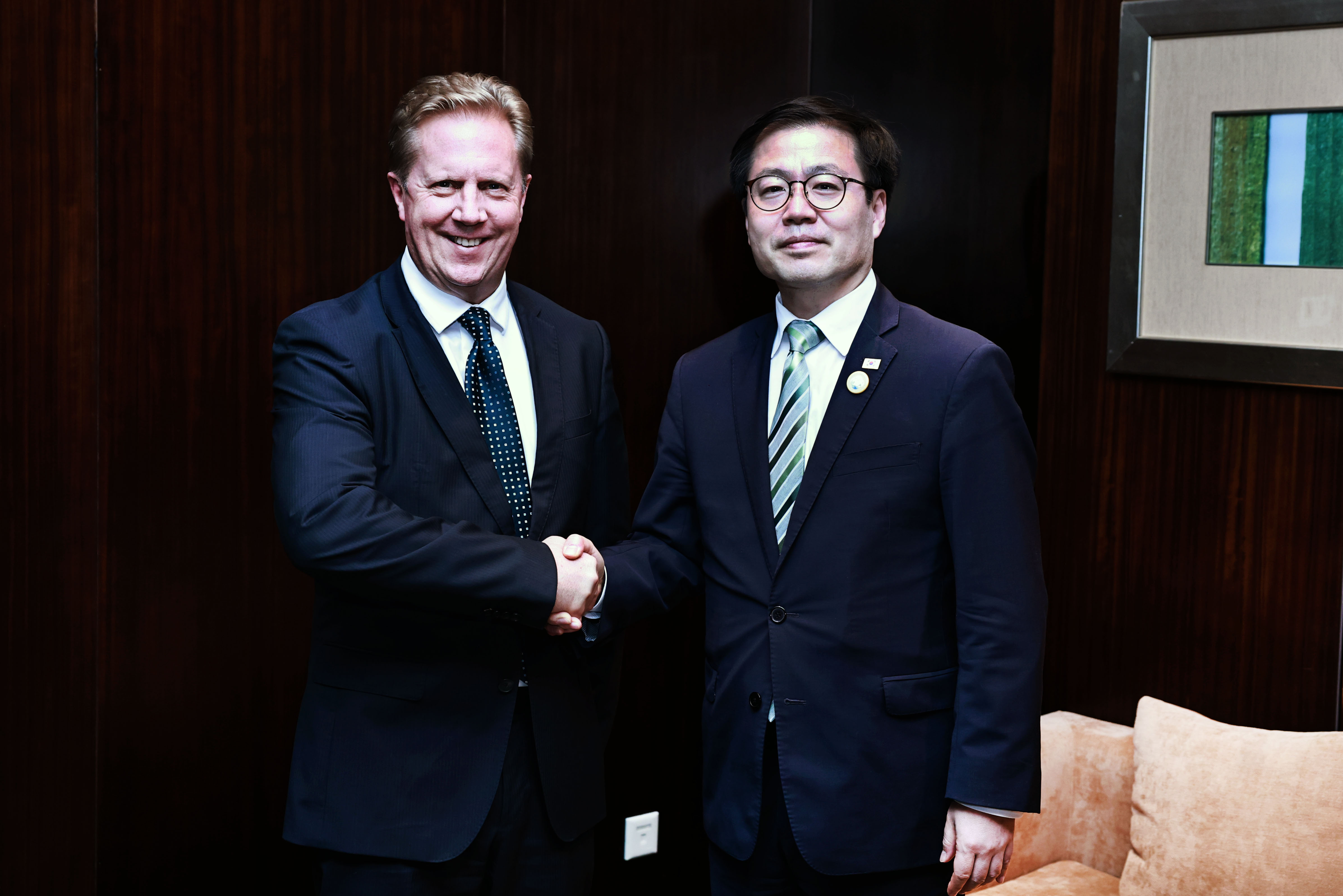
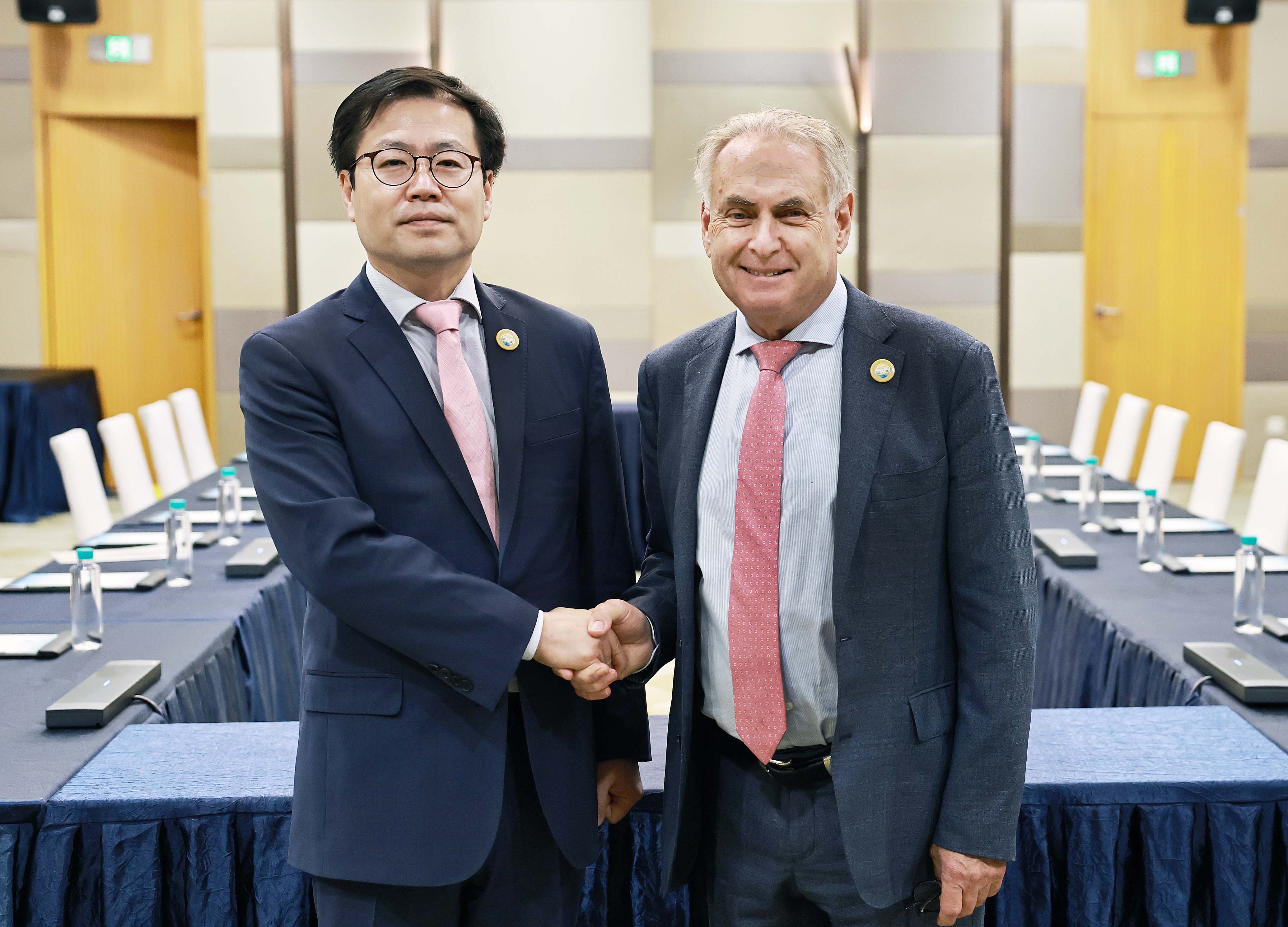
Meeting with New Zealand Minister for Trade and Investment Todd McClay
Minister for Trade Yeo Han-koo of the Ministry of Trade, Industry and Resources (MOTIR, Minister JK Kim) met with New Zealand Minister for Trade and Investment Todd McClay in Suzhou, China, on May 21, 2026, on the sidelines of the Asia-Pacific Economic Cooperation (APEC) Ministers Responsible for Trade Meeting. The two ministers discussed key trade issues, including Korea–New Zealand trade and investment cooperation and supply chain issues. They also agreed to strengthen cooperation on digital trade and supply chains through multilateral trade channels, including the Digital Economy Partnership Agreement (DEPA). date2026-05-27
-
FTA/Economic Cooperation
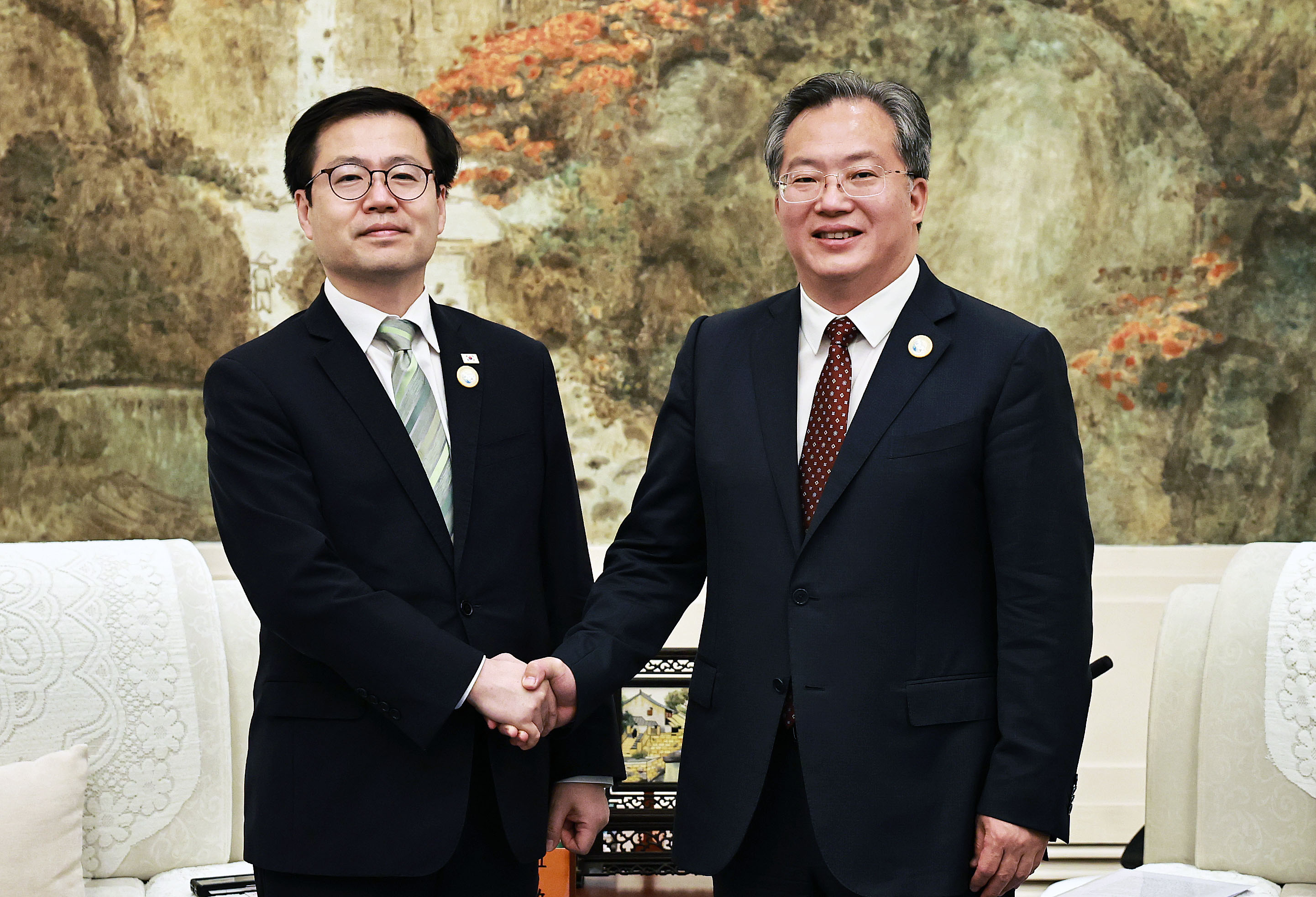
Meeting with Suzhou Party Secretary Fan Bo
Minister for Trade Yeo Han-koo of the Ministry of Trade, Industry and Resources (MOTIR, Minister JK Kim) met with Fan Bo, Secretary of the CPC Suzhou Municipal Committee, in Suzhou, China, on May 21, 2026, on the sidelines of the Asia-Pacific Economic Cooperation (APEC) Ministers Responsible for Trade Meeting. The two sides discussed ways to strengthen cooperation between Korea and Suzhou, including investment and exchanges. date2026-05-27
-
FTA/Economic Cooperation
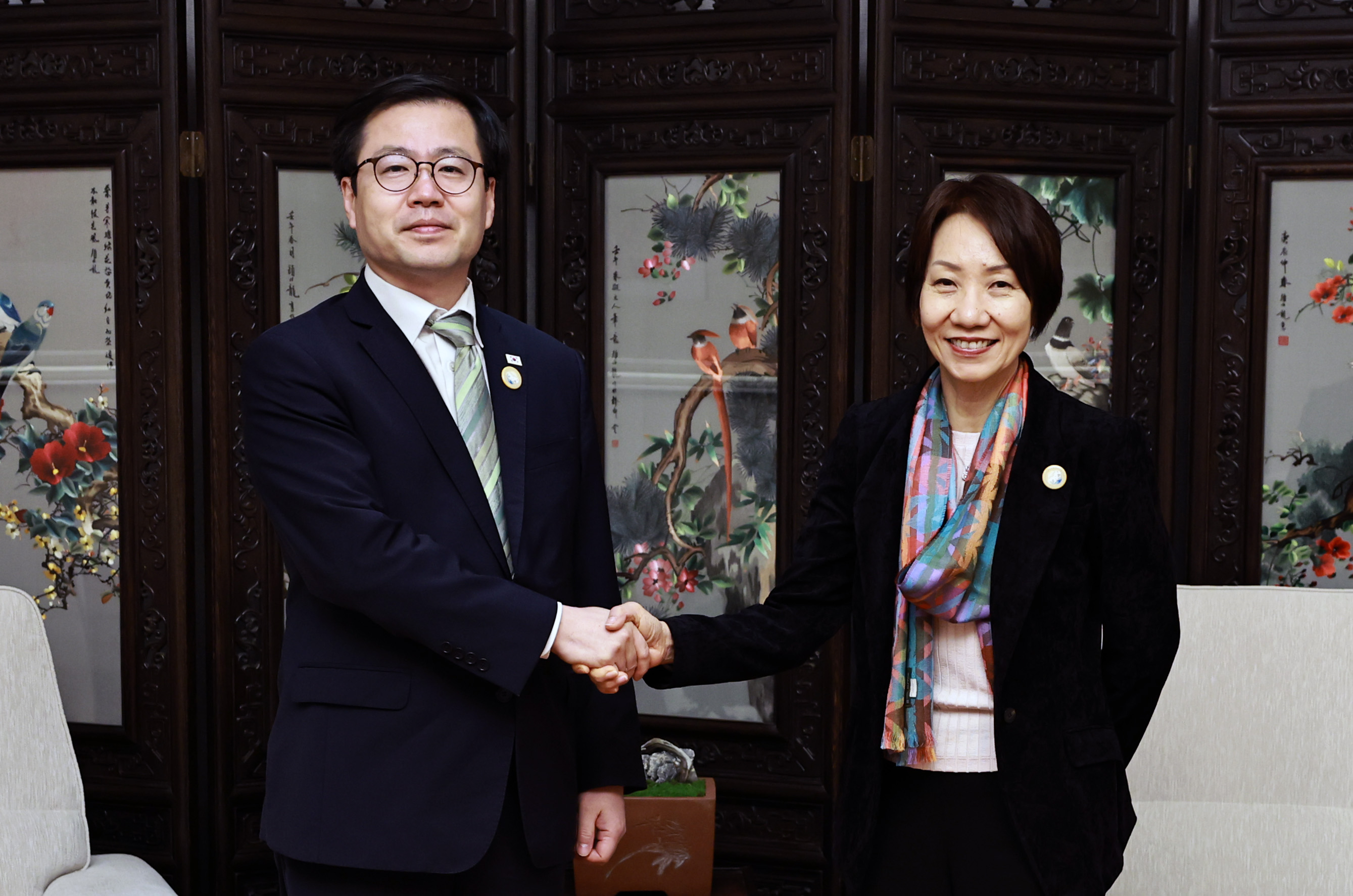
Meeting with Singapore Minister-in-Charge of Trade Relations Grace Fu
Minister for Trade Yeo Han-koo of the Ministry of Trade, Industry and Resources (MOTIR, Minister JK Kim) met with Singapore’s Minister-in-charge of Trade Relations Grace Fu in Suzhou, China, on May 21, 2026, on the sidelines of the Asia-Pacific Economic Cooperation (APEC) Ministers Responsible for Trade Meeting. The two ministers discussed key trade issues, including Korea–Singapore trade and investment cooperation and supply chain issues. date2026-05-27
-
FTA/Economic Cooperation
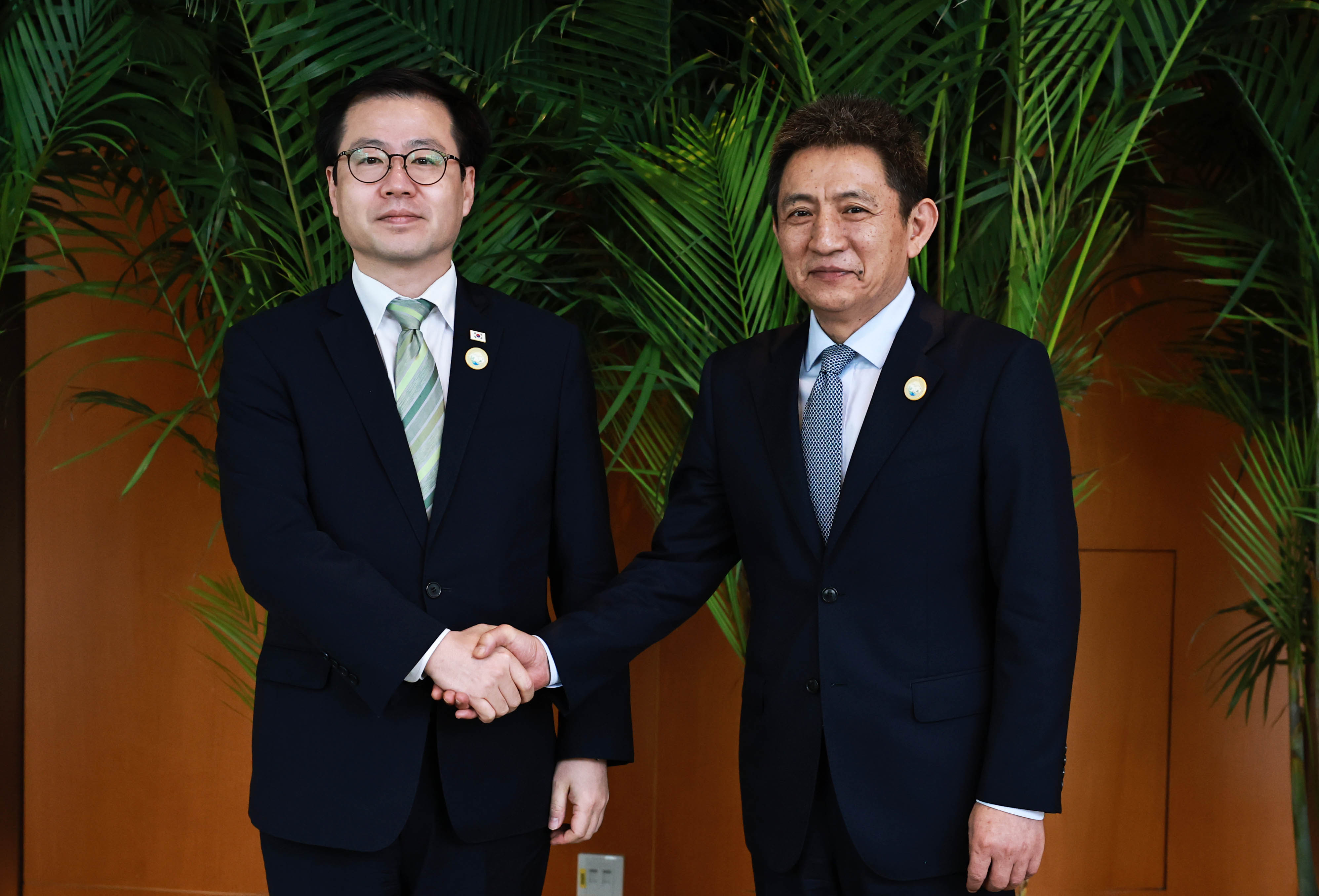
Meeting with China International Trade Representative Li Chenggang
Minister for Trade Yeo Han-koo of the Ministry of Trade, Industry and Resources (MOTIR, Minister JK Kim) met with Li Chenggang, China International Trade Representative and Vice Minister of Commerce, in Suzhou, China, on May 21, 2026, on the sidelines of the Asia-Pacific Economic Cooperation (APEC) Ministers Responsible for Trade Meeting. The two sides discussed key trade issues, including Korea–China trade and investment cooperation and supply chain issues. They agreed to continue cooperation to stabilize supply chains, including for critical minerals, and Minister Yeo asked China to improve predictability for companies by expanding the use of expedited and general licenses under its export control measures. date2026-05-27
-
FTA/Economic Cooperation
Meeting with Australia’s Minister for Trade and Tourism Don Farrell
Minister for Trade Yeo Han-koo of the Ministry of Trade, Industry and Resources (MOTIR, Minister JK Kim) met with Australia’s Minister for Trade and Tourism Don Farrell in Suzhou, China, on May 22, 2026, on the sidelines of the Asia-Pacific Economic Cooperation (APEC) Ministers Responsible for Trade Meeting. The two ministers discussed key trade issues, including bilateral trade and investment cooperation and supply chain issues. They also discussed cooperation to build stable supply chains for key energy and resource items, including LNG, critical minerals, and petroleum products. date2026-05-27
-
FTA/Economic Cooperation
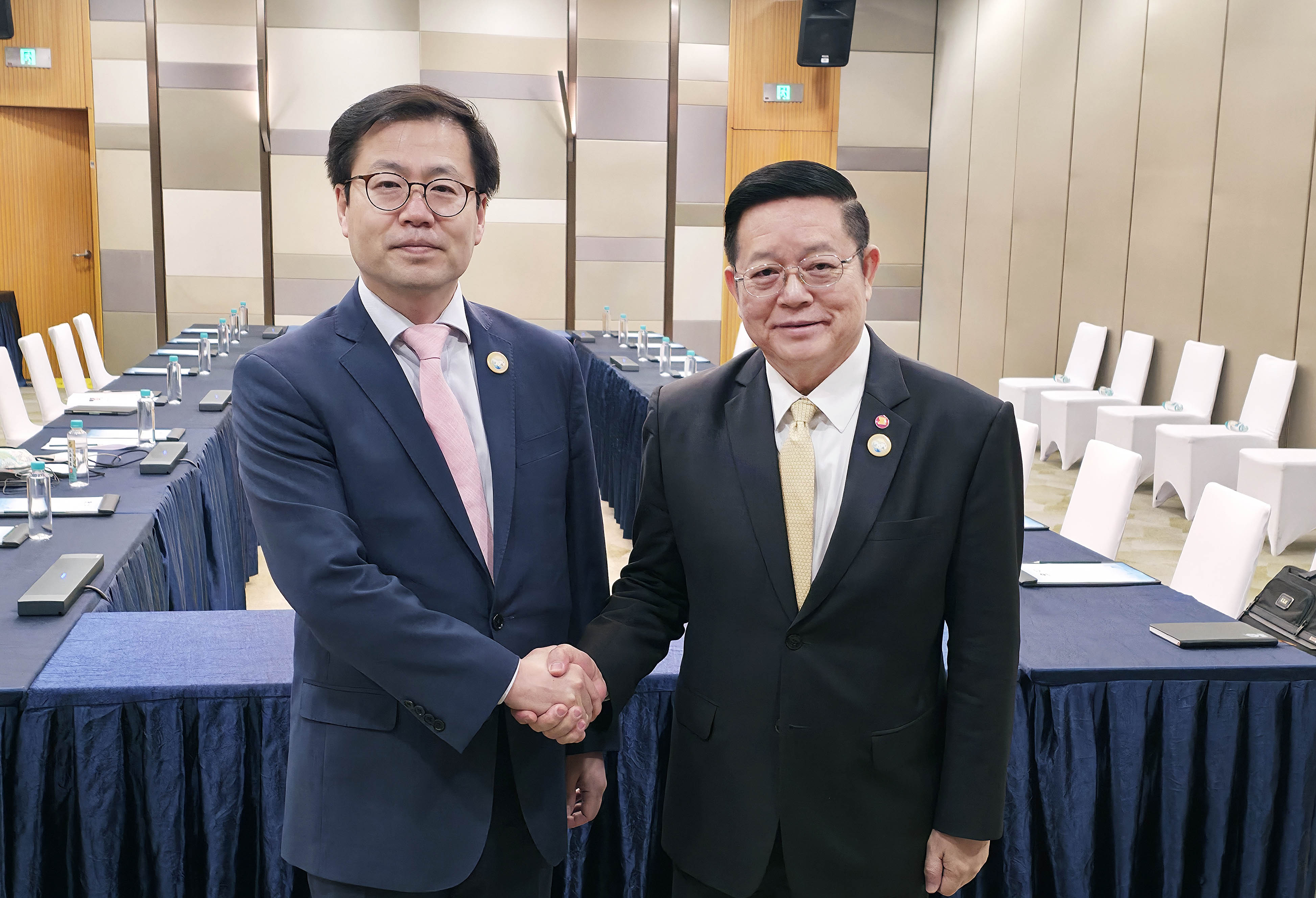
Meeting with ASEAN Secretary-General Kao Kim Hourn
Minister for Trade Yeo Han-koo of the Ministry of Trade, Industry and Resources (MOTIR, Minister JK Kim) met with Secretary-General of ASEAN Kao Kim Hourn in Suzhou, China, on May 22, 2026, on the sidelines of the Asia-Pacific Economic Cooperation (APEC) Ministers Responsible for Trade Meeting. The two sides discussed key trade issues, including the Korea–ASEAN FTA. Minister Yeo noted that ASEAN is Korea’s second-largest trading partner and a major investment destination, making it a central pillar of Korea’s economic cooperation, and the two sides agreed to consult closely so that negotiations to upgrade the Korea–ASEAN FTA, including in the digital area, can begin as soon as possible. date2026-05-27
-
Trade/Investment
Major Retailer Sales Up 7.2% in April 2026
The Ministry of Trade, Industry and Resources (MOTIR, Minister JK Kim) announced that total sales at 26 major retailers (15 brick-and-mortar retailers and 11 online retailers) in April 2026 rose 7.2 percent year-on-year, with offline sales up 6.7 percent and online sales up 7.5 percent. Offline sales increased at department stores (up 21.7 percent) and convenience stores (up 3.3 percent), while hypermarkets (down 6.6 percent) and super supermarkets (SSMs) (down 6.9 percent) declined. Department stores and convenience stores extended their growth streaks to ten consecutive months since July 2025. Department store sales increased across all categories, including premium international brands, fashion and apparel, accessories, and food. Convenience store sales also rose across all product categories, as early hot weather lifted sales of processed foods, including beverages, while ready-to-eat foods and household goods also posted gains. Hypermarket sales remained weak, as consumer spending continued to shift online and sales of food, their core category, stayed sluggish. This weakness has persisted since the second quarter of 2024. SSM sales also remained on a downward trend. Sales shares by channel were 60.3 percent for online retailers, 15.3 percent for department stores, 14.6 percent for convenience stores, 7.9 percent for hypermarkets, and 1.9 percent for SSMs. By product category, offline food sales declined, while online sales grew across all categories, including food, home appliances and electronics, fashion, and services. Cosmetics continued to post high growth, supported by strong demand for K-beauty. date2026-05-27
-
Industry
MOTIR Supports Shared Growth Across the K-Shipbuilding Supply Chain
Minister JK (Jung-Kwan) Kim of the Ministry of Trade, Industry and Resources (MOTIR) visited Hanla IMS, a shipbuilding equipment company in Busan, on May 27, 2026. Minister Kim toured the company’s manufacturing and R&D facilities and reviewed progress on its intelligent integrated system for autonomous maintenance, confirming that key equipment technologies for AI-enabled autonomous ships are already being developed on site. After the site visit, Minister Kim held a roundtable with 12 organizations, including shipbuilding equipment suppliers, small and medium-sized shipbuilders, and related institutions, to hear industry challenges and policy suggestions. The discussion focused on implementing key tasks set out at the May 13, 2026, Roundtable on the K-shipbuilding vision, including expanded equipment demonstrations, green technology development, refund guarantee (RG) support for small and medium-sized shipbuilders, and AI transformation in shipbuilding. The government plans to incorporate the practical support needs raised by industry into future policy measures. At the roundtable, Minister Kim presented three policy directions to support shipbuilding equipment suppliers and small and medium-sized shipbuilders. First, the government will accelerate Manufacturing AI Transformation (M.AX) in shipbuilding. MOTIR and the Ministry of Oceans and Fisheries (MOF, Minister Hwang Jong-woo) plan to invest around KRW 500 billion through the Autonomous Ship M.AX Alliance to develop core equipment, including engine automation systems and radar. The ministries will also support installation on ships and align the work with International Maritime Organization (IMO) standard-setting efforts. Second, MOTIR will expand overseas opportunities and financial support for shipbuilding equipment suppliers and small and medium-sized shipbuilders. As MOTIR develops the MASGA project, which played a key role in the Korea–U.S. tariff deal, one of the administration’s first-year achievements, the ministry will focus on identifying project opportunities for these companies. MOTIR will also launch support for MRO infrastructure, certification, and export channels through programs for naval vessel MRO competitiveness and U.S. market entry. In markets such as India, Viet Nam, and the Philippines, where Korean shipbuilders are expanding and demand for Korean equipment is growing, MOTIR will promote joint entry with anchor companies. It will also work with relevant ministries and financial institutions to expand RG support, as rising overseas orders increase RG demand among small and medium-sized shipbuilders. Third, the government will strengthen cooperation with the shipping industry. Through the Strategic Council for Shared Growth in Shipbuilding and Shipping, launched in April 2026, the government will promote the use of newly developed Korean equipment in newbuild vessels and channel joint orders from Korean shipping companies, as well as domestic orders for essential vessels, toward small and medium-sized shipbuilders. It will also develop strategic public procurement plans to prepare for a downturn in the shipbuilding cycle. “Shipbuilding equipment suppliers and small and medium-sized shipbuilders form the foundation of the K-shipbuilding supply chain and are critical to Korea’s maritime security,” Minister Kim said. “We will promptly address on-site needs, including equipment demonstrations, super-gap technology development, and order opportunities for small and medium-sized shipbuilders.” date2026-05-27
-
FTA/Economic Cooperation
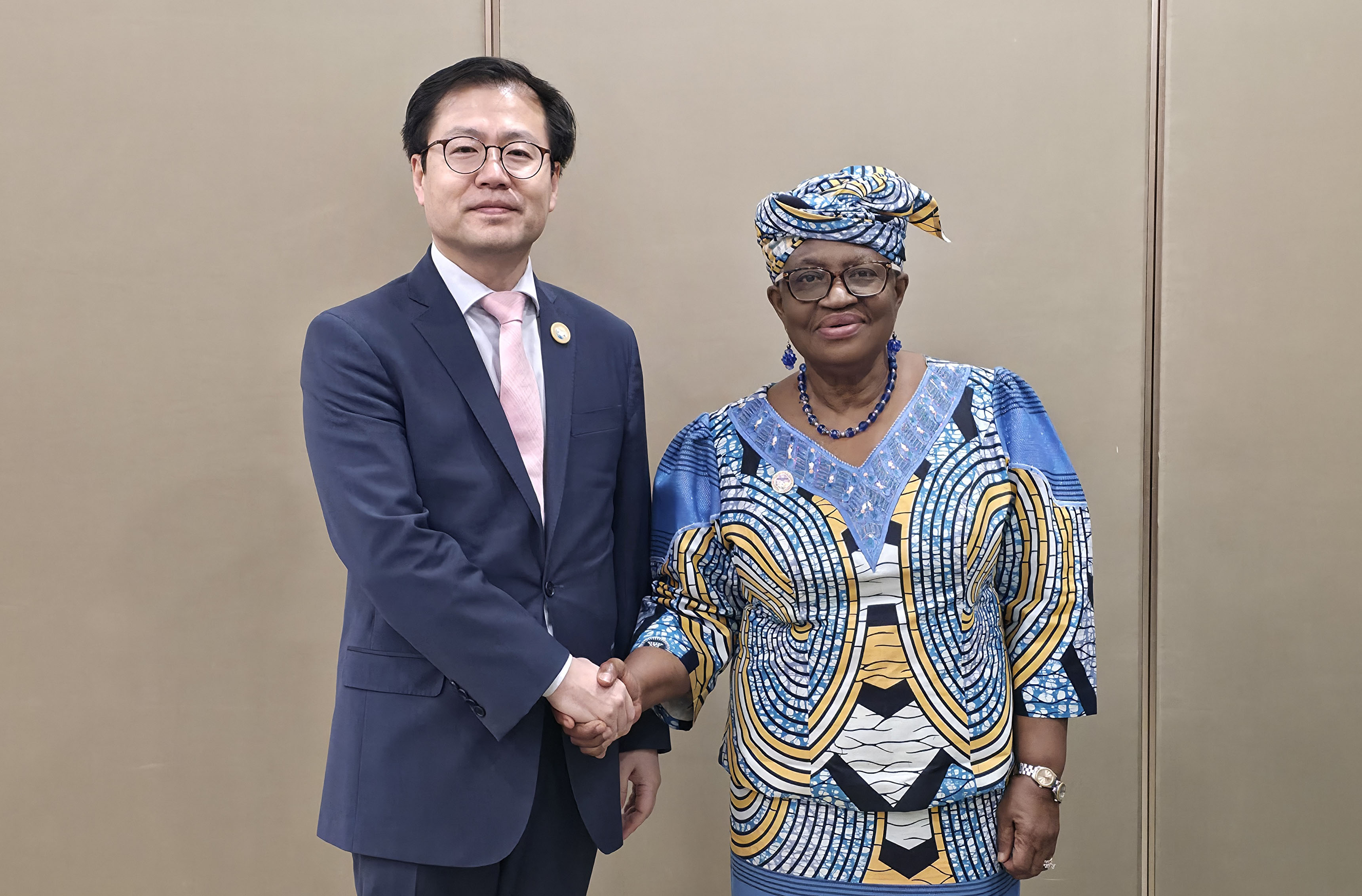
Meeting with WTO Director-General Ngozi Okonjo-Iweala
Minister for Trade Yeo Han-koo of the Ministry of Trade, Industry and Resources (MOTIR, Minister JK Kim) met with WTO Director-General Ngozi Okonjo-Iweala in Suzhou, China, on May 22, 2026, on the sidelines of the Asia-Pacific Economic Cooperation (APEC) Ministers Responsible for Trade Meeting. The two sides discussed key trade issues, including WTO reform and the outcomes of the 14th WTO Ministerial Conference (MC-14). They shared the need to maintain momentum in WTO reform discussions, extend or make permanent the moratorium on customs duties on electronic transmissions, and advance the early entry into force and implementation of the Investment Facilitation for Development Agreement (IFDA). date2026-05-27
-
FTA/Economic Cooperation
Korea and EU Deepen Economic Security Cooperation on Critical Minerals, Supply Chains, Technology Protection, and Batteries
The Ministry of Trade, Industry and Resources (MOTIR, Minister JK Kim) held the second Korea–EU Special Committee on Economic Security and Emerging Trade Issues via videoconference on May 26, 2026. Deputy Minister for Trade Park Jung-sung and Denis Redonnet, Deputy Director-General at the European Commission’s Directorate-General for Trade and Economic Security (DG TRADE), led the meeting as chief delegates. The Committee is a vice minister-level channel for responding to a rapidly changing trade and economic security environment, as global supply chains are reshaped, competition for critical minerals intensifies, and the need to protect advanced technologies grows. After the first meeting in March 2026, the two sides followed up on key issues, including critical minerals, supply chains, technology protection, batteries, and major EU regulatory proposals. The two sides exchanged views on supply chain stabilization policies, early warning systems, and advanced technology protection. Korea introduced its cross-government supply chain response system under the three supply chain laws and its early warning system for key materials, parts, and equipment. Korea also explained how it designates and manages national core technologies and prevents technology leaks under the Act on Prevention of Divulgence and Protection of Industrial Technology. Both sides recognized the need to cooperate on supply chain monitoring and technology protection from an economic security perspective. On critical minerals, both sides agreed to deepen cooperation on diversification, stockpiling, and recycling, given their high dependence on imports. They also agreed to lay the groundwork for Korea–EU cooperation on critical minerals. On batteries, the two sides noted that large-scale investments by Korean companies in the EU are helping strengthen EU supply chains. Korea requested reasonable transition periods, mutual recognition of data, and other practical measures during implementation of the EU Battery Regulation. On the EU Industrial Accelerator Act (IAA), Korea asked the EU to fully reflect Korean views as it prepares implementing rules, including clarification on how origin rules will apply to goods from FTA partner countries. Korea also reiterated its concerns over the EU’s new steel measure and requested that the EU promptly present an improved quota proposal. The two sides assessed that the Committee further strengthened the basis for cooperation across core economic security issues, including supply chains, critical minerals, technology protection, and batteries. They agreed to continue using high-level channels and other mechanisms to produce concrete results in trade cooperation. date2026-05-26