-
FTA/Economic Cooperation
Korea, Mongolia Discuss Accelerating CEPA Talks to Expand Market Access and Strengthen Critical Minerals Supply Chains
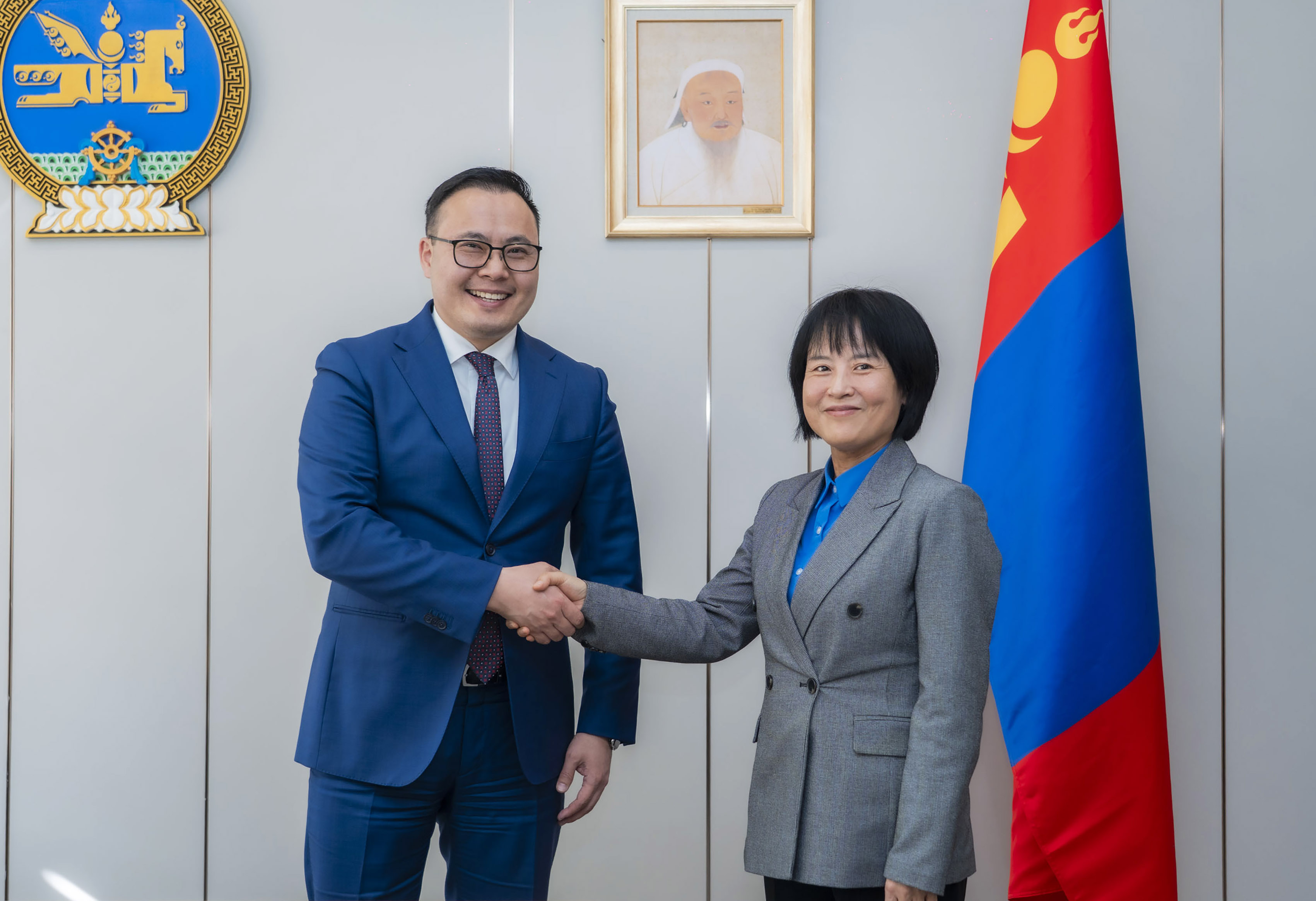
Kwon Hye-jin, Director General for Trade Negotiations at the Ministry of Trade, Industry and Resources (MOTIR, Minister JK Kim), visited Mongolia on March 24, 2026, to meet with senior officials responsible for trade and mineral resources and discuss how to accelerate the Korea–Mongolia CEPA, broaden market access, and strengthen cooperation on critical mineral supply chains. Mongolia has a relatively small consumer market of 3.5 million people, but more than 60 percent of its population is under 34, making it a promising market for Korean consumer goods. That demographic profile, coupled with the popularity of Korean culture, has driven rapid growth in Korean exports of cosmetics, food products and other consumer goods, while Korean retailers and food franchise brands are also expanding in the market. Korea’s exports of key products such as automobiles, tobacco, petrochemical products and pharmaceuticals have also continued to grow steadily since 2021. The Korea–Mongolia CEPA made progress over four formal rounds of negotiations held between December 2023 and November 2024. The talks were later paused, however, amid concerns in Mongolia about market opening and delays in reaching agreement on goods and rules of origin. In a meeting with Batkhuu Idesh, State Secretary of Mongolia’s Ministry of Economy and Development and Mongolia’s chief negotiator for the CEPA, Director General Kwon explored a broad basis for agreement on goods and rules of origin. The two sides also agreed to narrow remaining differences and accelerate the negotiations. Director General Kwon also proposed expanding the scope of the CEPA to include cooperation on critical mineral supply chains. Mongolia is rich in copper, molybdenum and rare earth elements, making it a promising partner for Korea as it seeks to diversify imports of critical minerals. In a meeting with Dashpurev Buriad, State Secretary of Mongolia’s Ministry of Industry and Mineral Resources, the two sides discussed ways to expand bilateral cooperation in critical minerals and shared the view that the CEPA should include a dedicated cooperation chapter to support that effort. Director General Kwon also held a roundtable with Korean companies operating in distribution, logistics, used cars, medical devices and tobacco to hear trade- and investment-related concerns and gather industry input to help shape the negotiations. “Mongolia is an emerging market where Korean companies have a growing presence, as well as an important partner in resource cooperation,” Director General Kwon said. “We will work to advance the CEPA quickly to support Korean companies’ expansion in the Mongolian market and to broaden cooperation on critical minerals through the agreement.” date2026-03-24
-
FTA/Economic Cooperation
14th WTO Ministerial Conference Opens as WTO Faces Challenges
Trade Minister Yeo Han-koo of the Ministry of Trade, Industry and Resources (MOTIR, Minister JK Kim) will lead a Korean government delegation to the 14th WTO Ministerial Conference (MC-14), to be held in Yaoundé, Cameroon, on March 26–29, 2026. The delegation will focus on restoring the multilateral trading system and stabilizing the trade environment for Korean industries and businesses. The delegation includes around 30 officials from MOTIR, the Ministry of Foreign Affairs (MOFA, Minister Cho Hyun), the Ministry of Agriculture, Food and Rural Affairs (MAFRA, Minister Song Mi-ryung), the Ministry of Oceans and Fisheries (MOF, Minister Hwang Jong-woo), and Korea’s Permanent Mission in Geneva. Korea Takes a Facilitator Role in WTO Reform Talks MC-14 comes at a time when the WTO faces serious challenges, with members expected to engage in intensive talks on restoring its functions and advancing institutional reform. The outcome of those discussions is likely to shape the WTO’s future role and the broader rules-based trading system. Korea will take part not only as a member but also as a key facilitator in the reform debate. Trade Minister Yeo will serve as one of the Minister Facilitators for the WTO reform session and chair four sessions, helping narrow differences among members and build consensus on tangible reform outcomes. It will be the first time Korea’s chief delegate has served a lead facilitating role in an official session of a WTO Ministerial Conference. Korea Pushes for Outcomes on the E-Commerce Moratorium and IFDA At MC-14, Korea will serve as a bridge on key issues, including the incorporation of the Investment Facilitation for Development Agreement (IFDA) into the WTO legal framework, extension of the moratorium on customs duties on electronic transmissions, and implementation of the e-commerce agreement. On March 25, 2026, Korea will host a ministerial side event on the IFDA—bringing together ministers from key economies and officials from major international organizations—to highlight how the agreement can improve the global investment climate and promote development. Korea will also step up consultations with key economies on extending the moratorium and expediting implementation of the e-commerce agreement. These steps would lower digital trade costs and widen access to global markets for Korean companies. They would also help Korean films, television dramas, music, games, and other digital content stay competitive overseas without additional tariff burdens, while facilitating overseas expansion for small and mid-sized digital firms and supporting growth in exports of digital services and content. Korea will also support early entry into force and full implementation of the Fisheries Subsidies Agreement, progress in follow-up negotiations, and discussions aimed at building a more inclusive trading system, including the extension of preferences after least developed countries (LDCs) graduate from LDC status. Korea Seeks to Turn a Broader Role into Tangible Results “Restoring the multilateral trading system is essential at a time when global supply chains are being reshaped and the rules-based trade order is under strain,” Trade Minister Yeo said. “As a middle power that advanced through trade liberalization and the multilateral system, Korea will work at MC-14 to move reform talks forward, deliver tangible outcomes, and help create a more stable trade environment for Korean businesses.” “Korea is serving for the first time as a facilitator for a core WTO reform session at a WTO Ministerial Conference,” he added. “We will do our part as a responsible middle power to help rebuild trust among members and restore the WTO’s normal functioning.” Bilateral Meetings to Address Trade Issues and Business Bottlenecks During MC-14, the Korean government will hol date2026-03-24
-
FTA/Economic Cooperation
Meeting with Mongolia’s State Secretary of Economy and Development
Kwon Hye-jin, Director General for Trade Negotiations at the Ministry of Trade, Industry and Resources (MOTIR, Minister JK Kim), met with Batkhuu Idesh, State Secretary of Mongolia’s Ministry of Economy and Development, in Mongolia on March 24, 2026. The two sides discussed ways to accelerate negotiations on the Korea–Mongolia CEPA in order to expand bilateral market access and strengthen cooperation on critical mineral supply chains. “Mongolia is an emerging market where Korean companies have a growing presence, as well as an important partner in resource cooperation,” Director General Kwon said. “We will work to advance the CEPA quickly to support Korean companies’ expansion in the Mongolian market and to broaden cooperation on critical minerals through the agreement.” date2026-03-24
-
FTA/Economic Cooperation
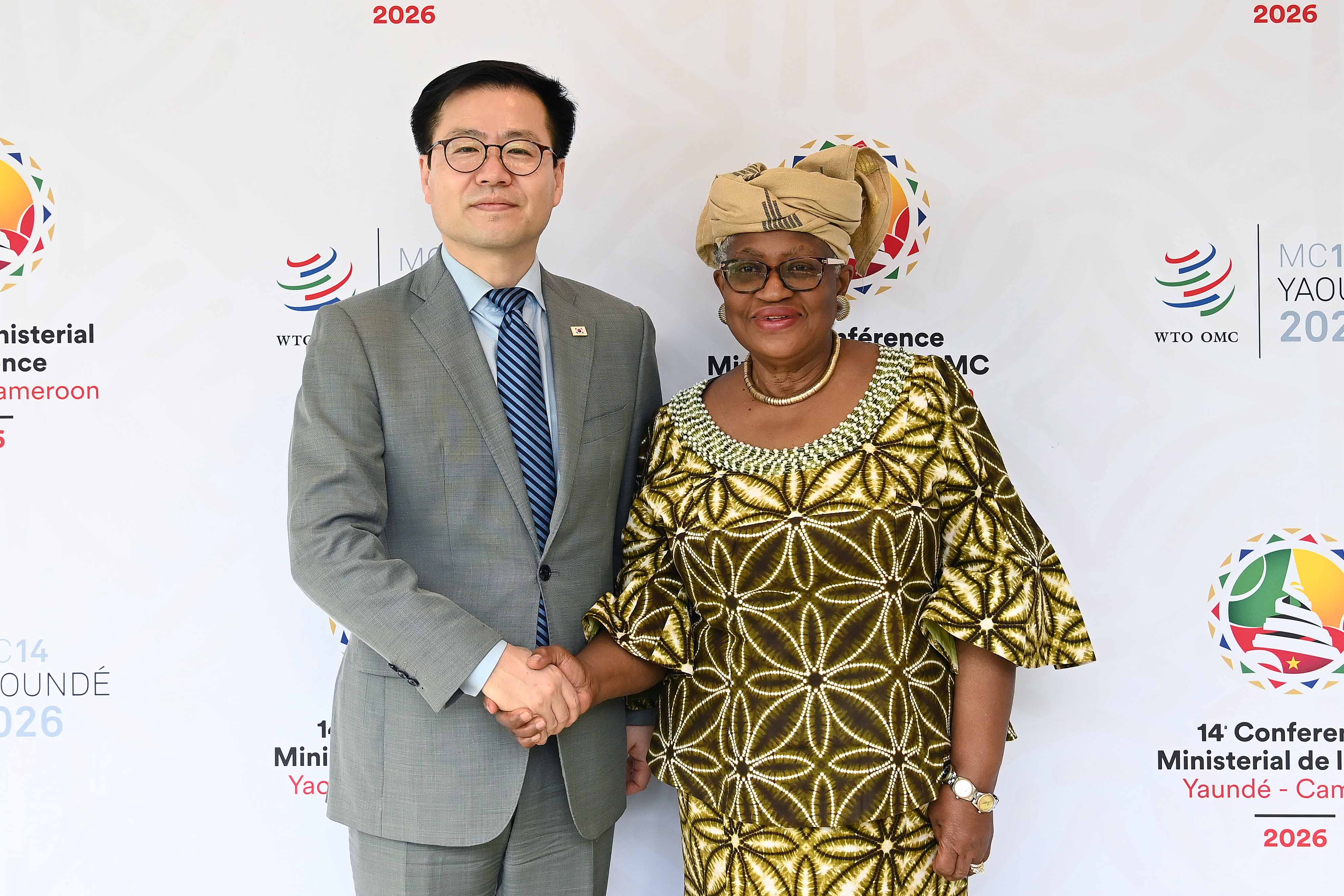
Trade Minister Yeo Meets with WTO Director-General Ngozi Okonjo-Iweala
Trade Minister Yeo Han-koo of the Ministry of Trade, Industry and Resources (MOTIR, Minister JK Kim) met with WTO Director-General Ngozi Okonjo-Iweala in Yaoundé, Cameroon, on March 24, 2026, on the sidelines of the 14th WTO Ministerial Conference (MC-14). The two discussed the MC-14 agenda and ways to restore the multilateral trading system. Korea is taking part not only as a member but also as a key facilitator in the reform talks, with Trade Minister Yeo serving as one of the Minister Facilitators for the WTO reform session. “Restoring the multilateral trading system is essential at a time when global supply chains are being reshaped and the rules-based trade order is under strain,” Trade Minister Yeo said. “Korea will work at MC-14 to move reform talks forward and deliver tangible outcomes.” date2026-03-24
-
FTA/Economic Cooperation
MOTIR Takes Systematic, Measured Approach to U.S. Trade Issues
On March 20, 2026, Trade Minister Yeo Han-koo of the Ministry of Trade, Industry and Resources (MOTIR, Minister JK Kim) chaired the 55th Trade Promotion Committee in Seoul with relevant ministries in attendance. On the same day, he also led a meeting with major business groups, industry associations, and experts to launch a public-private joint task force on U.S. Section 301 matters. The meetings were convened to review U.S. tariff and non-tariff issues and coordinate a systematic response by the government and private sector. They came as uncertainty over U.S. tariff measures persists following a ruling that limited executive authority to impose tariffs under the International Emergency Economic Powers Act (IEEPA), as well as the subsequent launch of Section 301 investigations. “The U.S. Section 301 investigations into overcapacity and forced labor appear aimed primarily at restoring tariff levels under existing trade arrangements, but we cannot rule out the possibility that the United States may initiate additional Section 301 investigations on other issues. We will remain fully vigilant in our response,” Trade Minister Yeo said. “MOTIR will launch a public-private joint task force on U.S. Section 301 matters, bringing together relevant ministries, industry, and experts, and respond systematically through written submissions, public hearings, and other procedures.” Trade Minister Yeo added, “Korea has remained in close contact with the United States regarding its implementation of the non-tariff commitments set out in the Korea–U.S. Joint Fact Sheet. The two sides are also coordinating the timing of a Korea–U.S. FTA Joint Committee meeting. We will prepare thoroughly to adopt a bilateral implementation plan on non-tariff matters at the meeting and help stabilize the trade environment.” The government will continue to respond systematically to current trade issues with the United States under two guiding principles: preserving the balance of interests under the existing Korea–U.S. tariff agreement and ensuring Korea is not placed at a disadvantage relative to other major economies. It will also work to minimize uncertainty for the Korean economy and businesses. date2026-03-20
-
FTA/Economic Cooperation
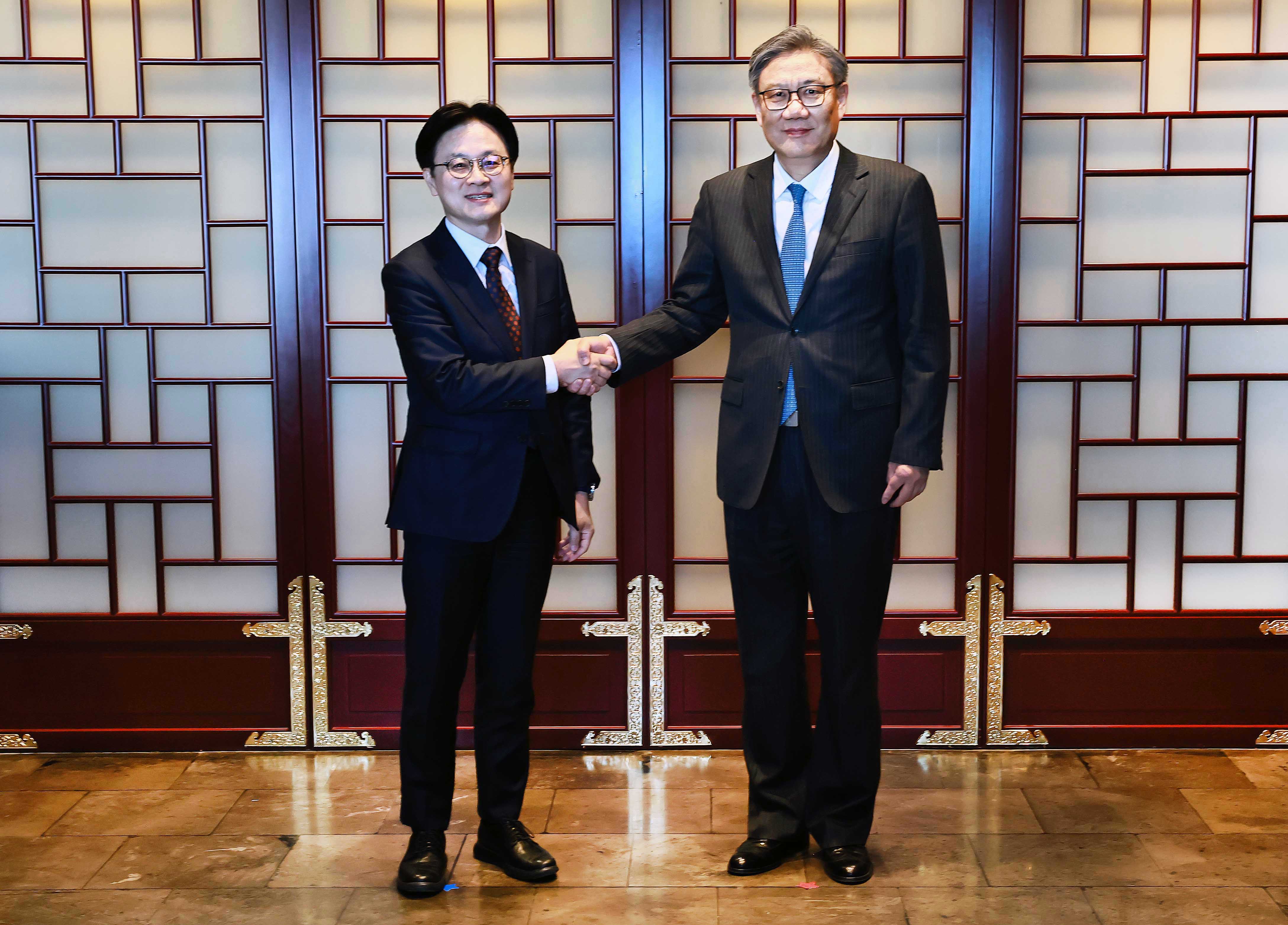
Korea–China Commerce Ministers’ Meeting
Minister JK (Jung-Kwan) Kim of the Ministry of Trade, Industry and Resources (MOTIR) held a Korea–China Commerce Ministers’ Meeting with Wang Wentao, China’s Minister of Commerce, in Beijing on March 18, 2026, with government delegations from both sides in attendance. The two ministers agreed to focus on implementing the agreements reached by the two leaders and stabilizing supply chains amid rapid shifts in the global trade environment. date2026-03-19
-
FTA/Economic Cooperation
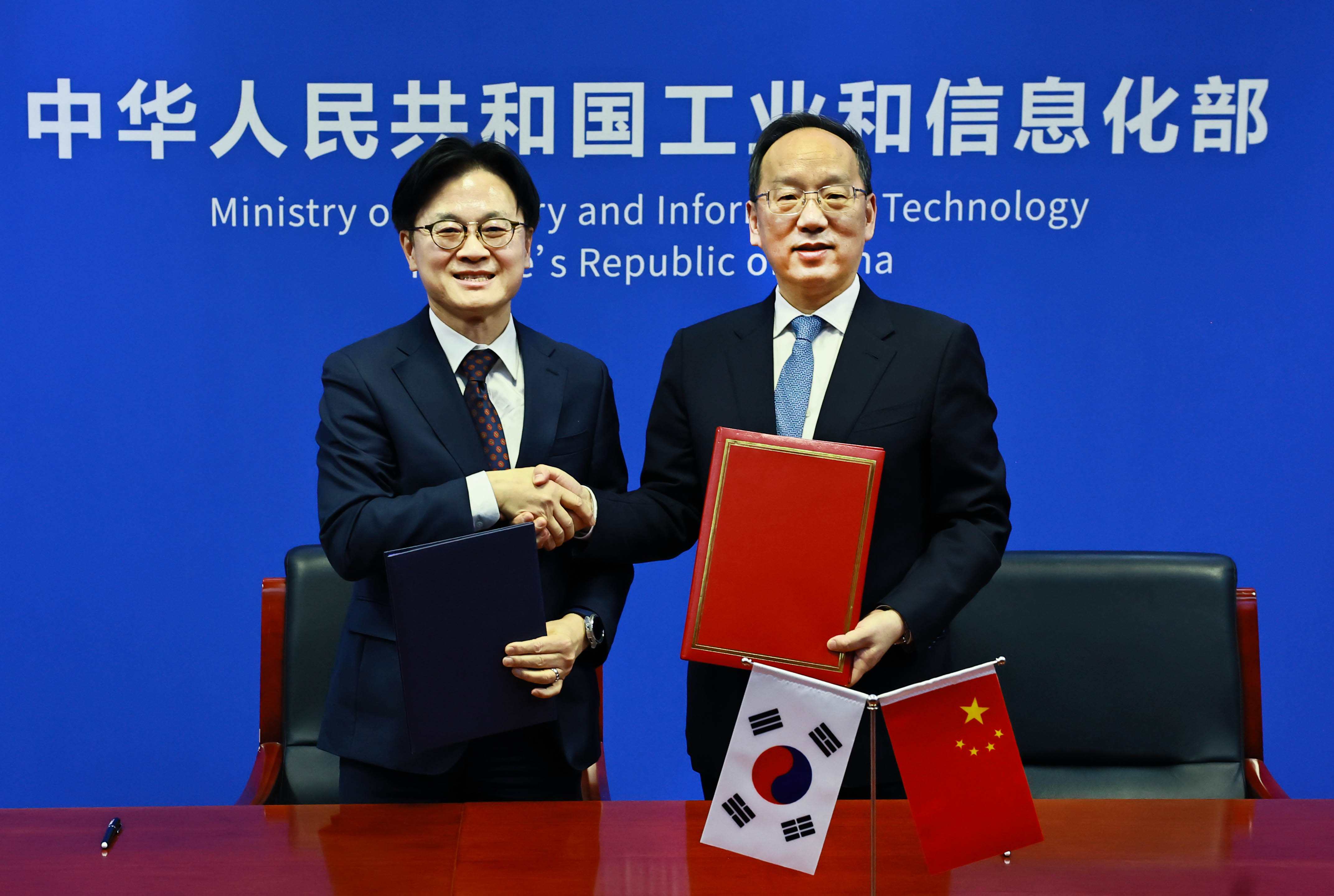
Fifth Korea–China Industrial Ministers’ Meeting
Minister JK (Jung-Kwan) Kim of the Ministry of Trade, Industry and Resources (MOTIR) held the Fifth Korea–China Industrial Ministers’ Meeting with Li Lecheng, China’s Minister of Industry and Information Technology, at the Ministry of Industry and Information Technology in Beijing on March 18, 2026. Joined by government delegations from both sides, the two ministers agreed to pursue more equal and mutually beneficial cooperation that reflects changes in the structure of bilateral industrial cooperation. Minister Kim stressed that although competition between the two countries has intensified as their industrial structures evolve, the mutual benefits of cooperation remain unchanged. He called for continued efforts to identify promising areas for cooperation and address shared challenges. date2026-03-19
-
FTA/Economic Cooperation
Korea-China Advance Summit (Jan 5) Follow-Up Through Mutually Beneficial Cooperation
Minister JK (Jung-Kwan) Kim of the Ministry of Trade, Industry and Resources (MOTIR) visited Beijing on March 18, 2026, and held successive Korea–China ministerial meetings on commerce and industry. Minister Kim first met with Wang Wentao, China’s Minister of Commerce, and agreed to focus on implementing the agreements reached by the two leaders and stabilizing supply chains amid rapid shifts in the global trade environment. In the event of logistics delays or raw material shortages, the two countries will immediately activate communication channels, including the supply chain hotline, and coordinate a joint response. For critical items such as rare earths and permanent magnets, they will use the export control dialogue and expedited and standardized licensing arrangements to improve predictability in bilateral supply chains. On trade, the two ministers discussed ways to expand bilateral cooperation into new areas, including consumer goods, by leveraging China’s drive to boost domestic demand. They agreed to increase business engagement through exchange events and trade fairs with China’s major economic provinces. The Korea–China FTA Joint Committee will be convened in the first half of 2026 to work toward practical outcomes in the services and investment negotiations. The two sides also recognized the need for effective measures to protect Korean music, films, and other intellectual property in China, including through the resumption of the intellectual property implementation committee. Minister Kim then held the fifth Korea–China Industrial Ministers’ Meeting with Li Lecheng, China’s Minister of Industry and Information Technology. It was the first Korea–China industrial ministerial meeting in four years since the virtual meeting in January 2022, and the first in-person meeting in eight years since the Seoul meeting in May 2018. Recognizing how the structure of Korea–China industrial cooperation has evolved, the two ministers agreed that future cooperation should move toward a more equal and mutually beneficial footing. They will deepen cooperation in advanced sectors such as semiconductors and batteries, while exploring new opportunities in the green transition of industry and the silver economy. The two sides also discussed ways to stabilize the tightly interconnected industrial and supply chains in the battery sector. In semiconductors, which account for 26 percent of bilateral trade, they will step up policy communication and actively support the smooth operation of Korean semiconductor plants in China. They reached a shared understanding on the need for cooperation on the green transition of industry and the silver economy in response to the shared challenges of climate change and population aging. To that end, they will exchange technologies and experience and promote cooperation between companies and research institutions. They will also share experience in building industrial supply chain data platforms as a digital foundation for the green transition of industry. Minister Kim stressed that although competition between the two countries’ industrial sectors has intensified, the mutual benefits of cooperation remain unchanged. He called for continued efforts to identify promising areas for cooperation and address shared challenges together. date2026-03-19
-
Industry
POSCO Group Transfers 112 Technologies to 75 Companies Free of Charge
The Ministry of Trade, Industry and Resources (MOTIR, Minister JK Kim) held the 2026 MOTIR–POSCO Group Technology Sharing Event in Seoul on March 18, 2026. The event was attended by Choi Yeon-woo, Director General for Industrial Technology Convergence Policy at MOTIR; POSCO Holdings executive Chun Hyun-jin; and representatives of more than 70 recipient companies. Since 2017, six POSCO Group affiliates have participated in the technology-sharing program and offered a total of 4,569 technologies. Of those, 926 technologies have been transferred free of charge to 480 SMEs and mid-sized companies. In 2026, POSCO Group offered technologies in machinery and equipment, materials and processes, energy, and eco-friendly and resource-related fields. Of those, 112 technologies were transferred to 75 companies. In particular, machinery and equipment technologies, where POSCO Group has a strong lead, accounted for the largest number of transfers. The technology that drew the most interest was a diagnostic device for battery control systems in the energy field. The device detects abnormalities in individual battery units within a battery pack at an early stage. “MOTIR will continue to support the active transfer of outstanding technologies through the technology-sharing program so that Korean companies can pursue commercialization and market entry,” said Choi Yeon-woo, Director General for Industrial Technology Convergence Policy. date2026-03-19
-
Trade/Investment
February 2026 Automobile Exports Reach $4.8 Billion
In February 2026, automobile exports (down 18.5 percent), domestic sales (down 7.2 percent), and production (down 21.0 percent) all declined year-on-year, reflecting three fewer working days due to the Lunar New Year holiday. However, cumulative exports of eco-friendly vehicles in January–February 2026 reached a record USD 4.5 billion, up 20.4 percent year-on-year. Automobile exports totaled 190,000 units in February, down 18.5 percent year-on-year, while export value fell 20.8 percent to USD 4.8 billion. Despite fewer working days due to the Lunar New Year holiday, eco-friendly vehicle exports posted only a modest decline, down 2.3 percent year-on-year, thanks to strong hybrid exports. By automaker, GM Korea and Renault Korea posted relatively stable results, led by their main export models. Domestic sales fell 7.2 percent year-on-year to 123,000 units in February. Eco-friendly vehicle sales rose 26.3 percent to 76,000 units, led by electric vehicles, which surged 156.2 percent year-on-year to 36,000 units. Production totaled 278,000 units in February, down 21.0 percent year-on-year. By model, the Trax recorded the highest output, followed by the Avante and Sportage. All automakers posted year-on-year declines, reflecting fewer working days due to the holiday. date2026-03-19