-
Industry
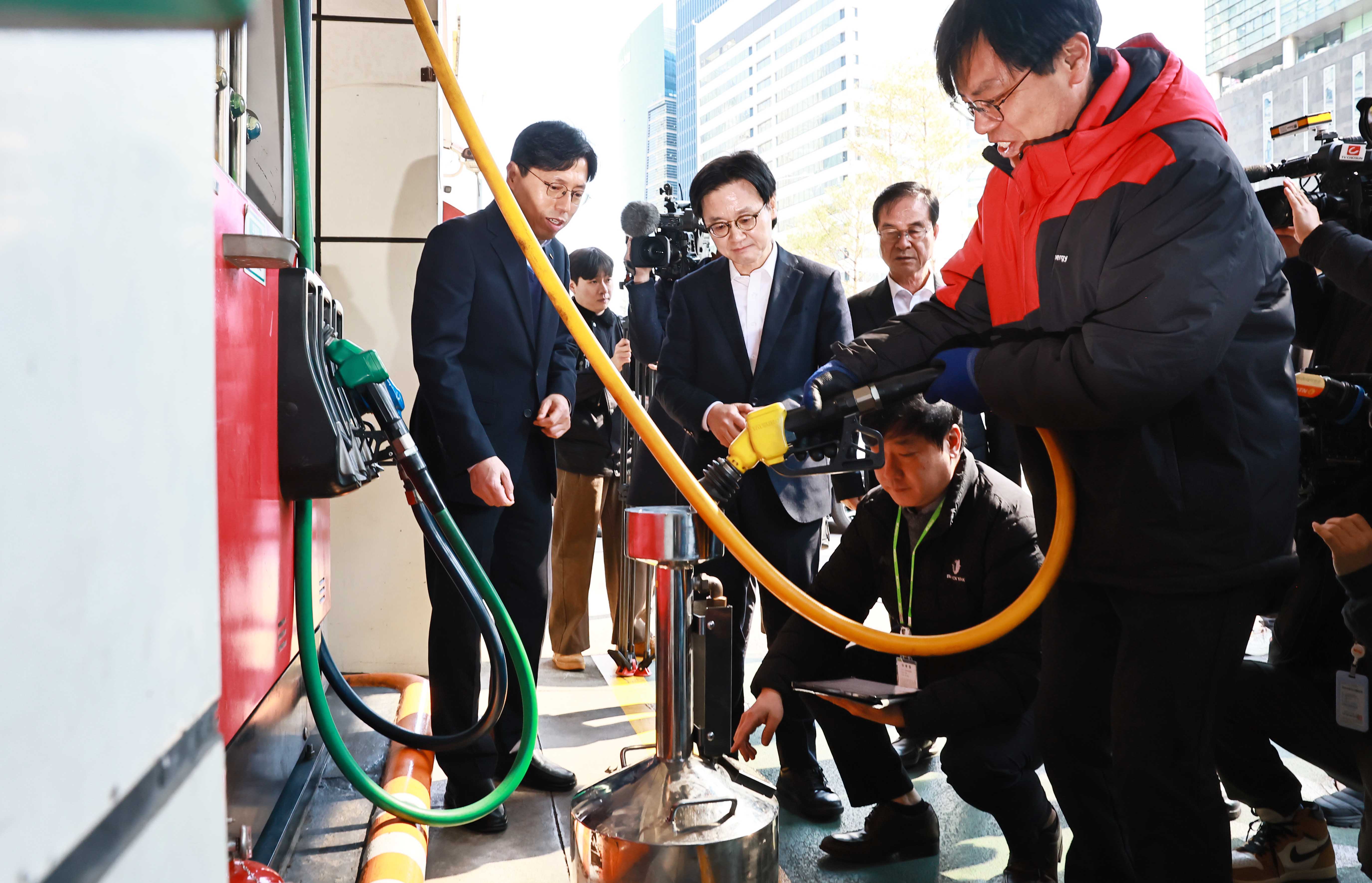
Minister Kim Visits an SK Energy Gas Station
On Friday, March 13, 2026, Minister JK (Jung-Kwan) Kim of the Ministry of Trade, Industry and Resources (MOTIR) visited an SK Energy-operated gas station in Dohwa-dong, Mapo-gu, Seoul, where prices had not risen as much as at nearby stations despite the recent surge in global oil prices. During the visit, he was briefed on recent fuel price trends and observed inspections of petroleum product prices, quality, and distribution. Minister Kim asked that retail prices continue to be kept stable so that the public can directly benefit from the maximum price system. date2026-03-16
-
FTA/Economic Cooperation
Energy Security for Indo-Pacific Endurance, a Global Growth Center of the 21st Century
We, the ministers of [participating countries in alphabetical order], met in Tokyo, Japan, on March 14–15, 2026, to hold the historic Indo-Pacific Energy Security Ministerial and Business Forum. The forum was co-hosted by the Chair and Vice Chair of the U.S. National Energy Dominance Council, Secretary of the Interior Doug Burgum, Secretary of Energy Chris Wright, and Japanese Minister of Economy, Trade and Industry Akazawa Ryosei. In light of the current situation in the Middle East, we affirm our shared determination to work collectively to ensure stable and secure energy supply in the Indo-Pacific region. To this end, we focused on three key themes: reliable energy for Indo-Pacific growth and security; securing energy supply chains, infrastructure and maritime routes; and enabling trade and investment. To support these goals, Ministers affirm the value of: · The necessity of reliable, affordable, secure and dispatchable energy from all sources depending on each country’s situation, in meeting the region’s surging energy demand. · Promoting quality as a key procurement mechanism to mitigate risk of operational liabilities. · Protecting against rising cyber threats to the security of the energy grid, critical infrastructure, vehicles, and devices. · Investment in comprehensive energy infrastructure that encompasses the entire energy supply chain from upstream development facilities to downstream equipment to support an affordable, reliable, and secure energy supply including baseload electricity. · Continuing to supply affordable and reliable energy sources in the Indo-Pacific region, including through emergency response measures, to benefit both producers and consumer countries. · While maintaining strong relations with current partners, expanding and diversifying energy suppliers and fuel types in order to strengthen energy security. · Promoting transparent, long-term energy contracts that reduce market volatility. As the global economy expands, so too does demand for energy driven by AI and electrification, we, as countries committed to a free and open Indo-Pacific, reaffirm our commitment to enhancing energy security in the region through the supply of abundant, accessible, reliable, affordable, secure and dispatchable energy. We recognize that growing all sources of energy, ensuring energy access and infrastructure, and lowering energy costs for all are essential to our efforts to end poverty, better human lives, and further drive economic growth, security, and prosperity in the Indo-Pacific, a global growth center of the 21st century. We welcome Pacific LNG exports, including from the United States and other established and emerging suppliers, that contribute to reliable, affordable and diversified energy supply in the Indo-Pacific region. We note efforts by the World Bank, the Asian Development Bank (ADB) and other international finance institutions to expand financing for energy-related programs and technical assistance including for nuclear energy projects for interested countries aligned with IAEA standards on safety, security, regulatory frameworks, and non-proliferation safeguards and supporting developing countries in mobilizing finance, transferring technology and capacity building. In addition, interested countries intend to accelerate cooperation, especially in the field of nuclear energy, to pursue deployment of Small Modular Reactors (SMRs) and other advanced technologies. We congratulate the series of tangible deals announced in Tokyo on this occasion and intend to make efforts to ensure that these deals result in reliable, accessible, and affordable energy supply and pave the way for future cooperation. date2026-03-16
-
Trade/Investment
Korea’s National Assembly Passes Special Act for Korea–U.S. Strategic Investment Management
The National Assembly of Korea passed the Special Act for Korea–U.S. Strategic Investment Management (the “Korea–U.S. Strategic Investment Special Act”) at its plenary session on March 12, 2026. Following the signing of the Memorandum of Understanding (MOU) on Korea–U.S. Strategic Investment on November 14, 2025, the Korean government and the National Assembly moved swiftly to prepare special legislation to establish the legal and institutional basis for its implementation. The first bill was introduced on November 26, 2025, and was followed by eight additional bills. To expedite deliberations, the National Assembly, by bipartisan agreement, set up a special committee for a one-month term beginning on February 9, 2026. After intensively reviewing all nine bills, the National Assembly passed the final bill at today’s plenary session, about four months after the governments of Korea and the United States signed the MOU. The Korea–U.S. Strategic Investment Special Act gives domestic legal effect to the MOU by defining the scope and principles of strategic investment and setting out the implementation framework and safeguards. Under the Act, “strategic investment” refers to Korea’s USD 200 billion commitment to invest in strategic industries in the United States and a separate USD 150 billion shipbuilding cooperation package approved by the United States. The Act provides that U.S.-bound investment must, in principle, be carried out on a commercially reasonable basis and in a manner consistent with the national interest, including the development of the national economy and stronger industrial competitiveness. It also allows exceptions, subject to prior consent from the relevant standing committees of the National Assembly, when unavoidable grounds exist, such as national security or supply chain stability. The Act establishes a dual-track implementation structure for strategic investment. Candidate projects will first be reviewed by the Project Management Committee under the Ministry of Trade, Industry and Resources (MOTIR, Minister JK Kim) for commercial reasonableness as well as strategic and legal considerations. The Operating Committee under the Korea–U.S. Strategic Investment Corporation will then decide whether to proceed, taking into account the review results and the fund’s financial position. The Korean government will report the matter to the relevant standing committees of the National Assembly before consulting with the United States. Final decisions on investment and execution will be made by the Operating Committee following bilateral consultations and the relevant U.S. procedures. The Act also includes safeguards and a funding framework for implementation. U.S.-bound investment will be capped at USD 20 billion per year and executed in line with project progress. If there are concerns about foreign exchange market instability or possible disruptions to the recovery of principal and interest, the Korean government must consult with the U.S. on adjustments to the timing and scale of execution or to the distribution of cash flows. Furthermore, the Act provides for the establishment of the Korea–U.S. Strategic Investment Fund within the Korea–U.S. Strategic Investment Corporation. Separate accounts will be maintained for U.S.-bound investment and support for shipbuilding cooperation investment. Minister JK (Jung-Kwan) Kim of MOTIR said, “The passage of the Act reflects the shared commitment of the Korean government and the National Assembly to keep the bilateral tariff agreement on track and further strengthen the Korea–U.S. strategic partnership.” He added that the ministry will work closely with the U.S. to ensure that implementation of the MOU helps deepen cooperation in strategic industries, expand opportunities for Korean companies in the U.S. market, and strengthen bilateral sup date2026-03-16
-
Industry
MOTIR Urges Oil Industry Cooperation to Stabilize Fuel Prices Under the Price Ceiling System
The price ceiling system for petroleum products took effect on March 13, 2026. On the same day, Minister JK (Jung-Kwan) Kim of the Ministry of Trade, Industry and Resources (MOTIR) held a series of meetings and site visits aimed at stabilizing fuel prices and maintaining order in the petroleum market. At the Korea Trade Insurance Corporation (K-SURE), Minister Kim chaired a morning meeting of the interagency joint inspection team. The team has been monitoring domestic and international petroleum prices, taking enforcement actions against price-fixing, and investigating suspected abuse of fuel subsidies and tax evasion. At the meeting, participants reviewed recent inspection findings and agreed to strengthen coordination on enforcement against illegal petroleum distribution. Minister Kim stated, “Illegal acts that exploit public anxiety for profit cannot be tolerated, and strong interagency enforcement is needed.” Since March 6, 2026, the team has carried out more than 800 targeted inspections at gas stations flagged as high risk for illegal petroleum distribution, uncovering 20 violations. It plans to continue intensive enforcement with more than 2,000 inspections a month. At a separate petroleum market inspection meeting held at K-SURE, industry participants, including refiners, the Korea Oil Station Association (KOSA), and the Korea National Oil Corporation (KNOC), discussed domestic and international oil price trends and response measures. Participants shared the view that domestic fuel prices have eased slightly since March 11, 2026, but the burden on the public remains high. They also agreed that refiners, gas stations, and related industry players must work together to ensure the price ceiling system works effectively in practice. Minister Kim urged gas stations to keep retail fuel prices stable so that consumers can benefit from the stable supply prices charged by refiners under the price ceiling system. After the meeting, Minister Kim met with SK Energy executives at the company’s headquarters. “The refining industry plays a critical role in ensuring that the price ceiling system for petroleum products operates smoothly in practice,” he said, calling on the industry to maintain stable production and supply despite difficult conditions. Minister Kim then visited a gas station in Mapo that had not raised prices as much as nearby stations despite the recent surge in global oil prices. After hearing from the station owner about recent fuel price trends, he asked the station to keep retail prices stable so the public can directly benefit from the price ceiling system. date2026-03-16
-
Industry
Minister Kim Chairs the Petroleum Market Inspection Meeting
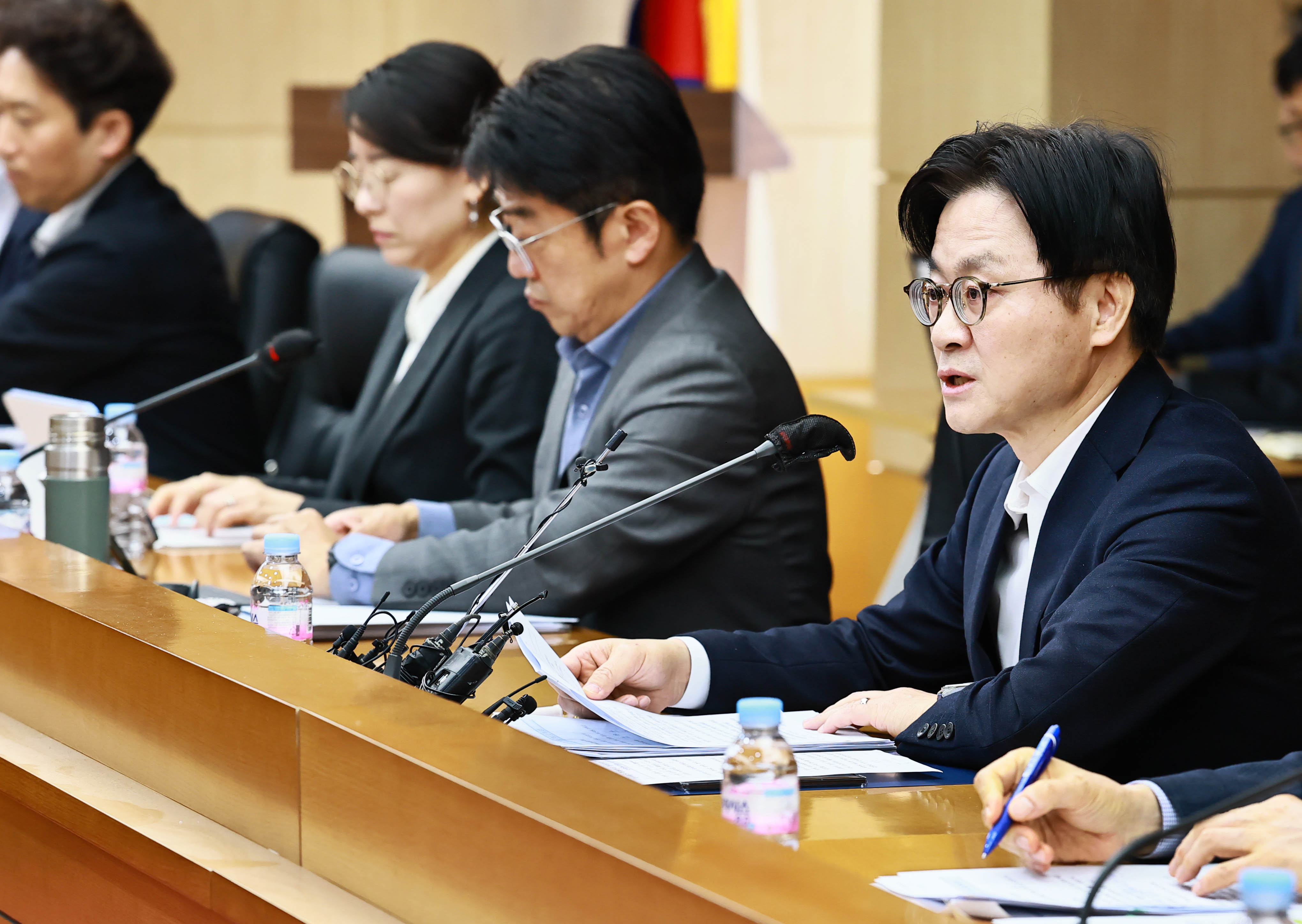
On Friday, March 13, 2026, Minister JK (Jung-Kwan) Kim of the Ministry of Trade, Industry and Resources (MOTIR) chaired the Petroleum Market Inspection Meeting at Korea Trade Insurance Corporation (K-SURE) in Jongno-gu, Seoul. The meeting was attended by officials from the Korea National Oil Corporation (KNOC), the Korea Petroleum Association, refiners including GS Caltex, S-OIL, SK Innovation, and HD Hyundai Oilbank, the Korea Petroleum Quality & Distribution Authority (K-Petro), and the Korea Oil Station Association (KOSA). After delivering opening remarks, Minister Kim discussed domestic and international oil price trends, response measures, and recent petroleum supply and pricing trends at refiners and gas stations. “As refiners’ supply prices stabilize under the maximum price system, gas stations should also help keep retail prices stable so that consumers can benefit,” Minister Kim said. date2026-03-13
-
Industry
Korea Steps Up Efforts to Stabilize Petroleum Product Prices
The Korean government will introduce policy measures to curb the recent spike in domestic petroleum prices driven by developments in the Middle East and to limit sharp price fluctuations in the event of a supply disruption. To that end, following consultations with relevant ministries, the Ministry of Trade, Industry and Resources (MOTIR, Minister JK Kim) will implement a price ceiling system for petroleum products. The price ceilings will apply to refiners’ supply prices charged to gas stations and dealers, not to retail prices at gas stations. Effective from 12:00 a.m. on March 13 through March 26, 2026, the initial ceilings will be KRW 1,724 per liter for gasoline, KRW 1,713 for diesel, and KRW 1,320 for kerosene. These figures are KRW 109, KRW 218, and KRW 408 lower, respectively, than the average supply prices reported by refiners on March 11, 2026. The ministry plans to adjust the price ceilings on March 27, 2026, to reflect domestic and international oil market conditions. For the adjustment, the initial tax-exclusive price ceilings will serve as the base prices, and taxes will be added after applying the rate of increase in international petroleum product prices over the relevant period is applied. The rate of increase will be calculated based on the price indicators published by Petronet by the Korea National Oil Corporation. To facilitate the prompt implementation of the price ceiling system for petroleum products, MOTIR will work with relevant ministries to finalize detailed standards for post-implementation settlement procedures with refiners to strengthen monitoring and oversight of gas stations. The ministry will also continue to review support measures, including energy vouchers, for energy-vulnerable groups such as self-employed business owners and farmers. date2026-03-13
-
Trade/Investment
USTR Launches Section 301 Investigation into Manufacturing Overcapacity
On March 12, 2026, the Office of the United States Trade Representative (USTR) announced in the Federal Register that it is initiating an investigation under Section 301 of the Trade Act of 1974 into acts, policies, and practices related to structural excess capacity and production in manufacturing sectors covering a total of 16 trading partners, including Korea, China, the European Union (EU), and Japan. According to the notice, the investigation will examine whether those acts, policies, and practices are unreasonable or discriminatory and burden or restrict U.S. commerce. The economies subject to the investigation are China, the European Union, Singapore, Switzerland, Norway, Indonesia, Malaysia, Cambodia, Thailand, Korea, Vietnam, Taiwan, Bangladesh, Mexico, Japan, and India. USTR also requested consultations with the economies concerned in connection with the Section 301 process. Written comments from interested parties on the investigation must be submitted between March 17 and April 15, 2026, and USTR announced that public hearings are scheduled to begin on May 5, 2026. Since the IEEPA (International Emergency Economic Powers Act) ruling, the U.S. government has said it plans to restore U.S. tariff levels to their pre-ruling levels through measures under Sections 122 and 301 of the Trade Act. During the investigation, the Korean government will remain in close consultations with the U.S. side to ensure that the balance of benefits under the existing Korea–U.S. tariff agreement is not undermined and that Korean exporters are not placed at a disadvantage relative to other major trading partners. date2026-03-13
-
Industry
Vice Minister Moon Attends the Opening Ceremony of InterBattery 2026
Vice Minister Moon Shin-hak of the Ministry of Trade, Industry and Resources (MOTIR, Minister JK Kim) attended the opening ceremony of InterBattery 2026 at COEX in Seoul on March 11, 2026. During the event, Vice Minister Moon delivered welcoming remarks and took part in a ribbon-cutting ceremony to mark the opening of the exhibition. The event was attended by National Assembly members Lee Cheol-gyu and Kim Won-I; Uhm Ki-cheon, Chairman of the Korea Battery Industry Association (K-BIA); Choi Ik-kyu, Executive Vice President of Samsung SDI, Kim Woo-seop; Executive Vice President of LG Energy Solution; as well as heads of organizing institutions and representatives of participating companies. Vice Minister Moon described batteries as the “heart of advanced industries” and said the government would continue to support the industry so that K-batteries can maintain their leadership. He added that the government and industry would work as one team to respond to developments in R&D and major countries’ trade policies. date2026-03-12
-
Industry
Advanced Semiconductor Materials Production Expands Beyond the Capital Region
Kim Seong-yeol, Deputy Minister for Industry and Growth at the Ministry of Trade, Industry and Resources (MOTIR, Minister JK Kim), attended the completion ceremony for JK Materials Sejong Campus on March 12, 2026, where he toured the company’s semiconductor materials production facilities and heard the views of industry representatives. The new campus will establish a production base in Sejong for key materials, including raw materials used in photoresists used in semiconductor lithography, advanced packaging materials for HBM, and OLED display films. The move is expected to help broaden Korea’s semiconductor industry beyond the Seoul metropolitan area and strengthen competitiveness across the broader ecosystem. Driven by AI-driven demand, the global semiconductor market is expected to surpass USD 1 trillion for the first time this year, with the market for semiconductor materials, parts, and equipment also set to expand. The government will help channel the current boom in memory chips, which are posting record earnings, into broader growth across the materials, parts, and equipment sector. To that end, MOTIR will back the establishment of a production-linked Trinity Fab for demonstration testing, develop investment incentives under the Special Act on Semiconductors, and step up support for regional semiconductor clusters and workforce development tailored to local industry needs. In his congratulatory remarks, Deputy Minister Kim noted that “Korea’s world-class semiconductor manufacturing capabilities can help accelerate the localization of semiconductor materials, parts, and equipment.” He added that “the government will focus on strengthening the supplier ecosystem, expanding demand-linked R&D, improving the investment environment, and training future semiconductor talent.” date2026-03-12
-
Trade/Investment
February ICT Exports and Trade Surplus Hit Record Highs, with Exports Up 103.3%
The Ministry of Trade, Industry and Resources (MOTIR, Minister JK Kim) and the Ministry of Science and ICT (MSIT, Deputy Prime Minister and Minister Bae Kyung-hoon) announced on March 13, 2026, that Korea’s ICT exports in February totaled USD 33.6 billion, up 103.3 percent year-on-year. Imports rose 19.6 percent year-on-year to $13.1 billion, resulting in a trade surplus of $20.6 billion. In February 2026, ICT exports posted the highest February total on record and recorded triple-digit growth for the first time for the month, despite three fewer working days than a year earlier due to the Lunar New Year holiday. ICT products accounted for 49.8 percent of Korea’s total exports, which stood at $67.5 billion. By product, exports increased for semiconductors (up 160.8 percent), mobile phones (up 16.9 percent), and computers and peripherals (up 187.8 percent), but decreased for displays (down 7.5 percent) and communication equipment (down 9.0 percent). Semiconductor exports remained above $20 billion for the third consecutive month, as memory prices continued to rise and exports of high-value products increased amid expanding global demand for AI servers. Mobile phone exports rose on initial shipments following new product launches and stronger demand for premium smartphones. Computers and peripherals posted triple-digit growth for the fourth consecutive month, reflecting solid SSD demand and higher prices amid continued investment in AI infrastructure. Display exports declined despite expanded OLED supply for smartphones, as demand for IT devices remained weak and competition in the LCD market intensified. Communication equipment exports also fell, as shipments of automotive electronics equipment and wireless communications device parts to key markets, including the United States and Vietnam, declined. By destination, exports increased in all major markets: the United States (up 200.7 percent), China, including Hong Kong (up 109.9 percent), Taiwan (up 98.8 percent), the European Union (up 78.1 percent), Vietnam (up 44.0 percent), Japan (up 37.3 percent), and India (up 9.9 percent). ICT imports totaled $13.1 billion in February 2026, up 19.6 percent from $10.9 billion a year earlier, as imports increased across most major ICT categories: semiconductors (up 19.3 percent), displays (up 13.6 percent), mobile phones including parts (up 96.0 percent), and computers and peripherals (up 52.2 percent). date2026-03-12