-
FTA/Economic Cooperation
MOTIR, Pennsylvania Join Forces to Keep MASGA Project on Track
Park Dong-il, Deputy Minister of the Office of Industrial Policy at the Ministry of Trade, Industry and Resources (MOTIR, Minister JK Kim), met with Rick Siger, Secretary of the Pennsylvania Department of Community and Economic Development in Seoul on March 18, 2026, to discuss bilateral industrial cooperation, including shipbuilding. Pennsylvania is home to Hanwha Philly Shipyard, the first U.S. shipyard acquired by Hanwha Ocean, one of Korea’s leading shipbuilders. Against that backdrop, Secretary Siger’s visit focused on ways to move shipbuilding cooperation forward, including steps to promote investment in the U.S. shipbuilding industry. Hanwha Ocean and its partners acquired Philly Shipyard from Norway’s Aker in December 2024. The shipyard is now building training vessels and medium-sized tankers, and Hanwha Ocean plans to expand the site and add automation equipment to raise annual production capacity from about 1.5 vessels to more than 10. Deputy Minister Park said Korean shipbuilders are reviewing a range of projects under the “Make American Shipbuilding Great Again (MASGA)” initiative to expand U.S. shipbuilding capacity, train workers, and strengthen supply chains. He stressed that effective support from the Pennsylvania state government will be essential to enabling Hanwha Philly Shipyard to play a leading role. He asked the state to expedite permits for the expansion project and build out infrastructure in advance to meet rising transport and electricity demand. He also called for the Philly area to be designated a Maritime Prosperity Zone (MPZ) under the U.S. Maritime Action Plan (MAP) announced in February, and underscored the need for U.S. government incentives given high labor costs in the United States. Deputy Minister Park also proposed cooperation tied to the Korean government’s export support programs for shipbuilding equipment and to the Korea–U.S. Shipbuilding Cooperation Center, which is set to open in 2026. He added that he hopes to expand cooperation with Pennsylvania’s leading universities and research institutes in a range of areas, including industrial AI transformation. MOTIR will continue working with the U.S. government to help create favorable investment conditions for Korean companies so that the MASGA project delivers mutually beneficial outcomes for both countries. date2026-03-18
-
Industry
Government and Civic Group Step Up Gas Station Price Monitoring
Minister JK (Jung-Kwan) Kim of the Ministry of Trade, Industry and Resources (MOTIR) met with Lee Seo-hye, head of the civic group Energy Consumer’s “Energy and Petroleum Market Watch,” on March 17, 2026. They discussed ways to strengthen monitoring of gas stations seeking excessive profits by raising retail prices despite the maximum price system for petroleum products, which took effect on March 13, 2026. Since the maximum price system took effect, refiners’ supply prices have fallen by more than KRW 100 per liter. But compared with March 12, 2026, retail prices at gas stations were down only KRW 66 per liter for gasoline and KRW 87 per liter for diesel as of March 16, 2026, indicating that cuts in pump prices have remained slow even four days after the system took effect. MOTIR will therefore begin the immediate price monitoring of more than 10,000 gas stations nationwide with Energy and Petroleum Market Watch, a non-governmental civic group with 14 years of experience monitoring the petroleum market from 2010 to 2024, using data from Opinet and other fuel price information systems. The government will provide real-time price data collected through Opinet and similar systems, and Market Watch will monitor gas station retail prices on a daily basis. The group will identify and publicly disclose gas stations that have raised prices excessively after the system took effect. Those that move early to lower prices and join efforts to support price stability for the public will be designated “good-price gas stations” and receive certification stickers and government commendations. “Stabilizing gas station prices is critical for the public to feel the effects of the maximum price system,” Minister Kim said. “I ask Energy and Petroleum Market Watch to conduct objective and fair monitoring from the perspective of consumers.” Meanwhile, MOTIR continues to accept 24-hour reports of illegal activity involving prices, quality, and distribution through K-Petro’s Oil Call Center (1588-5166). Gas stations suspected of illegal conduct are also being inspected daily through an interagency joint inspection team and other channels. date2026-03-18
-
Industry
Government Steps Up Efforts to Ensure Consumers Feel the Effects of the Maximum Price System at Gas Stations
Minister JK (Jung-Kwan) Kim of the Ministry of Trade, Industry and Resources (MOTIR) visited Changhyeon Gas Station, an independently operated budget gas station in Cheongju, on the morning of March 16, 2026, to review how retail prices are responding to the maximum price system. The visit followed his trip last week to refiner-operated gas stations in Seoul. At the station, Minister Kim was briefed by the station owner and the head of stockpiling at the Korea National Oil Corporation (KNOC) on changes in supply prices, retail prices, and customer traffic before and after the system took effect. He then observed the unloading of the first tanker truck delivery placed since the system was introduced, as fuel was transferred from the truck into the station’s storage tanks. “Today marks the fourth day since the maximum price system took effect, but cuts in refiners’ supply prices still do not seem to be reaching retail prices quickly enough,” Minister Kim said. “Once stations sell through existing inventory, they will be restocking at lower prices than before. Retail prices should naturally come down.” He added that the government “will mobilize all available resources to ensure that consumers can feel the effects of the maximum price system at gas stations.” The government will continue to monitor petroleum prices, conduct on-site inspections, and operate the Oil Price Reporting Center to ensure that the system is fully reflected in retail prices. It also plans to identify good-price gas stations and provide incentives. date2026-03-18
-
FTA/Economic Cooperation
Indo-Pacific Energy Security Ministerial and Business Forum
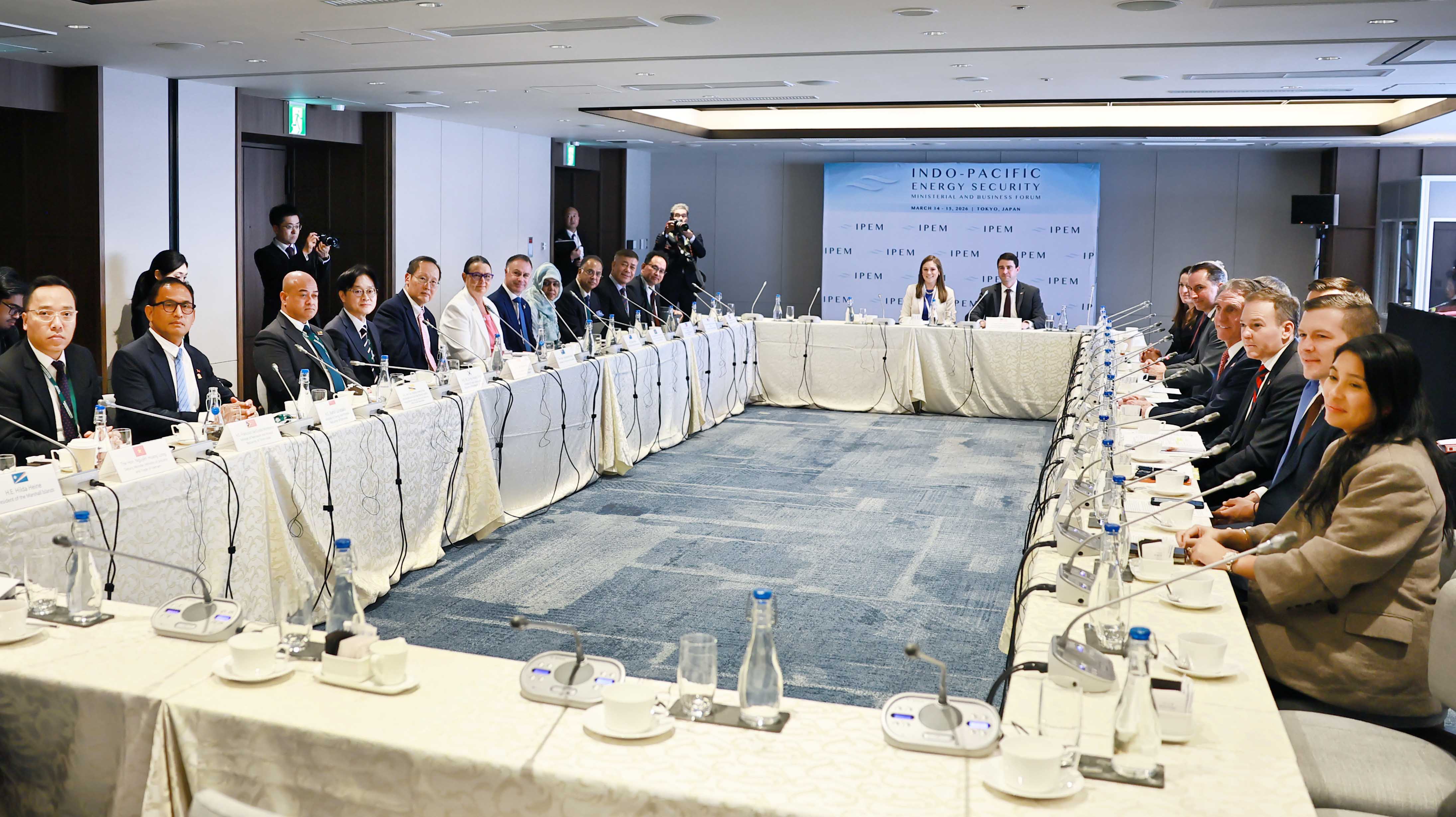
Minister JK (Jung-Kwan) Kim of the Ministry of Trade, Industry and Resources (MOTIR) attended the Indo-Pacific Energy Security Ministerial and Business Forum in Tokyo, Japan, on March 15, 2026. The event brought together senior government officials from 17 major Indo-Pacific countries—including the United States, Australia, Vietnam, and New Zealand—as well as business leaders from the energy, infrastructure, industry, and finance sectors. At the forum, participants discussed ways to strengthen energy security across the Indo-Pacific, with a focus on ensuring reliable and affordable energy supply, securing energy supply chains and infrastructure, and expanding trade and investment cooperation. In a joint statement, ministers also affirmed their shared determination to work collectively to promote a stable and secure energy supply in the region. date2026-03-17
-
FTA/Economic Cooperation
Korea–Japan Industry and Trade Ministers’ Meeting
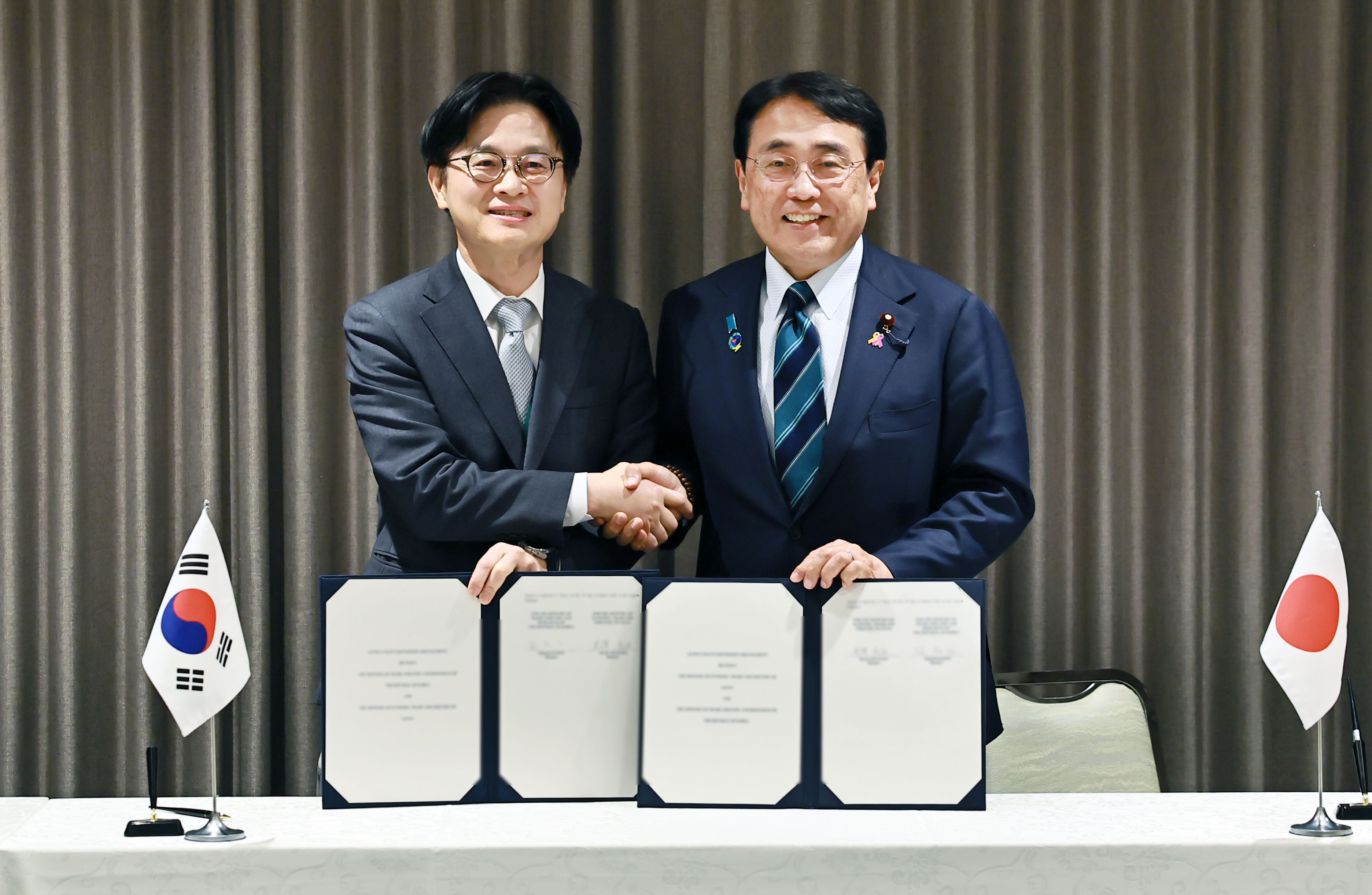
Minister JK (Jung-Kwan) Kim of the Ministry of Trade, Industry and Resources (MOTIR) met with Akazawa Ryosei, Japan’s Minister of Economy, Trade and Industry (METI), in Tokyo on March 14, 2026, on the sidelines of the inaugural Indo-Pacific Energy Security Ministerial. Ahead of the meeting, the two sides signed the Korea–Japan Supply Chain Partnership Arrangement (SCPA) to strengthen cooperation on supply chain disruption response and industrial collaboration, and discussed key bilateral agendas across industry and trade. They also agreed to launch the Korea–Japan Industrial and Trade Policy Dialogue, a regular consultative channel between MOTIR and METI, and shared the view that closer coordination is needed to help stabilize LNG supply. Minister Kim said, “As uncertainty grows amid shifts in the global trade environment, instability in energy and resource markets, and supply chain risks, Korea and Japan, as like-minded partners, have remained in close coordination. Building on 60 years of normalized diplomatic relations, the two countries will continue to advance forward-looking and mutually beneficial industrial and trade cooperation.” date2026-03-17
-
FTA/Economic Cooperation
Korea–India Trade Ministers’ Meeting
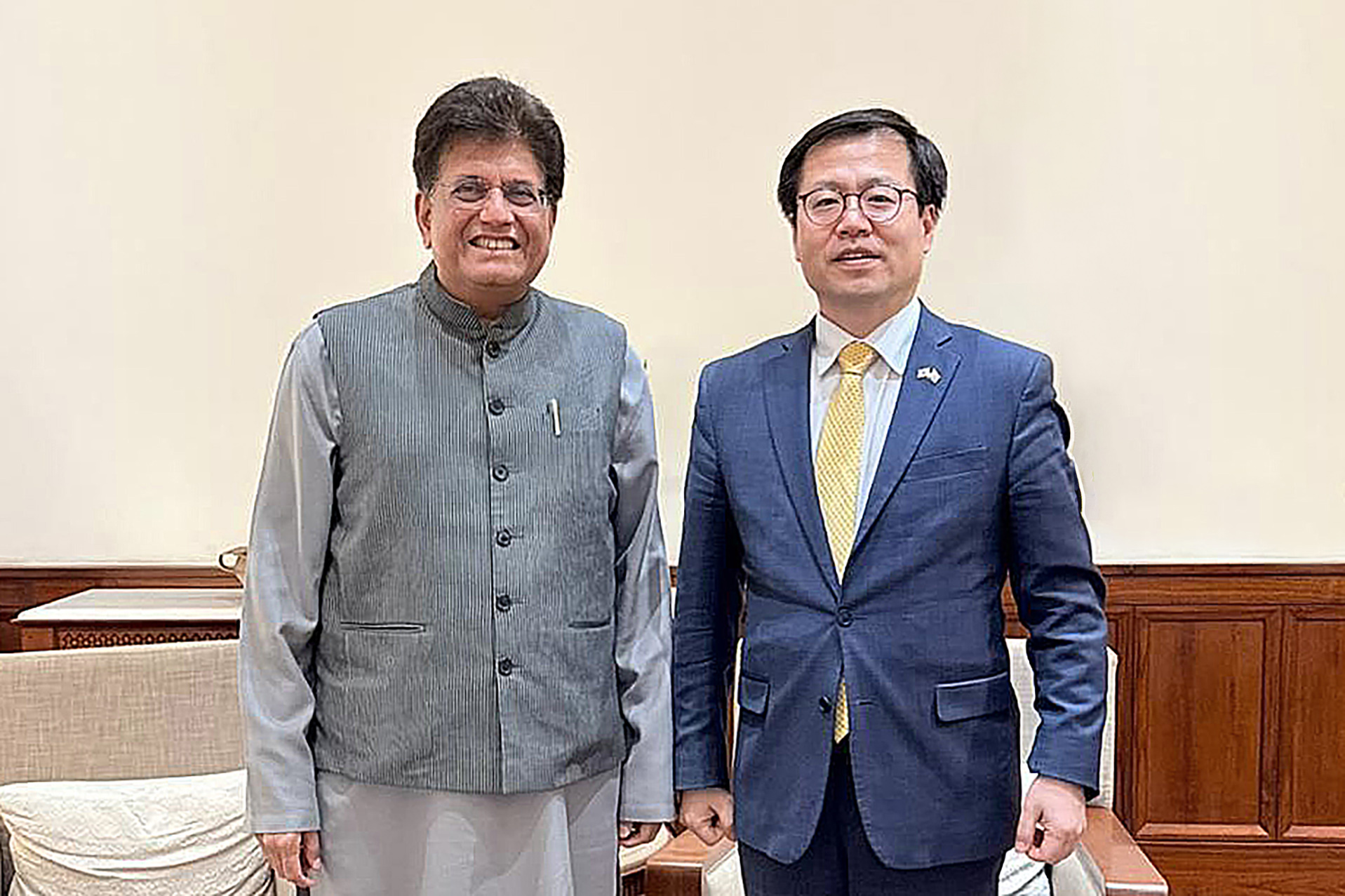
Trade Minister Yeo Han-koo of the Ministry of Trade, Industry and Resources (MOTIR, Minister JK Kim) held the Korea–India Trade Ministers’ Meeting with Piyush Goyal, India’s Minister of Commerce and Industry, in New Delhi, India, on March 13, 2026, with government delegations from both countries in attendance. After delivering opening remarks, the two sides welcomed the growing depth of bilateral economic ties and held in-depth talks on resuming and accelerating negotiations to upgrade the Korea–India CEPA. Trade Minister Yeo also stressed the importance of closer economic cooperation between the two countries as they seek to diversify markets and supply chains. date2026-03-16
-
FTA/Economic Cooperation
Roundtable with Indian IT and AI Companies
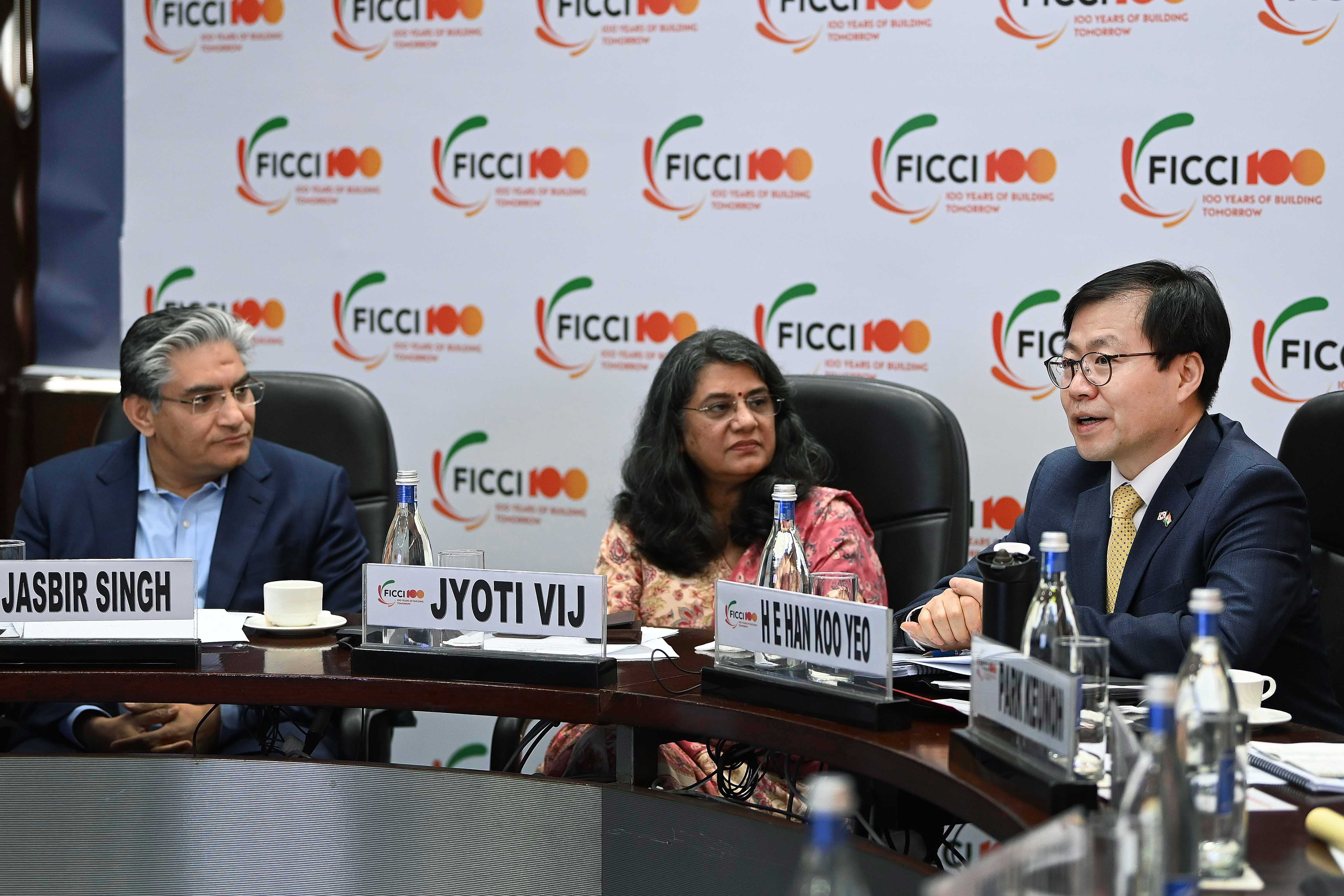
Trade Minister Yeo Han-koo of the Ministry of Trade, Industry and Resources (MOTIR, Minister JK Kim) chaired a roundtable with Indian IT and AI companies in New Delhi, India, on March 13, 2026, attended by representatives from the Federation of Indian Chambers of Commerce & Industry (FICCI) and other industry participants. He delivered opening remarks and discussed ways to strengthen Korea–India cooperation in AI and digital trade. The roundtable provided an opportunity for the two sides to exchange views on future cooperation in AI and digital trade and to explore ways to deepen bilateral cooperation in emerging technology sectors. date2026-03-16
-
FTA/Economic Cooperation
Meeting with NITI Aayog Vice Chairman
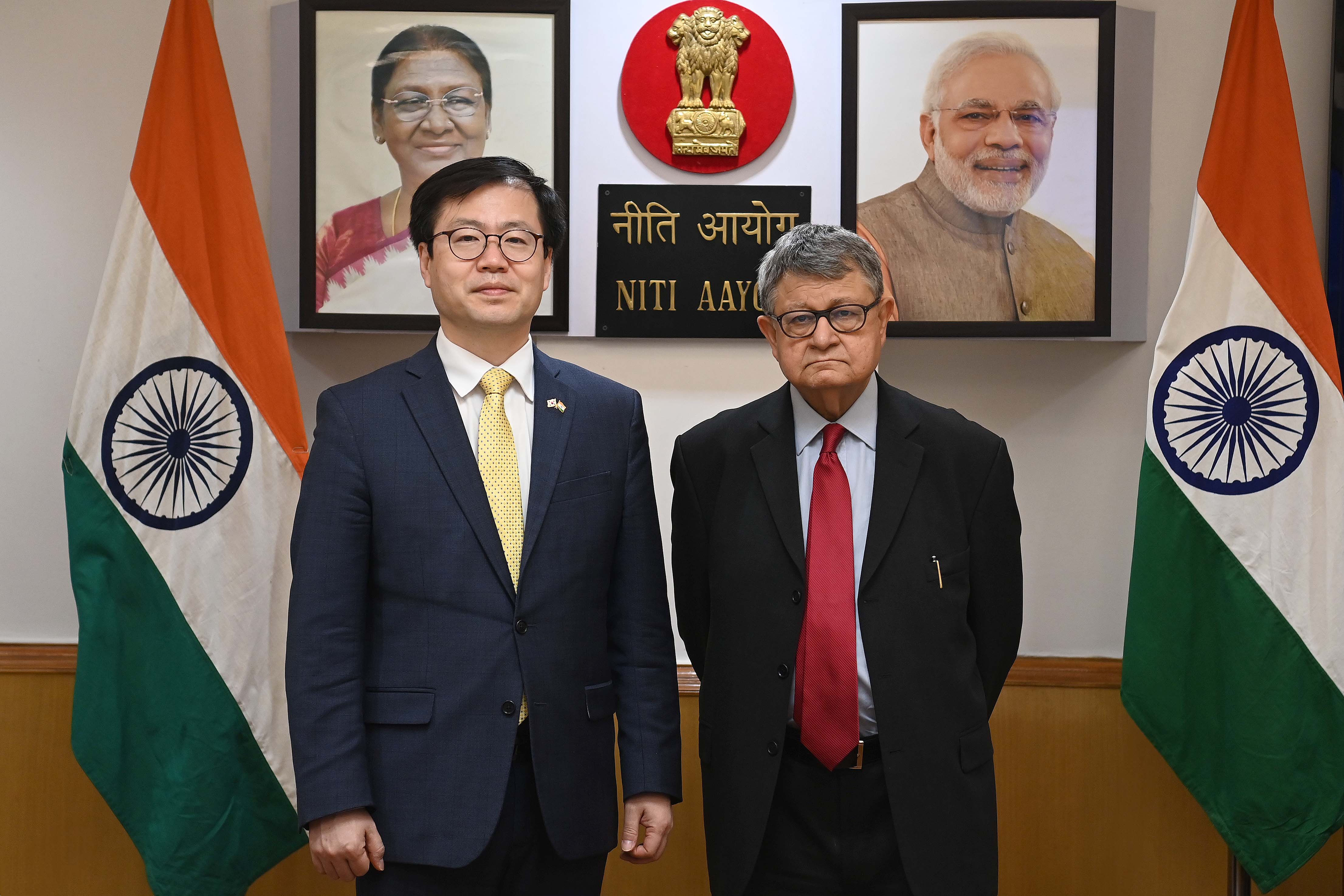
Trade Minister Yeo Han-koo of the Ministry of Trade, Industry and Resources (MOTIR, Minister JK Kim) met with Suman Bery, Vice Chairman of NITI Aayog, in New Delhi, India, on March 13, 2026, to discuss ways to deepen bilateral trade cooperation. During the meeting, the two sides exchanged views on economic cooperation between Korea and India, including efforts to diversify markets and supply chains. Trade Minister Yeo also called for active support from the Indian government to help address difficulties faced by Korean companies operating in the country. date2026-03-16
-
FTA/Economic Cooperation
Korea, Japan Hold Industry and Trade Ministers’ Meeting at Indo-Pacific Energy Security Ministerial
Minister JK (Jung-Kwan) Kim of the Ministry of Trade, Industry and Resources (MOTIR) attended the inaugural Indo-Pacific Energy Security Ministerial in Tokyo on March 14–15, 2026, where he met with Akazawa Ryosei, Japan’s Minister of Economy, Trade and Industry (METI), to discuss key bilateral agendas across industry, trade, and global supply chains. Amid heightened global uncertainty, Korea and Japan have remained in close coordination on supply chains and energy security. Against this backdrop, the two sides agreed to launch the Korea–Japan Industrial and Trade Policy Dialogue, a regular consultative channel between MOTIR and METI, to review and manage bilateral agendas across trade, economic security, supply chains, steel, and mineral resources. The two sides also underscored the importance of closer Korea–Japan cooperation to help stabilize LNG supply, given that both countries are among the world’s leading LNG importers. Korea Gas Corporation and JERA signed an Operation Cooperation Agreement covering LNG supply arrangements, including LNG swaps. The agreement establishes a framework for joint action in the event of an LNG supply disruption. The two sides agreed to expand practical follow-up measures at an early date, including the implementation of LNG swaps, to support stable LNG supply and demand in both countries. Minister Kim said, “As uncertainty grows amid shifts in the global trade environment, heightened volatility in energy and resource markets, and supply chain risks, Korea and Japan, as like-minded partners, have remained in close coordination. Building on 60 years of normalized diplomatic relations, the two countries will continue to advance forward-looking and mutually beneficial industrial and trade ties.” Before the meeting, the two sides signed the Korea–Japan Supply Chain Partnership Arrangement (SCPA), establishing a framework for joint responses to supply chain disruptions and broader industrial ties. Under the partnership, Korea and Japan will endeavor to minimize unnecessary measures that could affecting each other’s supply chains and to share information when signs of disruption emerge. They also plan to deepen supply chain ties by expanding joint exploration, investment, and technological collaboration in critical minerals and other resources. date2026-03-16
-
FTA/Economic Cooperation
Korea and India Discuss Resuming and Accelerating Korea–India CEPA Upgrade Talks
Trade Minister Yeo Han-koo of the Ministry of Trade, Industry and Resources (MOTIR, Minister JK Kim) met with Piyush Goyal, India’s Minister of Commerce and Industry, in India on March 13, 2026, to discuss ways to deepen bilateral trade and investment ties. India is one of Korea’s key partners in the New Southern region. Home to 1.45 billion people, it is the fourth-largest economy and one of the fastest-growing markets in the world, with average annual growth of about 7 percent over the past decade. As the country has recently concluded a series of high-standard FTAs and continues to open its market, expanding liberalization under the Korea–India CEPA has become increasingly urgent to help Korean companies remain competitive. Bilateral trade reached USD 25.7 billion in 2025, making it Korea’s eighth-largest export market. This represents an increase of more than 50 percent from the USD 17.1 billion recorded in 2010, when the agreement entered into force, underscoring the country’s growing importance to the Korean economy. Against a backdrop of rapid shifts in the global trade environment, Trade Minister Yeo highlighted the importance of closer economic cooperation between the two countries as they work to diversify markets and supply chains. Noting the growing depth of bilateral economic ties, he held in-depth discussions with Minister Goyal on ways to resume and accelerate negotiations to upgrade the Korea–India CEPA. The two sides also exchanged views on key issues ahead of the 14th WTO Ministerial Conference, which will be held in Cameroon, on March 26–29, 2026. With momentum building among WTO members for reform, they discussed the direction of those efforts and other major issues, including incorporating the Investment Facilitation for Development Agreement, which Korea has championed, into the WTO legal framework. They also explored practical ways to strengthen the multilateral trading system. During the visit, Trade Minister Yeo also met with Korean companies operating in India to hear their concerns firsthand. At both the ministerial meeting and a separate session with NITI Aayog, the Indian government’s policy think tank, he called for stronger support from the government to help resolve those difficulties. He also took part in a roundtable hosted by the Federation of Indian Chambers of Commerce and Industry (FICCI) with local IT and AI companies, where participants exchanged views on future cooperation in AI and digital trade. Trade Minister Yeo said, “India is a key pillar in the reshaping of global supply chains and one of Korea’s most important partners in the New Southern region. We will continue consultations with the Indian government to further expand mutually beneficial economic cooperation.” Building on the outcomes of the visit, MOTIR will maintain momentum in the Korea–India CEPA upgrade talks while continuing to expand support for Korean companies seeking to enter the market. date2026-03-16