-
Industry
Minister JK Kim Holds Meeting with FKTU President
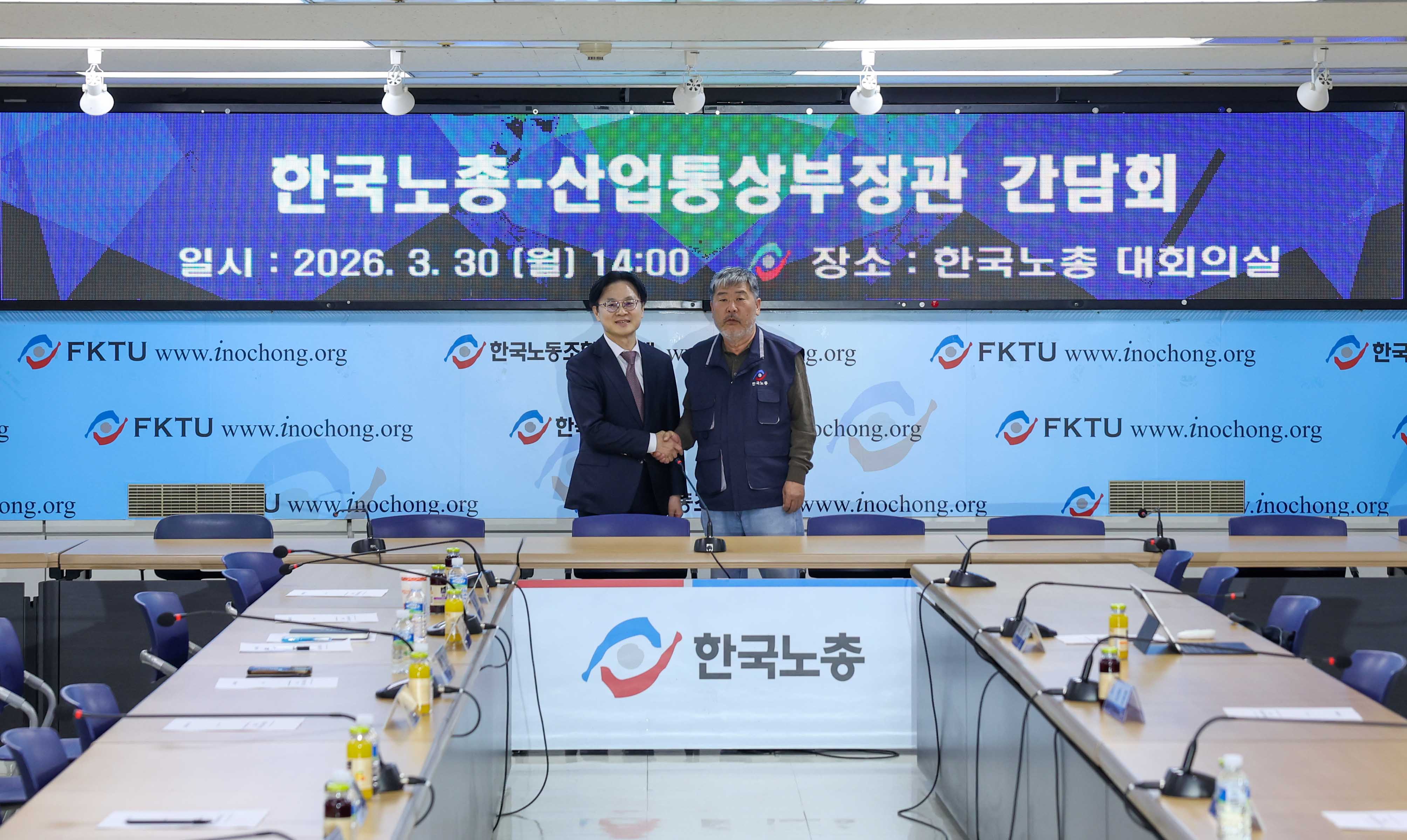
Minister JK (Jung-Kwan) Kim of the Ministry of Trade, Industry and Resources (MOTIR) met with Kim Dong-myeong, president of the Federation of Korean Trade Unions (FKTU), on March 30, 2026, at FKTU headquarters following a request from the union. The meeting was the first between Korea’s industry minister and the FKTU president since 2006. Minister Kim said, “As the war in the Middle East becomes prolonged and poses a major challenge to Korea’s economy and industry, labor and management should focus their efforts on overcoming the crisis and put unnecessary workplace disputes on hold.” He also asked labor to join energy-saving efforts to help maintain stable energy supplies. He also called for the union’s cooperation on Manufacturing AI Transformation (M.AX), noting that raising manufacturing productivity through M.AX and responding swiftly to industrial transition are essential to protecting jobs and workplaces. Minister Kim added that expanding corporate investment in the regions is key to creating stable jobs, and that the government will use stronger incentives to encourage more regional investment. He also called for continued dialogue with labor on expanding both flexibility and stability in the labor market to support quality job creation. At the meeting, the FKTU called for stronger support and job retention measures for industries undergoing transition, including petrochemicals and steel, and raised concerns about possible job losses linked to the adoption of AI. MOTIR has established communication channels with labor groups, including the FKTU and the Korean Confederation of Trade Unions (KCTU), to rebuild trust and strengthen labor-management cooperation. The ministry will continue consultations with labor on regional investment and job creation. date2026-03-31
-
Industry
Korea to Advance AI and Other Future Key Industries through K-Standards
As major economies such as the United States, China, and the EU are using national standardization strategies to drive AI and digital transformation, standards are increasingly being used as a key tool in the race for technological leadership. On March 31, 2026, the Korean government finalized the sixth basic plan for 2026–2030 National Standards, which was prepared by 18 ministries and agencies and approved by the National Standards Council chaired by Minister JK (Jung-Kwan) Kim of the Ministry of Trade, Industry and Resources (MOTIR). Under the plan, the government will develop more standards in future industries (K-standards) in line with market demand and strengthen the global competitiveness of Korean industry. With the goal of driving Korea’s innovation-led growth through K-standards, the plan sets out 129 action tasks under the following four strategies, following broad consultations with stakeholders from industry, academia, and research institutions. First, the government will focus on developing international and de facto standards in 18 future core industries, including M.AX Alliance sectors such as future vehicles and robotics, to help Korea secure a leading position in global markets. It will also link R&D more closely with standardization efforts so that research outcomes can be translated into international standards more quickly. In addition, in line with the Korea AI Action Plan announced by the National AI Strategy Committee in February 2026, the government will establish a national AI standardization governance framework and draw up a national AI standardization roadmap within 2026. Second, the government will expand standards that improve safety and convenience in daily life. It will develop standards that help prevent product accidents involving built-in batteries and new types of children’s products, and will strengthen occupational safety and health standards for industrial sites. It will also develop standards to ease day-to-day inconvenience for vulnerable groups, guide the design of performance venues, and set performance requirements for materials used in timber buildings. In addition, it will improve the management system for quantity-labeled products to help prevent shrinkflation. Third, to help exporters respond more systematically to overseas technical regulations, the government will enact legislation to support responses to technical barriers to trade (TBT) and remove unnecessary domestic technical regulations. It will also reform the KS certification system by introducing a review track that does not require factory audits, helping advanced products reach the market faster. To make Korea’s testing and certification industry more reliable and efficient, the government will strengthen the testing capabilities of Korea Laboratory Accreditation Scheme (KOLAS)-accredited bodies and give them more autonomy. Fourth, the government will strengthen strategic standards diplomacy by expanding the number of Korean experts serving in leadership positions at the International Organization for Standardization (ISO), the International Electrotechnical Commission (IEC), and the International Telecommunication Union (ITU) and by holding bilateral standards cooperation forums with countries that have strong standards systems, such as the United States and Germany. It will also continue to train master’s- and doctoral-level standards professionals, including through graduate programs in advanced fields. “Standards will play a critical role as Korea shifts to a more advanced, innovation-driven industrial structure through AI and digital transformation,” said Kim Dae-ja, President of the Korean Agency for Technology and Standards (KATS). “Together with relevant ministries, we will carry out the sixth basic plan for National Standards, accelerate AI and digital transformation, and help create a safer and more convenient everyday enviro date2026-03-31
-
FTA/Economic Cooperation
Deputy Minister Park Meets with Deputy Minister Kasimov of Uzbekistan
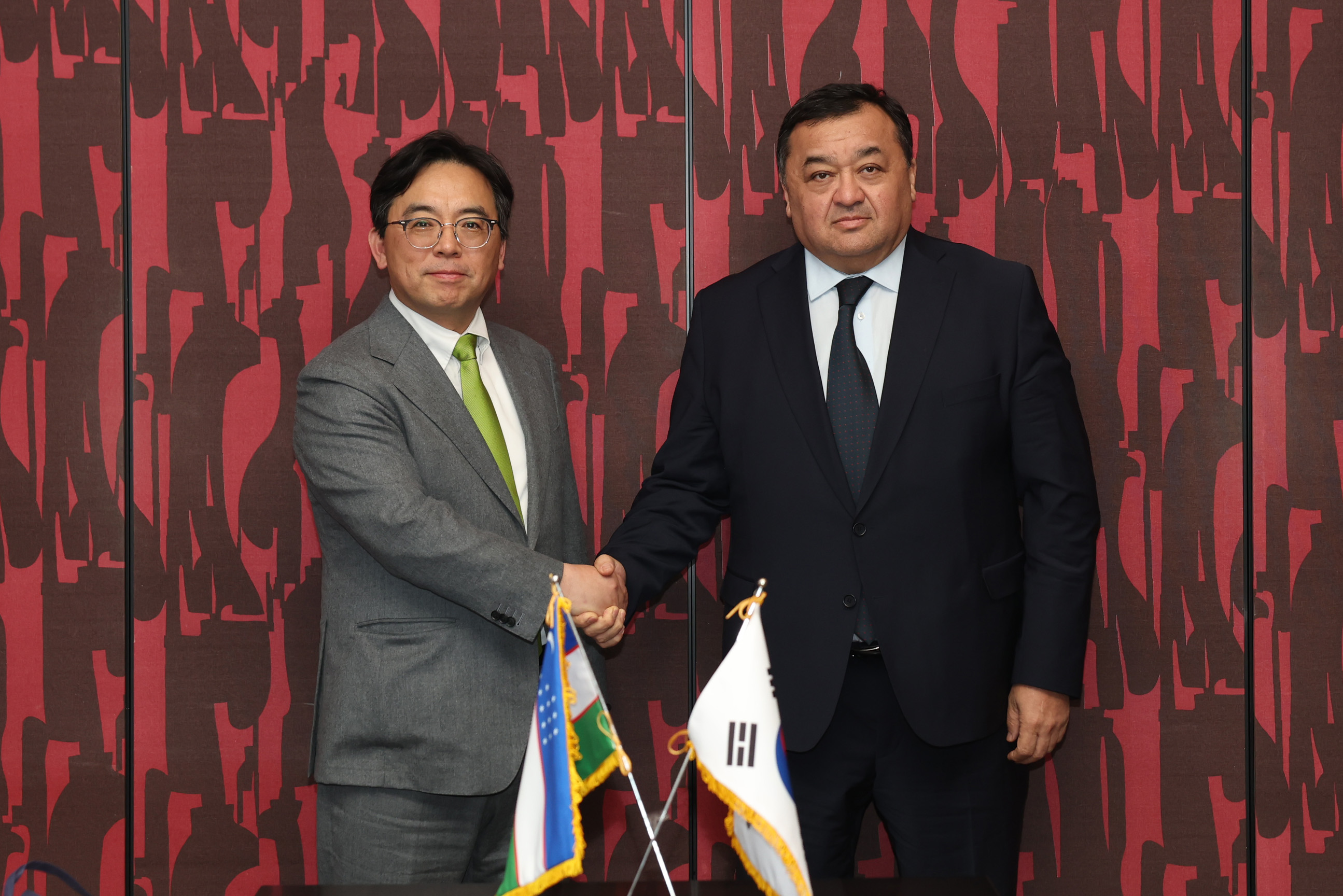
Deputy Minister for Trade Park Jung-sung of the Ministry of Trade, Industry and Resources (MOTIR, Minister JK Kim) met with Ilzat Kasimov, Deputy Minister of Investment, Industry and Trade of Uzbekistan, in Seoul on March 31, 2026, to discuss bilateral cooperation, as Korea–Central Asia cooperation gains momentum ahead of the Korea–Central Asia Summit. The two sides shared the view that cooperation in industry, trade and investment should be expanded. They also agreed to continue developing the cooperation agenda through existing channels, including the Korea–Uzbekistan trade and economic cooperation committee, and discussed the need to expand cooperation on critical minerals in response to shifts in global supply chains. “Uzbekistan is a key partner for Korea in Central Asia,” Deputy Minister Park said. “Building on the momentum in Korea–Central Asia cooperation, we will broaden cooperation in industry, supply chains and investment.” Deputy Minister Park also asked for the Uzbek government’s cooperation in helping Korean companies operate smoothly and address business difficulties. date2026-03-31
-
Industry
MOTIR–FKTU Roundtable
Minister JK (Jung-Kwan) Kim of the Ministry of Trade, Industry and Resources (MOTIR) attended the MOTIR–FKTU meeting at the Federation of Korean Trade Unions (FKTU) headquarters in Seoul on March 30, 2026. The meeting was attended by FKTU President Kim Dong-myeong and other union officials. It marked the first meeting between Korea’s industry minister and the head of the FKTU since 2006. Minister Kim said, “The war in the Middle East continues to pose a major challenge to Korea’s economy and industry. Labor and management should focus their efforts on overcoming the crisis and set aside unnecessary labor disputes.” He also called for the union’s cooperation on M.AX (Manufacturing AX) and for continued dialogue on regional investment and job creation. date2026-03-30
-
FTA/Economic Cooperation
Korea Gains Prominence in WTO Reform Talks and Pushes IFDA’s Incorporation into the WTO Framework
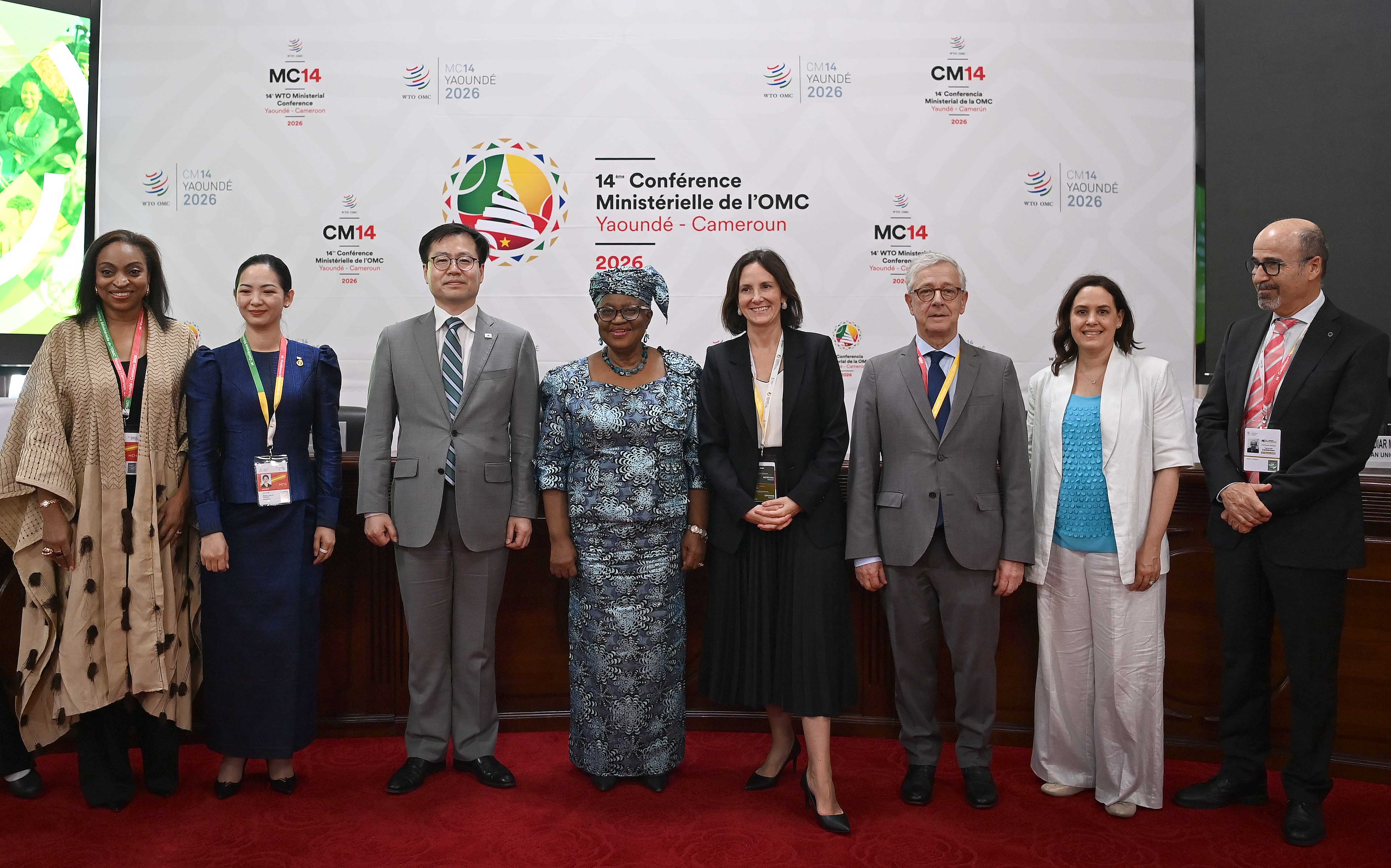
The Korean delegation, led by Trade Minister Yeo Han-koo of the Ministry of Trade, Industry and Resources (MOTIR, Minister JK Kim), is helping steer WTO reform talks, build support for incorporating the Investment Facilitation for Development Agreement (IFDA) into the WTO framework, and broaden strategic engagement with key partners at the 14th WTO Ministerial Conference (MC14) in Yaoundé, Cameroon. As the conference is seen as a pivotal moment to restoring the multilateral trading system and setting the direction of future global trade rules, Korea is playing an increasingly prominent role. Trade Minister Yeo Chairs Key WTO Reform Sessions As Minister Facilitator for WTO reform, Trade Minister Yeo Han-koo chaired four sessions on March 26 and 27, 2026, covering fundamental WTO issues, decision-making and past mandates, development and special and differential treatment, and a level playing field, structuring the key issues under each agenda item and leading constructive exchanges among member states. Türkiye Withdraws Opposition, Boosting Prospects for IFDA’s WTO Incorporation Korea is working to build support for incorporating the Investment Facilitation for Development Agreement (IFDA) into the WTO framework at MC14. As co-chair of the IFDA negotiations with Chile, Korea hosted a ministerial side event on March 25, 2026, bringing together major economies and international organizations to discuss the agreement’s value, its potential contribution to development, and support for implementation. In his opening remarks, Trade Minister Yeo highlighted Korea’s experience in improving its investment environment and stressed the importance of a predictable and transparent investment climate. He said the IFDA could provide a solid institutional foundation for attracting investment amid global uncertainty and serve as a practical model for inclusive cooperation for development. Ahead of MC14, Korea held bilateral consultations with India and Türkiye and exchanged letters with both countries in an effort to persuade them to drop their opposition. On March 26, 2026, Türkiye withdrew its opposition at the opening session of MC14, raising expectations for the IFDA’s incorporation into the WTO framework. Expanding Global Networks Through Bilateral Meetings In his role as facilitator of the WTO reform talks, Trade Minister Yeo Han-koo held a series of bilateral meetings with heads of delegation from key economies to build broader support for the multilateral trading system and address issues affecting Korean businesses. With New Zealand, Singapore, the Netherlands, France, and the United Kingdom, he coordinated positions on the WTO reform work plan and digital trade rules. With Paraguay, Uruguay, and Argentina, he discussed supply chain stability and measures to ease non-tariff barriers. “At a time of growing uncertainty in the global trading environment, the multilateral trading system faces a critical test of whether it can deliver tangible results,” Trade Minister Yeo said. He added, “As facilitator of WTO reform discussions and co-chair of the IFDA negotiations, Korea will work through the close of MC14 to help deliver concrete outcomes.” date2026-03-27
-
Trade/Investment
MOTIR Reviews Impact of Prolonged Middle East Conflict on Key Export Items and Delivery of Support Measures
The Korean government has stepped in directly to address difficulties facing key export industries, as it moves to minimize export disruptions from the prolonged conflict in the Middle East. Following the launch of a pan-government export support system on March 11, 2026, it is now taking a closer look at sector-specific impacts and stepping up tailored support, including logistics and liquidity assistance. The Ministry of Trade, Industry and Resources (MOTIR, Minister JK Kim) held a meeting with major exporters at the Korea Trade Insurance Corporation (K-SURE) on March 26, 2026, to review conditions across key sectors and the export outlook in the wake of the war in the Middle East. The meeting was chaired by Na Sung-hwa, Director General for International Trade Policy, and was attended by representatives from eight key industries: semiconductors, automobiles, machinery, petroleum products, petrochemicals, steel, biohealth, and displays. Companies voiced concern over rising freight rates and war-risk surcharges tied to uncertainty in the Strait of Hormuz, as well as possible delays in financing and payments and instability in raw material supplies. To address these concerns, the government will accelerate existing logistics and liquidity support and improve implementation on the ground. First, the government will continue rolling out emergency logistics vouchers. MOTIR is accepting applications through the end of March 2026 for KRW 8 billion in emergency vouchers to help cover international shipping costs, return shipping, war-risk surcharges, and rerouting charges. For companies with a high share of exports to the Middle East, the ministry is also operating a fast-track program that issues vouchers within three days of application. As of March 24, 44 companies had received support. The Ministry of SMEs and Startups (MSS) has also been running a KRW 10.5 billion emergency logistics voucher program since March 20, 2026. The government will also move quickly to provide KRW 24.2 trillion in emergency liquidity support through policy finance institutions. K-SURE has expanded working-capital guarantees for exporters to the Middle East and increased import insurance support for sectors facing urgent raw-material needs, including petrochemicals, from KRW 2.8 trillion in 2025 to KRW 3.4 trillion in 2026. The Financial Services Commission (FSC) is operating financial support programs worth KRW 20.3 trillion, while MSS is providing additional support through its emergency management stabilization funds. The government will further strengthen one-stop support for exporters affected by the Middle East crisis. The Korea Trade-Investment Promotion Agency (KOTRA), the Korea International Trade Association (KITA), and MSS’s regional export support centers will continue sharing local information and coordinating responses, while other ministries step up cooperation on logistics and liquidity issues. In addition, MOTIR will use the supply chain support center launched on March 23, 2026, in response to the situation in the Middle East, to closely monitor supply conditions for items highly dependent on the region and products exposed to knock-on effects, while providing focused support to resolve bottlenecks. The government also plans to expand support for exporters facing difficulties from the prolonged conflict through the supplementary budget now being prepared. “Swift action matters, but so does making sure support is delivered smoothly on the ground,” said Director General Na. “We will closely review each stage of implementation and make adjustments where needed so that measures such as the emergency export vouchers and trade insurance package deliver tangible support for exporters.” date2026-03-26
-
FTA/Economic Cooperation
Korea Hosts Ministerial Side Event on Investment Facilitation for Development Agreement (IFDA)
Trade Minister Yeo Han-koo of the Ministry of Trade, Industry and Resources (MOTIR, Minister JK Kim) hosted an IFDA side event on the sidelines of the 14th WTO Ministerial Conference (MC-14) in Yaoundé, Cameroon, on March 25, 2026, and delivered opening remarks. The event brought together trade ministers and delegations from WTO members, along with representatives from international organizations engaged in investment facilitation. Discussions focused on the IFDA’s potential to improve the global investment climate and support development. date2026-03-26
-
FTA/Economic Cooperation
Korea and Canada Hold Second Director-General-Level 2+2 Economic Security Dialogue
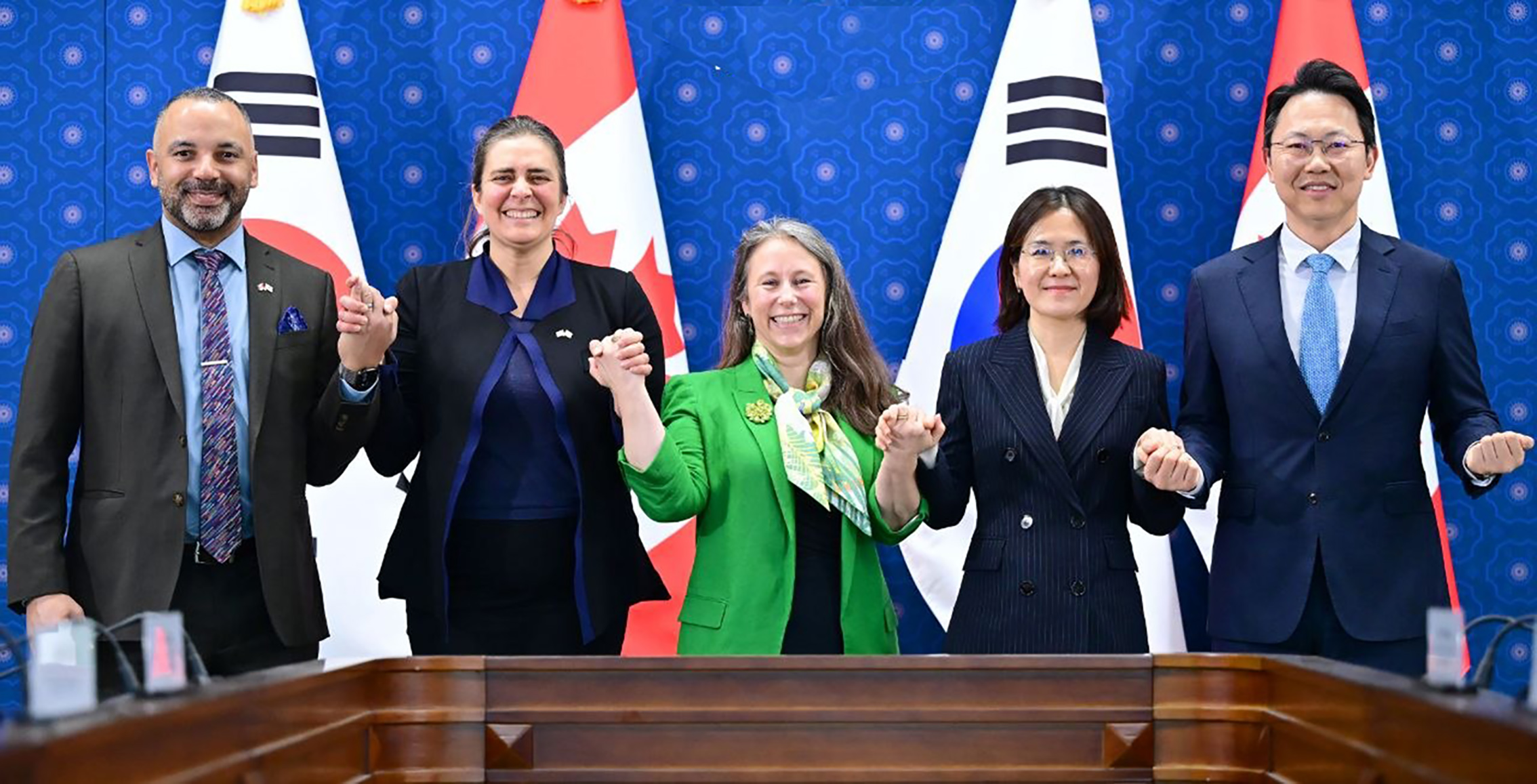
Kim Young-man, Acting Director General for Trade Policy at the Ministry of Trade, Industry and Resources (MOTIR), attended the second Director-General-level Korea–Canada 2+2 Economic Security Dialogue held at the Ministry of Foreign Affairs in Seoul on March 25, 2026. The meeting brought together Kim Sun-young, Director General for Bilateral Economic Affairs at the Ministry of Foreign Affairs (MOFA); Jamieson McKay, Director General of the Foreign Investment Review and Economic Security (FIRES) Branch at Innovation, Science and Economic Development Canada; and Joya Donnelly, Director-General for Northeast Asia at Global Affairs Canada. The two sides discussed ways to strengthen coordination in a rapidly changing global economic security environment shaped by supply chain realignment and intensifying technology competition. date2026-03-26
-
Trade/Investment
Major Retailer Sales Up 7.9% in February 2026
The Ministry of Trade, Industry and Resources (MOTIR, Minister JK Kim) announced that total sales at 26 major retailers (15 brick-and-mortar retailers and 11 online retailers) in February 2026 rose 7.9 percent year-on-year, with offline sales up 14.1 percent and online sales up 3.9 percent. Offline sales at hypermarkets (up 15.1 percent), department stores (up 25.6 percent), and convenience stores (up 4.0 percent) posted strong growth during the Lunar New Year holiday season, while super supermarkets (SSMs) (down 0.4 percent) fell slightly. Hypermarket sales returned to growth for the first time in four months since the Chuseok holiday boost in October 2025. Department stores and convenience stores extended their growth streaks to eight consecutive months since July 2025. SSM sales declined for a third consecutive month since December 2025. At hypermarkets, food sales rose 18.8 percent, driven by Lunar New Year demand for holiday gift sets and key seasonal food items. Department store sales increased across all categories, including food (up 65.0 percent), women’s casual wear (up 25.1 percent), and premium international brands (up 22.6 percent), as consumer sentiment improved. Convenience store sales continued to rise, led by processed foods (up 8.1 percent), including beverages, snacks, and desserts. SSM sales, by contrast, fell for the third consecutive month due to weaker non-food sales (down 2.0 percent), including everyday household goods. Online sales rose, driven by food (up 17.4 percent) and cosmetics (up 7.4 percent), while home appliances and electronics (down 4.6 percent) and fashion/apparel (down 3.7 percent) declined. Sales shares by channel were 58.5 percent for online retailers, 15.9 percent for department stores, 13.0 percent for convenience stores, 10.5 percent for hypermarkets, and 2.0 percent for SSMs. date2026-03-25
-
FTA/Economic Cooperation
Korea and Canada Address Risks Together, Create Opportunities Together
The Ministry of Trade, Industry and Resources (MOTIR, Minister JK Kim) and the Ministry of Foreign Affairs (MOFA, Minister Cho Hyun) held the second Director-General-level Korea–Canada 2+2 Economic Security Dialogue on March 25, 2026, with visiting officials from Innovation, Science and Economic Development Canada and Global Affairs Canada. This was the second director-general-level meeting between the two countries’ industry and foreign affairs authorities since Korea and Canada elevated ties to a Comprehensive Strategic Partnership in September 2022. The dialogue focused on ways to strengthen coordination in a rapidly changing economic security environment, marked by supply chain realignment and intensifying technology competition. The two sides reviewed key global risk factors, including shifts in the geoeconomic landscape and the spread of protectionist policies, and agreed on the need for closer coordination to address them. They also discussed joint responses to supply chain disruptions, including the use of overseas missions in an early warning system (EWS). Korea also outlined industrial cooperation related to the Canadian Patrol Submarine Project (CPSP) as a means of broadening strategic and economic ties, and conveyed its interest in working with Canada on the project. The two sides agreed to prepare thoroughly for the next Korea–Canada 2+2 Ministerial Economic Security Dialogue and to continue working closely to identify practical projects and deliver concrete outcomes. date2026-03-25