-
Industry
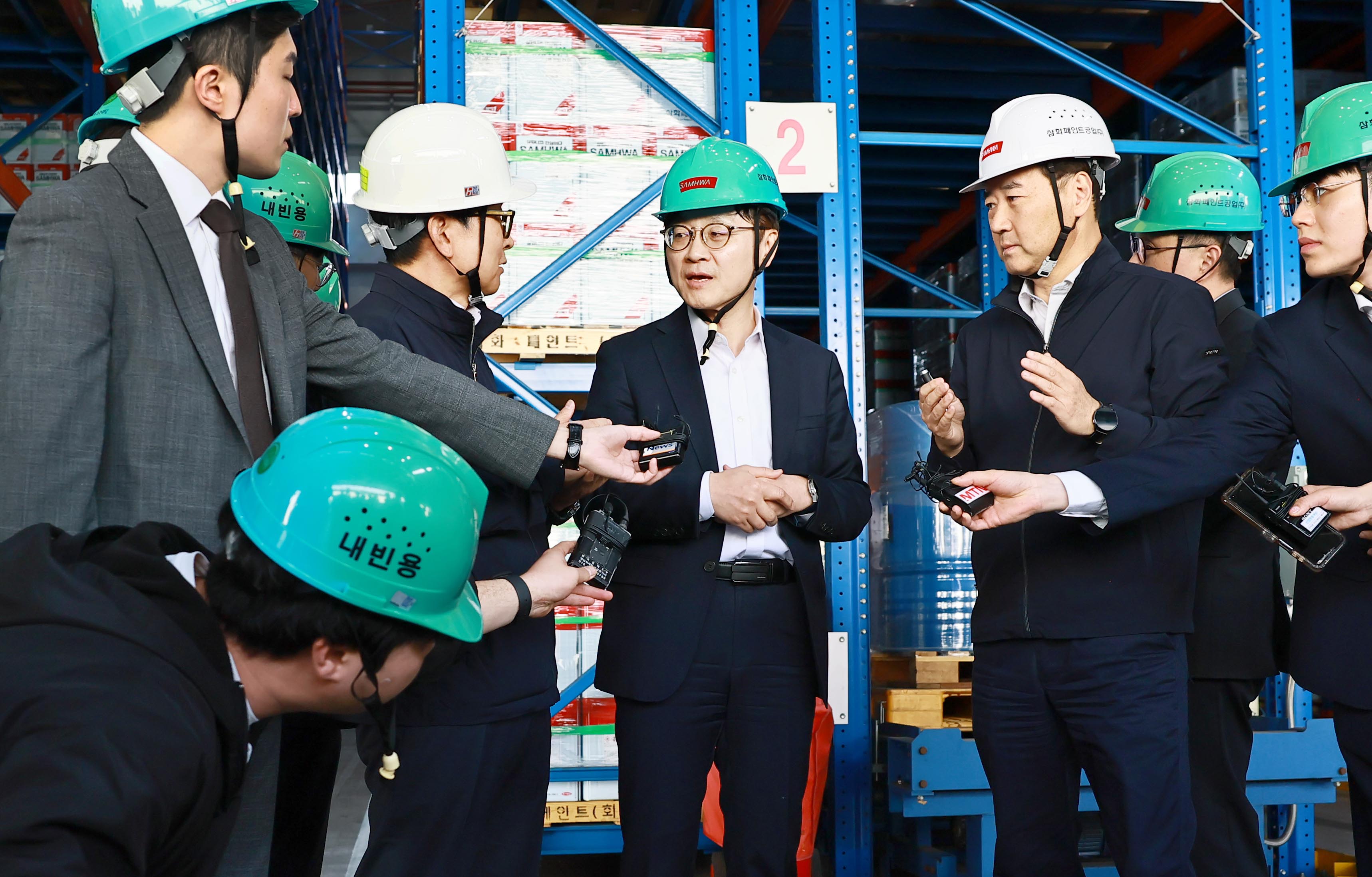
Minister JK Kim Visits SP Samhwa
Minister JK (Jung-Kwan) Kim of the Ministry of Trade, Industry and Resources (MOTIR) visited SP Samhwa, a manufacturer of paints for shipbuilding, automobiles and housing, in the Banwol-Sihwa Industrial Complex in Ansan, Gyeonggi Province, on April 13, 2026. During the visit, company officials briefed him on operations and business challenges, and he reviewed production and supply conditions for essential petrochemical items used in everyday products and key industries. “Since April 10, 2026, the government has streamlined import registration procedures under the Act on the Registration and Evaluation, etc. of Chemical Substances, allowing faster imports of raw materials. We ask the industry to cooperate in stabilizing paint supply and prices,” Minister Kim said. date2026-04-14
-
Industry
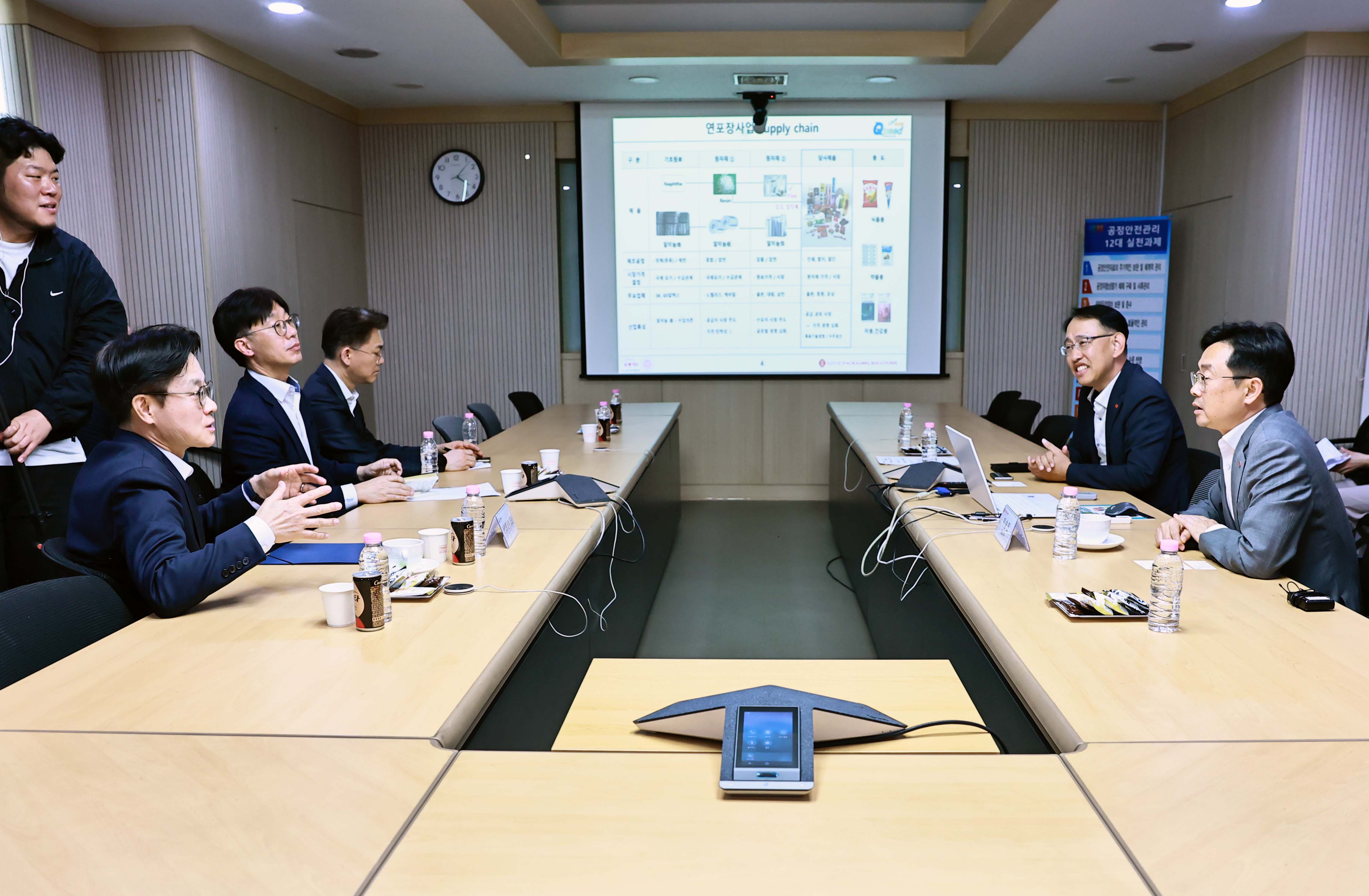
Minister JK Kim Visits Lotte Packaging Solutions
Minister JK (Jung-Kwan) Kim of the Ministry of Trade, Industry and Resources (MOTIR) visited Lotte Packaging Solutions, a manufacturer of packaging materials for instant noodles, in the Banwol-Sihwa Industrial Complex in Ansan, Gyeonggi Province, on April 13, 2026. During the visit, company officials briefed him on operations and business challenges, and he reviewed production and supply conditions for essential petrochemical items used in everyday products and key industries. “To prevent shortages of food packaging and other everyday-use products, we will closely monitor packaging-material supply through a pan-government task force involving the Ministry of Trade, Industry and Resources (MOTIR), the Ministry of SMEs and Startups (MSS), and the Ministry of Food and Drug Safety (MFDS),” Minister Kim said. date2026-04-14
-
Industry
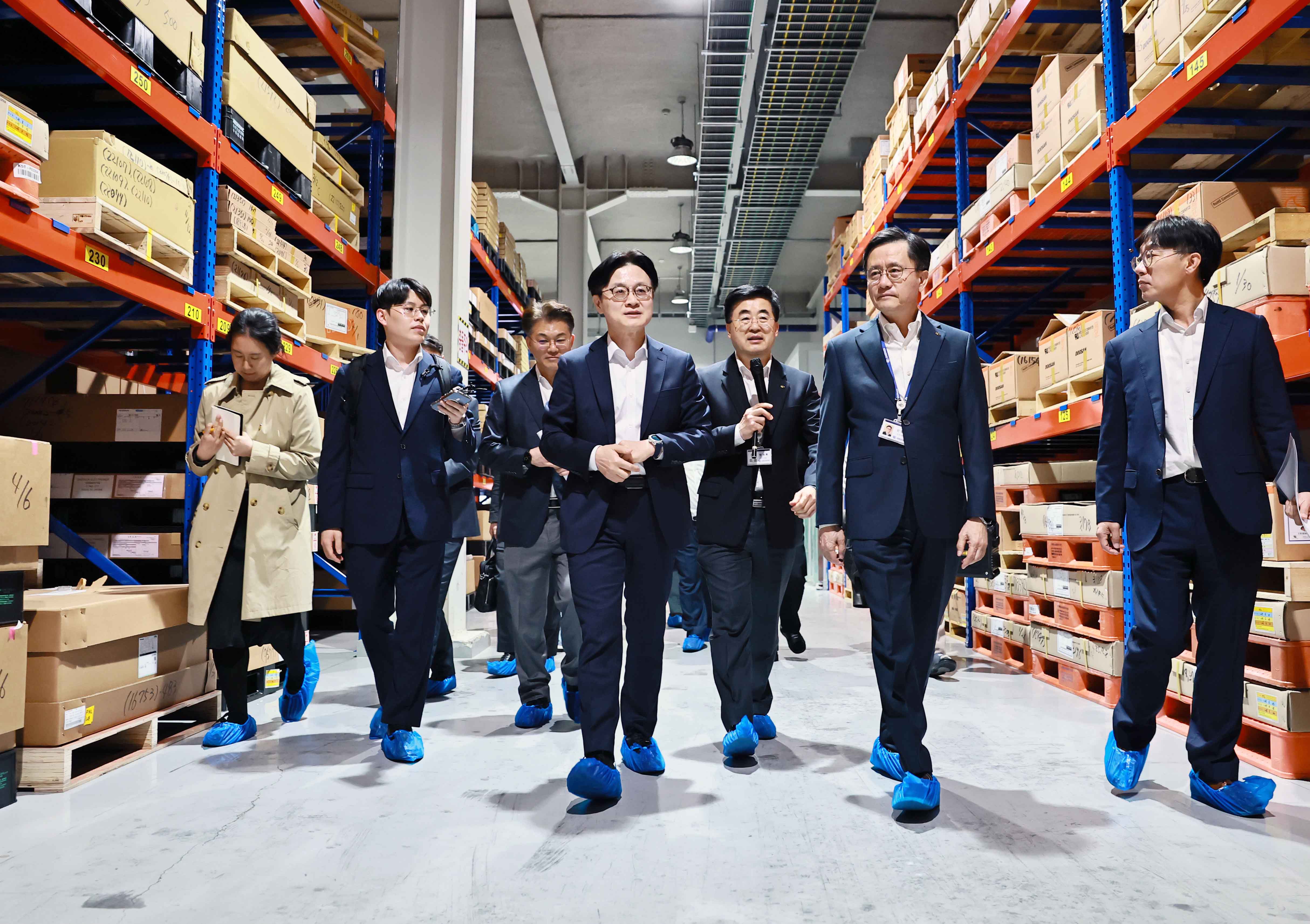
Minister JK Kim Visits Daeduck Electronics
Minister JK (Jung-Kwan) Kim of the Ministry of Trade, Industry and Resources (MOTIR) visited Daeduck Electronics, a producer of semiconductor packaging materials (PCB substrates), in the Banwol-Sihwa Industrial Complex in Ansan, Gyeonggi Province, on April 13, 2026. During the visit, company officials briefed him on operations and business challenges, and he reviewed production and supply conditions for essential petrochemical items used in everyday products and key industries. “We will maintain stable supplies of petrochemical products so that there is no disruption not only to daily necessities but also to production in national key industries such as semiconductors,” Minister Kim said. date2026-04-14
-
Industry
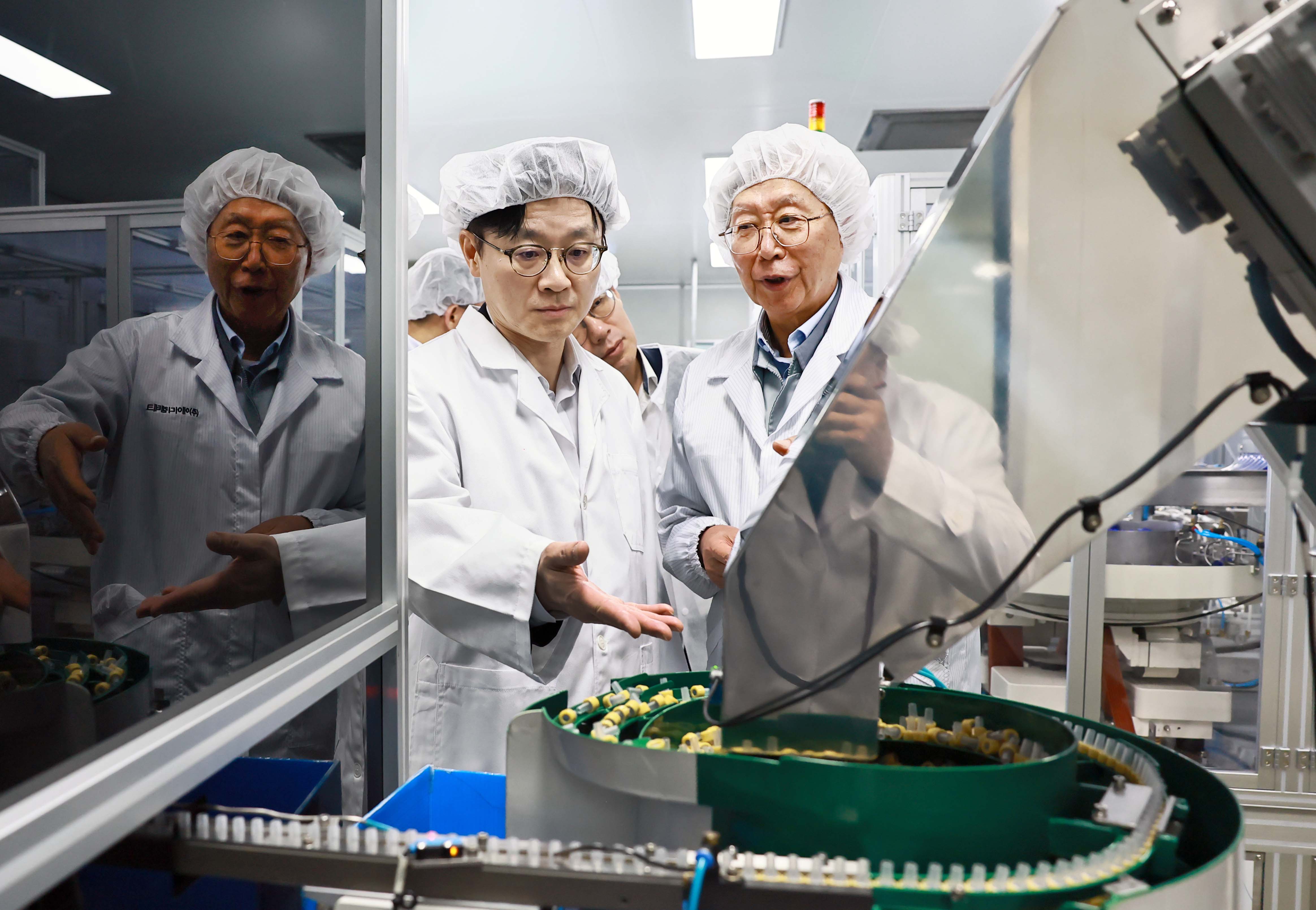
Minister JK Kim Visits AD CHEMTECH
Minister JK (Jung-Kwan) Kim of the Ministry of Trade, Industry and Resources (MOTIR) visited AD CHEMTECH, a manufacturer of packaging materials for syringes and IV solutions, at the Banwol-Sihwa Industrial Complex in Ansan, Gyeonggi Province, on April 13, 2026. During the visit, company officials briefed him on operations and business challenges, and he reviewed production and supply conditions for essential petrochemical items used in everyday products and key industries. “MOTIR, working with relevant ministries and industry, resolved supply concerns over packaging materials for IV solutions and syringes. We will continue to manage supplies thoroughly so that there is no disruption in health and medical products essential to public health,” Minister Kim said. date2026-04-14
-
Trade/Investment
March ICT Exports Top $40 Billion for First Time, Trade Surplus Hits Record High
The Ministry of Trade, Industry and Resources (MOTIR, Minister JK Kim) and the Ministry of Science and ICT (MSIT, Deputy Prime Minister and Minister Bae Kyung-hoon) announced on April 15, 2026, that Korea’s ICT exports in March reached USD 43.5 billion, up 112.0 percent year-on-year. Imports rose 32.2 percent from $12.2 billion to $16.2 billion, resulting in a trade surplus of $27.4 billion. In March 2026, ICT exports exceeded $40.0 billion for the first time, extending their growth streak to 14 consecutive months despite the conflict in the Middle East. The ICT trade surplus also reached a new record high, following the record set in February 2026. ICT products accounted for 50.5 percent of Korea’s total exports, which stood at $86.1 billion, reinforcing ICT’s role as a key driver of Korea’s economic growth. By product, exports increased for semiconductors (up 151.4 percent), mobile phones (up 57.0 percent), and computers and peripherals (up 174.1 percent), but decreased for displays (down 9.3 percent) and communication equipment (down 5.8 percent). Semiconductor exports surpassed $30.0 billion for the first time on strong memory demand amid global AI server investment and higher quarter-end shipments. Mobile phone exports rose on strong sales of newly launched premium models and stronger demand for high-value parts. Computers and peripherals also exceeded $3.0 billion for the first time, as solid demand and higher prices for server SSDs kept SSD exports on a triple-digit growth trajectory. Display exports, by contrast, declined as OLED exports fell on softer downstream demand. Communication equipment exports also fell due to weaker U.S. demand for automotive electronics equipment following increased local production. By destination, exports increased in all major markets: the United States (up 189.0 percent), China, including Hong Kong (up 141.0 percent), the European Union (up 89.9 percent), Taiwan (up 82.0 percent), Vietnam (up 48.0 percent), India (up 45.6 percent), and Japan (up 33.9 percent). ICT imports totaled $16.2 billion in March 2026, up 32.2 percent from $12.2 billion a year earlier, as imports increased across most major ICT categories: semiconductors (up 35.3 percent), displays (up 7.7 percent), mobile phones including parts (up 74.8 percent), and computers and peripherals (up 47.4 percent). date2026-04-14
-
Industry
MOTIR Approves 8 Business Restructuring Plans in Semiconductors and Batteries
The Ministry of Trade, Industry and Resources (MOTIR, Minister JK Kim) announced that it approved eight business restructuring plans, including those submitted by Seoul Semiconductor and UTI, at the 51st meeting of the Business Restructuring Review Committee. The approved companies plan to invest a combined KRW 249.6 billion and hire 402 people over the next five years as they implement the plans. Among the approved companies, Seoul Semiconductor, a display components maker, will enter the AR glasses display module market based on its core micro-LED technologies. UTI will use its high-precision glassmaking technologies, including ultrathin glass, to move into glass substrates for semiconductor packaging. GSR Tech (Geo Seong Recycling Tech) will extract and recycle lithium from refractories discarded after use in battery cathode material production and supply raw materials for cathodes, moving beyond its current business of installing refractories in steel blast furnaces. Kunwoo Metal will use an AI-based autonomous manufacturing model to upgrade its production process and develop annular gears for electric vehicles, leveraging its manufacturing expertise in bearings and transmission components for internal combustion engine vehicles. Kim Ju-hoon, the Committee’s private-sector chair, commended the companies for their efforts to enter new markets and seek new sources of growth despite difficult conditions at home and abroad, and said the Committee will continue to support business restructuring. A MOTIR official said, “Business restructuring gives companies a fresh opportunity for growth and remains a key tool for upgrading Korea’s industrial structure. MOTIR will strengthen support measures, including institutional improvements, to help facilitate business restructuring.” date2026-04-14
-
Industry
MOTIR Minister Conducts a Series of On-Site Inspections of Petrochemical Production Sites
Minister JK (Jung-Kwan) Kim of the Ministry of Trade, Industry and Resources (MOTIR) visited four companies on April 13, 2026, to inspect the production and supply conditions of essential petrochemical products directly related to public health, daily necessities, and key industries. The companies use petrochemical materials to manufacture packaging for syringes and IV solutions, food packaging, paint, and semiconductor components. At AD CHEMTECH, Minister Kim explained how MOTIR, in cooperation with relevant ministries and petrochemical companies, resolved potential supply disruptions affecting packaging materials for IV solutions and syringes. He said the government would ensure that supplies of health and medical products essential to public health remain uninterrupted. At Lotte Packaging Solutions, Minister Kim said the government would closely monitor the supply of packaging materials through an interagency task force comprising MOTIR, the Ministry of SMEs and Startups (MSS), and the Ministry of Food and Drug Safety (MFDS) to prevent shortages affecting food packaging and other everyday consumer products. At SP Samhwa, Minister Kim noted that the government had streamlined import registration procedures under the Act on the Registration and Evaluation, etc. of Chemical Substances on April 10, 2026, thereby facilitating faster imports of raw materials. He also called on the industry to cooperate in stabilizing the supply and prices of paint. At Daeduck Electronics, Minister Kim said the government would ensure a stable supply of petrochemical products so that the production of daily necessities and operations of key national industries are not disrupted. Minister Kim stressed, “We are giving top priority to preventing even a single day of disruption in the supply of health and medical products, daily necessities, and inputs for key national industries. MOTIR and the relevant ministries remain in close coordination and are prepared to take immediate action whenever necessary.” MOTIR has established a task force of approximately 40 members to manage the supply and demand of key petrochemical items and is monitoring daily inventory levels and supply trends for each item. The ministry also plans to support rapid import of naphtha through an import cost-offset program included in the supplementary budget passed by the National Assembly at a plenary session on April 10, 2026, in response to war in Iran In addition, MOTIR will introduce a regulation prohibiting the hoarding of petrochemical products and feedstocks, and authorizing prompt and appropriate supply-and-demand adjustment measures in the event of disruptions. date2026-04-13
-
FTA/Economic Cooperation
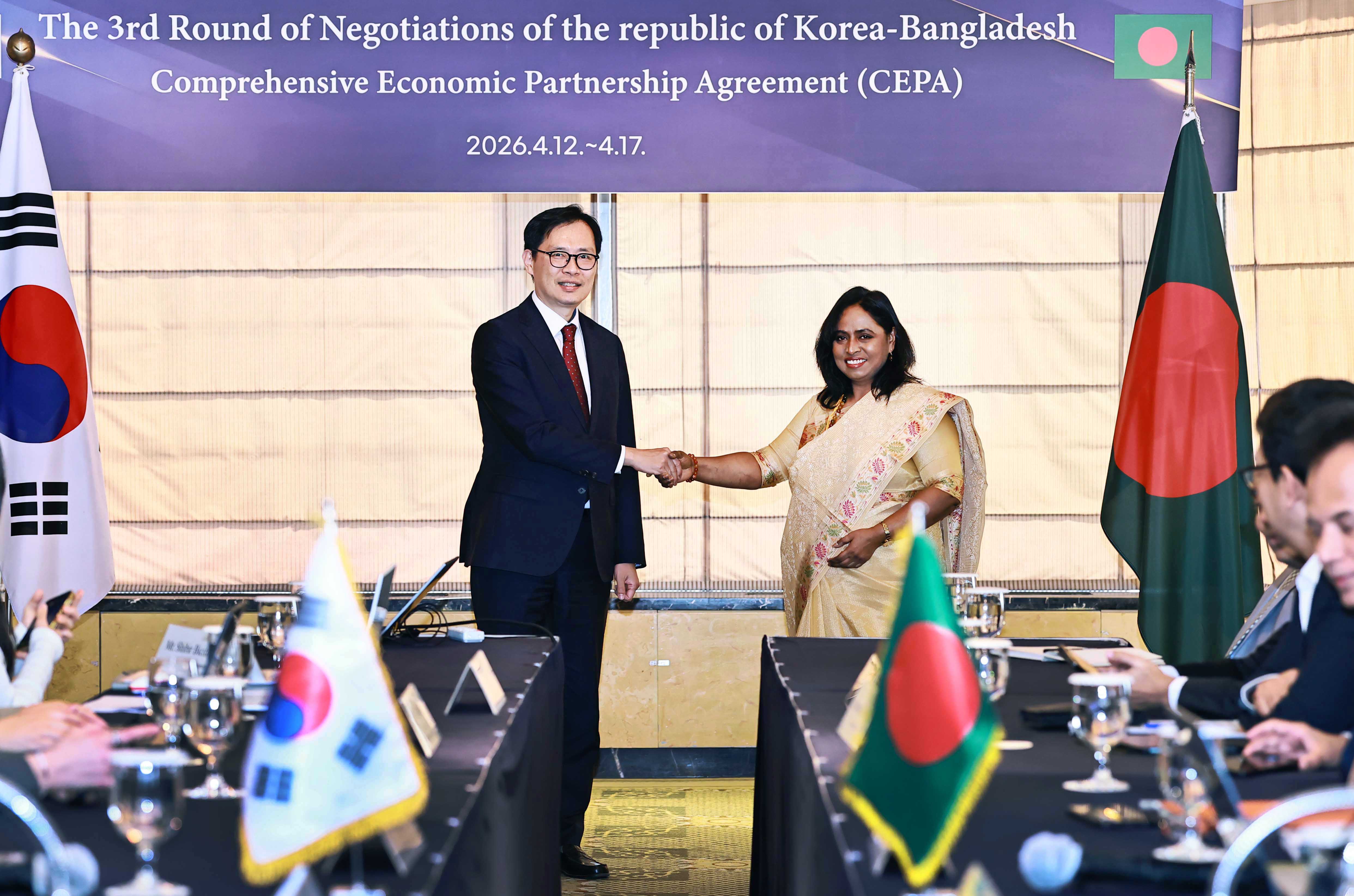
Third Round of Korea–Bangladesh CEPA Negotiations
Park Geun-oh, Director General for Trade Agreement Policy at the Ministry of Trade, Industry and Resources (MOTIR, Minister JK Kim) and Korea’s chief negotiator, attended the opening session of the third round of official negotiations on the Korea–Bangladesh Comprehensive Economic Partnership Agreement (CEPA) on April 12, 2026, in Seoul. The meeting was joined by Ayesha Akther, Additional Secretary and Head of the Foreign Trade Agreement Wing at Bangladesh’s Ministry of Commerce and chief negotiator for the Bangladeshi side, as well as government delegates from both countries. “A CEPA with Bangladesh, a fast-growing emerging market of 170 million people, would help Korean companies compete more effectively in South Asia,” Park said. “We will work to conclude the negotiations early.” date2026-04-13
-
FTA/Economic Cooperation
Korea and Bangladesh Hold Third Round of CEPA Negotiations
With trade uncertainty rising at home and abroad and the need to diversify export markets growing, Korea will hold the third round of formal negotiations in Seoul from April 12 to 17, 2026, on a Comprehensive Economic Partnership Agreement (CEPA) with Bangladesh, the world’s eighth-most populous country and a key potential market in South Asia. The Office of Trade Negotiations at the Ministry of Trade, Industry and Resources (MOTIR, Minister JK Kim) said around 60 delegates from both sides will take part in the negotiations. The Korean delegation will be led by Park Geun-oh, Director General for Trade Agreement Policy at MOTIR, and the Bangladeshi delegation by Ayesha Akther, Additional Secretary and Head of the Foreign Trade Agreement Wing at Bangladesh’s Ministry of Commerce. Since launching negotiations in November 2024, the two sides have held two formal rounds, outlining their positions in each working group and identifying key issues. In the third round, they will build on the groundwork and hold in-depth talks in 13 areas, including goods market access, services, and rules of origin, to narrow differences over the draft agreement text. On the sidelines of the WTO ministerial conference held in Cameroon in March 2026, Trade Minister Yeo Han-koo met with Khandaker Abdul Muktadir, Bangladesh’s Commerce Minister, and agreed to push for an early conclusion of the CEPA with Bangladesh, a market of 170 million people. Director General Park said, “A CEPA with Bangladesh, a fast-growing emerging market of 170 million people, would help Korean companies compete more effectively in South Asia. We will work to conclude the negotiations early.” date2026-04-13
-
Industry
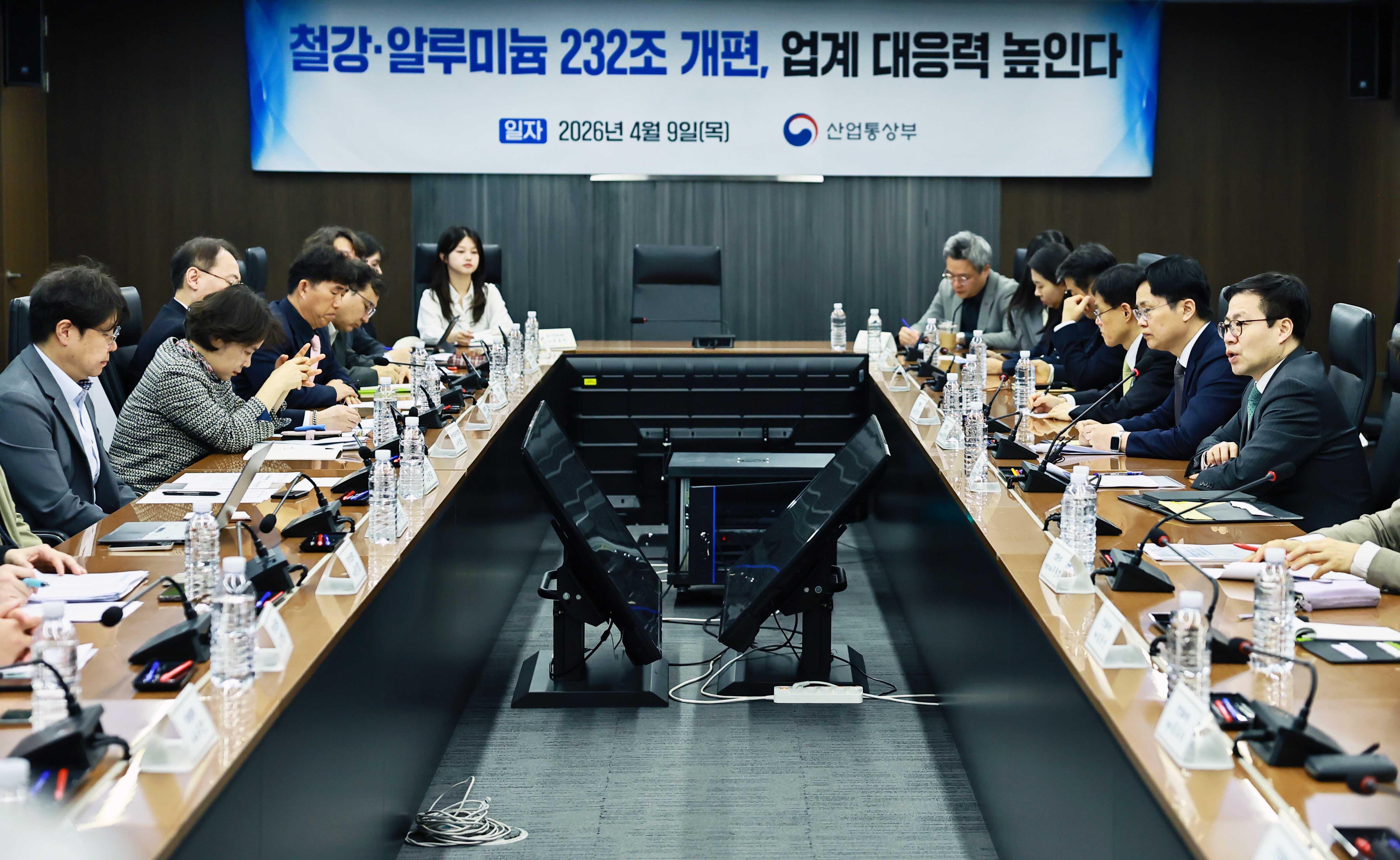
Joint Review Meeting on Revised U.S. Section 232 Tariffs on Steel and Aluminum
Trade Minister Yeo Han-koo of the Ministry of Trade, Industry and Resources (MOTIR, Minister JK Kim) chaired a public-private joint review meeting on revisions to U.S. tariffs under Section 232 of the Trade Expansion Act covering steel, aluminum, copper and derivative products at the Korea Chamber of Commerce and Industry (KCCI) in Seoul on April 9, 2026. The meeting was attended by representatives from industry associations and related organizations, including the Korea Iron and Steel Association (KOSA), the Korea Nonferrous Metal Association (KONMA), the Korea Association of Machinery Industry (KOAMI), the Korea International Trade Association (KITA) and the Korea Trade-Investment Promotion Agency (KOTRA). At the meeting, Trade Minister Yeo noted that the latest revisions reflect, at least in part, concerns raised by the government and industry. He stated, “While the overall administrative burden is expected to ease, some products may still be affected and further changes remain possible,” imploring participants to stay alert, continue their joint response, and minimize the burden on Korean companies. date2026-04-10