-
Industry
MOTIR Holds the Industrial Complex Policy Hackathon
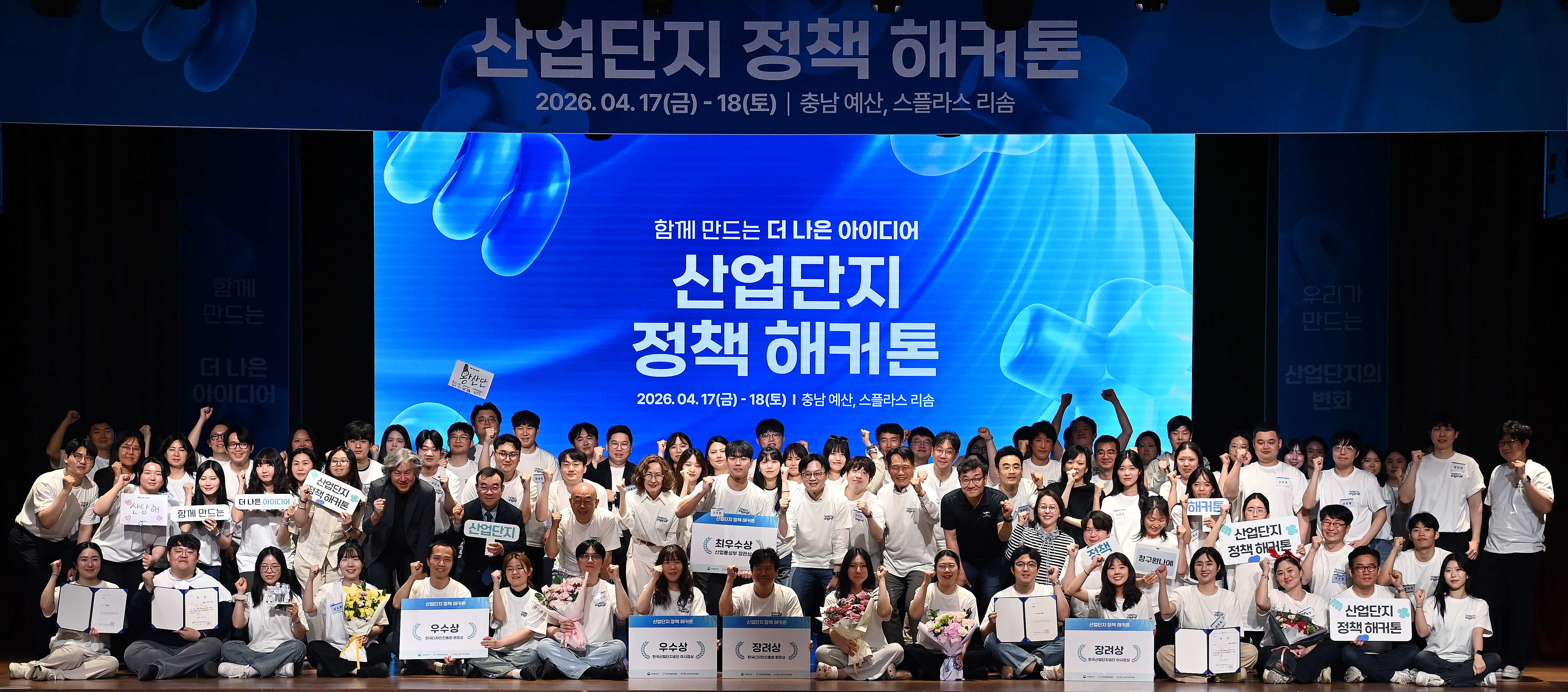
Minister JK (Jung-Kwan) Kim of the Ministry of Trade, Industry and Resources (MOTIR) attended the Industrial Complex Policy Hackathon in Yesan, Chungcheongnam-do, on April 18, 2026. Attendees included Lee Sang-hoon, chairman of the Korea Industrial Complex Corporation (KICOX), Kang Yoon-joo, president of the Korea Institute of Design Promotion (KIDP), and other participants and officials. After delivering opening remarks, Minister Kim presented the MOTIR Minister’s Award to “Bungeoppang,” the team that won the top prize. He said, “We will build M.AX ecosystems in key industrial complexes across the five mega-regions and three special self-governing provinces so that they fully serve as Korea’s growth engines, and the benefits of AI transformation reach industries across the regions.” date2026-04-20
-
FTA/Economic Cooperation
Korea and the EU Hold 13th FTA Trade Committee and First Strategic Dialogue
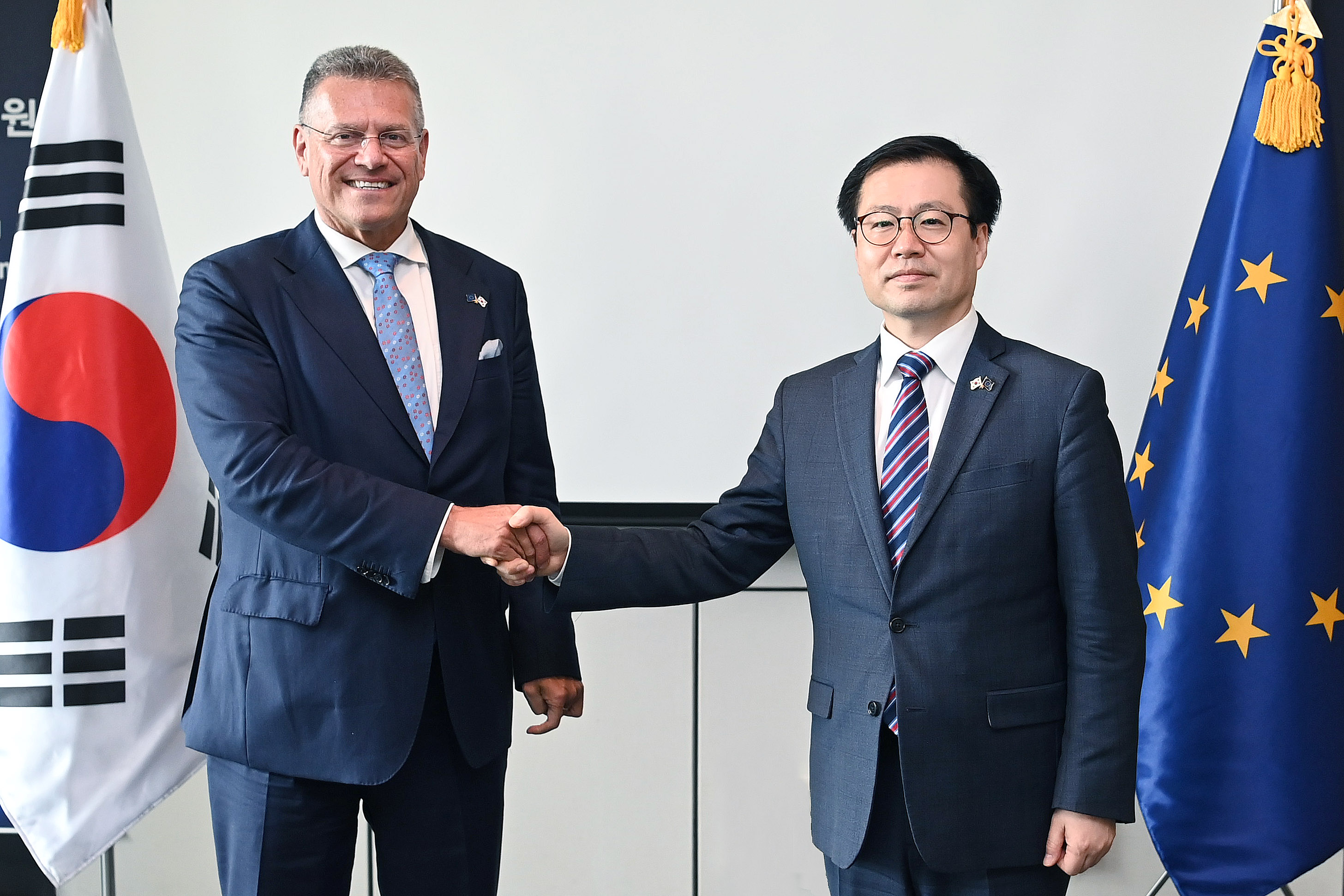
Trade Minister Yeo Han-koo of the Ministry of Trade, Industry and Resources (MOTIR, Minister JK Kim) attended the 13th Korea–EU FTA Trade Committee and the first Strategic Dialogue on Trade, Supply Chains and Technology at the Four Seasons Hotel Seoul on April 17, 2026, where he delivered opening remarks and discussed trade issues including steel and the Industrial Accelerator Act (IAA), as well as new trade agenda items such as critical minerals and semiconductors. The meetings were attended by Maroš Šefčovič, European Commissioner for Trade and Economic Security, and officials from Korea and the EU. Trade Minister Yeo said, “Today’s meetings mark an important turning point in broadening Korea–EU cooperation beyond traditional trade into a next-generation strategic partnership on economic security, supply chains, and advanced technologies. We will continue to use both high-level and working-level channels to improve predictability for Korean companies in the EU market and work closely with the EU toward a free and fair trade environment.” date2026-04-17
-
Industry
First Industrial Complex AX Subcommittee Meeting
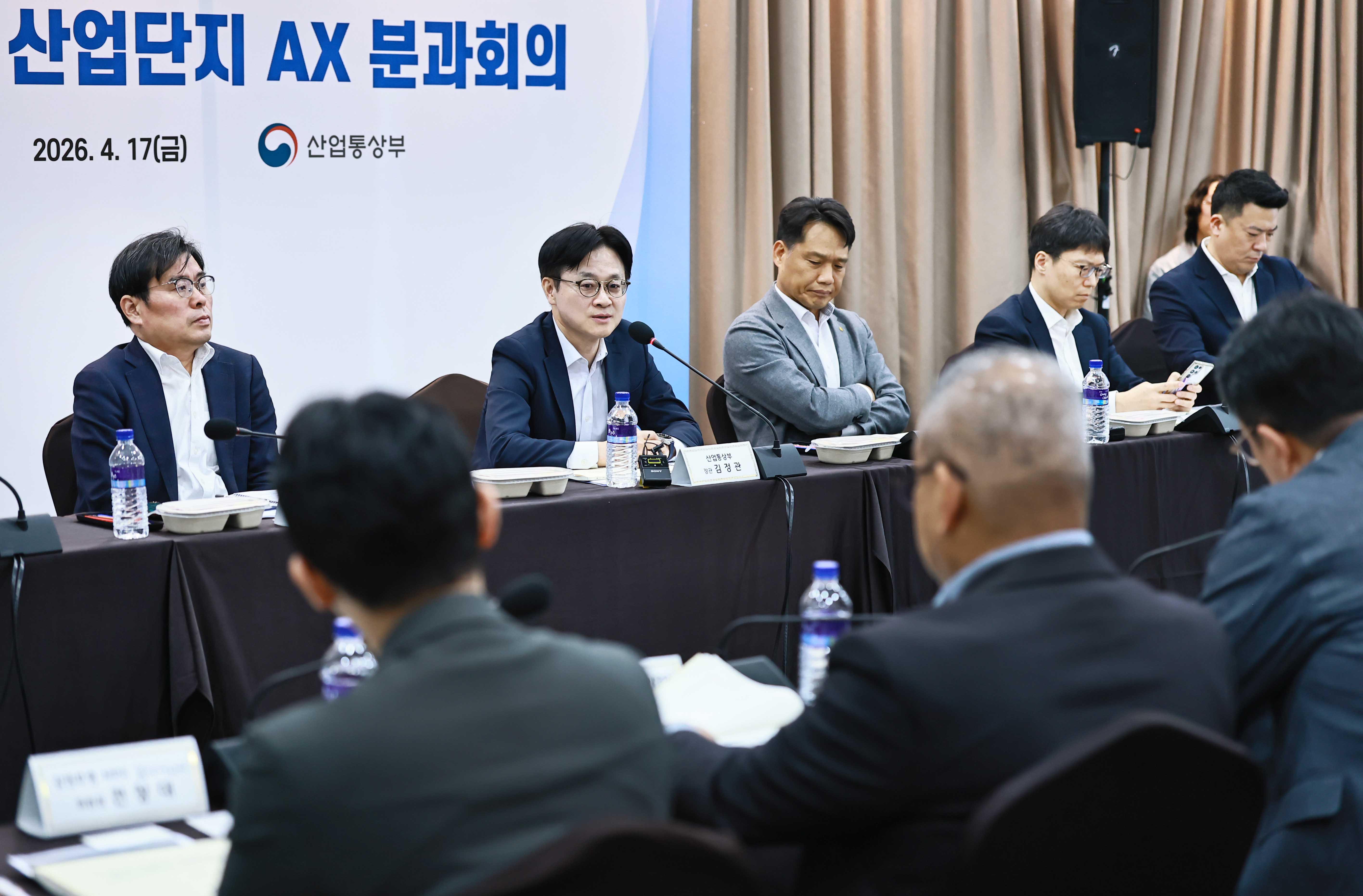
Minister JK (Jung-Kwan) Kim of the Ministry of Trade, Industry and Resources (MOTIR) chaired the first meeting of the Industrial Complex AX Subcommittee in Cheongju, North Chungcheong Province, on April 17, 2026. Attendees included Park Min-won, president of Changwon National University and chair of the Subcommittee; Lee Sang-hoon, chairman of the Korea Industrial Complex Corporation (KICOX); and other Subcommittee members. Minister Kim said, “We will build M.AX ecosystems in key industrial complexes across the five mega-regions and three special self-governing provinces so that they fully serve as Korea’s growth engines, and the benefits of AI transformation reach industries across the regions.” date2026-04-17
-
Industry
Roundtable with Battery and Display Companies
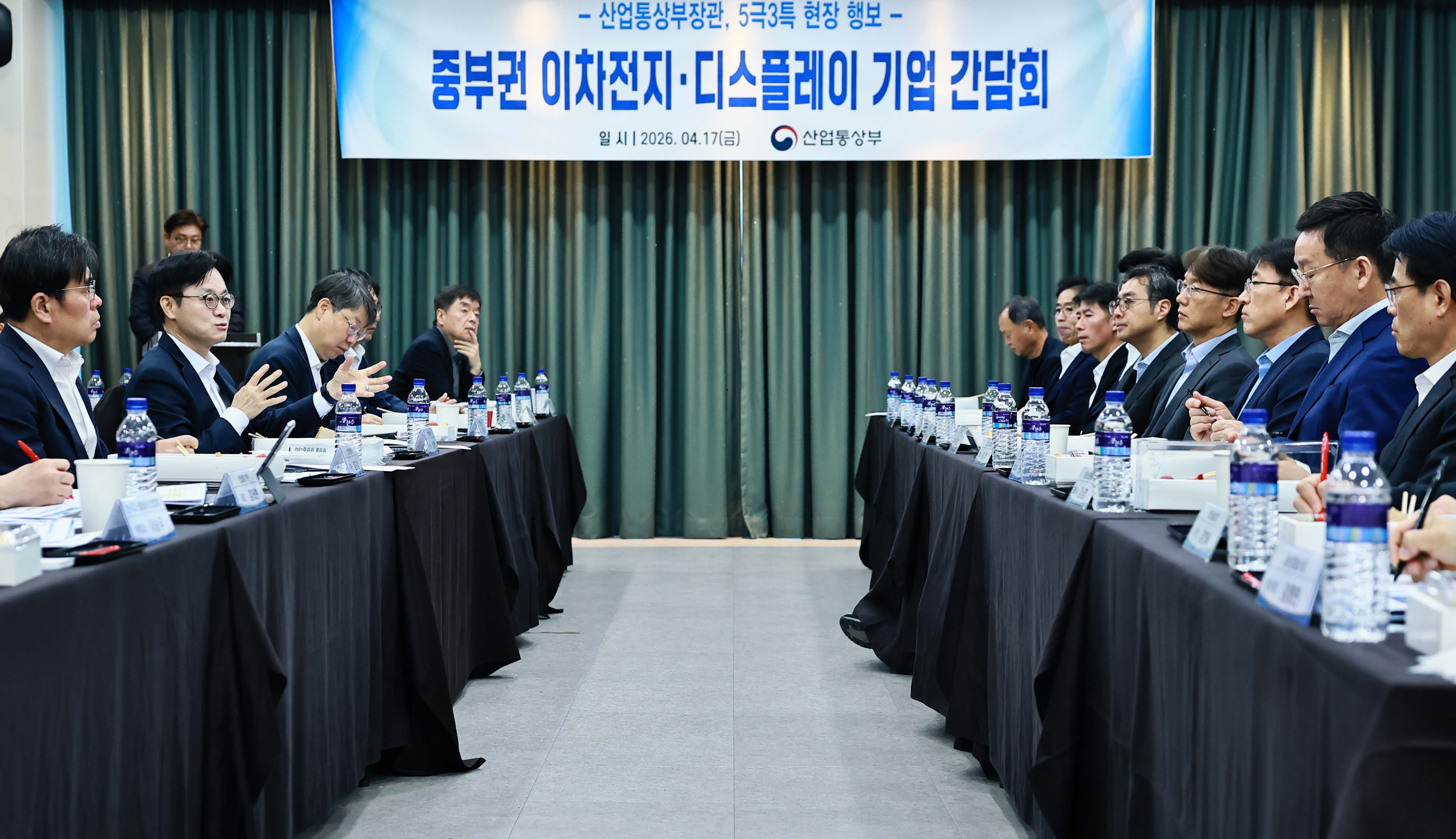
Minister JK (Jung-Kwan) Kim of the Ministry of Trade, Industry and Resources (MOTIR) chaired a roundtable with battery and display companies and related industry associations in Cheongju, North Chungcheong Province, on April 17, 2026. Representatives from SK On, Samsung SDI, LG Energy Solution, Samsung Display, WONIK IPS, Dongjin Semichem, the Korea Battery Industry Association (KBIA) and the Korea Display Industry Association (KDIA) attended the meeting. After delivering opening remarks, Minister Kim heard about the current state of the region’s battery and display ecosystem and discussed difficulties facing the industry. He said, “Batteries and displays are foundational industries for mobility, energy storage systems (ESS), robotics, and many other sectors. The government will strengthen the industrial ecosystem and expand M.AX to secure a clear edge in global competition.” date2026-04-17
-
Industry
Minister Kim Visits Central Region to Discuss Advanced Industries and Region-Led M.AX
Minister JK (Jung-Kwan) Kim of the Ministry of Trade, Industry and Resources (MOTIR) visited the central region of Korea on April 17, 2026, as part of the ministry’s on-site outreach under the “Five Mega-Regions and Three Special Self-Governing Provinces” initiative. The visit was held despite ongoing emergency economic response efforts linked to the war in the Middle East, underscoring MOTIR’s commitment to region-led growth through regular communication with local stakeholders. The visit focused on ways to strengthen the secondary battery and display industries clustered in the central region and to step up region-led Manufacturing AI Transformation (M.AX) through industrial complexes. It also marked the first Industrial Complex AX Subcommittee meeting since its launch on February 26 as the 11th subcommittee under the M.AX Alliance. Breakfast Roundtable with Battery and Display Companies Minister Kim first met with major battery and display companies and industry associations in the central region to review industry conditions and hear companies’ concerns. Participants discussed key issues facing the industry, including investment, workforce, and supply chains, against a backdrop of intensifying global competition and rising external uncertainty. They also discussed policy options to expand downstream demand—including battery leasing and R&D initiatives led by anchor buyers—and to strengthen win-win cooperation across the industrial ecosystem. Minister Kim said, “Batteries and displays are foundational industries for mobility, energy storage systems (ESS), robotics, and many other sectors. The government will strengthen the industrial ecosystem and expand M.AX to secure a clear edge in global competition.” First Industrial Complex AX Subcommittee Meeting Minister Kim then chaired the first meeting of the Industrial Complex AX Subcommittee, where participants discussed the subcommittee’s operating plan and ways to build M.AX clusters through the 10 MINI Alliances. The meeting also marked the start of a full-fledged, field-based foundation for wider adoption, bringing together local industry, academia, and research institutions. Minister Kim said, “We will build M.AX ecosystems in key industrial complexes across the five mega-regions and three special self-governing provinces so that they fully serve as Korea’s growth engines, and the benefits of AI transformation reach industries across the regions.” In addition, MOTIR will hold a two-day Industrial Complex Policy Hackathon in Yesan, Chungcheongnam-do, on April 17–18, 2026, with direct participation from young workers to develop ideas for more vibrant industrial complexes. The hackathon was proposed during a January 22 roundtable with young workers held during MOTIR’s regional visit to Jeollabuk-do. It will serve as a starting point for turning young workers’ ideas into policy to build more vibrant industrial complexes. About 20 officials from MOTIR’s Regional Economic Policy Bureau will join the full two-day program to help ensure those ideas move beyond suggestions and into actual policy. date2026-04-17
-
FTA/Economic Cooperation
Korea and EU Advance Strategic Economic Partnership on Supply Chains and Economic Security
Trade Minister Yeo Han-koo of the Ministry of Trade, Industry and Resources (MOTIR, Minister JK Kim) held the 13th Korea–EU FTA Trade Committee meeting and the first Strategic Dialogue on Trade, Supply Chains and Technology with Maroš Šefčovič, European Commissioner for Trade and Economic Security, in Seoul on April 17, 2026. The two sides noted that the Korea–EU FTA has served as a key platform for cooperation in goods, services, and investment over the past 15 years and agreed to broaden cooperation to supply chains, critical minerals, and advanced technologies amid growing economic security challenges. 1. Key Outcomes of the 13th Korea–EU FTA Trade Committee At the Trade Committee meeting, the two sides finalized the text of the Korea–EU Digital Trade Agreement (DTA), concluded in March 2026, and agreed to work closely toward its signature and entry into force. They also agreed to revise the motor vehicles and parts appendix (2-C-3), moving immediately on 26 items and continuing consultations on 11 others. The two sides agreed to begin MRA talks on telecommunications equipment, pharmaceuticals, and circular-economy packaging materials. In cosmetics, they agreed to set up a working group to address industry concerns and support trade and investment, with its first meeting planned for the second half of 2026. 2. Discussion on Key Trade Issues On key trade issues, Korea welcomed the text of the Industrial Accelerator Act (IAA), which would treat products from FTA partners on a par with EU-origin products. Korea also asked the EU for its attention and support in addressing concerns raised by the Korean government and industry regarding provisions that remain unclear. Korea expressed deep concern over the steel tariff-rate quota (TRQ) measure under consideration by the EU and asked that any such measure be designed in a manner consistent with the Korea–EU FTA and WTO rules. On geographical indications (GIs), Korea proposed interpretive guidance to ensure clear origin labeling and prevent consumer confusion. On the Carbon Border Adjustment Mechanism (CBAM), Korea welcomed recent simplification steps and called for the early adoption of key implementing rules, including provisions on carbon prices already paid in third countries. Korea also requested safeguards against double regulation for Korea, which already operates the Korea Emissions Trading Scheme (K-ETS), and support for the recognition of Korean verification agencies by EU accreditation bodies. 3. Key Outcomes of the First Korea–EU Strategic Dialogue At the Strategic Dialogue, the two sides discussed practical cooperation in response to a new trade environment increasingly shaped by economic security concerns. They recognized shared vulnerabilities in critical minerals and semiconductors and agreed to step up strategic communication and cooperation in those areas, while continuing cooperation in AI, advanced semiconductors, and key materials. On batteries, Korea noted that Korean battery companies are contributing to EU supply chains and job creation through large-scale investment and production in Europe, and called for a larger role in EU energy storage system (ESS) projects. Korea formally proposed discussions on a tentatively titled Korea–EU Strategic Economic Partnership, which would broaden cooperation beyond trade to economic security. Both sides agreed to continue discussions on the initiative. Trade Minister Yeo said, “Today’s meetings mark an important turning point in broadening Korea–EU cooperation beyond traditional trade into a next-generation strategic partnership on economic security, supply chains, and advanced technologies. We will continue to use both high-level and working-level channels to improve predictability for Korean companies in the EU market and work closely with the EU toward a free and fair trade environment date2026-04-17
-
Trade/Investment
Roundtable on Expanding Win-Win Trade Finance and Signing Ceremony for Consumer Goods Supply Chain Guarantee Agreements
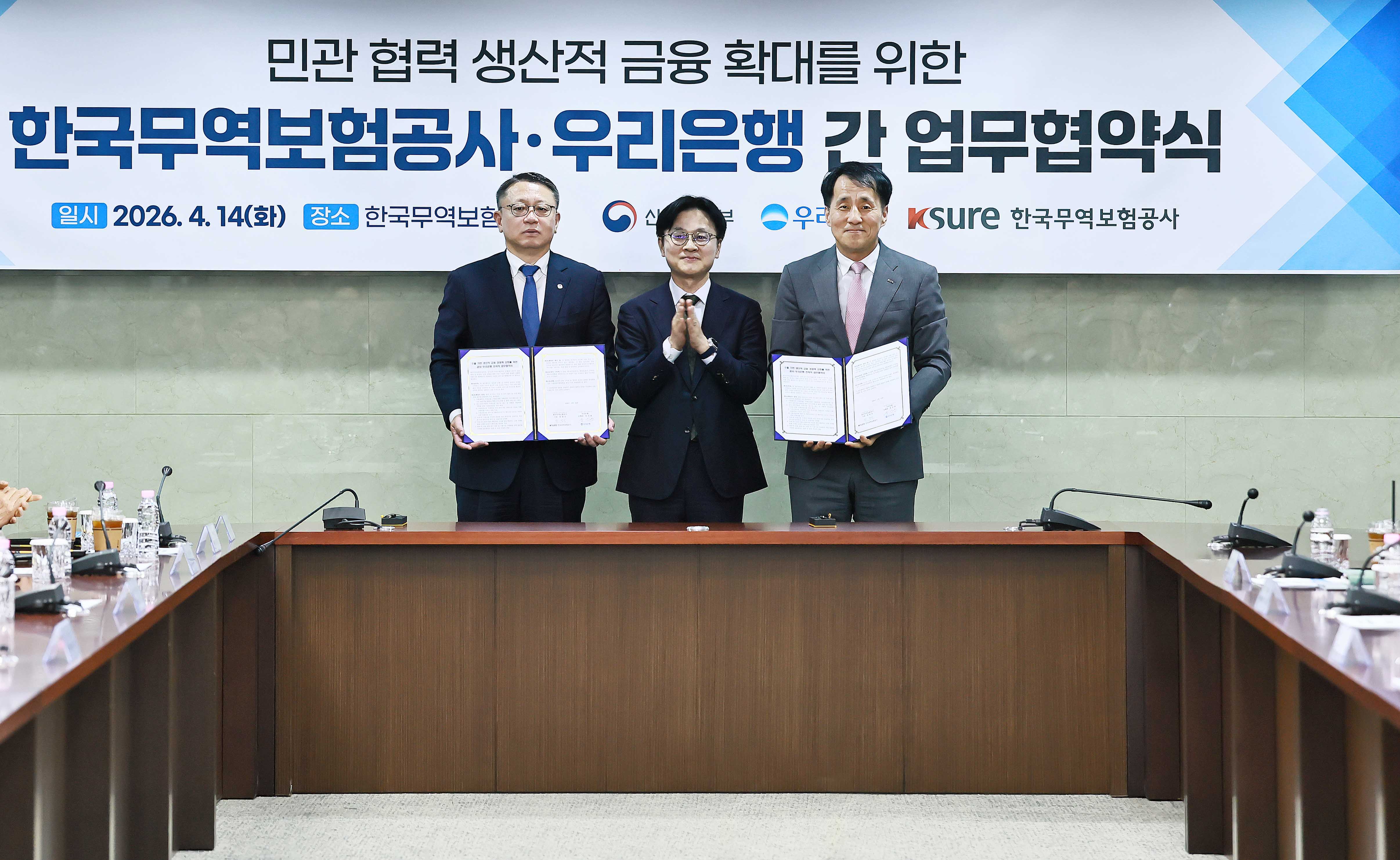
Minister JK (Jung-Kwan) Kim of the Ministry of Trade, Industry and Resources (MOTIR) attended a roundtable on expanding win-win trade finance and a signing ceremony for consumer goods supply chain guarantee agreements at the Korea Trade Insurance Corporation (K-SURE) in Seoul on April 14, 2026. The event brought together representatives from trade and industry groups, Woori Bank, Kolmar, MUSINSA and other export-related organizations and companies. “Win-win trade finance is more than a support program. It is a key safety net for Korea’s industrial ecosystem and supply chains,” Minister Kim said. “The government will work to expand this model quickly.” date2026-04-15
-
Trade/Investment
March 2026 Automobile Exports Reach $6.4 Billion
The Ministry of Trade, Industry and Resources (MOTIR, Minister JK Kim) announced that in March 2026, Korea’s automobile industry posted year-on-year increases in exports, domestic sales, and production. March automobile exports reached USD 6.4 billion, the second-highest value on record for the month, behind only the $6.5 billion recorded in March 2023. In particular, hybrid vehicle exports rose 79 percent year-on-year, driving overall export growth. In the first quarter of 2026, however, automobile export value edged down 0.2 percent. By region, first-quarter automobile exports increased mainly to Europe, including the European Union (up 14.2 percent), but fell in Asia (down 38.9 percent) and the Middle East (down 21.3 percent), likely reflecting the impact of the conflict in the Middle East. Domestic sales totaled 165,000 units in March, up 10.2 percent year-on-year, while first-quarter sales rose 5.3 percent to 409,000 units. Eco-friendly vehicles, including electric vehicles, accounted for 98,000 units, or about 59 percent of domestic sales. Production totaled 387,000 units in March, up 4.5 percent year-on-year, as major automakers raised output amid gains in exports and domestic sales. First-quarter production also rose 1.3 percent year-on-year to 1.026 million units, marking the fourth consecutive year that first-quarter output exceeded 1 million units. MOTIR is closely monitoring risks to parts procurement and logistics supply chains in light of the recent conflict in the Middle East. It will continue close consultations with industry and step up support to sustain growth in production and exports. date2026-04-15
-
Trade/Investment
MOTIR Reviews Supply Risks and Response Measures for Naphtha and Crude Oil
Minister JK (Jung-Kwan) Kim of the Ministry of Trade, Industry, and Resources (MOTIR) held a meeting on April 15, 2026, to review Korea’s supply conditions naphtha and crude oil and discuss response measures, as uncertainty in the Middle East persisted despite the U.S.-Iran ceasefire. Although tensions in the Middle East have eased for the time being, key risks remain, including uncertainty over passage through the Strait of Hormuz and broader disruptions to maritime shipping. Korea therefore needs to closely monitor supply risks and review response options, as 73 percent of its naphtha imports and 69 percent of its crude oil imports come from the Middle East. The meeting was attended by officials from relevant ministries, including the Ministry of Oceans and Fisheries (MOF) and the Ministry of Foreign Affairs (MOFA), as well as representatives from the shipping, refining and petrochemical industries. It brought together the full industrial chain, from crude oil transport and refining to the production of industrial, medical, and consumer goods. Participants reviewed import conditions for naphtha and crude oil, alternative shipping routes, and production and supply plans for petroleum products. They also shared their on-the-ground conditions, operational challenges, and policy suggestions. Minister Kim said, “We will do everything possible to minimize disruptions to people's daily lives and maintain industrial operations by diversifying supply sources for naphtha and crude oil and securing alternative logistics routes.” He added, “MOTIR will work closely with industry and relevant ministries and deploy all available policy tools to address on-the-ground difficulties without delay.” Korea will launch a KRW 674.4 billion program to support additional naphtha imports. The program will cover 50 percent of the difference between pre-war prices and actual import prices for naphtha contracted between April and June. To help ease short-term supply pressures, it will also apply to naphtha substitutes such as LPG and condensate, as well as basic petrochemical feedstocks including ethylene and propylene. Furthermore, the government will accelerate naphtha imports to help restore operating rates affected by naphtha shortages following the conflict and expand domestic supplies of petrochemical products. To minimize disruptions to people's lives, the government will work with petrochemical companies to prioritize feedstock supplies for health and medical products, key industries, and everyday necessities. The government will also expand freight-cost support for crude oil imports from the Americas, Africa, and Europe to diversify supply sources. Under the revised oil import surcharge refund program, it will fully offset the additional freight costs relative to Middle Eastern crude for imports from those regions during April-June, increasing refunds by an estimated KRW 127.5 billion. date2026-04-15
-
Trade/Investment
MOTIR to Increase Win-Win Trade Finance to KRW 10 Trillion in 2026
At a ministerial roundtable held on April 14, 2026, the Ministry of Trade, Industry and Resources (MOTIR, Minister JK Kim) announced plans to increase win-win trade finance to KRW 10 trillion by the end of 2026. The move comes amid heightened external uncertainty linked to the war in the Middle East. Formally known as the Export Supply Chain Strengthening Guarantee, the program is a public-private financing model that connects exporters, commercial banks, and policy finance institutions through partnerships between large enterprises and SMEs. Since Hyundai Motor and Kia joined the program in August 2025, HL Group, POSCO, and HD Hyundai Heavy Industries have also joined. Kolmar and MUSINSA joined on April 14, 2026, bringing the total amount mobilized under the program to KRW 1.7 trillion. Until then, the program had been adopted mainly by heavy industries such as the automotive, steel, and shipbuilding sectors, but it has now expanded to consumer goods as well. At the roundtable, Kolmar and MUSINSA each signed an agreement with Woori Bank under the program. Kolmar, which supports the K-beauty industry through the supply of cosmetic ingredients R&D, will contribute KRW 10 billion, providing KRW 174 billion in liquidity support for more than 160 partner companies, including SMEs and mid-sized firms. MUSINSA, a leading K-fashion company, will contribute KRW 5.75 billion, providing KRW 100 billion in liquidity support for more than 200 micro and SME partner companies. Given the large number of micro and small suppliers in consumer goods industries, the government will also strengthen tailored support measures, including online direct guarantees to accelerate access to small-ticket trade finance. The government will also use the supplementary budget to provide KRW 3 trillion in emergency trade finance for companies affected by the war in the Middle East. It will increase financing support for key importers in sectors facing heightened supply-chain pressures, including petrochemicals and energy; expand short-term export insurance for companies seeking alternative export markets; and provide emergency liquidity support for SMEs facing logistics disruptions and uncertainty surrounding raw material imports. Separately, Woori Bank signed an additional memorandum of understanding (MOU) with the Korea Trade Insurance Corporation (K-SURE) to expand the KRW 3 trillion productive finance program for exporters. Minister Kim said, “Win-Win trade finance is more than a support program. It is a key safety net for Korea’s industrial ecosystem and supply chains. By sharing responsibility for supporting partner companies, large enterprises and financial institutions help sustain Korea’s export competitiveness, and the government will work to expand this model quickly." date2026-04-15