-
FTA/Economic Cooperation
Korea and Jiangsu Province Hold Seventh Economic and Trade Cooperation Exchange
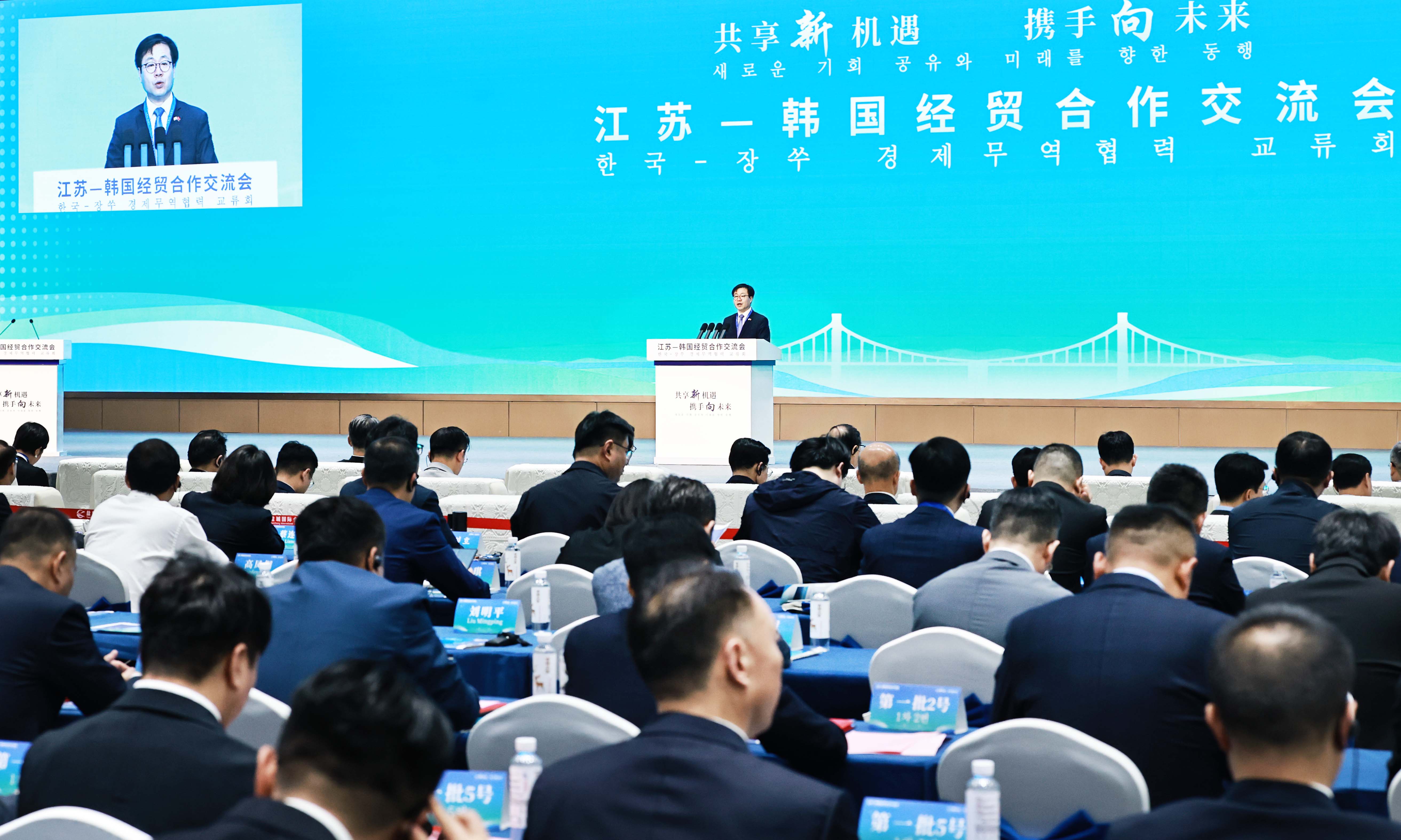
Minister for Trade Yeo Han-koo of the Ministry of Trade, Industry and Resources (MOTIR, Minister JK Kim) attended the seventh Korea–Jiangsu Province Economic and Trade Cooperation Exchange in Yancheng, Jiangsu Province, China, on May 20, 2026. The event was held under the theme of expanding future-oriented Korea–China cooperation. The event brought together approximately 400 government officials and business representatives from Korea and China, including Xia Xinmin, including Xia Xinmin, Vice Chairman of the Standing Committee of the Jiangsu Provincial People’s Congress. “We will help translate the momentum generated by the reciprocal state visits between the leaders of Korea and China into concrete results,” Minister Yeo said, noting that Korea will continue region-specific dialogue with Chinese local governments. date2026-05-21
-
Industry
Minister Yeo Visits Tongwei Solar’s Yancheng Facility
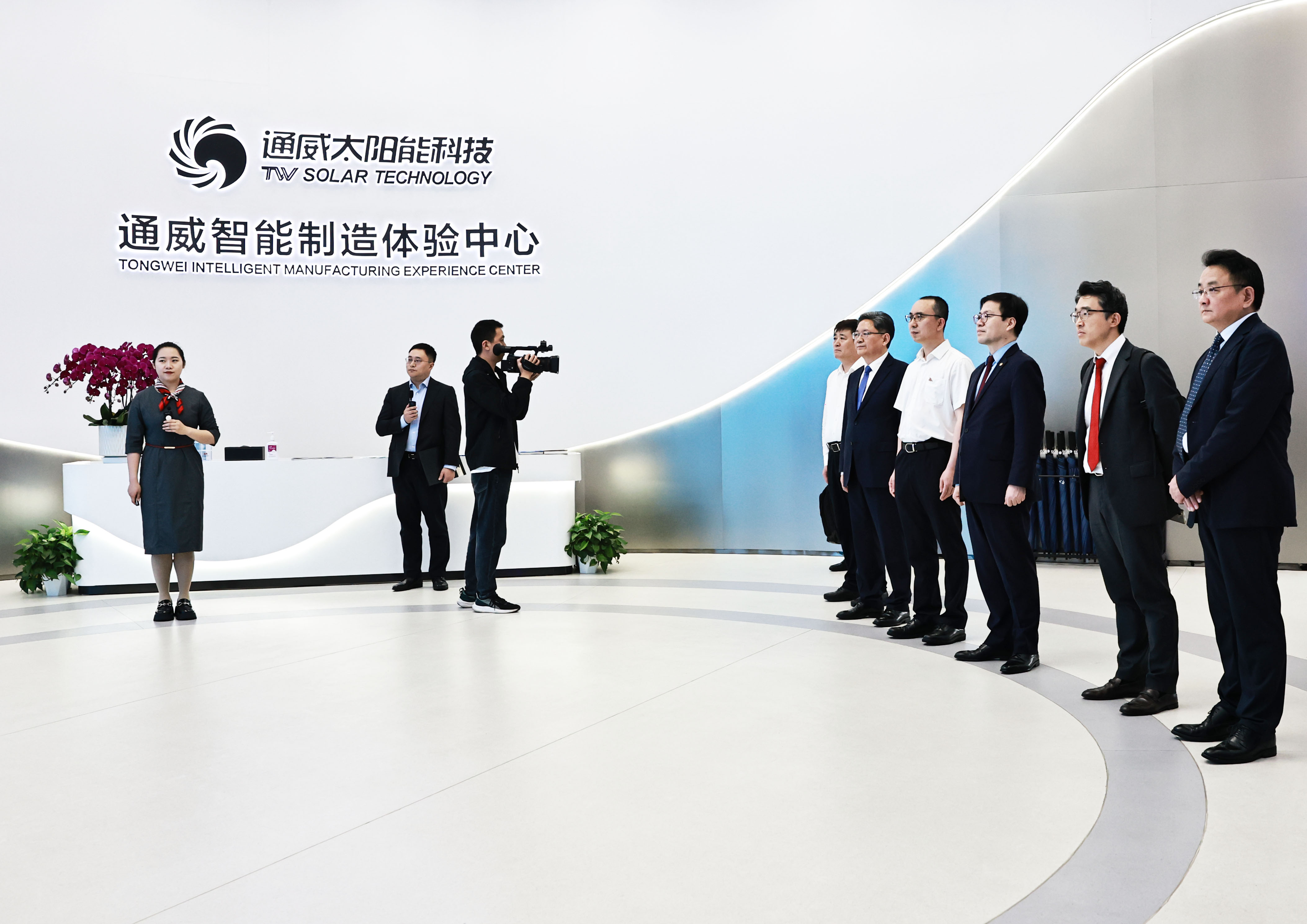
Minister for Trade Yeo Han-koo of the Ministry of Trade, Industry and Resources (MOTIR, Minister JK Kim) visited the Tongwei Solar Technology Yancheng Base in Jiangsu Province, China, on May 19, 2026, on the occasion of the seventh Korea–Jiangsu Province Economic and Trade Cooperation Exchange. During the visit, Minister Yeo toured the base’s main facilities. The visit took place as Korea and Jiangsu Province discussed ways to expand industrial and supply chain cooperation. date2026-05-21
-
Industry
Minister Yeo Holds Roundtable with Korean Companies in Jiangsu Province
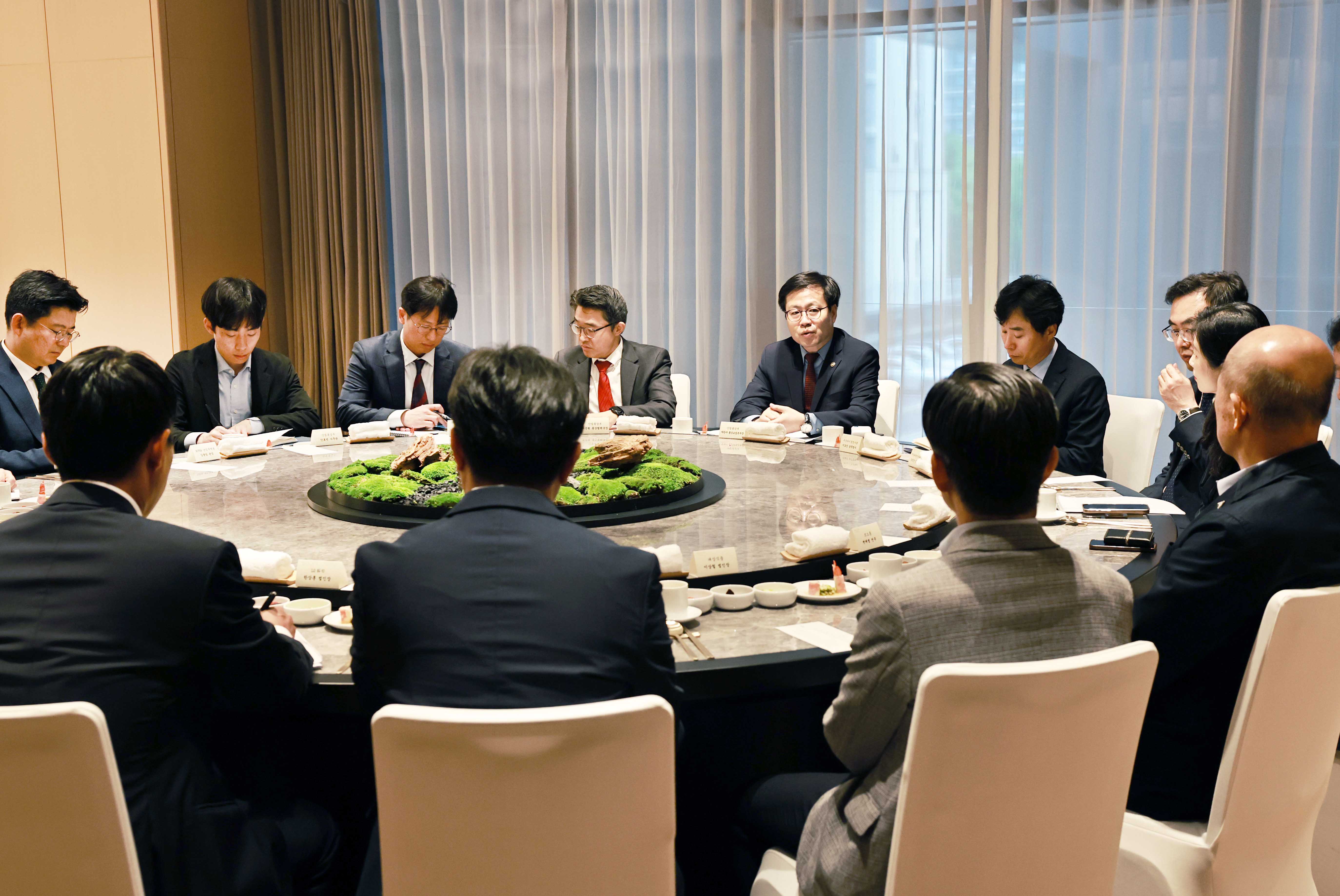
Minister for Trade Yeo Han-koo of the Ministry of Trade, Industry and Resources (MOTIR, Minister JK Kim) held a roundtable with Korean companies operating in Jiangsu Province in Yancheng, Jiangsu Province, China, on May 19, 2026, on the occasion of the seventh Korea–Jiangsu Province Economic and Trade Cooperation Exchange. The meeting was attended by representatives from companies including Kia, SK On, Sungwoo Hitech, Yancheng Dongyi Auto Parts, LG Chem and Daesang Food. Minister Yeo was briefed on their local operations and challenges in Jiangsu Province and discussed possible support measures. date2026-05-21
-
FTA/Economic Cooperation
Minister Yeo Visits China–ROK Industrial Park Exhibition Hall in Yancheng
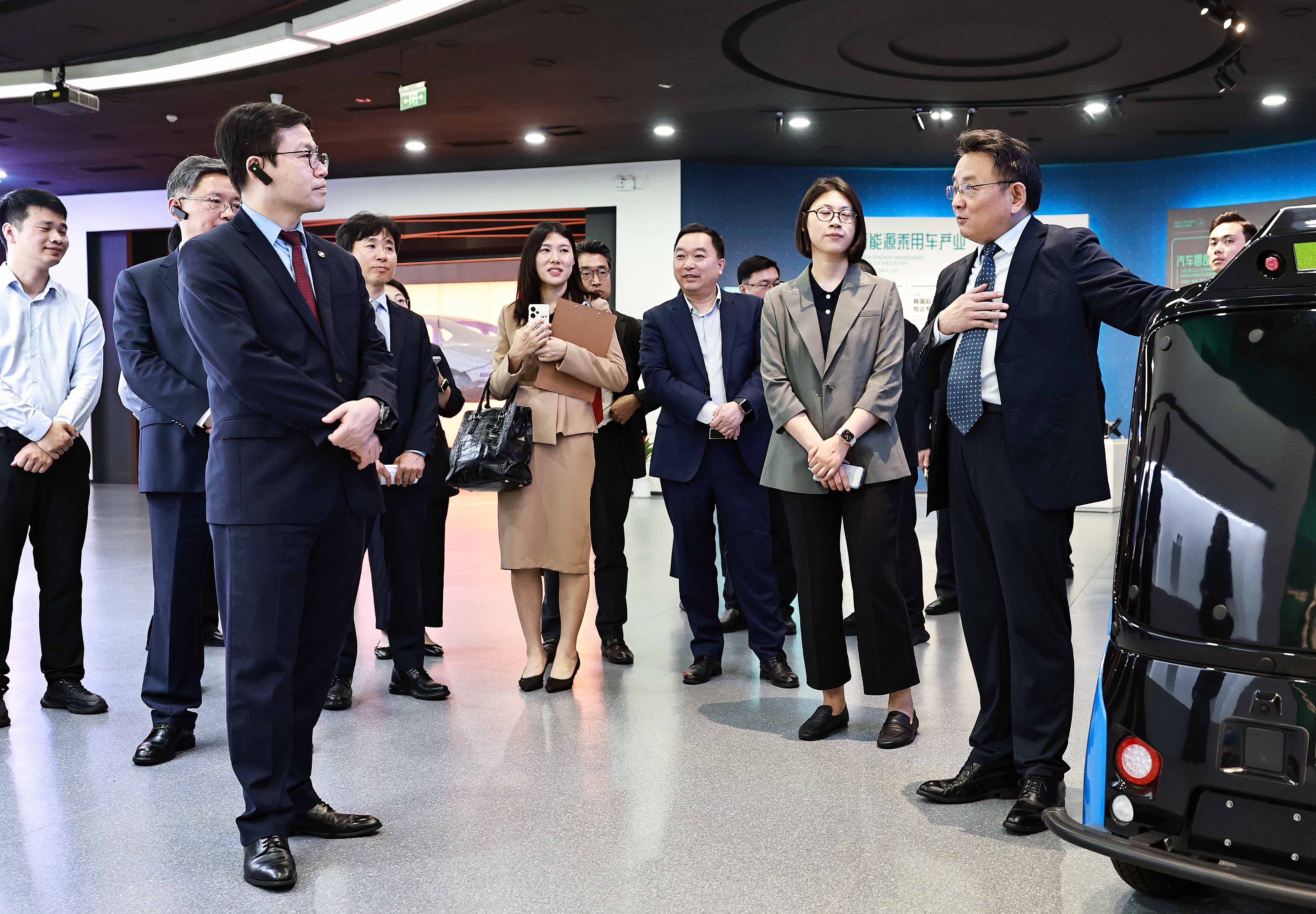
Minister for Trade Yeo Han-koo of the Ministry of Trade, Industry and Resources (MOTIR, Minister JK Kim) visited the exhibition hall at the Korea–China industrial park in Yancheng, Jiangsu Province, China, on May 19, 2026, on the occasion of the seventh Korea–Jiangsu Province Economic and Trade Cooperation Exchange. The visit took place as Korea and Jiangsu Province discussed industrial park cooperation and ways to strengthen supply chain cooperation. date2026-05-21
-
FTA/Economic Cooperation
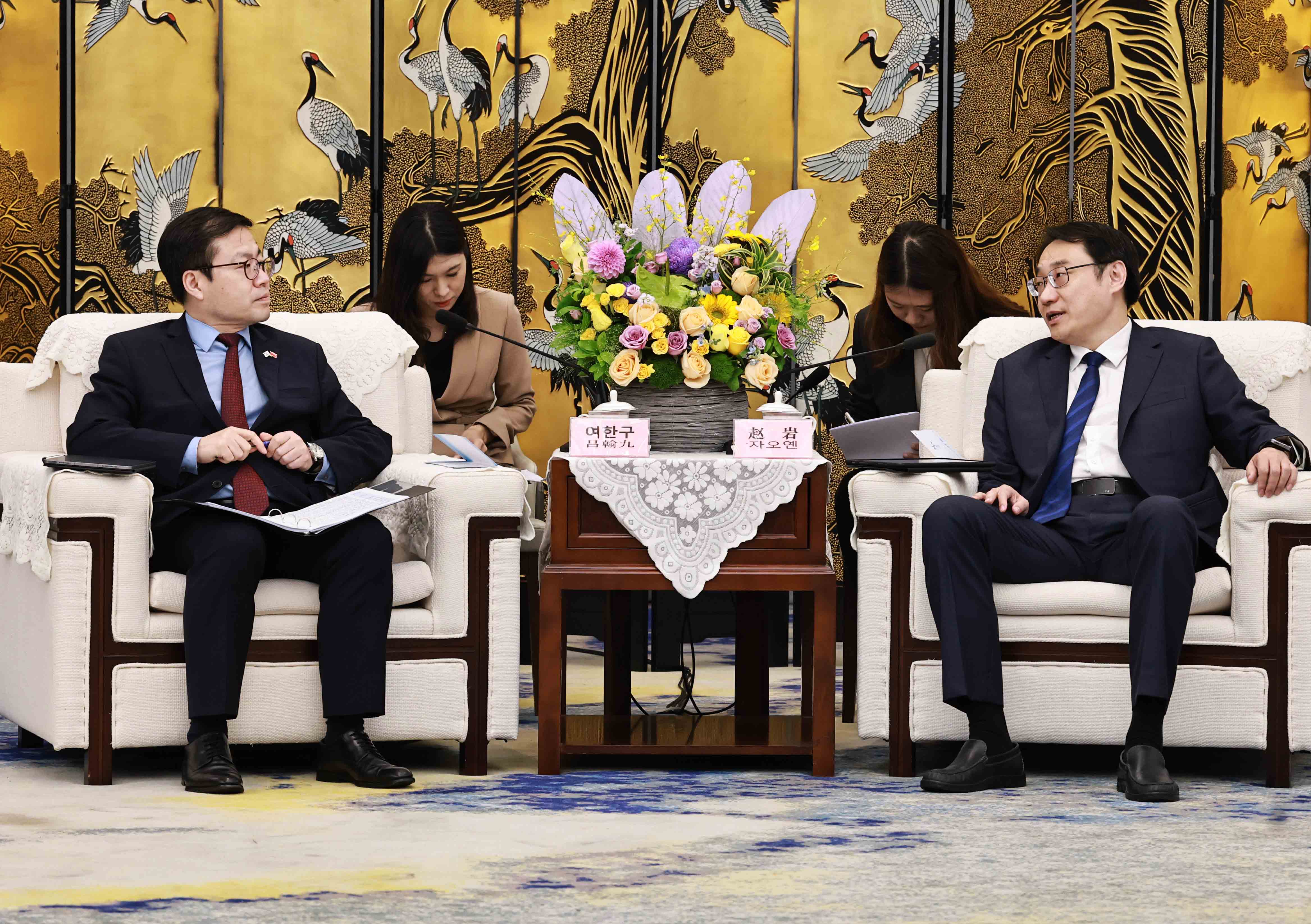
Minister Yeo Meets with Jiangsu Vice Governor Zhao Yan
Minister for Trade Yeo Han-koo of the Ministry of Trade, Industry and Resources (MOTIR, Minister JK Kim) met with Zhao Yan, Vice Governor of Jiangsu Province, in Yancheng, Jiangsu Province, China, on May 19, 2026, on the occasion of the seventh Korea–Jiangsu Economic and Trade Cooperation Exchange Conference. The two sides discussed cooperation between Korea–China industrial parks and ways to strengthen supply chain cooperation, as Jiangsu Province continues to serve as a key base for Korean companies operating in China. “We will help translate the momentum generated by the reciprocal state visits between the leaders of Korea and China into concrete results,” Minister Yeo said, adding that Korea will continue region-specific dialogue with Chinese local governments. date2026-05-21
-
Trade/Investment
Land Ownership to Be Allowed in Free Trade Zones
The Korean Cabinet approved a bill to amend the Act on Designation and Management of Free Trade Zones on May 20, 2026. The amendment is designed to modernize aging production facilities in free trade zones and update their manufacturing-centered industrial structure so they can respond to rapid changes in the global industrial environment. It focuses on detailed rules for selling state- and public-owned land, giving companies a path to land ownership that can support new investment, while expanding digital transformation (DX) support to promote higher-value business activities. 1. Detailed Rules for Land Sales and Stronger Follow-Up Controls Until now, the law allowed land sales in free trade zones, but no detailed procedures were in place. In practice, the zones operated on a lease-only basis, leaving resident companies without land ownership and limiting their ability to secure collateral, hindering new investments. To address these constraints, the amendment sets out procedures and conditions for selling state-owned or public land and factory facilities, including sales prices and purchase eligibility. A restriction period on property disposal is introduced as a measure to prevent real estate speculation, as well as compliance enforcement fines for violations, such as failure to sign an occupancy contract or unauthorized disposal. 2. Support for Higher-Value Activities and Industrial Competitiveness Since their introduction in 1970, free trade zones have operated mainly as manufacturing bases, limiting their ability to keep pace with changes in the industrial environment. The amendment grants occupancy eligibility to export companies in knowledge services, including information processing and R&D, to promote digital transformation among resident companies and attract higher-value businesses. It also lowers entry barriers by allowing exceptions to the standard building area ratio requirement, reflecting the fact that knowledge service companies do not require large factories. In addition, the amendment expands special provisions under the Customs Act beyond goods clearance to customs assessment and duty reductions or exemptions. It also introduces raw material taxation, strengthening tax benefits for companies in free trade zones. The amendment is scheduled to take effect in May 2027 after revisions to the Enforcement Decree and related regulations. The Ministry of Trade, Industry and Resources (MOTIR, Minister JK Kim) will continue to support free trade zones so they can remain at the forefront of Korea’s exports and move beyond traditional manufacturing and logistics bases into advanced strategic hubs that bring together digital and service industries. date2026-05-20
-
Industry
Korea to Build Circular Battery Ecosystem with Used Battery Safety Framework
The Ministry of Trade, Industry and Resources (MOTIR, Minister JK Kim) announced that the bill to enact the “Act on the Management of Used Batteries and Promotion of the Used Battery Industry,” or the Used Battery Act, was approved by the Cabinet on May 20, 2026. The act treats used batteries as strategic national resources rather than waste, providing a legal basis for their management as volumes are projected to increase sharply with the wider adoption of energy storage systems (ESS) and electric vehicles. It also fosters related industries and establishes a national framework to respond to global green trade regulations, including the EU Battery Regulation, helping create a more stable business environment for companies. Key measures include a framework for performance evaluations and safety inspections; a battery life-cycle tracking and transaction system; measures to promote recycled material use; and support for the used battery industry. First, batteries will be graded through performance evaluations before removal, and products containing used batteries will undergo safety inspections before and after distribution. This will strengthen safety management for used batteries. Second, the battery life-cycle tracking and transaction system will serve as a public platform that manages data across the full battery life cycle—from manufacturing to disposal—and facilitates transactions. It is expected to help stimulate the market, support responses to trade regulations and address gaps in used battery oversight. Third, the act will introduce target requirements for recycled material content and a certification system for the production and use of recycled materials. These measures are expected to strengthen Korea’s supply chain for key battery minerals and promote resource circulation. Fourth, the act will foster the used battery industry through recommendations for priority purchases of products equipped with used batteries, supply chain stabilization measures, and technology development support. The Act will take effect one year after promulgation. Before then, MOTIR will work with relevant ministries, experts and industry to prepare implementing rules, secure the necessary budget and design a safe, balanced system. “This act is the result of years of consultation between industry and relevant ministries,” Minister Kim said. “It will lay the foundation for a closed-loop system for Korea’s battery resources and support the growth of emerging industries.” date2026-05-20
-
Industry
Experts Discuss M.AX as the Way Forward for Korean Manufacturing
The Ministry of Trade, Industry and Resources (MOTIR, Minister JK Kim) held the first Manufacturing AI Transformation (M.AX) Conference and Industrial Growth Forum on May 20, 2026, bringing together experts in manufacturing and economics to discuss how to advance M.AX and scale up the outcomes. Participants included companies involved in M.AX, such as LG Production Engineering Research Institute (LG PRI) and INTERX, as well as academic experts from KAIST, UNIST, Sungkyunkwan University and Myongji University. Manufacturing has long anchored Korea’s economic growth. But the sector now faces tougher conditions, including a shrinking working-age population and a declining potential growth rate. As AI moves into manufacturing sites and emerges as a game changer for productivity and industrial competitiveness, advancing the M.AX has become essential. As major competitors transform manufacturing with AI through large-scale private investment and strong government-led policies, the Korean government launched the M.AX Alliance to bring together capabilities across manufacturers, AI companies, academia and research institutions. Today, more than 1,500 companies and organizations across 11 divisions are working together on the use of manufacturing data, AX in production processes and the development of AI-embodied innovative products. Key projects include AI factories, on-site demonstrations of industrial robots and humanoids in manufacturing, and on-device AI semiconductors essential for AX products such as autonomous vehicles. In 2026, MOTIR will invest KRW 1.1 trillion in its AX budget to support wider adoption. Since its launch, the Alliance has produced initial results, including productivity gains among AI factory participants through lower defect rates, more efficient predictive equipment maintenance, liquidity support for companies facing financing constraints through closer links with the National Growth Fund, and the creation of a M.AX sub-fund under the Industry Growth Fund. In February 2026, MOTIR added an industrial complex AX division, establishing a foundation for AX at regional manufacturing sites and completing the M.AX Alliance’s “Best Eleven” structure. At the forum, speakers examined how M.AX can strengthen industrial competitiveness, reviewed strategies in different countries, and discussed technical priorities for applying M.AX at manufacturing sites. Participants also discussed upgrades to AI factory technologies, the need to secure technological sovereignty in manufacturing AI, Korea’s strengths in full-stack capabilities, and the importance of strengthening AI skills among the manufacturing workforce. “M.AX, the AI transformation of manufacturing, will be a critical factor in maintaining Korea’s industrial leadership and securing the country’s future competitiveness amid the global race for technological supremacy,” said Kim Sung-youl, Deputy Minister for Industry and Growth at MOTIR. “The government will focus on bringing AI into production processes and developing new AI-embodied products and services, so that manufacturing, one of Korea’s core assets, can secure world-leading competitiveness. We will also work closely with companies in the M.AX Alliance to deliver tangible results on the ground, including higher productivity and greater value added across industry.” Deputy Minister Kim added that MOTIR will also work to address labor shortages in key manufacturing industries and create new jobs through M.AX. Future M.AX conferences will be held as a series on topics such as data and robotics, while the Industrial Growth Forum will continue discussions across advanced technologies to develop a new growth model for Korean industry. date2026-05-20
-
FTA/Economic Cooperation
Korea and Jiangsu Province Step Up Cooperation to Deliver Tangible Results
Minister for Trade Yeo Han-koo of the Ministry of Trade, Industry and Resources (MOTIR, Minister JK Kim) attended the seventh Korea–China (Jiangsu) Economic and Trade Cooperation Exchange in Yancheng, Jiangsu Province, China, on May 20, 2026, an event co-hosted by MOTIR and the Jiangsu Provincial Government. On the sidelines, Minister Yeo met with senior provincial officials, including Zhao Yan, Vice Governor of Jiangsu Province. Held under the theme of expanding future-oriented Korea–China cooperation, the conference brought together approximately 400 government officials and business representatives from both sides to discuss trade, investment and supply chain cooperation. Jiangsu Province is China’s second-largest provincial-level economy by gross regional domestic product (GRDP) and Korea’s largest trade and investment partner among Chinese regions. In 2025, Korea–Jiangsu trade reached approximately USD 86.3 billion, a level that would make Jiangsu Korea’s fourth-largest trading partner if counted as a country, following Vietnam at $94.5 billion. The province is also an important base for stable Korea–China supply chains, with more than 3,000 Korean companies operating there in sectors including automobiles, batteries and semiconductors. They include Samsung Electronics in Suzhou, SK hynix in Wuxi, Kia in Yancheng and LG Energy Solution in Nanjing. For the first time, the 2026 conference introduced one-on-one business matching sessions to help Korean companies generate practical export results. Organized by the Korea International Trade Association (KITA), the sessions connected 35 promising Korean consumer goods companies with major Chinese retail platforms, including JD.com, and local buyers. The event also featured a product showcase pavilion, which drew interest from visitors. More than 300 consultations were held, and Korean companies including Kwangcheonkim Co., Ltd. in food products and HS Hyosung Advanced Materials in anode materials signed 11 agreements with Chinese partners, with export agreements worth a combined $2.3 million. The business matching program also utilized the Gmarket–Alibaba MOU, signed on the occasion of the Korea–China summit on January 5, 2026, to support participating companies’ cross-border e-commerce exports. The Korea Trade Insurance Corporation (K-SURE) and the Korea Testing & Research Institute (KTR) operated advisory desks, providing guidance on certification, insurance and other business challenges faced by Korean companies. In his opening remarks, Trade Minister Yeo said, “We will help translate the momentum generated by reciprocal state visits between the leaders of Korea and China into tangible results.” He added, “China’s provincial governments have economies comparable in scale to individual countries, and each has a distinct industrial ecosystem. This makes region-specific cooperation necessary, and we will continue to communicate through exchanges such as this event.” Trade Minister Yeo also met with representatives from Alibaba, China’s largest e-commerce platform, to discuss ways to expand Korean consumer goods’ access to the Chinese market, including through cross-border e-commerce and livestream commerce. He also held a roundtable with Korean-invested companies to hear their concerns and discuss support measures. date2026-05-20
-
Trade/Investment
April 2026 Automobile Exports Total $6.2 Billion
The Ministry of Trade, Industry and Resources (MOTIR, Minister JK Kim) announced that in April 2026, Korea’s automobile exports fell 5.5 percent year-on-year in value to USD 6.2 billion and 0.8 percent in volume to 245,000 units, while domestic sales edged up 0.7 percent to 152,000 units and production fell 6.1 percent to 362,000 units. Automobile exports reached $6.2 billion in April, down 5.5 percent year-on-year. By region, exports increased to North America (up 2.4 percent), Latin America (up 23.7 percent), and Oceania (up 20.1 percent), but declined in the Middle East (down 38.7 percent), the European Union (down 13.1 percent), and Asia (down 31.7 percent). Despite the overall decline, exports of eco-friendly vehicles continued to grow, led by electric and hybrid vehicles, with export value rising 13.5 percent year-on-year to $2.5 billion. Production totaled 362,000 units in April, down 6.1 percent year-on-year. Production rose at GM Korea (up 15.4 percent), KG Mobility (up 8.6 percent), and Kia (up 0.5 percent), while falling at Hyundai Motor (down 16.2 percent) and Renault Korea (down 32.3 percent). The decline reflected some parts supply-chain issues, as well as delayed purchases ahead of new and facelifted model launches for key vehicle lines. Production disruptions from the supply-chain issues are expected to ease beginning in June. Domestic sales totaled 152,000 units in April, up 0.7 percent year-on-year. Among domestically produced vehicles, Kia sales rose 7.9 percent, while sales of some imported vehicles also increased, mainly among electric models. Eco-friendly vehicle sales totaled 91,000 units, accounting for about 60 percent of total domestic sales and indicating that the industry’s shift toward eco-friendly vehicles is accelerating. date2026-05-20