-
Trade/Investment
MOTIR Realigns K-Nuclear Export Framework for Global Nuclear Renaissance
The Ministry of Trade, Industry and Resources (MOTIR, Minister JK Kim) convened the first Nuclear Power Plant Export Strategy Council meeting of 2026 on May 14 at the Korea Trade Insurance Corporation (K-SURE). During the session, chaired by Minister JK Kim, the Ministry unveiled a comprehensive roadmap to streamline Korea’s nuclear export framework. These measures are designed to enhance the government’s strategic coordination and support, reflecting the fundamental nature of nuclear projects as government-to-government initiatives. MOTIR’s implementation strategy follows a two-tiered approach: immediate tactical actions and long-term goals to be realized by the end of 2026. As an immediate step, MOTIR will establish a public-private Nuclear Power Plant Export Planning Committee under the Council’s jurisdiction. This committee will serve as a central hub for project planning and coordination, while significantly bolstering external oversight and advisory functions regarding economic feasibility, risk management, and other critical factors. In recognition of the significant impact of nuclear power plant exports on national security and the economy, as well as the necessity for large-scale financing, the government intends to assume a more proactive leadership role by conducting reviews and seeking guidance from external experts to enhance project performance. Market management, previously divided between Korea Electric Power Corporation (KEPCO) and Korea Hydro & Nuclear Power (KHNP), will be consolidated into a unified, collaborative framework. Under this model, KEPCO and KHNP will jointly pursue overseas project development and lead contracting. In line with efforts to leverage each company’s strength, KEPCO will spearhead negotiations with partner countries and lead equity investments, while KHNP will focus on construction and operational management. However, to maintain continuity and leverage established expertise, KHNP will retain its lead role in project development, contracting, construction, and operations for large-scale exports to the Czech Republic and the Philippines, as well as for innovative Small Modular Reactor (i-SMR) initiatives. Moving forward, as part of the Ministry’s long-term goals, MOTIR also plans to enact the "Nuclear Power Plant Export Promotion Act" (tentative title) by the end of 2026. This Act aims to evaluate the performance of KEPCO and KHNP respectively and, through public consultation, the Act will be enacted. This legislation will provide a robust statutory foundation for export support, encompassing market development, information systems, financing, government contributions, professional training, and technology certification. Furthermore, it will mandate that public institutions involved in nuclear exports consult with the government on major strategic decisions, including large-scale borrowing, investments, export contracts, and the transfer or modification of nuclear intellectual property rights. The Ministry is also evaluating the legal basis for a dedicated lead export agency responsible for the full project lifecycle—from feasibility studies and client negotiations to bidding and final contracting. Several options remain under active consideration, including consolidating functions within KEPCO or KHNP or launching a new, integrated export agency. During the meeting, KEPCO President Kim, Dong-cheol and KHNP President Kim Hoechun formalized a strategic partnership agreement for nuclear exports. The two companies agreed to bolster cooperation across all project stages and expand the exchange of information and personnel. Notably, they also agreed to amend the UAE nuclear power plant contract which allows for the dispute settlement to be arranged not in the United Kingdom but in Korea. This initiative follows the adoption of MOTIR’s proposal, aimed at reducing litigation expenses related to sett date2026-05-14
-
FTA/Economic Cooperation
Korea–Mexico Business Roundtable
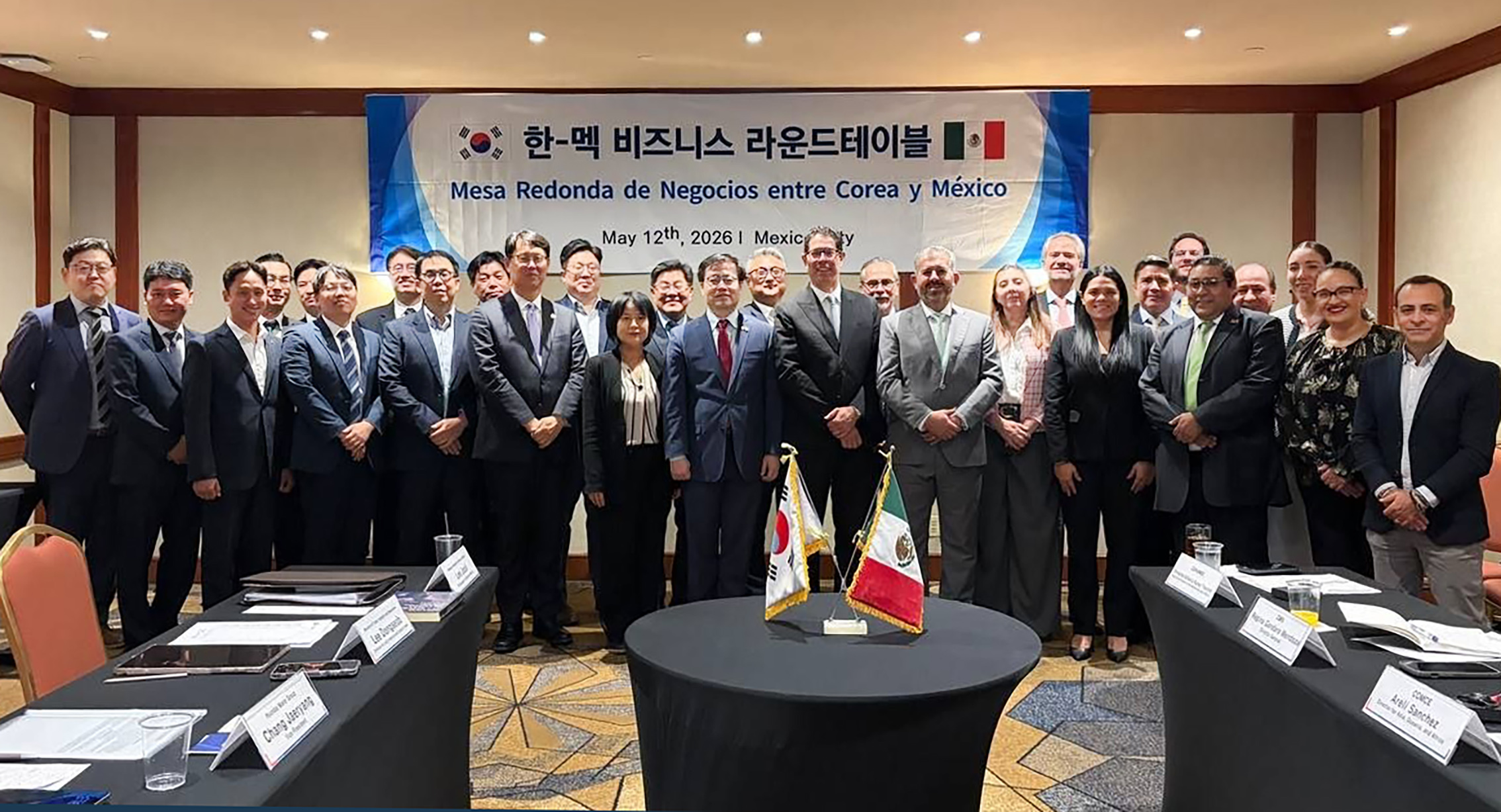
Trade Minister Yeo Han-koo of the Ministry of Trade, Industry and Resources (MOTIR, Minister JK Kim) chaired the Korea–Mexico Business Roundtable at the Sheraton Maria Isabel Hotel in Mexico on May 12, 2026. The meeting brought together major business leaders from the two countries, including representatives from the Business Coordinating Council (CCE), the Mexican Business Council for Foreign Trade, Investment and Technology (COMCE), the Employers’ Confederation of the Mexican Republic (COPARMEX), and the Mexican Automotive Industry Association (AMIA). Participants discussed ways to strengthen Korea–Mexico economic cooperation and build private-sector support for the Korea–Mexico FTA. The roundtable also provided a venue for business networking and raised private-sector interest in advancing the FTA. date2026-05-14
-
FTA/Economic Cooperation
Meeting with Mexican Senators
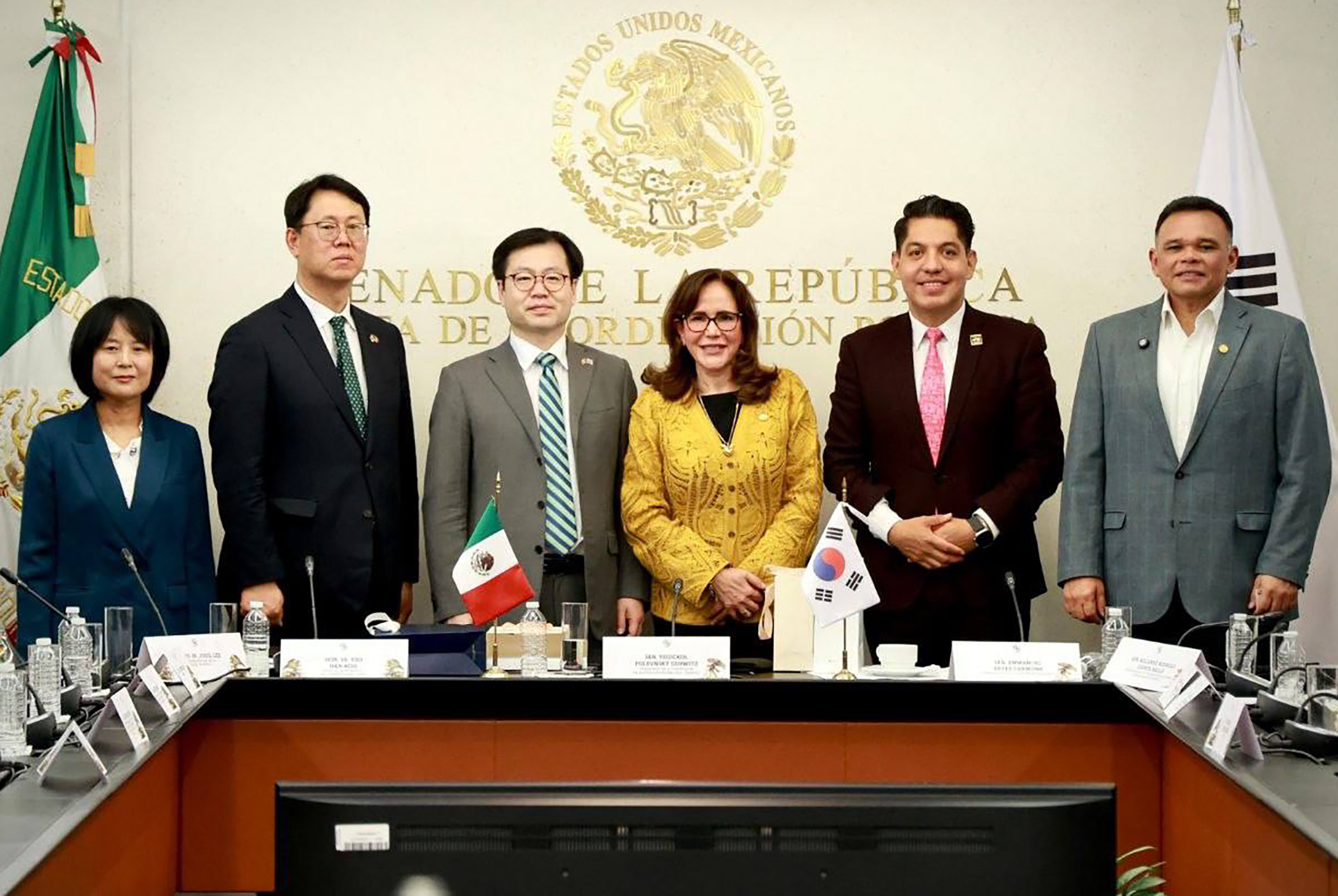
Trade Minister Yeo Han-koo of the Ministry of Trade, Industry and Resources (MOTIR, Minister JK Kim) met with Mexican senators at the Senate of the Republic in Mexico on May 13, 2026. The meeting was attended by Senator Yeidckol Polevnsky, Chair of the Asia-Pacific Foreign Relations Committee; Senator Emmanuel Reyes, Chair of the Economic Affairs Committee; and Senator Rolando Zapata. The two sides discussed ways to strengthen Korea–Mexico economic cooperation. Trade Minister Yeo underscored the importance of Korean companies invested in Mexico and asked for support in advancing the Korea–Mexico FTA. date2026-05-14
-
FTA/Economic Cooperation
Meeting with the Chief of Staff to the President of Mexico
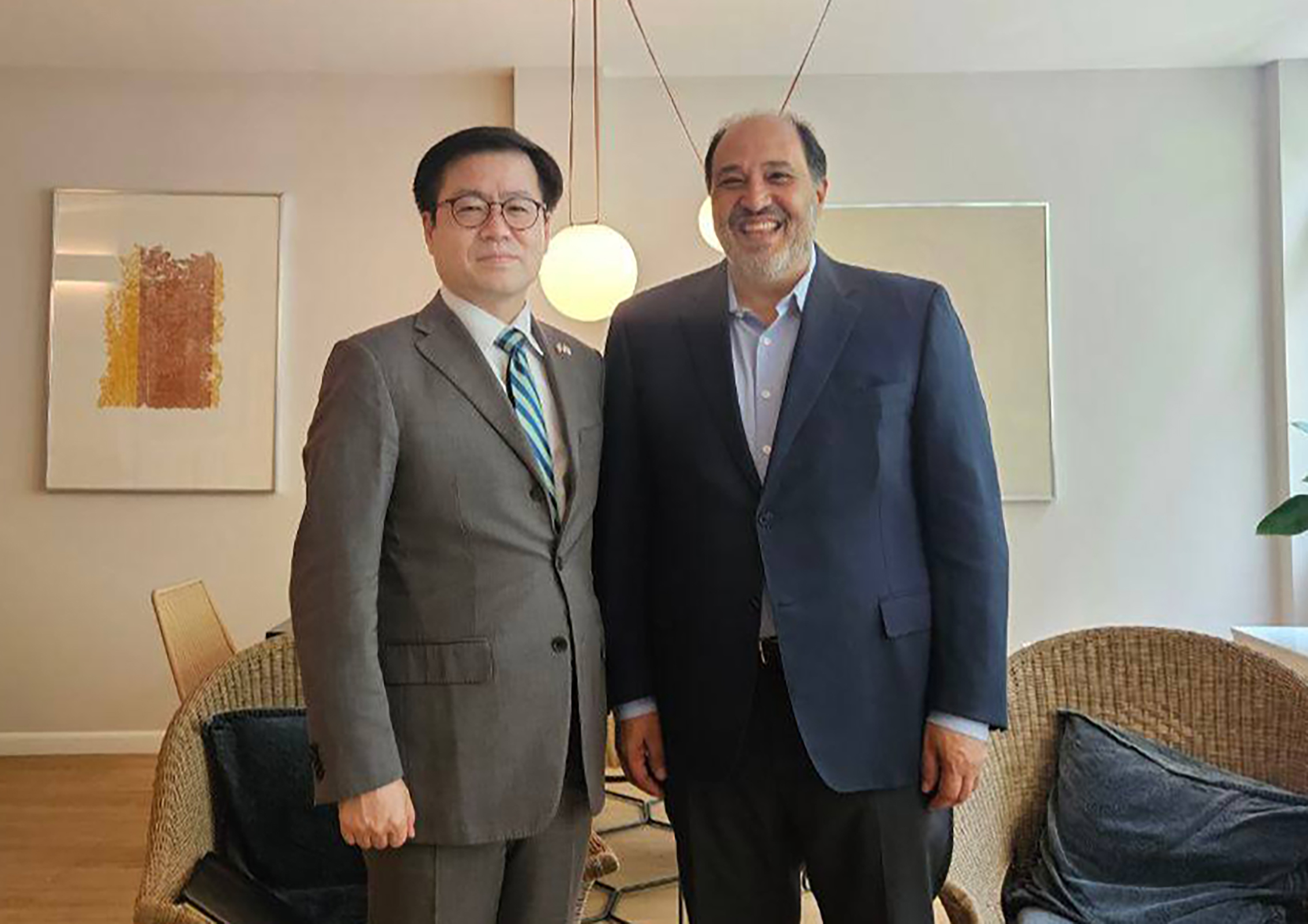
Trade Minister Yeo Han-koo of the Ministry of Trade, Industry and Resources (MOTIR, Minister JK Kim) met with Lázaro Cárdenas Batel, Chief of Staff to the President of Mexico, at his office in Mexico on May 13, 2026. Trade Minister Yeo conveyed difficulties faced by Korean companies operating in Mexico and asked Chief of Staff Cárdenas for support in resuming Korea–Mexico FTA negotiations. date2026-05-14
-
FTA/Economic Cooperation
Meeting with Former Senior Mexican Trade Officials on Korea–Mexico FTA
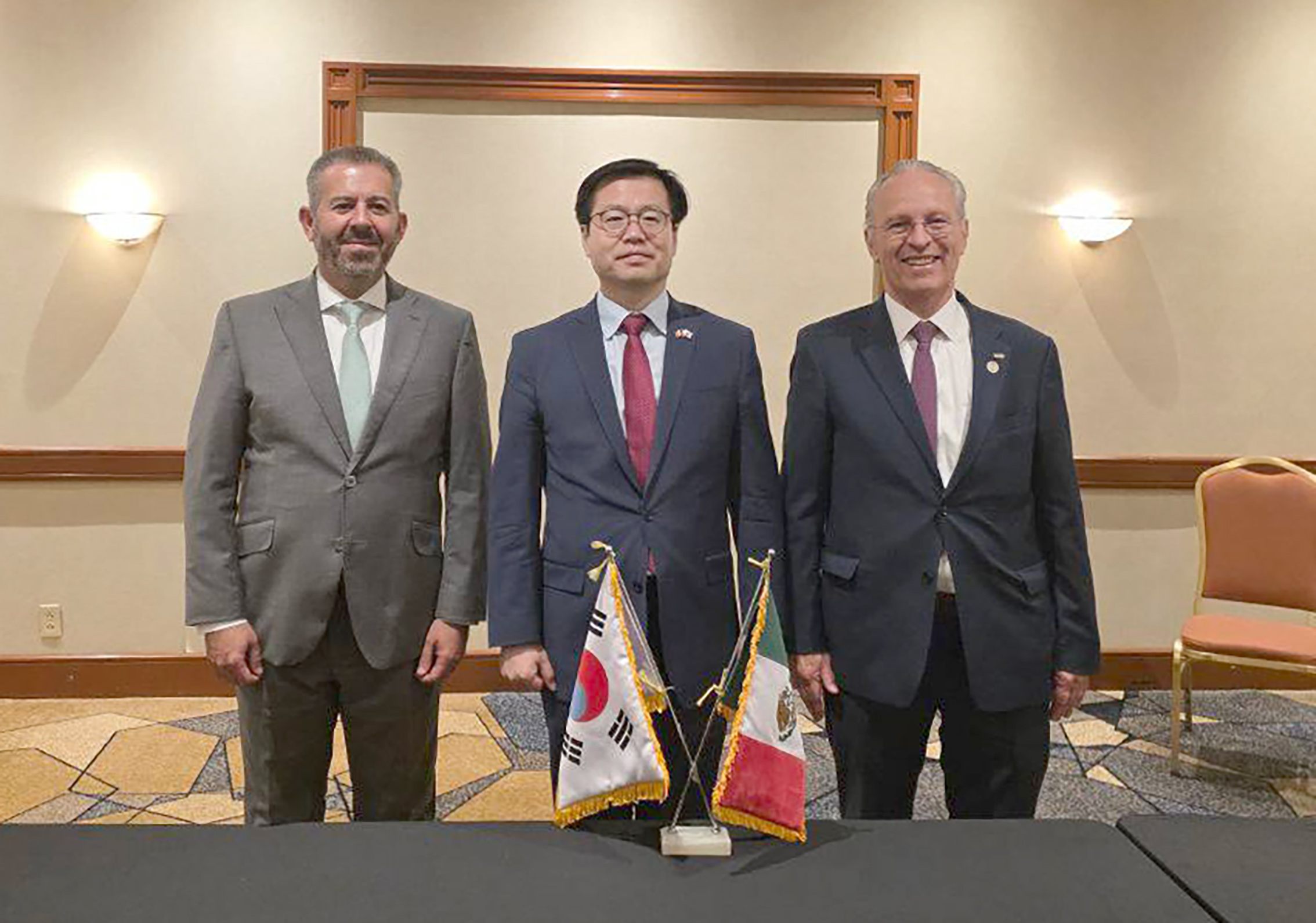
Trade Minister Yeo Han-koo of the Ministry of Trade, Industry and Resources (MOTIR, Minister JK Kim) met with Juan Carlos Baker Pineda, former Vice Minister for Foreign Trade of Mexico, and Roberto Zapata Barradas, former Ambassador and Permanent Representative of Mexico to the World Trade Organization (WTO), at the Sheraton Maria Isabel Hotel during his visit to Mexico on May 12, 2026. The meeting focused on the need for a Korea–Mexico FTA and ways to build support for resuming negotiations, as Korea and Mexico seek to improve and modernize their trade and investment relationship. date2026-05-14
-
FTA/Economic Cooperation
Meeting with Mexico’s Secretary of Economy
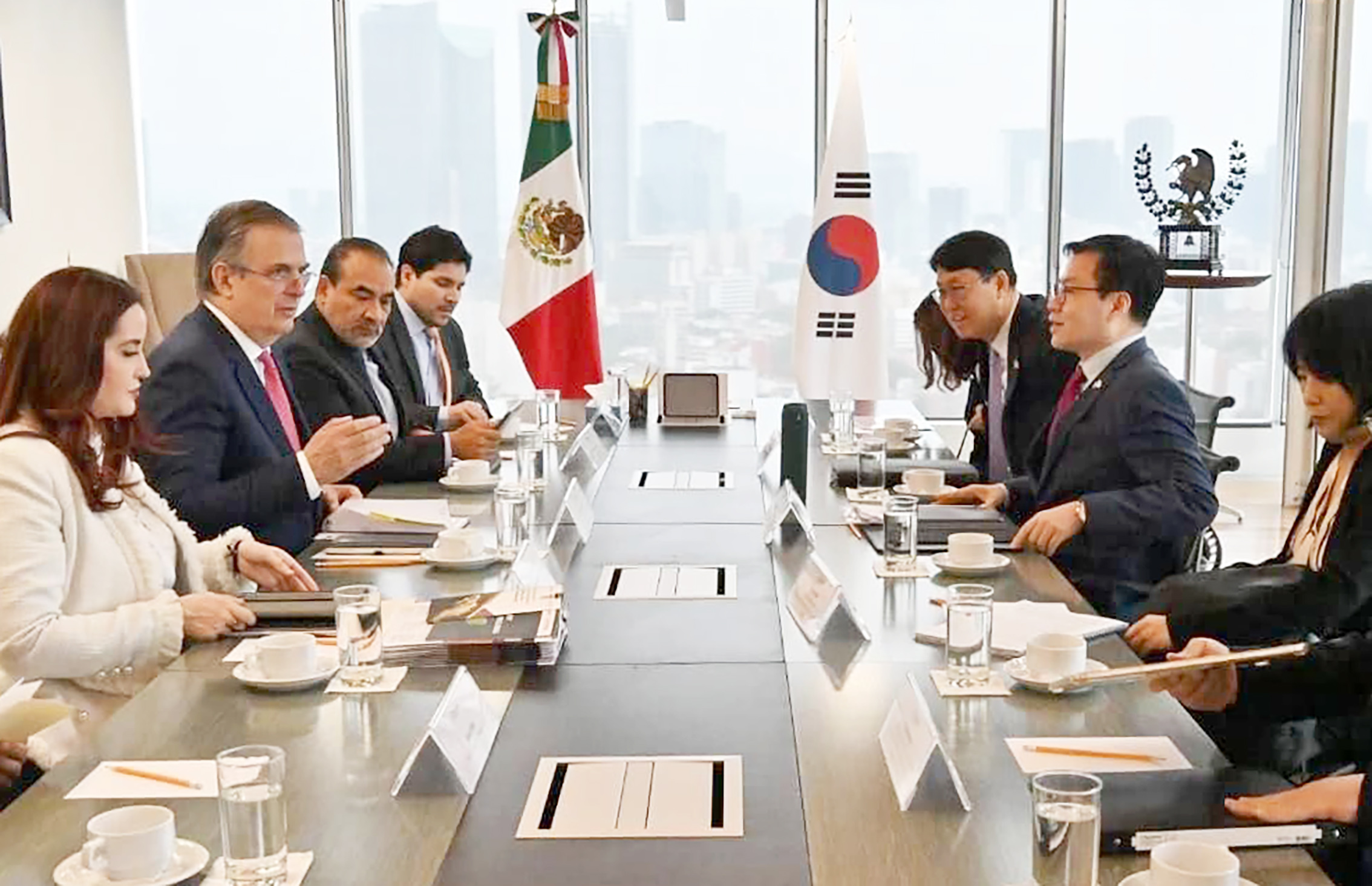
Trade Minister Yeo Han-koo of the Ministry of Trade, Industry and Resources (MOTIR, Minister JK Kim) met with Marcelo Ebrard, Mexico’s Secretary of Economy, at the Ministry of Economy in Mexico on May 12, 2026. The two sides discussed difficulties faced by Korean companies operating in Mexico and ways to resume Korea–Mexico FTA negotiations. The two sides agreed to improve and modernize the current trade and investment relationship, and to establish a ministerial Strategic Dialogue and a working-level Working Group between their trade authorities. date2026-05-14
-
FTA/Economic Cooperation
Korea–EU Trade Ministerial Meeting
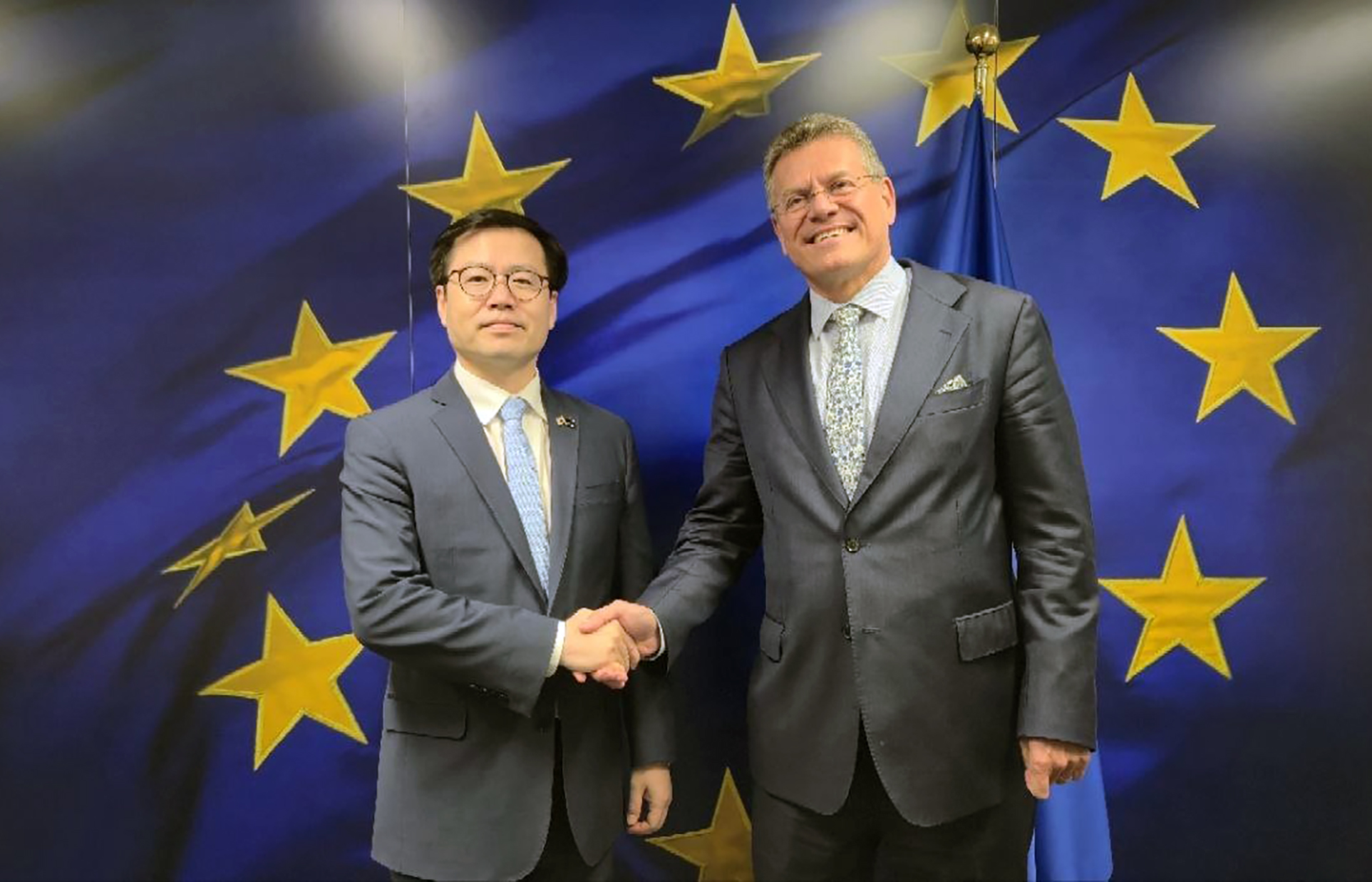
Trade Minister Yeo Han-koo of the Ministry of Trade, Industry and Resources (MOTIR, Minister JK Kim) met with Maroš Šefčovič, European Commissioner for Trade and Economic Security, at the European Commission headquarters in Brussels, Belgium, on May 11, 2026. “The government will use its full trade policy capacity to help Korean companies operating overseas invest with stability and remain competitive,” Trade Minister Yeo said. He added that MOTIR will continue to raise industry concerns through Korea–EU high-level consultations and follow-up working-level channels, while continuing discussions to ease regulatory burdens and improve market access. date2026-05-14
-
FTA/Economic Cooperation
Trade Minister Seeks EU Cooperation on Steel TRQs, Steps Up Outreach for Korea–Mexico FTA
Yeo Han-koo, Minister for Trade at the Ministry of Trade, Industry and Resources (MOTIR, Minister JK Kim) met with Maroš Šefčovič, European Commissioner for Trade and Economic Security, in Brussels, Belgium, on May 11, 2026, and conveyed Korean industry’s concerns over the EU’s planned steel import restrictions. As the EU prepares to implement a new steel measure in July 2026 to address overcapacity, including higher duties and tariff-rate quotas (TRQs) for 30 steel product categories, Minister Yeo requested the EU to take a careful, cooperative approach so Korean steel products are not subject to undue restrictions. Minister Yeo stressed that the EU is Korea’s second-largest steel export market and expressed serious concern that the measure could affect not only the steel industry, but also supply chains and stable production at Korean companies in Europe that manufacture finished goods, including automobiles and home appliances. The EU side agreed that steel is strategically important to both Korea and the EU, and said the two sides would continue to seek mutually beneficial solutions through high-level and working-level consultations. Ahead of the meeting, Minister Yeo met with Korean companies operating in the EU on May 10, 2026, to review business conditions and on-the-ground challenges in key industries, including steel, automobiles, and batteries. Companies said the EU’s tighter industrial and environmental regulations, including the Industrial Accelerator Act (IAA), the Carbon Border Adjustment Mechanism (CBAM), and steel import restrictions, are increasing local business burdens. They highlighted the need for government negotiations and support, expressing particular concern that planned steel import restrictions could extend the burden beyond steelmakers to downstream industries, including automobiles and home appliances. Korean battery companies operating in Poland said the EU’s decision in December 2025 to make the battery industry eligible for support as an “energy-intensive industry,” together with Poland’s follow-up legislative work, is expected to help ease electricity costs and reduce manufacturing costs. The companies said the outcome reflected close consultations among the Korean government, the European Commission and the Polish government, and requested continued government attention and support on protectionist measures, including tighter EU steel import restrictions. This outcome is a result of the government's sustained trade outreach to the EU and Poland. Through various consultation channels — including meetings with the EU Trade Commissioner and senior officials at Poland's Ministry of Economic Development and Technology — the Korean government had repeatedly called for the inclusion of the battery industry in the EU's list of supported "energy-intensive industries." Minister Yeo said, “The government will use its full trade policy capacity to help Korean companies operating overseas invest with stability and remain competitive.” He added that MOTIR will continue to raise industry concerns through Korea–EU high-level consultations and follow-up working-level channels, while continuing discussions to ease regulatory burdens and improve market access. Minister Discusses Mexico Tariff Issues, USMCA Review and Korea–Mexico FTA Minister Yeo visited Mexico from May 12 to 13, 2026, and met with government, parliamentary, and business leaders to build support for a Korea–Mexico FTA and create momentum for negotiations. Minister Yeo first met with Marcelo Ebrard, Mexico’s Secretary of Economy, and raised concerns over difficulties faced by Korean companies with manufacturing operations in Mexico for exports to the United States and Latin American markets, including Brazil, following Mexico’s tariff hikes on non-FTA partners. He date2026-05-14
-
FTA/Economic Cooperation
Korea and UAE Hold Forum on Investment in AI Infrastructure and Semiconductors
The Ministry of Trade, Industry and Resources (MOTIR, Minister JK Kim), the Ministry of Science and ICT (MSIT, Deputy Prime Minister and Minister Bae Kyung-hoon) and the National Artificial Intelligence (AI) Strategy Committee held the Korea-UAE Investment Forum on AI Infrastructure and Semiconductors in Seoul on May 13, 2026. Following Korea’s state visit to the UAE in November 2025, the two countries formed a public-private working group and have since discussed cooperation across the AI ecosystem, including infrastructure, models and services. The forum was held to build on those discussions and translate them into practical outcomes. A 25-member UAE delegation, led by H.E. Mohamed Abdul Rahman AlHawi, Undersecretary of the UAE Ministry of Investment, visited Korea for the forum. The delegation included senior representatives from Core42, MGX, the Advanced Technology Research Council (ATRC), the Technology Innovation Institute (TII), Mubadala and the Abu Dhabi Investment Authority (ADIA). H.E. Abdulla Saif Al Nuaimi, UAE Ambassador to Korea, also attended. At a high-level meeting, senior officials from both sides recognized the need for strategic cooperation to develop the AI ecosystem as global competition in AI continues to evolve rapidly. A high-level panel discussion then covered areas where the two countries can combine their strengths, including low-power, high-efficiency AI infrastructure using AI semiconductors such as neural processing units (NPUs), as well as specialized services and demonstrations based on local-language AI models. In the afternoon session, Korean companies introduced their technologies and business models through investment presentations on AI semiconductors, infrastructure and AI technologies. These were followed by business briefings, matching sessions and networking, giving companies from both countries an opportunity to discuss concrete investment cooperation. The Korean government plans to continue follow-up discussions so that the forum leads beyond a one-off exchange to tangible results, including complementary technology development and joint entry into overseas markets. “Competitiveness in the AI era depends not only on building AI infrastructure, but also on the ability to apply it in industrial settings,” said Kim Sung-youl, Deputy Minister for Industry and Growth at MOTIR. “The UAE brings strategic investment capacity and experience in large-scale projects, while Korea brings strengths in AI semiconductors, data centers and manufacturing. We will help the two sides identify practical opportunities in AI infrastructure and industrial AI, and support efforts to expand this cooperation into global markets.” “The UAE and the Republic of Korea have built a forward-looking partnership around a shared vision for future industries,” said H.E. Mohamed Abdul Rahman AlHawi, Undersecretary of the UAE Ministry of Investment. “That cooperation has gained strong momentum since the UAE announced its USD 30 billion investment commitment to Korea in 2023.” He added, “Major energy and AI projects, including Korea’s role in the Barakah Nuclear Energy Plant and Korean participation in the Stargate AI Data Center Campus project in the UAE, already show the strategic value of the partnership. This visit is expected to help extend cooperation across the AI value chain.” date2026-05-13
-
Industry
M.AX to Drive Smarter, Safer Manufacturing at Ulsan-Mipo Industrial Complex
The Ministry of Trade, Industry and Resources (MOTIR, Minister JK Kim) held a meeting of the Ulsan M.AX Innovation Network in Industrial Complexes (MINI) Alliance at the Ulsan Information Industry Promotion Agency (UIPA) on May 13, 2026, to discuss the M.AX strategy for Ulsan’s petrochemical sector and ways to expand it across the region. The meeting brought together manufacturing companies, AI firms, universities, research institutes and local governments. The meeting marked the first time Minister Kim chaired a MINI Alliance meeting since MOTIR launched the Industrial Complex AX Subcommittee under the M.AX Alliance and 10 MINI Alliances in February 2026. The Ulsan-Mipo National Industrial Complex is Korea’s largest hub for automobiles, shipbuilding and petrochemicals, and has symbolized the growth of Korea’s key industries since the 1960s. It is also one of Korea’s leading petrochemical clusters, representing 48 percent of companies, 45 percent of production and 43 percent of exports across the country’s three main petrochemical complexes—Ulsan, Yeosu and Daesan—and underpinned by more than 60 years of process operation expertise and industrial data. Ahead of the meeting, Minister Kim visited SK Energy’s plant, a lead site where petrochemical AX is being demonstrated in an industrial complex setting. There, he saw firsthand how AI models could support process, equipment and safety management. SK Energy is applying AI across its operations, including an AI virtual sensor that predicts diesel quality indicators at its Fluid Catalytic Cracking (FCC) unit in real time, a predictive diagnosis algorithm that monitors vibration and temperature in rotating equipment, and on-site monitoring based on AI-powered video analysis. The Ulsan MINI Alliance is focusing on production process optimization, equipment predictive maintenance and safety management, areas where AI demand is strong across the petrochemical sector. AI models validated in Ulsan are expected to spread quickly to other industrial complexes and similar sectors nationwide. MOTIR will support the early development of leading M.AX models for petrochemicals at the Ulsan-Mipo National Industrial Complex and turn them into scalable examples. The effort is expected to strengthen the competitiveness of Korea’s petrochemical industry against immediate challenges such as global oversupply and the recent situation in the Middle East. After the site visit, Lee Dong-gu, Chair of the Ulsan MINI Alliance, and Park Min-won, Chair of the Industrial Complex AX Subcommittee, gave presentations before a participant discussion. Participants supported the government’s industrial complex AX strategy and called for faster rollout, balanced data use and security, regulatory sandboxes and specialized workforce training. “Ulsan is a core manufacturing hub for Korea, with extensive industrial data and manufacturing capabilities,” Minister Kim said. “Through the Ulsan MINI Alliance, we will deploy AI models that optimize production, improve equipment integrity and prevent accidents, creating manufacturing sites that are more precise, faster and safer. We will make Ulsan a regional base for accelerating M.AX.” date2026-05-13