-
FTA/Economic Cooperation
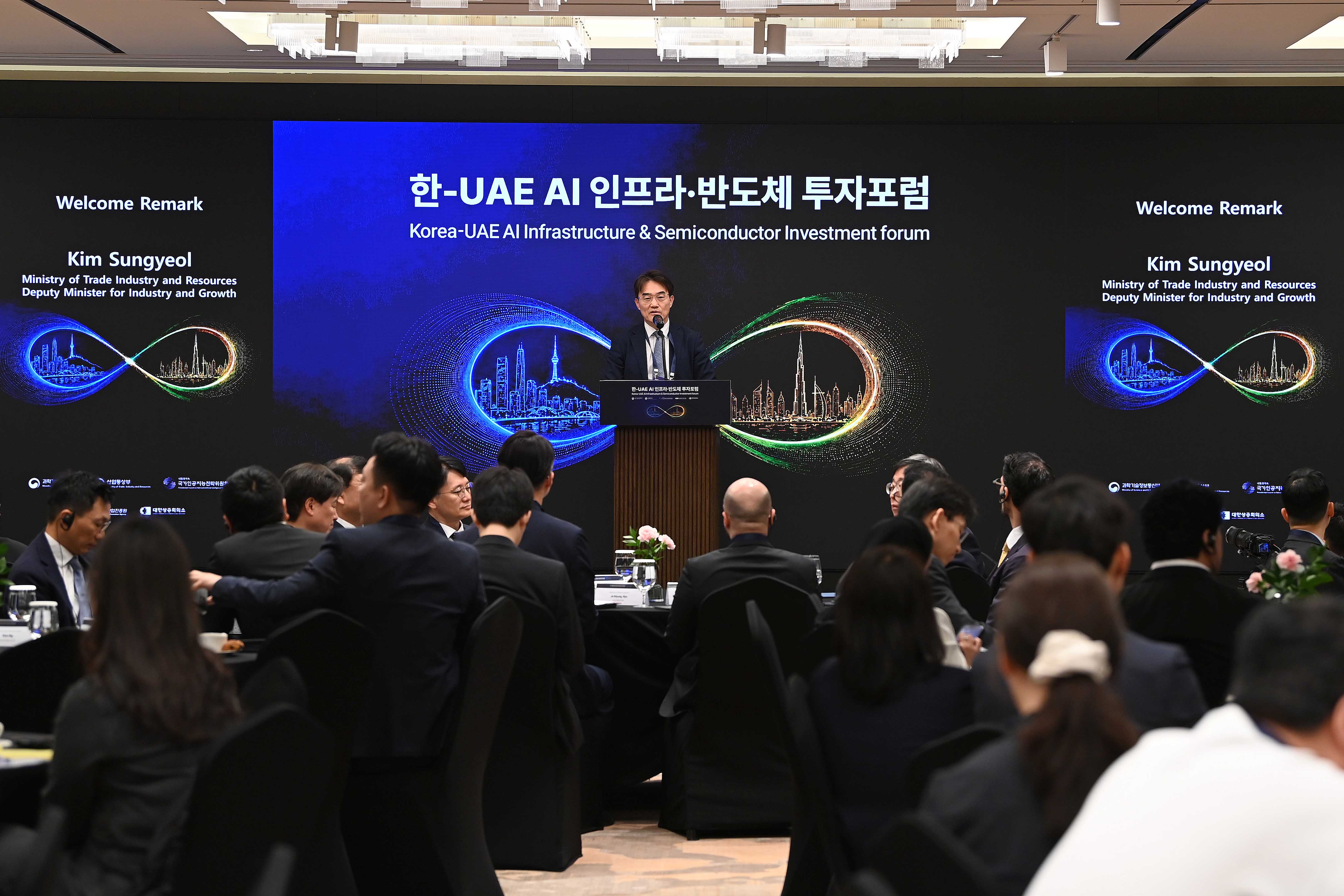
Korea-UAE Investment Forum on AI Infrastructure and Semiconductors
Kim Sung-youl, Deputy Minister for Industry and Growth at the Ministry of Trade, Industry and Resources (MOTIR, Minister JK Kim), attended the Korea-UAE Investment Forum on AI Infrastructure and Semiconductors in Seoul on May 13, 2026. The forum brought together Ryu Je-myung, Second Vice Minister of Science and ICT at the Ministry of Science and ICT (MSIT); H.E. Mohamed Abdul Rahman AlHawi, Undersecretary of the UAE Ministry of Investment; and officials and business representatives from Korea and the UAE. “Competitiveness in the AI era depends on both AI infrastructure and the ability to apply it in industry,” Deputy Minister Kim said. “By combining the UAE’s investment capacity and large-scale project experience with Korea’s strengths in AI semiconductors, data centers and manufacturing, we will help identify practical opportunities in AI infrastructure and industrial AI and support efforts to expand this cooperation into global markets.” date2026-05-13
-
Industry
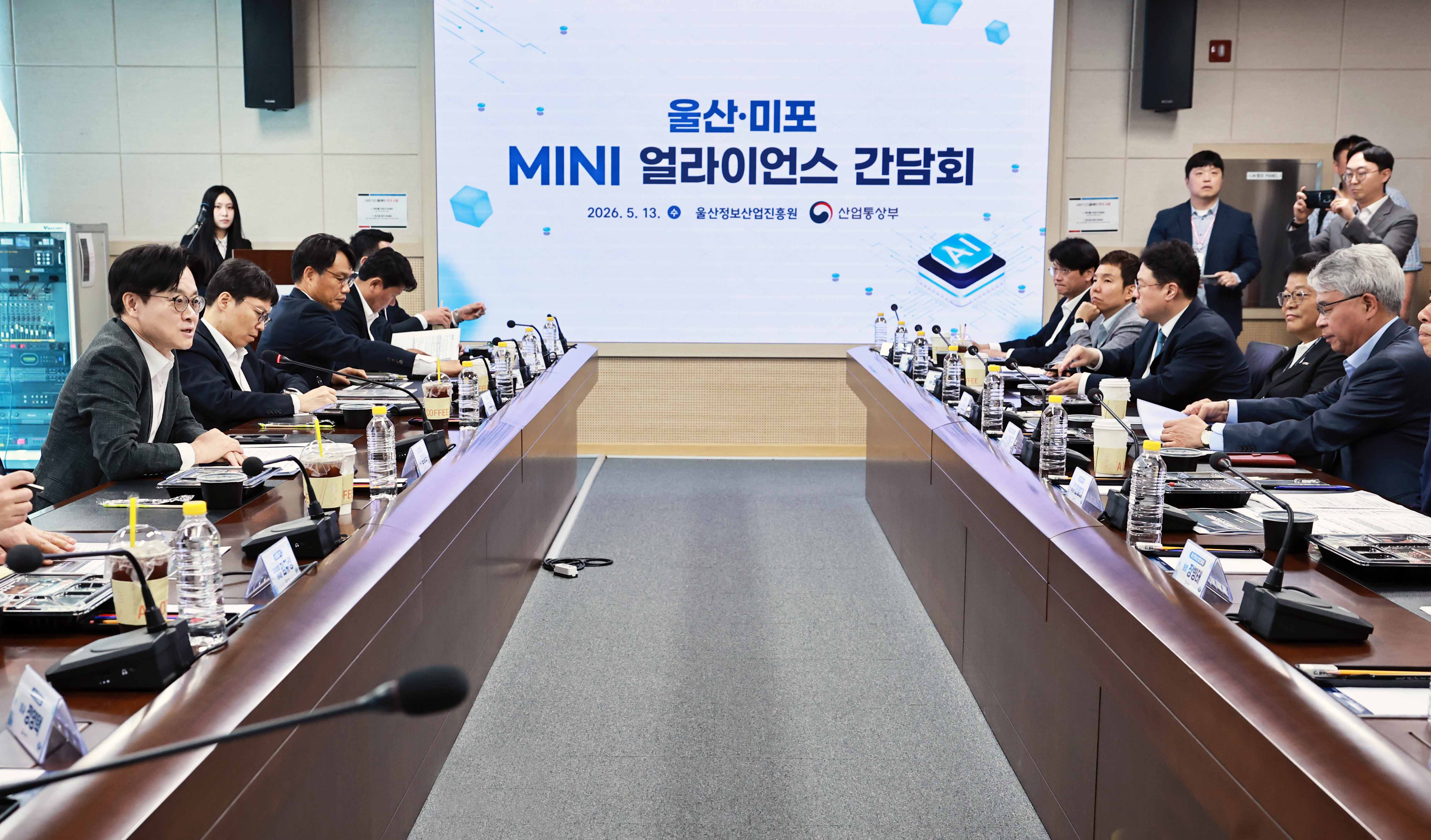
Ulsan-Mipo MINI Alliance Meeting
Minister JK (Jung-Kwan) Kim of the Ministry of Trade, Industry and Resources (MOTIR) chaired the Ulsan-Mipo MINI Alliance Meeting at the Ulsan Information Industry Promotion Agency (UIPA) on May 13, 2026. The meeting was attended by Lee Dong-gu, Chair of the Ulsan MINI Alliance; Park Min-won, Chair of the Industrial Complex AX Subcommittee; and participants from manufacturing companies, AI firms, universities, research institutes and local governments. Minister Kim delivered opening remarks and discussed Ulsan’s petrochemical M.AX strategy and regional rollout plans. “Through the Ulsan MINI Alliance, we will deploy AI models to optimize production, improve equipment integrity and prevent accidents, making manufacturing sites more precise, faster and safer,” Minister Kim said. date2026-05-13
-
Industry
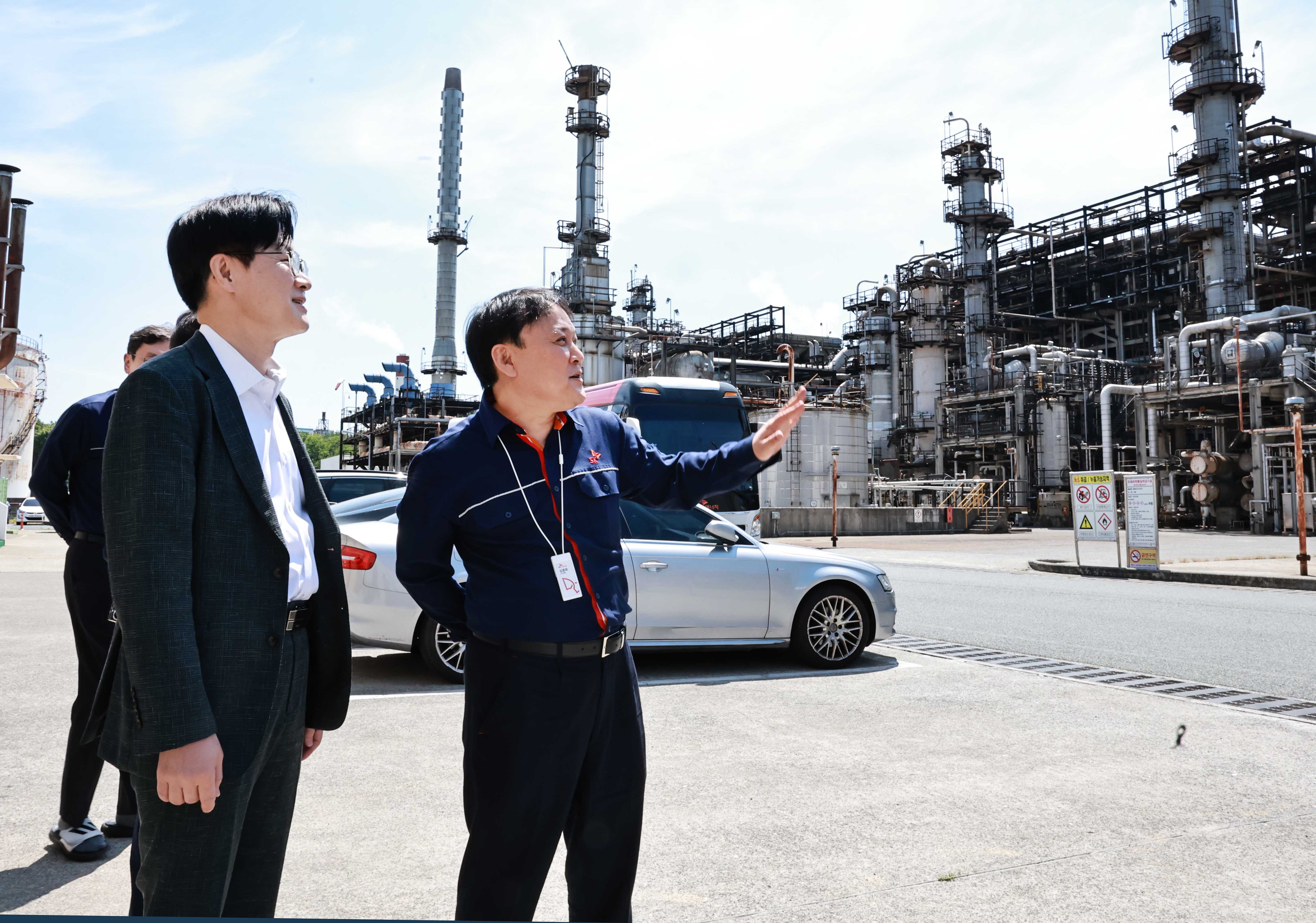
Minister JK Kim Visits SK Energy’s Ulsan Plant
Minister JK (Jung-Kwan) Kim of the Ministry of Trade, Industry and Resources (MOTIR) visited SK Energy’s Ulsan plant on May 13, 2026. The plant is a lead site for demonstrating petrochemical AX in an industrial complex setting. During the visit, Minister Kim heard from company officials about SK Energy’s operations and on-site challenges, and reviewed firsthand how AI models could support process, equipment and safety management. SK Energy is developing AI applications including real-time diesel quality prediction at its Fluid Catalytic Cracking (FCC) unit, predictive diagnostics for rotating equipment, and AI-powered video monitoring. date2026-05-13
-
Trade/Investment
MOTIR Launches K-Export Star 500 to Develop 500 Key Exporters
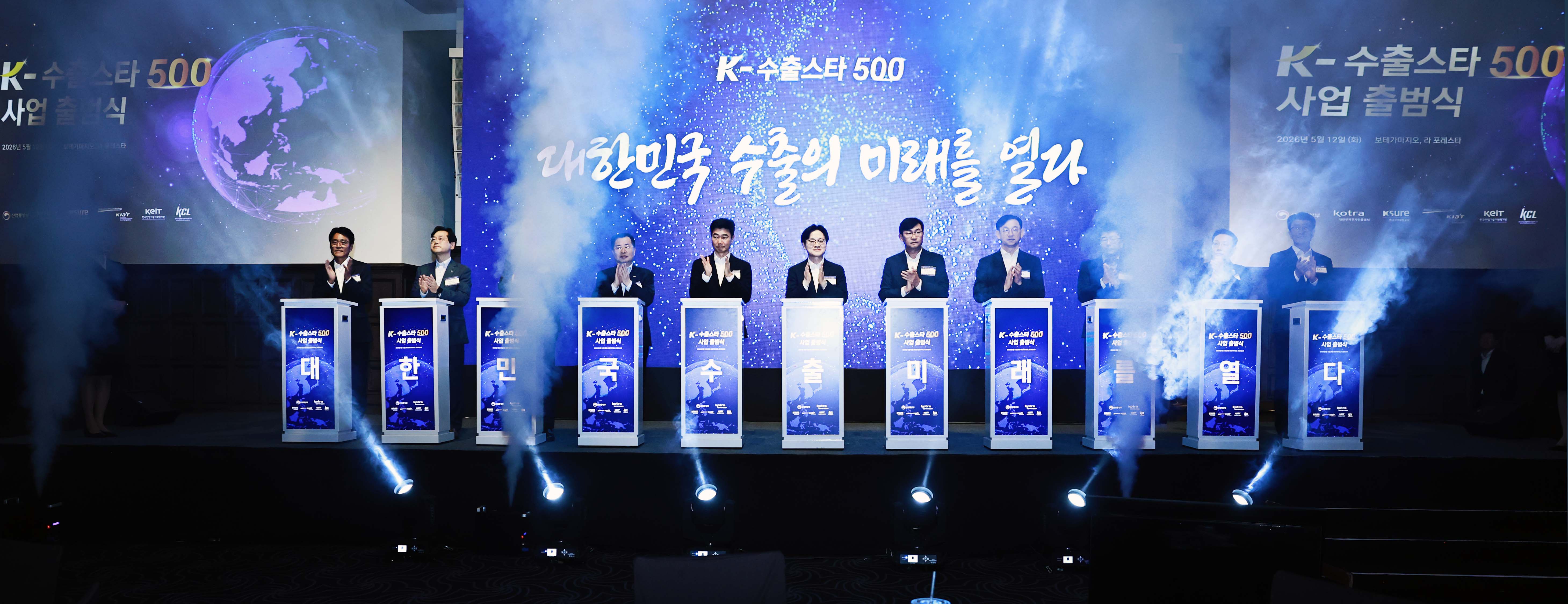
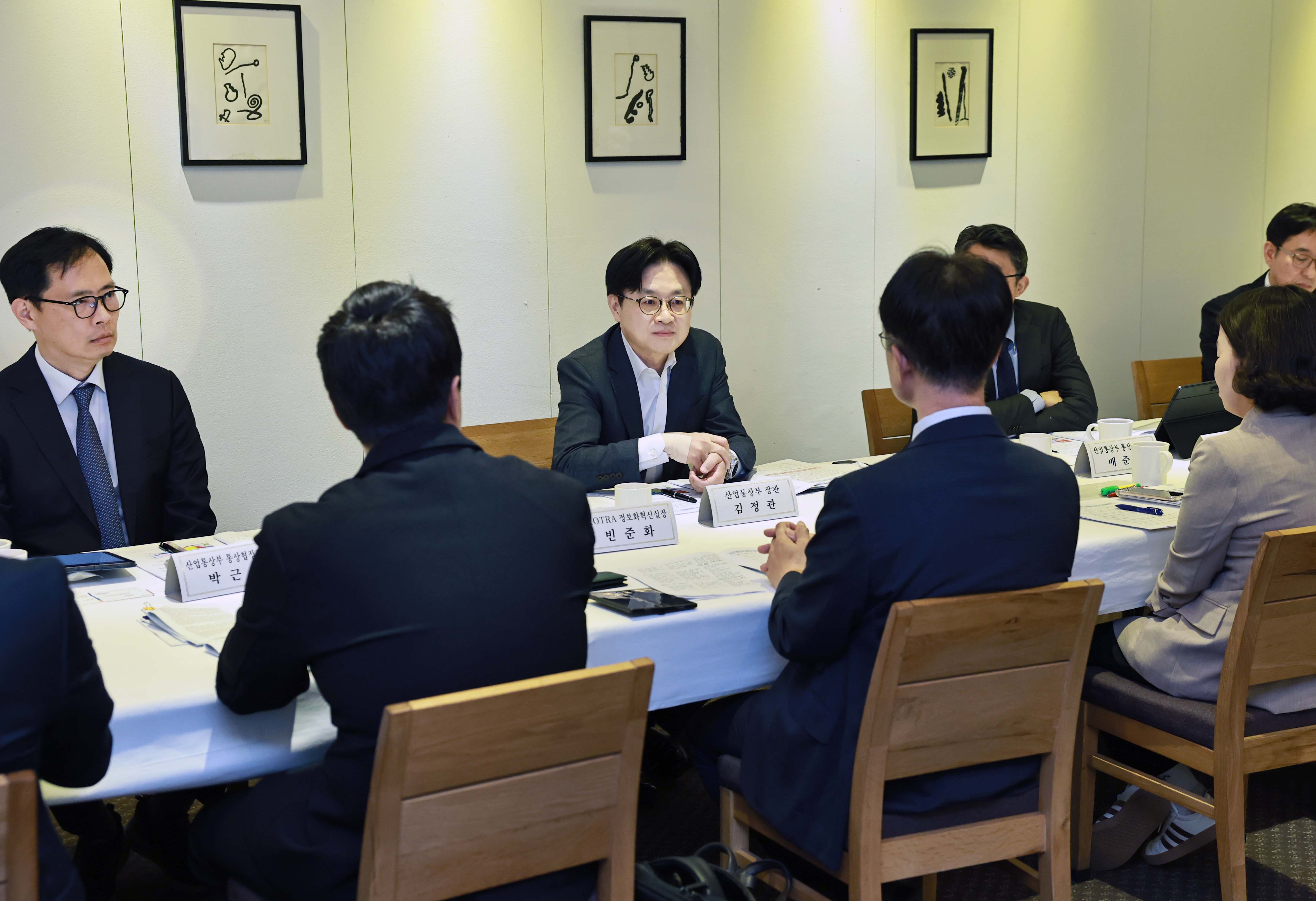
The Korean government will run a customized export support program from 2026 through 2030 to develop 500 key exporters with annual exports of at least USD 10 million. Selected companies will receive package support in marketing, finance, and certification from five export support agencies, with assistance of up to KRW 560 million per company for up to three years. The Ministry of Trade, Industry and Resources (MOTIR, Minister JK Kim) held a launch ceremony and business roundtable for the K-Export Star 500 program in Seoul on May 12, 2026. The event brought together 100 promising companies selected for this year’s program and relevant organizations. MOTIR established K-Export Star 500 this year to narrow export disparities by helping high-potential SMEs and middle market enterprises grow into “export stars” with annual exports of at least USD 10 million. Applications opened in January 2026, and 100 promising SMEs and middle market enterprises in consumer goods, mainstay industries and advanced industries were selected for support this year. The event consisted of a business roundtable to gather feedback from exporters, followed by a launch ceremony. The roundtable was held at JUNGSAEMMOOL Beauty’s Seongsu flagship store, where seven representative companies across sectors shared practical challenges in entering overseas markets, including obtaining overseas certification and conducting joint local marketing. The Korean government will work with five export support agencies—the Korea Trade-Investment Promotion Agency (KOTRA), Korea Trade Insurance Corporation (K-SURE), Korea Conformity Laboratories (KCL), Korea Institute for Advancement of Technology (KIAT) and Korea Planning & Evaluation Institute of Industrial Technology (KEIT)—to address companies’ export challenges and strengthen customized support throughout the export process. At the ceremony, the K-Export One Team digital agreement was concluded following congratulatory remarks by Minister JK Kim. The agreement launches the Export Star Makers framework, enabling participating organizations to work beyond institutional boundaries and provide integrated support in marketing, finance, certification, technology and R&D based on company demand. “Amid growing external uncertainty, it is critical to build a broader base of export stars that each generate at least USD 10 million in annual exports and form the backbone of Korea’s exports,” Minister Kim said. “The government and the five export support agencies will work as one team to build an export support system that responds quickly to company needs.” date2026-05-12
-
Trade/Investment
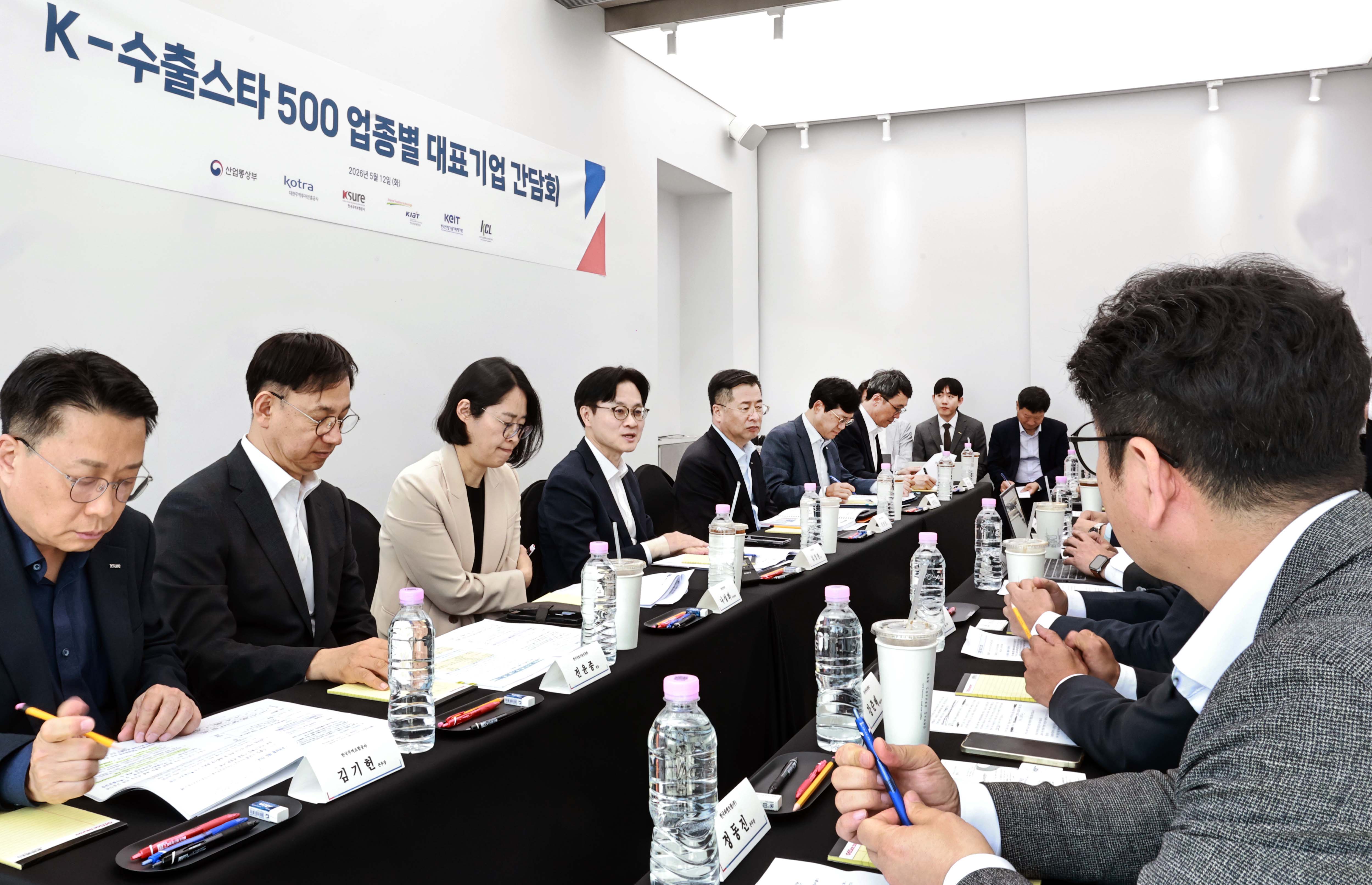
K-Export Star 500 Sector Roundtable
Minister JK Kim of the Ministry of Trade, Industry and Resources (MOTIR, Minister JK Kim) chaired the K-Export Star 500 sector roundtable at JUNGSAEMMOOL Beauty’s Seongsu flagship store in Seoul on May 12, 2026. The roundtable was attended by officials from K-Export Star 500 companies and export support agencies, including Kang Kyung-sung, CEO & President of the Korea Trade-Investment Promotion Agency (KOTRA); Jeon Yoon-jong, President of the Korea Institute for Advancement of Technology (KIAT); Cheon Young-ghil, President of Korea Conformity Laboratories (KCL); Yoo Jae-woong, Vice President of JUNGSAEMMOOL Beauty; Kim Seok-jin, CEO of Cha Meditech Co., Ltd.; and Kang Jun-bae, CEO of Kuna NT. After delivering opening remarks, Minister Kim discussed challenges companies face in entering overseas markets, including obtaining overseas certification and holding joint local pop-up events, and toured the flagship store. date2026-05-12
-
Trade/Investment
K-Export Star 500 Launch Ceremony
Minister JK Kim of the Ministry of Trade, Industry and Resources (MOTIR, Minister JK Kim) attended the K-Export Star 500 launch ceremony in Seoul on May 12, 2026. At the ceremony, Minister Kim delivered congratulatory remarks and took part in the K-Export Support Team digital agreement declaration. The ceremony was attended by representatives and officials from the 100 companies selected for K-Export Star 500, including JUNGSAEMMOOL Beauty, CHA Meditech and KunaNT, as well as heads of export support agencies, including the Korea Trade-Investment Promotion Agency (KOTRA), Korea Institute for Advancement of Technology (KIAT) and Korea Conformity Laboratories (KCL). Minister Kim said the government and five export support agencies will work as one team to build an export support system that responds quickly to company needs and helps more Korean firms grow into export stars with annual exports of at least USD 10 million. date2026-05-12
-
FTA/Economic Cooperation
MOTIR Holds Expert Meeting on Economic Cooperation with India, One of the World’s Leading Economies
Minister JK (Jung-Kwan) Kim of the Ministry of Trade, Industry and Resources (MOTIR) held an expert meeting on May 11, 2026, to discuss ways to expand Korea-India economic cooperation. The meeting reviewed follow-up steps for the economic outcomes of President Lee Jae Myung’s state visit to India from April 19 to 21, 2026, and explored specific policy tasks to further develop bilateral economic cooperation. At the meeting, Minister Kim said, “At the summit, the two countries agreed to establish the Korea-India Industrial Cooperation Committee, their first ministerial-level platform for industry and resource cooperation. They also signed a series of investment and cooperation MOUs in areas with strong cooperation demand, including shipbuilding and steel.” Minister Kim noted, however, that the current level of Korea-India economic and industrial cooperation has yet to match the two countries’ potential and expectations. He requested practical policy suggestions from the experts based on their field experience and research. The meeting brought together experts from major economic and research institutions, including the Korea Institute for International Economic Policy (KIEP), the Korea Institute for Industrial Economics and Trade (KIET), the Korea Trade-Investment Promotion Agency (KOTRA), the Korea International Trade Association (KITA) and the Korea Industrial Complex Corporation (KICOX). The experts held in-depth discussions on practical and concrete agenda items, including ways to develop a dedicated industrial complex for Korean companies in India; other countries’ economic cooperation policies toward India; a structural analysis of India’s growing trade deficit with Korea and possible response options; and sector-specific bilateral cooperation in promising industries. Experts noted that India, with a population of about 1.43 billion and GDP exceeding USD 4 trillion, is emerging as a key production base and promising market amid the realignment of global supply chains. While large companies have made inroads into the Indian market, infrastructure and regulatory complexities can present challenges for small and medium-sized enterprises. The experts therefore stressed the need for a dedicated industrial complex for Korean companies in India to ease infrastructure and permitting burdens and strengthen the benefits of business clustering. They also shared successful cases of other countries’ entry into India and stressed the need for a more structured market-entry strategy. Experts also analyzed that Korean companies’ supply chains in India are largely built around importing intermediate goods, processing them locally and selling them in the domestic market, a structure that has contributed to India’s trade deficit with Korea. They stressed the need to reshape these supply chains over the long term to build a more sustainable basis for bilateral cooperation. This would include developing India-based production sites in promising industries into global production and export hubs, while localizing intermediate goods production. MOTIR plans to incorporate the views raised at the meeting into its policies and work closely with relevant ministries and organizations to strengthen the implementation of Korea-India industrial cooperation and help translate the outcomes of the state visit into concrete follow-up measures. date2026-05-11
-
FTA/Economic Cooperation
Expert Meeting on Expanding Korea–India Economic Cooperation
Minister JK (Jung-Kwan) Kim of the Ministry of Trade, Industry and Resources (MOTIR, Minister JK Kim) chaired an expert meeting on expanding Korea–India economic cooperation in Seoul on May 11, 2026. The meeting reviewed follow-up steps for the economic outcomes of President Lee Jae Myung’s state visit to India from April 19 to 21, 2026, and explored specific policy tasks to further develop bilateral economic cooperation. The meeting brought together experts from major economic and research institutions, including the Korea Institute for International Economic Policy (KIEP), the Korea Institute for Industrial Economics and Trade (KIET), the Korea Trade-Investment Promotion Agency (KOTRA), the Korea International Trade Association (KITA) and the Korea Industrial Complex Corporation (KICOX). “At the summit, the two countries agreed to establish their first ministerial-level platform for industry and resource cooperation and signed several MOUs in sectors with strong cooperation potential, including shipbuilding and steel,” Minister Kim said. He said bilateral economic and industrial cooperation has yet to match the two countries’ potential and expectations, and requested practical policy suggestions from the experts based on their field experience and research. date2026-05-11
-
FTA/Economic Cooperation
Signing Ceremony for MOU on the Korea–U.S. Shipbuilding Partnership Initiative
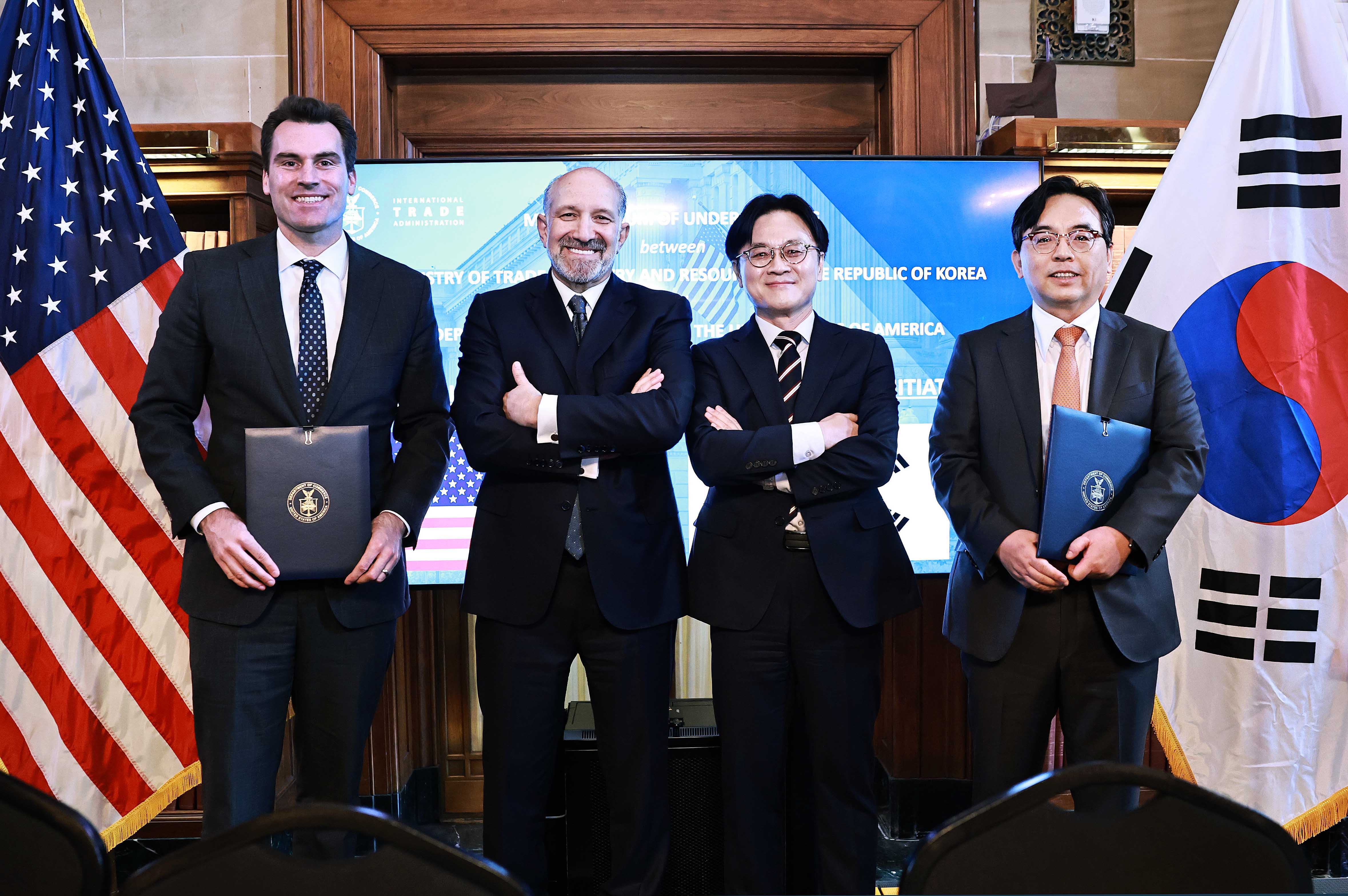
Minister JK (Jung-Kwan) Kim of the Ministry of Trade, Industry and Resources (MOTIR) attended a signing ceremony for an MOU launching the Korea–U.S. Shipbuilding Partnership Initiative (KUSPI) at the U.S. Department of Commerce in Washington, D.C., on May 8, 2026. The ceremony was held in the presence of Minister Kim and U.S. Secretary of Commerce Howard Lutnick. The MOU was signed by Deputy Minister for Trade Park Jung-sung of MOTIR and U.S. Under Secretary of Commerce for International Trade William Kimmitt. Under the MOU, the two sides agreed to establish the Korea–U.S. Shipbuilding Partnership Center to support company-to-company cooperation projects, including joint R&D, technology exchanges and direct investment. date2026-05-11
-
FTA/Economic Cooperation
Virtual Meeting with U.S. Senator Bill Hagerty
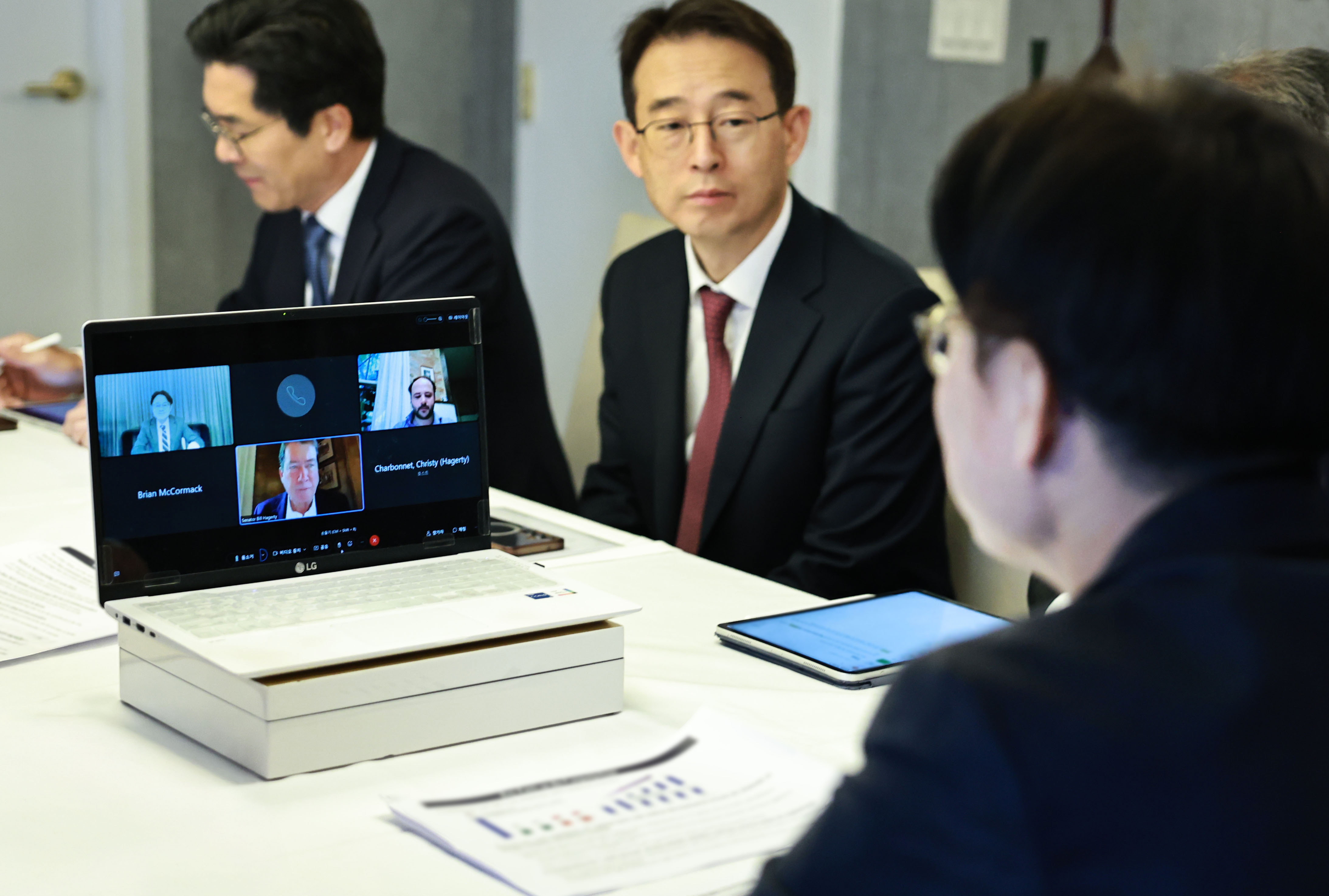
Minister JK (Jung-Kwan) Kim of the Ministry of Trade, Industry and Resources (MOTIR) held a video meeting with U.S. Senator Bill Hagerty of Tennessee from Washington, D.C., on May 8, 2026. The two sides discussed Korea–U.S. cooperation in areas of mutual interest, including nuclear power. The two sides also held talks to build mutual understanding on digital and other issues. date2026-05-11