-
FTA/Economic Cooperation
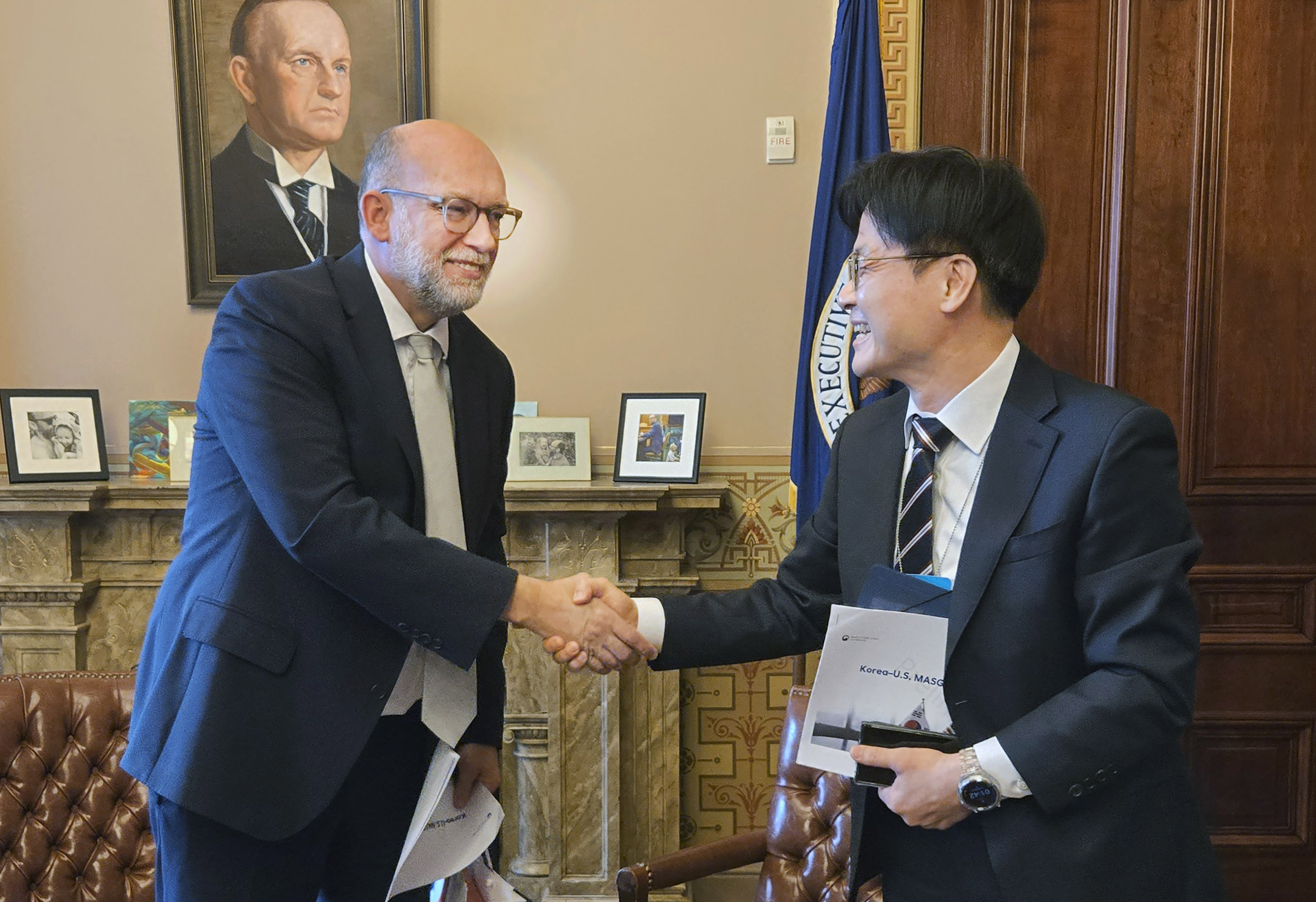
Meeting with Director of the Office of Management and Budget
Minister JK (Jung-Kwan) Kim of the Ministry of Trade, Industry and Resources (MOTIR) met with Russell Vought, Director of the Office of Management and Budget (OMB), in Washington, D.C., on May 7, 2026. Minister Kim requested OMB’s support for Korea’s efforts to advance the MASGA project, and the two sides exchanged views on strengthening Korea–U.S. shipbuilding cooperation. date2026-05-11
-
FTA/Economic Cooperation
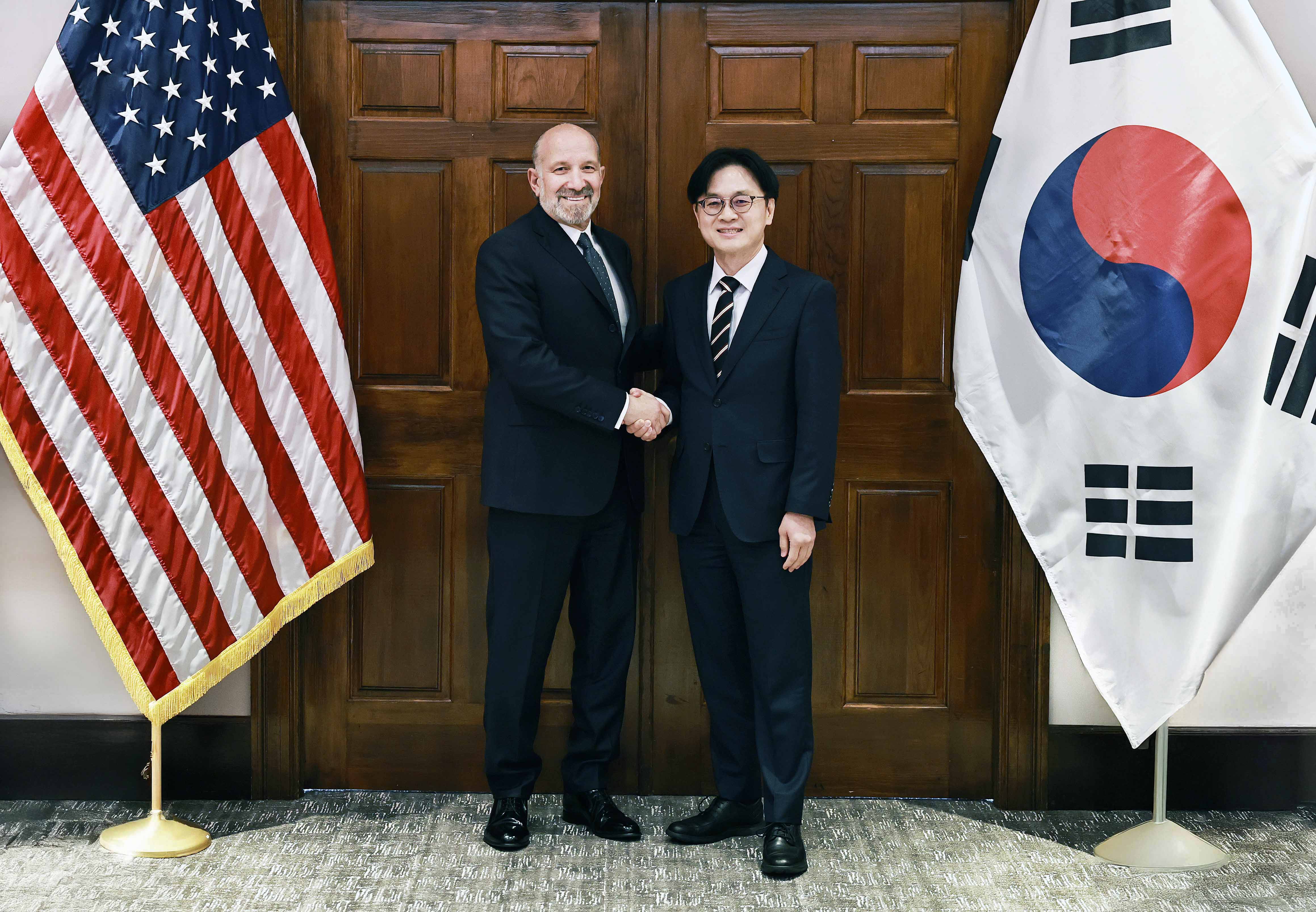
Meeting with U.S. Secretary of Commerce
Minister JK (Jung-Kwan) Kim of the Ministry of Trade, Industry and Resources (MOTIR) met with U.S. Secretary of Commerce Howard Lutnick at the U.S. Department of Commerce in Washington, D.C., on May 8, 2026. The two sides discussed directions for investment in the United States and other key issues. Minister Kim said MOTIR will continue close communication with the U.S. side on strategic investment projects in the United States, while working to deepen Korea–U.S. cooperation in industry and energy and manage trade issues without disruption. date2026-05-11
-
FTA/Economic Cooperation
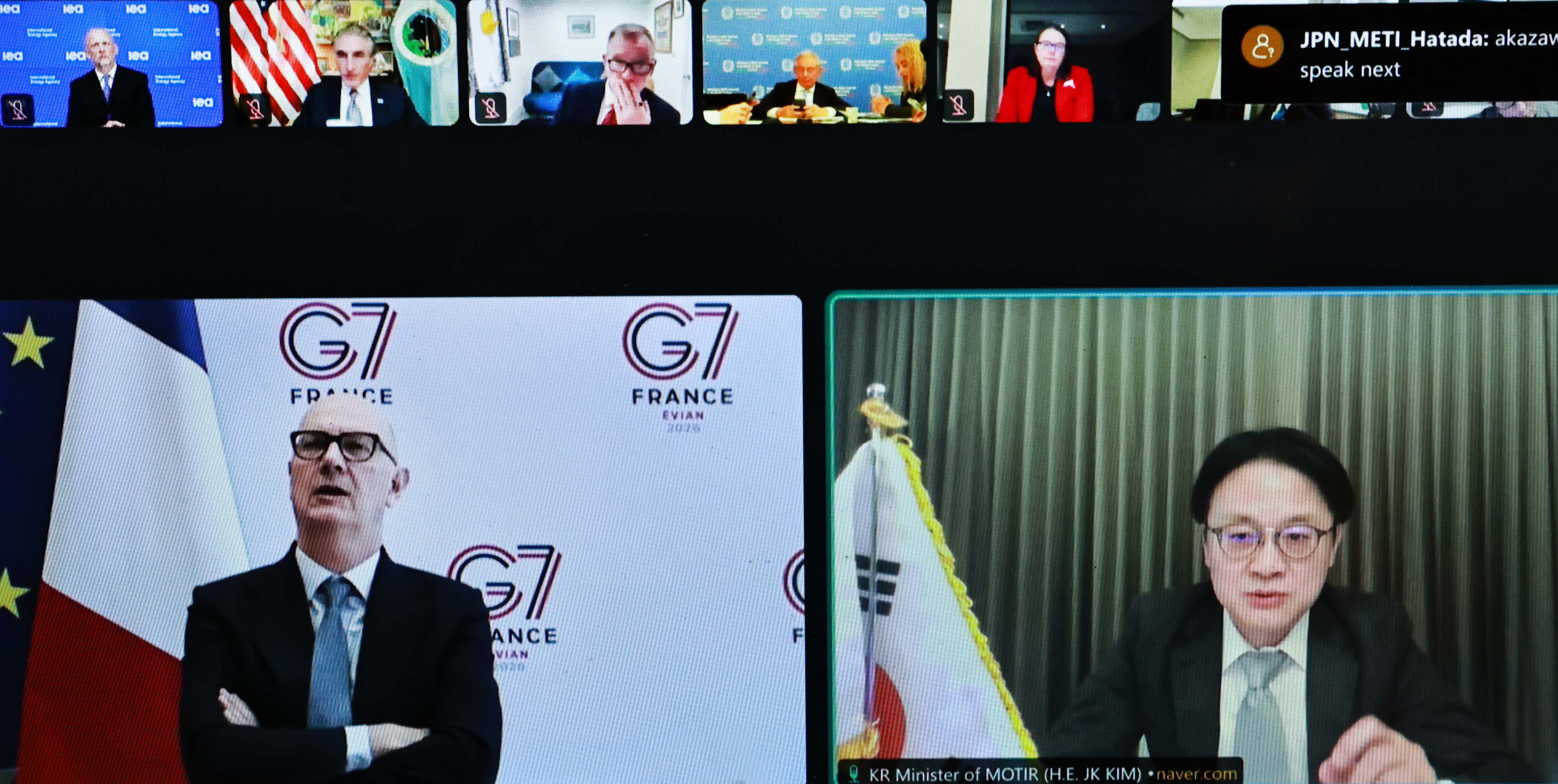
G7 Critical Minerals Ministers’ Virtual Meeting
Minister JK (Jung-Kwan) Kim of the Ministry of Trade, Industry and Resources (MOTIR) participated by videoconference in the G7 Critical Minerals Ministers’ Meeting from Washington, D.C., on May 7, 2026, during his visit to the United States to discuss ways to strengthen cooperation on global critical minerals supply chains. The meeting was chaired by France, the 2026 G7 president, and attended by G7 members, including the United States, Canada, Italy, Germany, Japan and the United Kingdom. “Korea welcomes discussions on cooperation among the G7 and partner countries,” Minister Kim said. “Countries need to work together to prepare for supply chain disruptions and stabilize critical minerals supplies, using a flexible mix of policy tools suited to their circumstances.” date2026-05-11
-
FTA/Economic Cooperation
MOTIR Minister Discusses U.S. Strategic Investment and Key Issues with U.S. Administration and Congress
Minister JK (Jung-Kwan) Kim of the Ministry of Trade, Industry and Resources (MOTIR) visited Washington, D.C., from May 6 to 9, 2026, where he met with key U.S. officials and lawmakers to discuss strategic investment projects in the United States and ways to strengthen Korea–U.S. cooperation in industry and trade. Minister Kim began his visit with a meeting with U.S. Secretary of Commerce Howard Lutnick. He briefed the U.S. side on Korea’s progress in drafting implementing regulations and establishing an implementation framework for the recently passed Special Act for Korea–U.S. Strategic Investment Management. Drawing on earlier talks on shipbuilding, energy and other shared priorities, the two sides also discussed more concrete directions for strategic investment projects in the U.S. At the meeting, MOTIR and the U.S. Department of Commerce signed an MOU launching the Korea–U.S. Shipbuilding Partnership Initiative (KUSPI). The two sides agreed to establish the Korea–U.S. Shipbuilding Partnership Center to support company-to-company cooperation projects, including joint R&D and direct investment, and cooperate on workforce training and information sharing. Minister Kim also met with Russell Vought, Director of the Office of Management and Budget (OMB), which oversees the U.S. federal budget, and requested OMB’s support for Korea’s efforts to advance the MASGA project. In a separate meeting with U.S. Secretary of Energy Chris Wright, the two sides reviewed progress in Korea–U.S. energy discussions, including nuclear power, and discussed ways to expand cooperation. Minister Kim also held a video meeting with U.S. Senator Bill Hagerty of Tennessee, a leading advocate of stronger Korea–U.S. ties in Congress, to discuss cooperation in areas of mutual interest, including nuclear power. He also utilized the visit to build mutual understanding on digital and other issues. MOTIR will continue close communication with the U.S. side on strategic investment projects in the United States, while working to deepen Korea–U.S. cooperation in industry and energy and manage trade issues without disruption. date2026-05-11
-
FTA/Economic Cooperation
Korea Calls for Multilateral Discussions on WTO Reform and Extension of E-Commerce Moratorium
Kwon Hye-jin, Deputy Minister for Trade Negotiations at the Ministry of Trade, Industry and Resources (MOTIR, Minister JK Kim), attended the World Trade Organization (WTO) General Council held in Geneva, Switzerland, from May 6 to 7, 2026, as Korea’s head of delegation. Deputy Minister Kwon took part in follow-up discussions on the 14th WTO Ministerial Conference (MC14), held in Yaoundé, Cameroon, in March 2026. Korea also put forward an agenda item on collective restraint by WTO members on measures that run counter to trade liberalization. Through the item, Korea called for a coordinated multilateral response to the recent spread of trade-restrictive measures. Follow-up Discussions on MC14 Outcomes, Including WTO Reform The General Council was the first high-level multilateral meeting since MC14 and marked the start of substantive follow-up discussions on key unresolved issues that remained pending after the conference. At MC14, Korea served as ministerial coordinator for WTO reform and led efforts to forge convergence on the draft WTO reform work plan, and as the co-chair of the Investment Facilitation for Development Agreement (IFDA) alongside with Chile, Korea has led discussions on incorporating the IFDA, which was concluded in 2024 but has not yet entered into force, into the WTO legal framework. During the Council, Deputy Minister Kwon stressed the importance and urgency of restoring confidence in the multilateral trading system. She called for WTO reform discussions to advance swiftly based on the draft WTO reform work plan. Deputy Minister Kwon also expressed regret that MC14 did not extend the nearly 30-year moratorium on customs duties on electronic transmissions. She emphasized the importance of extending the moratorium to ensure stability and predictability in digital trade. On the IFDA, she proposed that members begin discussing concrete steps for its timely entry into force and implementation so that the agreement can help improve the investment environment in developing countries. Call for Restraint on Measures that Could Undermine Trade Liberalization Korea raised concerns that the recent spread of trade-restrictive measures, including import restrictions on steel and related products, could undermine trade liberalization. Deputy Minister Kwon said, “Relying on short-term tariff increases could set off a cycle of retaliation among countries.” She stressed that structural issues, including excess capacity and subsidies, should be addressed at their source, and called on WTO members to exercise joint restraint on measures that could undermine trade liberalization. Deputy Minister Kwon also held bilateral consultations with key WTO members, including the United Kingdom, Japan and Türkiye. During the consultations, Korea raised concerns over recent protectionist measures introduced by the EU and the United Kingdom, including steel safeguard tariff-rate quotas (TRQs), and exchanged views on broader trade issues. “Amid the spread of global protectionism, Korea has actively raised the TRQ challenges facing its steel industry through both multilateral and bilateral channels,” Deputy Minister Kwon said. “Korea will continue to strengthen its trade diplomacy to help restore the WTO-centered multilateral trading system and protect the rights and interests of Korean companies." date2026-05-08
-
Industry
MOTIR and MOF Open the Era of Autonomous Ships with Data
The Ministry of Trade, Industry and Resources (MOTIR, Minister JK Kim) and the Ministry of Oceans and Fisheries (MOF, Minister Hwang Jong-woo) jointly held the launch ceremony for the AI Data Platform Project for Autonomous Ships in Seoul on May 7, 2026. Autonomous ships use AI models trained on data from sensors, navigation equipment and machinery systems to make operational decisions. The Project will systematically collect, standardize and make available real-world operating data generated at sea, which is essential for core functions such as collision avoidance, route optimization and fault prediction. Since December 2025, MOTIR and MOF have jointly operated the autonomous ships division of the M.AX Alliance and gathered input on the project from the shipbuilding, shipping and IT industries. Around 60 participants from industry, academia and research attended the launch ceremony, including shipbuilders, shipping companies, marine equipment suppliers, AI companies and research institutes. Participants also signed letters of intent with the project’s implementing organization, reaffirming their commitment to cooperate on sharing existing data, designating vessels for data collection and providing data-collection equipment. The Korea Research Institute of Ships and Ocean Engineering (KRISO), the implementing organization for the project, will collect around 100 types of data in eight core areas: autonomous navigation systems; navigation and maneuvering; engines and machinery; remote control and digital twins; communications and data; maritime traffic; weather; and safety and security. At the event, KRISO shared standard data formats and presented detailed plans for collecting real-world operating data. Park Dong-il, Director General for Industrial Policy at MOTIR, said, “The competitiveness of the autonomous ships that K-shipbuilding will build in the years ahead will ultimately depend on high-quality data. We should actively share and combine the data held by individual companies to build a world-class data bank.” He added, “The government will support data standardization, security and utilization systems to minimize the burden on companies.” Kim Hye-jung, Director General of the Shipping and Logistics Bureau at MOF, said, “Autonomous ships are central to the decarbonization and digitalization now reshaping the shipping and shipbuilding industries. The operational data accumulated through this project, which builds on cooperation between the two industries, will be one of the most important tools for engaging in international standard-setting.” She added, “MOF will also provide full policy support, including technology development and regulatory improvements.” The data collected under the project will be used to build high-quality datasets for training autonomous navigation AI, making them available to both large shipbuilders and small and medium-sized shipbuilders. The platform will also be linked to a KRW 600 billion technology development project for AI-enabled fully autonomous ships, scheduled to begin in 2026, and will support expanded demonstrations, commercialization and the incorporation of project outcomes into international standards. In the first half of 2026, MOTIR and MOF will also announce the first basic plan to promote the development and commercialization of autonomous ships. The plan will set out measures for technology development, demonstrations, industrial expansion, infrastructure, workforce training and leadership in international standards. Together, these measures will establish a systematic support framework for autonomous ships. date2026-05-07
-
FTA/Economic Cooperation
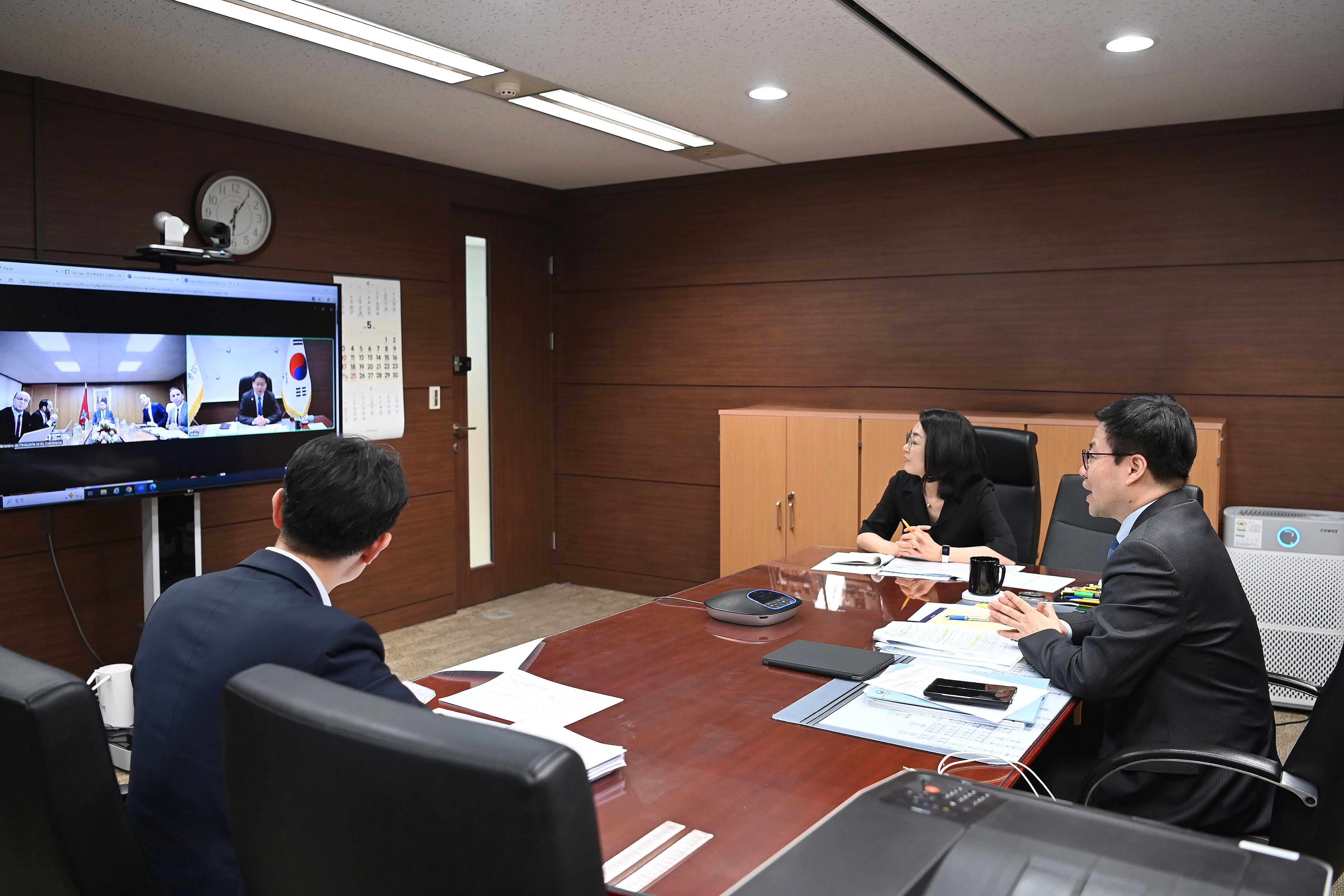
Meeting with Morocco’s Secretary of State to the Minister of Industry and Trade, in charge of Foreign Trade
Trade Minister Yeo Han-koo of the Ministry of Trade, Industry and Resources (MOTIR, Minister JK Kim) held a virtual meeting with Omar HEJIRA, Morocco’s Secretary of State to the Minister of Industry and Trade, in charge of Foreign Trade, at the Korea Chamber of Commerce and Industry in Seoul on May 6, 2026. Trade Minister Yeo said the Korea–Morocco CEPA will help extend Korea’s trade cooperation to Africa and support Korean companies’ strategic diversification of trade and investment markets, adding that Korea will move swiftly to conclude the CEPA and accelerate trade and industrial cooperation with Morocco. date2026-05-07
-
FTA/Economic Cooperation
Meeting with Canadian Senator Hassan Yussuff
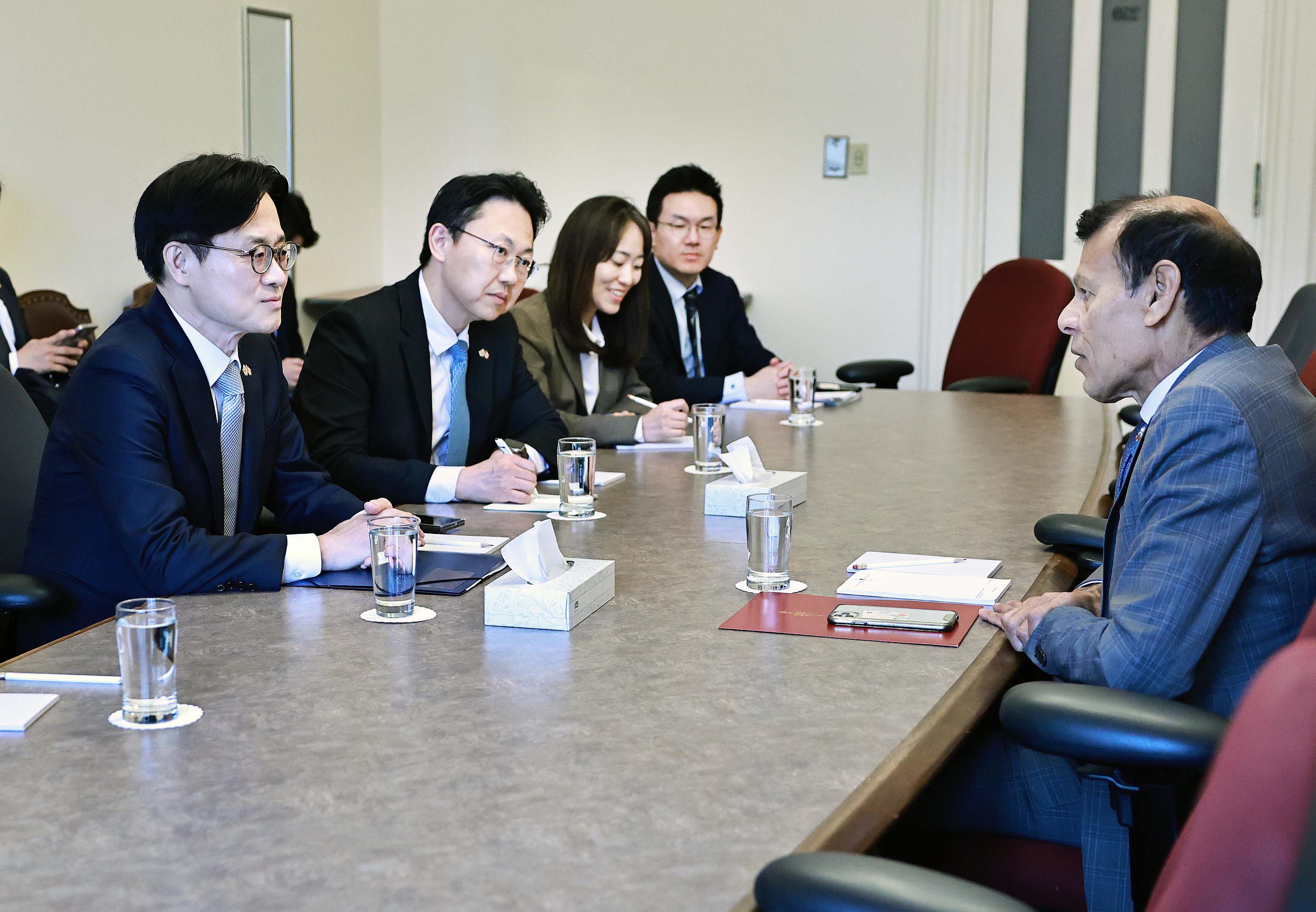
Minister JK (Jung-Kwan) Kim of the Ministry of Trade, Industry and Resources (MOTIR) met with Canadian Senator Hassan Yussuff, former Chair of the Standing Senate Committee on National Security, Defence and Veterans Affairs, in Ottawa, Canada, on May 6, 2026. The two sides discussed strategic cooperation between Korea and Canada in connection with the Canadian Patrol Submarine Project (CPSP). date2026-05-07
-
FTA/Economic Cooperation
Meeting with the President of Canada’s Automotive Parts Manufacturers’ Association
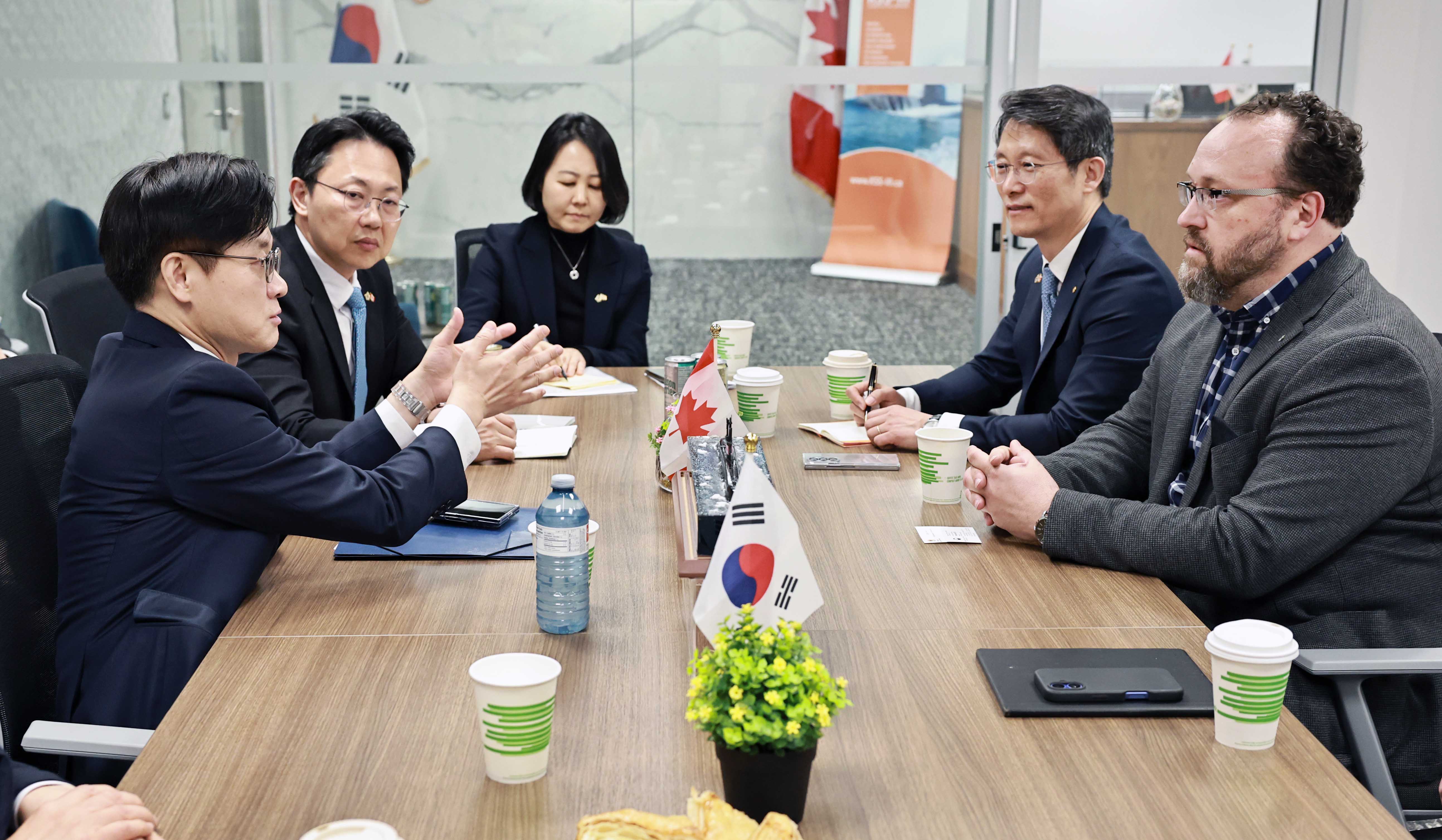
Minister JK (Jung-Kwan) Kim of the Ministry of Trade, Industry and Resources (MOTIR) met with Flavio Volpe, President of Canada’s Automotive Parts Manufacturers’ Association (APMA), in Ottawa, Canada, on May 6, 2026. The two sides discussed defense industry cooperation following APMA’s recent MOU with Korean companies. date2026-05-07
-
FTA/Economic Cooperation
Signing Ceremony for Korea–Canada MOUs on Shipbuilding and R&D
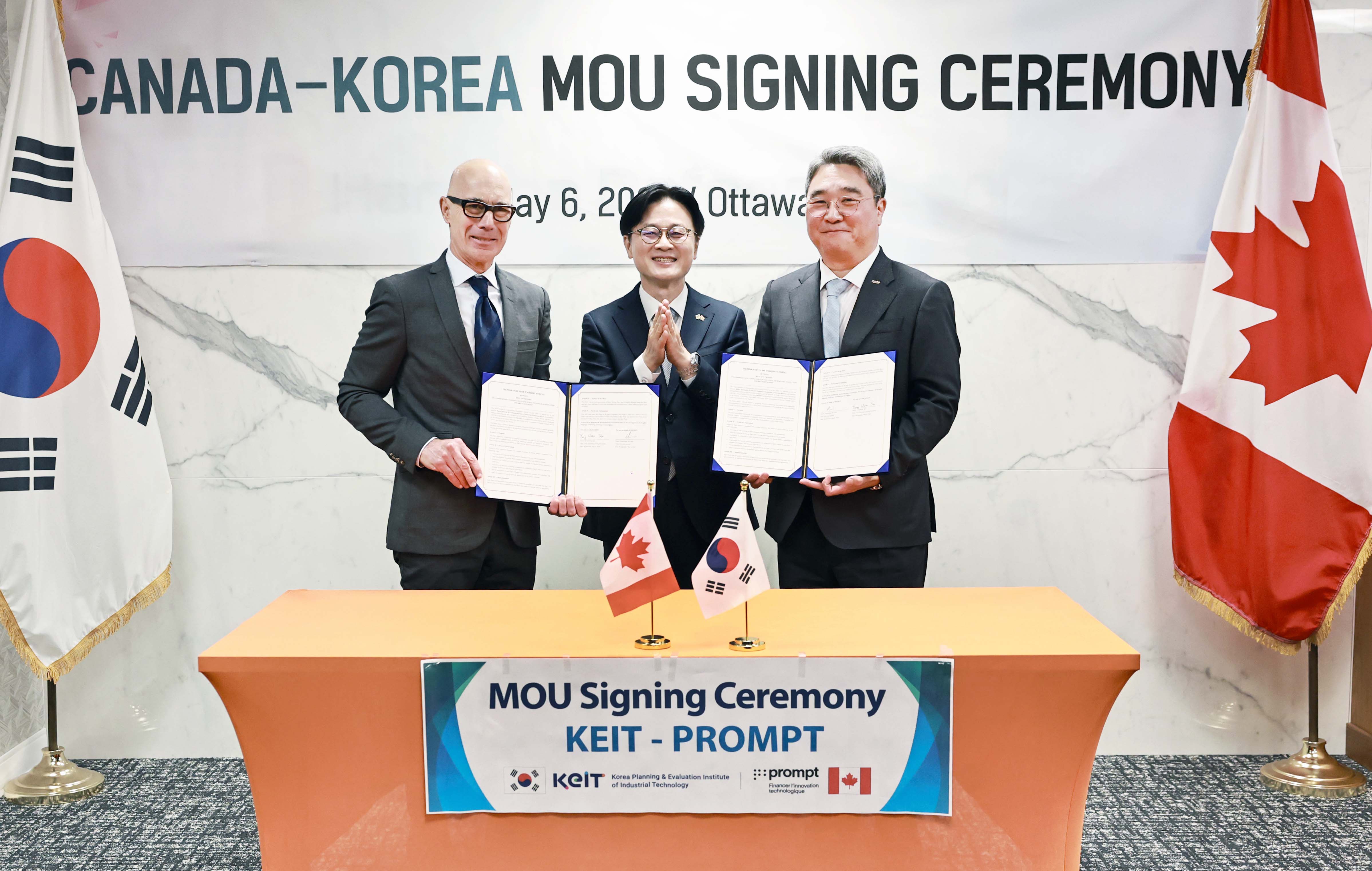
Minister JK (Jung-Kwan) Kim of the Ministry of Trade, Industry and Resources (MOTIR) attended a signing ceremony for Korea–Canada MOUs on international joint research on icebreakers and industrial technology cooperation in Ottawa, Canada, on May 6, 2026. The MOUs will lay the groundwork for practical cooperation and tangible outcomes in shipbuilding and R&D between Korea and Canada. date2026-05-07