-
FTA/Economic Cooperation
Meeting with Singapore’s Minister-in-Charge of Energy and Science & Technology
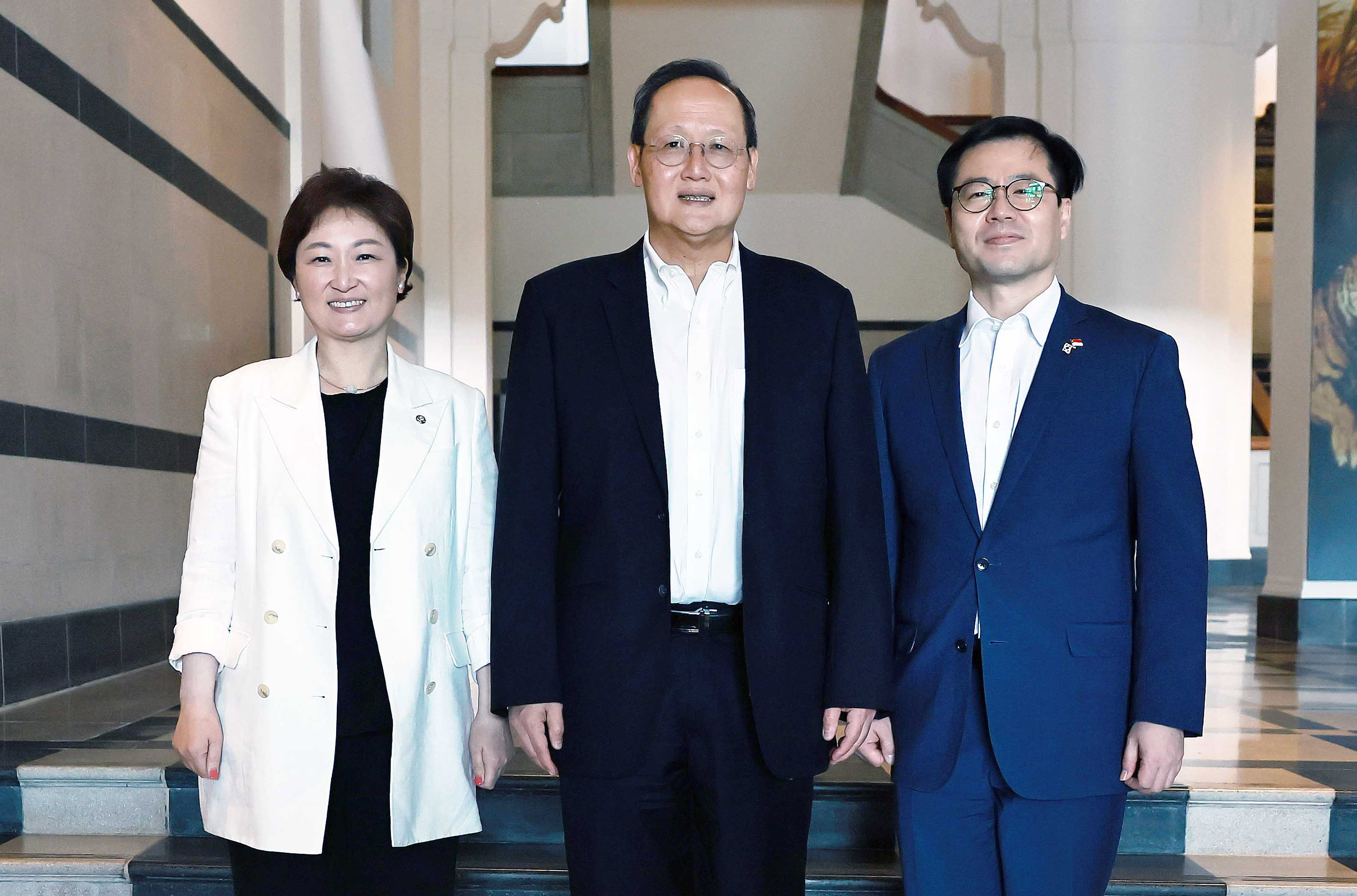
Trade Minister Yeo Han-koo of the Ministry of Trade, Industry and Resources (MOTIR, Minister JK Kim) met with Dr Tan See Leng, Singapore’s Minister-in-charge of Energy and Science & Technology in the Ministry of Trade and Industry, in Singapore on April 27, 2026. Rep. Lee Un-ju, chair of the Korea–Singapore Parliamentary Friendship Association, also attended the meeting. The meeting covered ways to accelerate upgrade negotiations for the Korea–ASEAN FTA and the Korea–Singapore FTA, as part of efforts to strengthen Korea’s economic cooperation framework with New Southern Policy partner countries. date2026-04-29
-
Trade/Investment
Launch Ceremony for Strategic Council on Shared Growth in Shipbuilding and Shipping
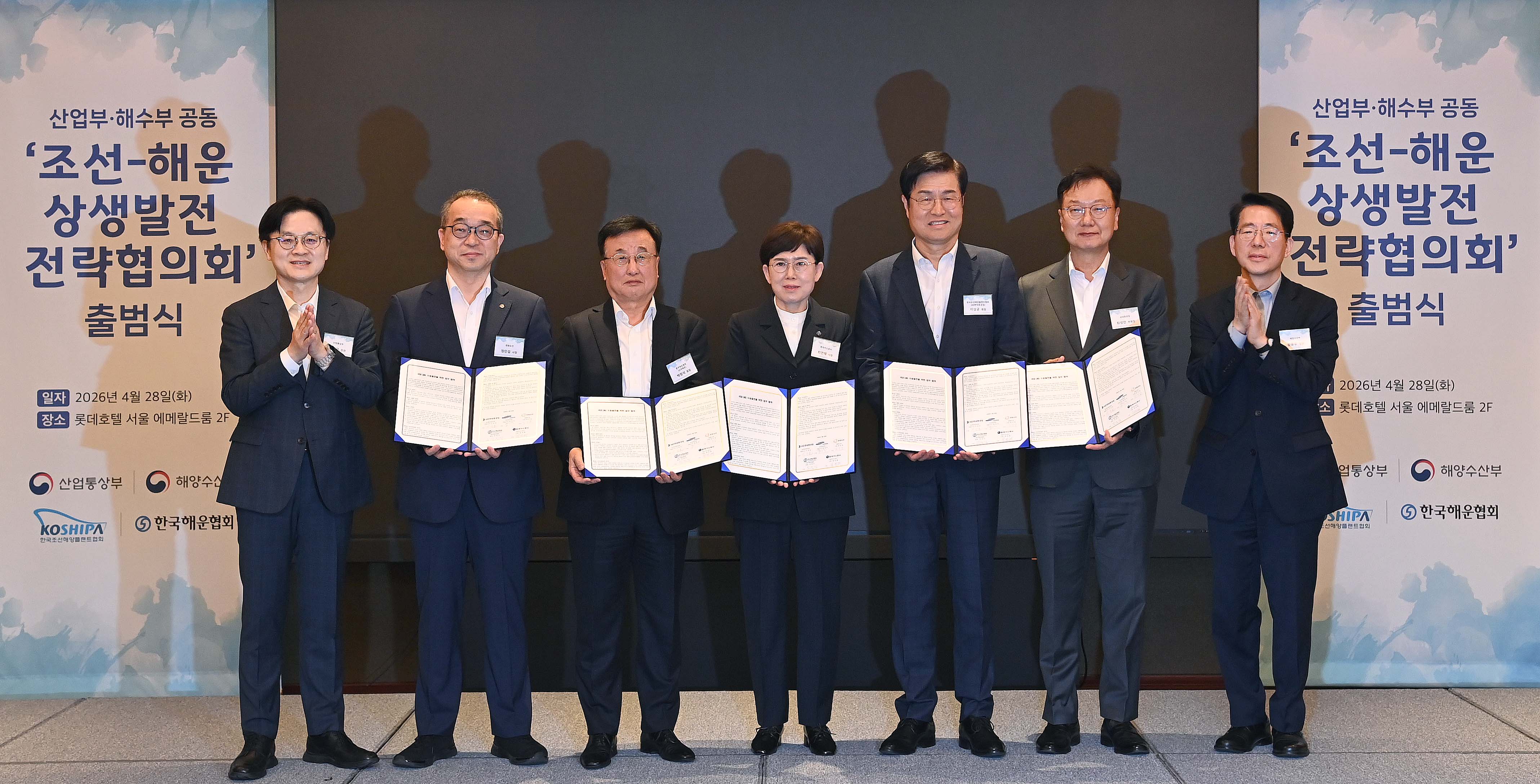
Minister JK Kim of the Ministry of Trade, Industry and Resources (MOTIR) attended the launch ceremony for a strategic council on shared growth in shipbuilding and shipping in Seoul on April 28, 2026. The event was attended by MOF Minister Hwang Jong-woo, officials from relevant ministries and institutions, and representatives from major Korean shipbuilders. “Shipbuilding and shipping are industries critical to Korea’s economic security,” Minister Kim said. “MOTIR will work closely with MOF to ensure that joint orders, future-vessel technology development and stronger industrial ecosystems lead to tangible results.” date2026-04-29
-
Industry
Korea Launches Shipbuilding–Shipping Alliance under Next-Generation W.A.V.E. Strategy
The Ministry of Trade, Industry and Resources (MOTIR, Minister JK Kim) and the Ministry of Oceans and Fisheries (MOF, Minister Hwang Jong-woo) held a launch ceremony in Seoul on April 28, 2026, for a strategic council to promote shared growth between the shipbuilding and shipping industries. The ceremony followed the two industry associations’ December 2025 agreement at the Strategic Meeting of the M.AX Alliance for Autonomous Ships to form the council. The event brought together more than 100 participants, including the ministers of MOTIR and MOF; Korea Gas Corporation (KOGAS); the Korea Offshore & Shipbuilding Association (KOSHIPA); the Korea Shipowners’ Association (KSA); and representatives from major Korean shipbuilders and shipping companies. The council will link Korea’s shipbuilding and shipping industries and build a maritime supply chain connecting Korean-built vessels with Korean-flag shipping. Led by KOSHIPA and KSA, it brings together shipbuilders, shipping companies, government officials, and academic experts under the W.A.V.E. strategy. The W.A.V.E. strategy sets out four goals: securing world-leading technologies (World Top Class); building industry alliances across shipbuilding and shipping (Alliance); expanding the Korean-flag fleet and securing orders for Korean shipbuilders (Vessel Production); and creating a shared-growth innovation ecosystem rooted in regional economies (Ecosystem). The two industries will identify detailed tasks for each goal and prepare an implementation plan by the end of 2026. The council will operate through expert task forces on technology development, demonstrations, vessel orders, financing and regulatory improvements, with quarterly meetings tied to policy proposals. As a first step in strategic cooperation, KOSHIPA and KSA adopted a declaration on joint orders for Korean-flag vessels to support the development of Korea’s shipbuilding and offshore cluster. The declaration will strengthen order links between Korean shipping companies and shipyards, helping shipping companies expand advanced fleets at competitive prices and giving shipbuilders and marine equipment suppliers a more stable order pipeline. KOGAS, KSA, and Korea’s three major shipbuilders also signed an MOU on LNG transportation. Under the MOU, they will work together to stabilize Korea’s LNG transport system amid growing resource security concerns and the need to strengthen the country’s energy transport capacity. The government and industry agreed to strengthen a one-team framework that aligns shipbuilding and shipping under a single industrial strategy, including technology development, demonstrations, and fleet expansion. MOTIR and MOF will jointly pursue regulatory improvements, budget support, demonstration infrastructure, and links with regional industrial bases, drawing on input from the field. Through the M.AX Alliance for Autonomous Ships, the two ministries will also launch a KRW 600 billion project in 2026 to develop fully autonomous AI-powered ships. They will support future-vessel technologies, including ammonia- and electric-powered eco-friendly ships and localized LNG cargo tanks, and discuss expanding MASGA, the Korea–U.S. shipbuilding cooperation project, to shipping and ports. “Shipbuilding and shipping are industries critical to Korea’s economic security,” said Minister Kim of MOTIR. “Today’s launch is significant because it puts in place an action-oriented framework for the two industries to shape and carry out work on market demand, technology, demonstrations, and regulatory improvements. Under the W.A.V.E. strategy, I hope shipbuilding and shipping will move forward together into a new phase of growth.” Minister Kim added, “MOTIR will work closely with MOF to ensure that the cooperation announced today, including joint orders, future-vessel technology developm date2026-04-28
-
FTA/Economic Cooperation
Korea and Singapore Launch FTA Upgrade Negotiations
Trade Minister Yeo Han-koo of the Ministry of Trade, Industry and Resources (MOTIR, Minister JK Kim) visited Singapore from April 27 to 28, 2026, to formally launch negotiations to upgrade the Korea–Singapore Free Trade Agreement (FTA) and discuss key ministerial-level trade issues. He also reviewed crude oil and naphtha market conditions with global energy traders and promoted Singaporean investment in Korea’s advanced industries and cross-border e-commerce exports of Korean consumer goods. Rep. Lee Un-ju, a Supreme Council member of the Democratic Party of Korea and chair of the Korea–Singapore Parliamentary Friendship Association, participated in key programs, including industry meetings and investment promotion activities, drawing on her experience in the National Assembly’s industry and trade committee as well as in business and law. 1. Launch of Korea–Singapore FTA Upgrade Negotiations On April 28, 2026, MOTIR and Singapore’s Ministry of Trade and Industry (MTI) formally launched negotiations to upgrade the Korea–Singapore FTA by signing the terms of reference, following the two countries’ agreement at their March 2026 summit. Trade Minister Yeo and Singapore’s Deputy Prime Minister and Minister for Trade and Industry Gan Kim Yong attended the signing, which was carried out by the chief negotiators of the two countries. MOTIR then held the first round of Korea–Singapore FTA upgrade negotiations together with relevant Korean ministries, including the Ministry of Economy and Finance (MOEF) and the Ministry of Land, Infrastructure and Transport (MOLIT). The talks covered supply chains, the green economy, aviation maintenance, repair, and overhaul (MRO), and trade facilitation. 2. Ministerial-Level Trade Discussions with Singapore Trade Minister Yeo held talks with Singaporean ministerial-level officials, including Deputy Prime Minister Gan Kim Yong; Dr. Tan See Leng, Minister-in-charge of Energy and Science & Technology; and Grace Fu, Minister-in-charge of Trade Relations. They discussed accelerating the upgrade negotiations for the Korea–ASEAN FTA and the Korea–Singapore FTA to strengthen Korea’s economic cooperation framework with New Southern Policy partner countries. The two sides also discussed plurilateral cooperation in support of free trade, including the Future of Investment and Trade Partnership (FIT Partnership) and the Green Economy Partnership Agreement (GEPA), as well as supply chain cooperation in energy, biotechnology, and pharmaceuticals. 3. Meetings with Global Energy Traders to Review Crude Oil and Naphtha Supply Risks Trade Minister Yeo and Rep. Lee held a series of meetings in Singapore with global energy traders Vitol and Trafigura and commodity market intelligence provider S&P Global to discuss the global energy market outlook and response options. They also met with Korean refining and petrochemical companies operating in Singapore to review crude oil and naphtha supply conditions and hear industry concerns. 4. Investment Promotion and Cross-Border E-Commerce Exports The Korean delegation met with Chia Song hwee, CEO of Temasek Global Investments. Temasek, a Singapore investment company and long-term investor in Korea in areas such as life sciences, expressed interest in exploring further investments in advanced technology sectors in the country, including AI and semiconductors. The delegation also visited Shopee, Southeast Asia’s largest e-commerce company, to discuss dedicated sections for Korean products, certification support, and logistics cooperation for Korean SMEs in K-fashion, beauty, and food. 5. Visits to Advanced Manufacturing AI and Port Automation Sites The Korean delegation visited Hyundai Motor Group Innovation Center Singapore (HMGICS), Singapore’s advanced manufacturing innovation hub, and PSA Singapore, a globa date2026-04-28
-
Industry
On-Site Visit and Roundtable with Reshoring Companies
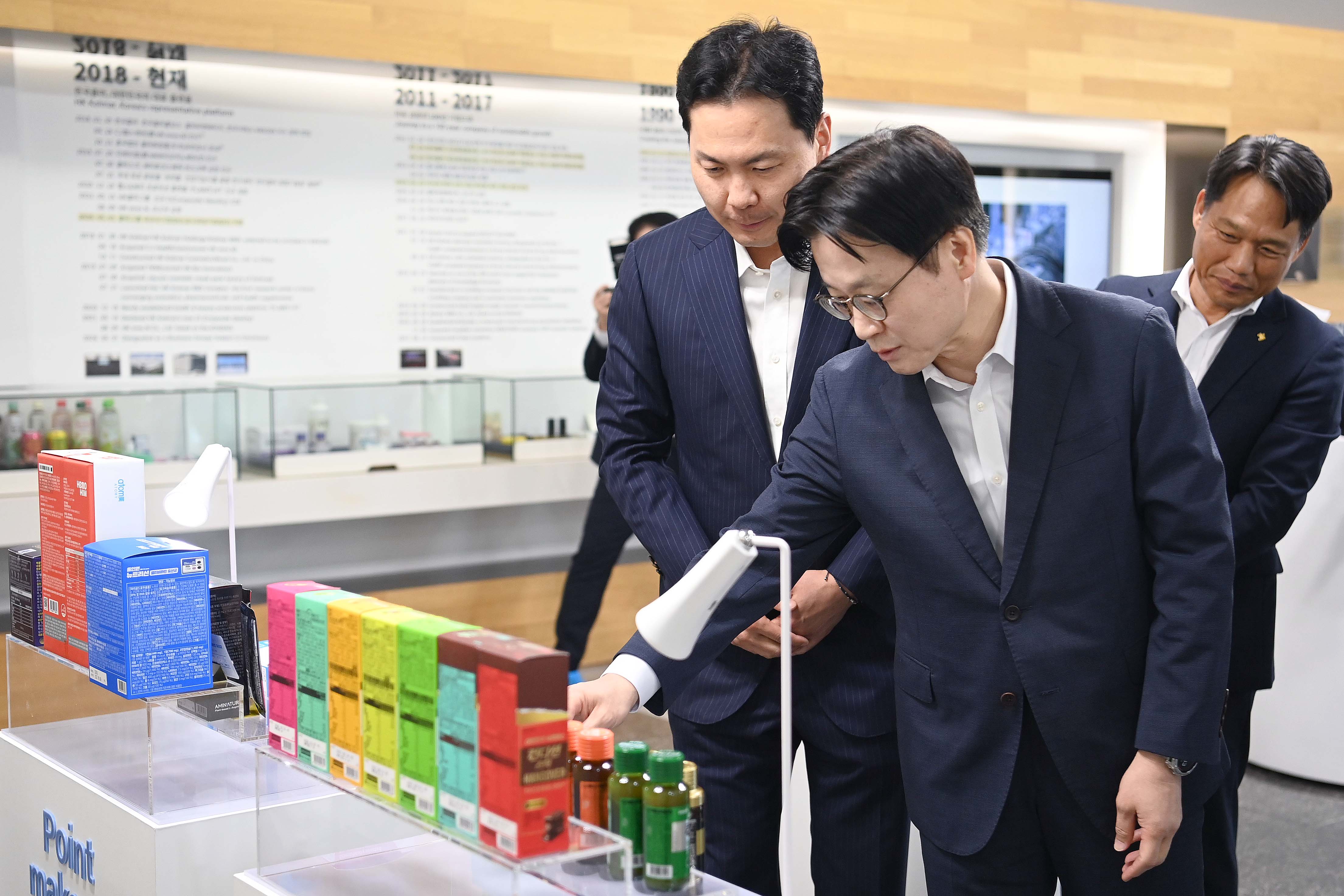
Minister JK (Jung-Kwan) Kim of the Ministry of Trade, Industry and Resources (MOTIR) visited Kolmar Korea, a cosmetics manufacturer in Jeonui-myeon, Sejong, on April 27, 2026. Kolmar Korea was selected as the first company under Korea’s 2026 reshoring program. Minister Kim toured key facilities at Kolmar Korea’s plant before chairing a roundtable with reshoring companies. The meeting was attended by representatives from related organizations and companies, including the Korea Trade-Investment Promotion Agency (KOTRA), the Korea Industrial Complex Corporation (KICOX), Hanwha Engine and Simmtech. At the roundtable, Minister Kim said secure and stable supply chains now define the competitiveness of companies and countries alike, and that the government will provide full support so that reshoring and regional investment become a more rational and attractive choice. date2026-04-28
-
Trade/Investment
MOTIR Seeks to Boost Domestic Investment by Improving Reshoring Policy
Minister JK (Jung-Kwan) Kim of the Ministry of Trade, Industry and Resources (MOTIR) visited Kolmar Korea, a cosmetics manufacturer selected as the first company under Korea’s 2026 reshoring program, on April 27, 2026. Minister Kim also held an on-site roundtable with reshoring companies and discussed ways to improve Korea’s reshoring support policy. Since the enactment of the Act on Assistance to Korean Off-Shore Enterprises in Repatriation (the Reshoring Act), Korea’s reshoring policy has helped generate around KRW 7 trillion in investment and 8,000 jobs between 2014 and 2025. However, calls have grown for policy reform as new reshoring cases have slowed, with Korea’s reshoring framework not yet fully reflecting rapid changes in the global investment environment, including stronger protectionism and supply chain realignment. In particular, as major economies compete to attract investment to anchor advanced industries and critical supply chains domestically, Korea now needs to redesign its reshoring policy not simply to support the relocation of overseas operations, but to secure core industrial capabilities at home. Companies attending the roundtable also called for stronger government support for corporate investment amid global supply chain uncertainty and accelerating AI transformation. In particular, they noted that eligibility for reshoring support remains too narrow, as companies must produce the same or similar products or services at their overseas and returning domestic operations. As a result, businesses may have difficulty qualifying for support when shifting to different products, such as from auto parts to energy storage system components, or when investing in domestic R&D facilities instead of manufacturing operations. Participants also said the current maintenance requirement limits companies’ flexibility in operating their business sites. Under the rule, companies must maintain an existing domestic business site for three years. They added that employment requirements should also be made more flexible to reflect growing automation trends. In response, MOTIR said it is preparing improvements to Korea’s reshoring policy centered on three areas: expanding eligibility and refining detailed requirements; diversifying subsidy programs based on the nature of each reshoring project, including regional investment, large-scale investment and investment in strategic advanced sectors; and helping attract strategic investment while providing closer support for implementation. MOTIR will finalize and announce the measures after gathering industry feedback and consulting relevant ministries. Minister Kim thanked companies for their reshoring investments, saying, “We are now in an era in which the competitiveness of both companies and countries depends on secure and stable supply chains. The government will provide full support so that reshoring and regional investment become the most rational and attractive choice.” date2026-04-27
-
Industry
M.AX Requires Speed: MOTIR Moves to Align Policy with Industry Pace
The Ministry of Trade, Industry and Resources (MOTIR, Minister JK Kim) held a special lecture for MOTIR staff on April 24, 2026, delivered by Park Min-won, president of Changwon National University and chair of the M.AX Alliance’s Industrial Complex AX Division. Held under the theme “Manufacturing, the Heart of Korea’s Economy, Opens the Future through M.AX,” the lecture was designed to help MOTIR officials build the policy capacity needed to support M.AX implementation on the ground. The Industrial Complex AX Division was established on February 26, 2026, as the 11th division of the M.AX Alliance. On April 17, 2026, it held its first meeting, with the chairs of the 10 MINI Alliances joining as division members. As industrial complex AX moves into full implementation, MOTIR invited President Park to speak to staff based on his work with the ministry at the forefront of M.AX and his efforts to bring together industry, academia and research institutions. In the lecture, President Park briefed MOTIR staff on the background to M.AX, why M.AX is urgently needed, and specific implementation plans. He noted that as global industrial leadership shifts, technology competition is intensifying, making demonstration projects essential to help reduce the investment burden on companies adopting AI technologies. He also shared direct feedback from companies on demand for AX, bringing field-level perspectives into the discussion. Minister JK Kim said, “MOTIR will use this lecture as an opportunity to narrow the gap between policy and the field, renew the sense of urgency behind M.AX policy implementation, and strengthen its internal capacity. The ministry will also continue engaging with field experts to expand opportunities for policy officials to better understand the pace and needs of industry.” date2026-04-24
-
Trade/Investment
MOTIR Discusses Regional Strategy to Attract Foreign Investment for the Five Mega-Regions and Three Special Self-Governing Provinces Initiative
The Ministry of Trade, Industry and Resources (MOTIR, Minister JK Kim) held the 2026 first-half workshop on attracting foreign investment for local governments and related agencies in Seoul on April 24, 2026. The event brought together around 200 officials responsible for foreign investment promotion from local governments and related institutions. The event was held to share region-led, industry-policy-aligned approaches to attracting strategic foreign investment, particularly from global leading companies that can support the government’s strategy to cluster and upgrade advanced industries. It also aimed to help local governments apply these approaches to their own regional investment strategies. The workshop is expected to provide practical support for attracting foreign investment by sharing real-world cases of foreign-invested companies connecting with regional industries and local talent, along with the key factors that shape investment decisions by global companies. Through its 2026 foreign investment promotion measures, MOTIR plans to strengthen policy support for the government’s regional strategic projects under the Five Mega-Regions and Three Special Self-Governing Provinces initiative, including expanded regional incentives and regulatory improvements. To this end, MOTIR, local governments and related institutions will work as one team to provide hands-on support for attracting foreign-invested companies. Nam Myung-woo, Director General for Cross-Border Investment Policy at MOTIR, said, “It is important that regional economies also benefit from the positive momentum of last year’s record-high USD 36.1 billion in foreign direct investment. We will work to attract promising companies strategically and significantly strengthen incentives for investment outside the capital region to support regional growth.” date2026-04-24
-
FTA/Economic Cooperation
Korea–Japan New Economic Cooperation Seminar in the Age of Complex Crisis
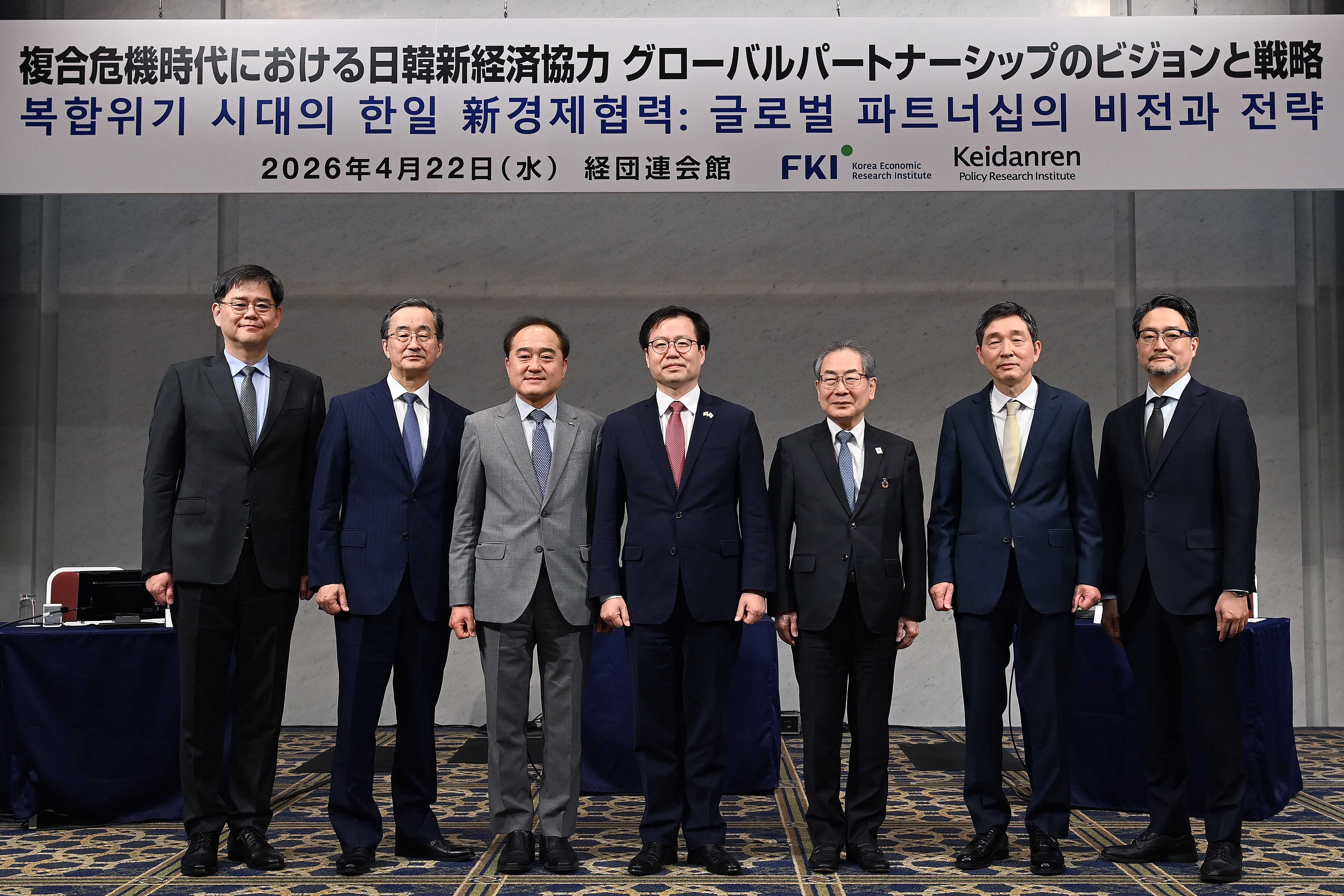
Trade Minister Yeo Han-koo of the Ministry of Trade, Industry and Resources (MOTIR, Minister JK Kim) attended the Korea–Japan New Economic Cooperation Seminar in the Age of Complex Crisis, jointly hosted in Tokyo on April 22, 2026, by the Korea Economic Research Institute (KERI) of the Federation of Korean Industries (FKI) and Keidanren Policy Research Institute of Japan. The seminar was organized to explore new directions for Korea–Japan economic cooperation amid rapid changes in the global environment. About 100 experts from both countries attended, including Chung Chul, President of KERI, and Masakazu Kubota, Vice Chair of Keidanren and Head of the Keidanren Policy Research Institute. “Korea and Japan face a common set of challenges, including the situation in the Middle East, strategic competition between the United States and China, and demographic pressures from low birth rates and aging populations. As middle powers with similar positions, the two countries should pursue coordinated efforts in supply chains, energy, AI, and trade agreements,” Trade Minister Yeo said. date2026-04-24
-
FTA/Economic Cooperation
Meeting with Vietnam’s Minister of Industry and Trade
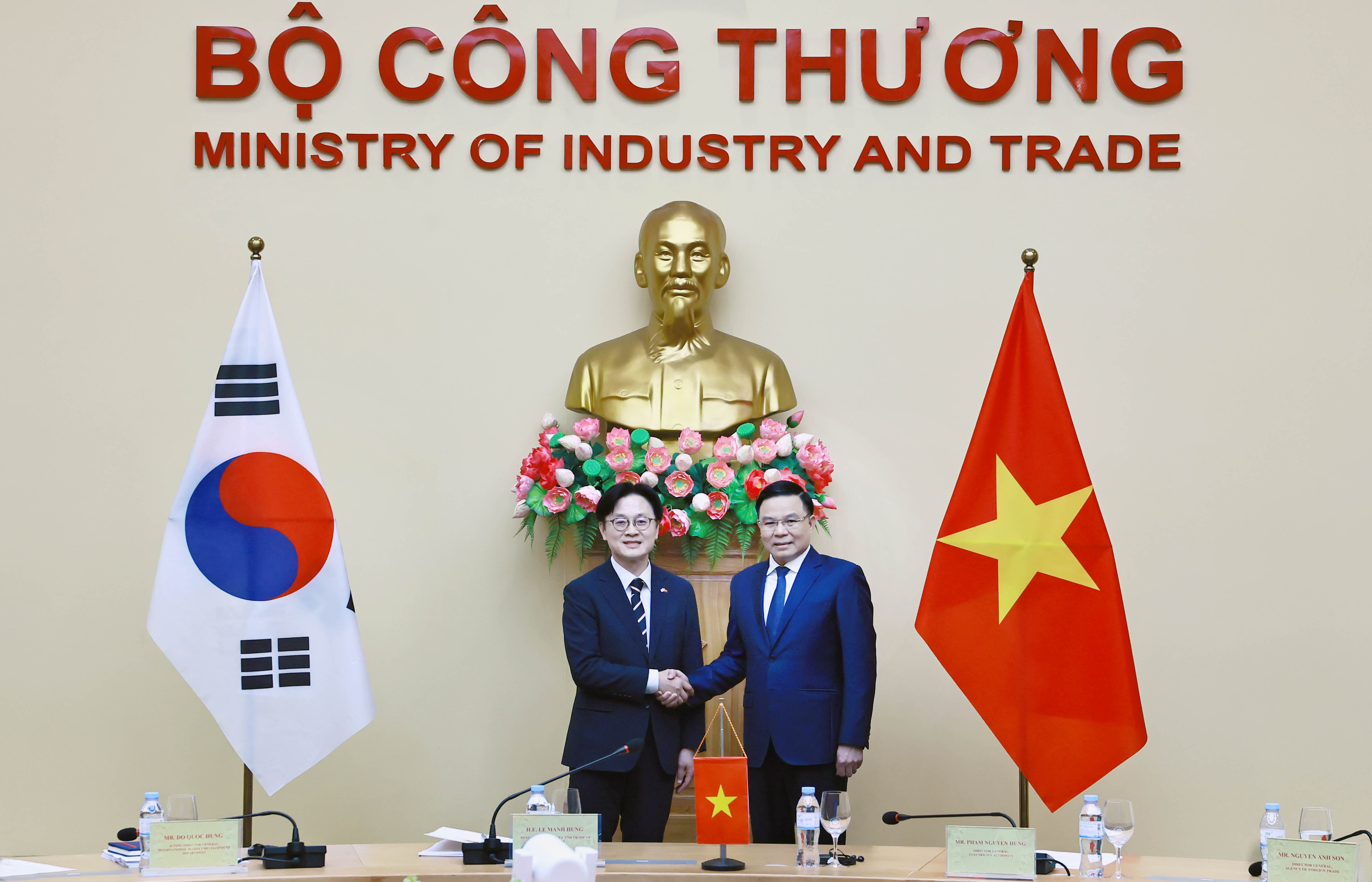
Minister JK (Jung-Kwan) Kim of the Ministry of Trade, Industry and Resources (MOTIR) met with Minister Le Manh Hung of Vietnam’s Ministry of Industry and Trade on April 22, 2026, on the occasion of President Lee Jae Myung’s state visit to Vietnam. The two sides discussed cooperation on the Ninh Thuan 2 nuclear power project and agreed to stay in close coordination on resource security and on building a cooperation framework for supply chains for rare earths and other critical minerals. “Vietnam is Korea’s third-largest trade and investment partner, and MOTIR will continue to strengthen economic ties and support business activity in both countries,” Minister Kim said. date2026-04-24