-
FTA/Economic Cooperation
Meeting with Canada’s Minister of Energy and Natural Resources
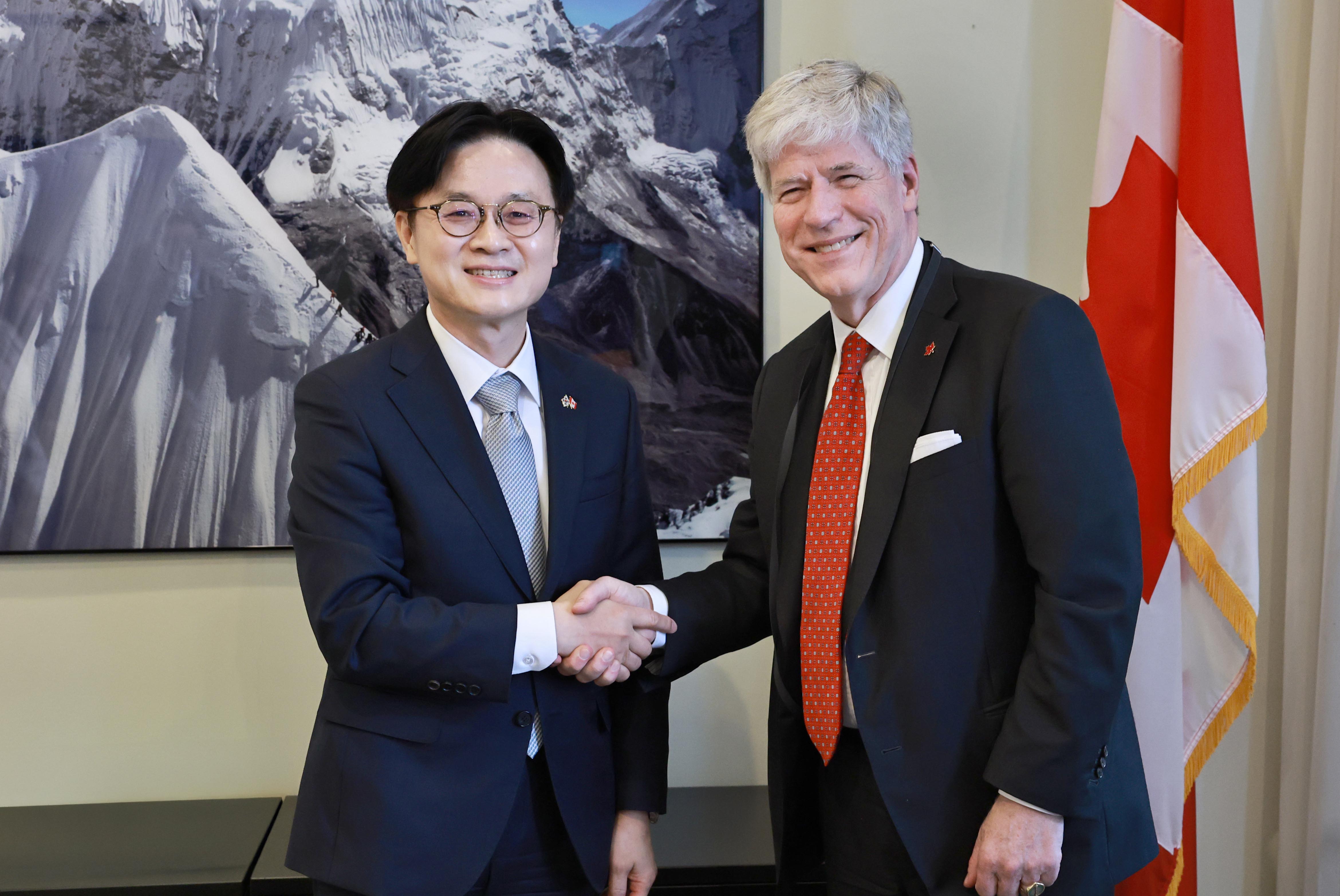
Minister JK (Jung-Kwan) Kim of the Ministry of Trade, Industry and Resources (MOTIR) met with Tim Hodgson, Canada’s Minister of Energy and Natural Resources, in Ottawa, Canada, on May 6, 2026. The two ministers shared the view that energy and resource supply chains need to be diversified amid recent global supply chain instability. They also agreed to deepen bilateral cooperation in critical minerals through channels such as the Korea–Canada Critical Minerals Working Group (WG). date2026-05-07
-
FTA/Economic Cooperation
Meeting with Canada’s Minister of Industry
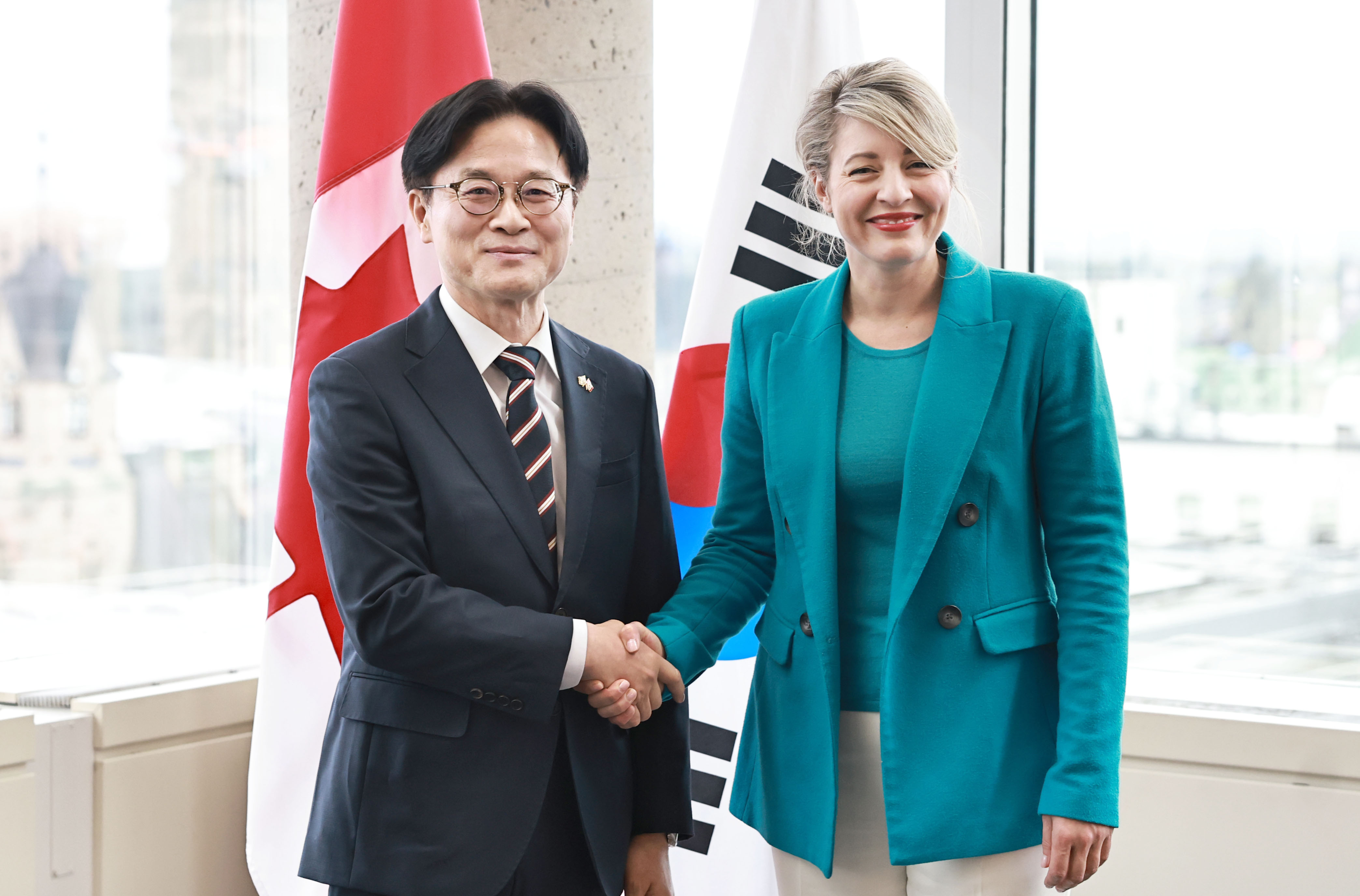
Minister JK (Jung-Kwan) Kim of the Ministry of Trade, Industry and Resources (MOTIR) met with Mélanie Joly, Canada’s Minister of Industry, in Ottawa, Canada, on May 5, 2026, during his visit to Canada. The two ministers shared progress in bilateral industrial cooperation related to Korea’s bid for the Canadian Patrol Submarine Project (CPSP), including cooperation MOUs signed between Korean and Canadian companies. They also discussed expanding industrial cooperation in hydrogen, as well as cooperation in multilateral settings. Minister Kim said the CPSP would be more than a defense procurement project and could mark an important turning point in building a long-term Korea–Canada partnership. date2026-05-07
-
FTA/Economic Cooperation
Korea and Canada Expand Industrial and Resource Cooperation Through a Partnership Built on Trust
Minister JK (Jung-Kwan) Kim of the Ministry of Trade, Industry and Resources (MOTIR) visited Ottawa, Canada, from May 5 to 6, 2026. During the visit, he met with senior Canadian officials to discuss ways to expand bilateral cooperation in industry and resources. He also focused his efforts on supporting Korea’s bid for the Canadian Patrol Submarine Project (CPSP). On May 5, 2026, Minister Kim met with Mélanie Joly, Minister of Industry and Minister responsible for Canada Economic Development for Quebec Regions. The two ministers reviewed recent progress in industrial cooperation related to the submarine bid, including cooperation MOUs signed between Korean and Canadian companies. They also discussed expanding industrial cooperation in hydrogen and other areas, as well as cooperation in multilateral settings. Minister Kim requested the Canadian government’s support for Korean companies investing in Canada. On May 6, 2026, Minister Kim met with Tim Hodgson, Minister of Energy and Natural Resources. The two ministers shared the view that energy and resource supply chains need to be diversified amid recent global supply chain instability. They also agreed to deepen cooperation in critical minerals through channels such as the Korea–Canada Critical Minerals Working Group (WG). Minister Kim also met on May 6 with Senator Hassan Yussuff, former Chair of the Standing Senate Committee on National Security, Defence and Veterans Affairs, to discuss strategic cooperation between Korea and Canada on the submarine project. He also met with Flavio Volpe, President of the Automotive Parts Manufacturers’ Association (APMA), and exchanged views on defense industry cooperation following APMA’s recent MOU with Korean companies. Minister Kim thanked APMA for its statement of support for Korea’s bid for the submarine project. Separately, two MOUs were signed with Minister Kim in attendance: one on Korea–Canada international joint research on icebreakers and the other on industrial technology cooperation. The MOUs are expected to support practical cooperation in shipbuilding and R&D. “Winning the Canadian Patrol Submarine Project would be more than a defense procurement contract. It would mark an important turning point in building a long-term partnership between Korea and Canada,” Minister Kim said. “We will bring together the full capabilities of government and industry and make every effort to support the bid.” date2026-05-07
-
FTA/Economic Cooperation
Minister JK Kim Attends G7 Critical Minerals Ministers’ Virtual Meeting
Minister JK (Jung-Kwan) Kim of the Ministry of Trade, Industry and Resources (MOTIR) attended the G7 Critical Minerals Ministers’ Virtual Meeting on May 7, 2026 (KST), during his visits to Canada and the United States. Chaired by France, this year’s G7 president, the meeting discussed cooperation to strengthen the stability and resilience of global critical minerals supply chains. The meeting was attended by ministers from G7 members, the European Union (EU), Korea, Australia and other key partner countries. Representatives from international organizations, including the International Energy Agency (IEA), the Organisation for Economic Co-operation and Development (OECD) and the World Bank (WB), also took part. Participants discussed key agenda items, including diversification of critical minerals value chains, strategic stockpiling and traceability, and cooperation among participating countries in coordination with international organizations. They shared the view that, in response to changes in the global industrial environment and rising demand for critical minerals, countries need to strengthen cooperation across the full supply chain, from production and processing to recycling, while improving market stability and predictability. At the meeting, Minister Kim said Korea, as a major consumer and processor of critical minerals, welcomes discussions on cooperation among the G7 and partner countries. He emphasized the need to continue working together to prepare for supply chain disruptions and stabilize critical minerals supplies. He also proposed a flexible mix of policy tools suited to each country’s circumstances, and stressed the need to build practical cooperation platforms in coordination with international organizations such as the IEA and OECD. Following the meeting, MOTIR will coordinate with the G7, key partner countries and international organizations to strengthen the stability and resilience of global critical minerals supply chains. The ministry will also support Korean companies’ participation in overseas projects, technology cooperation and information sharing, helping Korea secure stable critical minerals supplies. date2026-05-07
-
FTA/Economic Cooperation
Korea to Expand Trade and Industrial Cooperation with Morocco, an Emerging North African Economy
Trade Minister Yeo Han-koo of the Ministry of Trade, Industry and Resources (MOTIR, Minister JK Kim) held a virtual meeting on May 6, 2026, with Omar Hejira, Morocco’s Secretary of State to the Minister of Industry and Trade, in charge of Foreign Trade. The two sides discussed the path toward the Korea–Morocco Comprehensive Economic Partnership Agreement (CEPA) and key industrial cooperation issues. The meeting was arranged to expand trade and investment with Morocco and support local projects by Korean companies in areas including electric trains and batteries. Trade Minister Yeo noted Morocco’s strengths, including its strategic location as a bridge linking Europe, the Middle East and Africa, as well as its extensive FTA network with more than 50 countries, including the EU and the United States. He proposed combining Morocco’s growth potential with Korea’s advanced industrial capabilities to expand bilateral trade and industrial cooperation. The two sides noted that the Korea–Morocco CEPA would serve as a key legal and institutional framework for boosting bilateral trade and investment and mark an important turning point for economic cooperation. They agreed to consult closely toward the early launch of negotiations. Trade Minister Yeo also noted that Korean companies, including Hyundai Rotem in electric trains and LG Energy Solution in lithium refining, are actively expanding into Morocco. He emphasized that the CEPA would be important as an institutional foundation for expanding business cooperation. Secretary of State Hejira said Morocco regards Korea as a key strategic partner and hopes to work with Korean companies across a wide range of fields. “The Korea–Morocco CEPA will help extend Korea’s trade cooperation to Africa and support Korean companies’ strategic diversification of trade and investment markets,” Trade Minister Yeo said. “We will move swiftly to conclude the CEPA and accelerate trade and industrial cooperation with Morocco, an emerging hub in North Africa.” date2026-05-07
-
Trade/Investment
Korea’s Q1 2026 Exports Reach Record High under Revised MTI Code Standards
Revision of MTI Code Standards for Export and Import Statistics The Ministry of Trade, Industry and Resources (MOTIR, Minister JK Kim) revised the MTI code standards used to analyze export and import trends, marking the first revision of the framework since 2020. The revised framework expands Korea’s key export items from 15 to 20 by adding products that reflect the diversification of its export base. It also updates subcategories for major items to reflect current industry structures and export patterns. The framework adds five items to the list: electrical equipment, nonferrous metals, agricultural and fisheries products, cosmetics and daily consumer goods. Together, the 20 key items accounted for 86.3 percent of Korea’s total exports in 2025, compared with 77.2 percent under the previous 15-item framework. The expanded list provides broader coverage and a more detailed view of overall export trends. MOTIR also reorganized detailed product classifications to better reflect current industrial and export patterns. For biohealth, a separate MTI code was created, and the category was divided into pharmaceuticals and medical devices. For semiconductors, memory semiconductors were separated from system semiconductors, with memory semiconductors further divided into DRAM, NAND and other items. For automobiles, vehicle type was placed at the four-digit MTI level and powertrain at the six-digit level, while new and used vehicles were separated. For steel, certain items, including other steel products, raw materials and subsidiary materials, were moved from the steel category to the other steel and metal products category to align the classification with steel product categories commonly used in global markets. For batteries, a separate code was created for lithium-ion batteries, and battery materials, including cathode materials, electrolytes and separators, were consolidated under one code. For textiles, natural materials, bags, footwear, belts and other textile-related items were moved into the textile category to make the statistics more representative. For general machinery, subcategories such as manufacturing equipment, industrial machinery, energy machinery and machinery parts were aligned with actual industry classifications. To maintain statistical consistency, MOTIR will apply the revised standards retroactively to data from 2022 onward and use them in its monthly export and import trend releases from June 1, 2026. Details of the changes, along with the HSK-MTI correlation table, will be released by the Korea International Trade Association (KITA) on May 8, 2026.   Q1 2026 Export and Import Trends Exports in the first quarter of 2026 rose 37.8 percent year-on-year to USD 219.9 billion, the highest first-quarter figure on record. Average daily exports, adjusted for working days, increased 34.7 percent to $3.4 billion. Imports rose 10.9 percent to $169.4 billion, while the trade balance posted a surplus of $50.4 billion, up $43.7 billion from a year earlier. By product, exports increased in 13 of Korea’s 20 key export items. Semiconductor exports rose 139.0 percent to $78.5 billion, as AI server investment expanded and memory prices remained high. DRAM exports increased 249.1 percent to $35.8 billion, while NAND exports rose 377.5 percent to $5.4 billion. System semiconductor exports also increased 13.5 percent to $12.1 billion. Automobile exports edged down 0.3 percent to $17.2 billion. Truck exports rose 63.9 percent to $0.7 billion, while passenger car and van exports fell 2.2 percent and 31.7 percent, respectively. Biohealth exports increased 9.6 percent to $4.2 billion. Pharmaceutical exports rose 11.9 percent to $2.7 billion on continued growth in biosimilar demand in major markets, while medical device exports increased 5.5 percent to $1.5 billion. Secondary battery exports rose 9.9 percent to $2.0 billion, supported by higher lithium and other minera date2026-05-06
-
FTA/Economic Cooperation
MOTIR to Strengthen Economic and Industrial Partnerships with the United States and Canada
Minister JK (Jung-Kwan) Kim of the Ministry of Trade, Industry and Resources (MOTIR) will visit Ottawa, Canada, and Washington, D.C., from May 5 to 8, 2026, to hold a series of high-level meetings and outreach activities aimed at strengthening Korea’s economic and industrial partnerships with the United States and Canada. Minister Kim will first visit Ottawa from May 5 to 6, 2026, where he will meet with Mélanie Joly, Canada’s Minister of Industry, and Tim Hodgson, Canada’s Minister of Energy and Natural Resources, to discuss expanding bilateral cooperation in industry and resources. He will also seek the Canadian government’s support for Korea’s participation in the Canadian Patrol Submarine Project (CPSP). Minister Kim will then travel to Washington, D.C., on May 6, 2026, for preliminary Korea-U.S. consultations on strategic investment with senior U.S. government officials, including U.S. Secretary of Commerce Howard Lutnick. He will also engage with the U.S. Congress and other stakeholders to discuss Korean investment in the United States and current trade issues. “Since the National Assembly passed the Special Act for Korea–U.S. Strategic Investment Management in March 2026, MOTIR has been taking follow-up steps as planned, including preparing the enforcement decree and the launch of the Korea–U.S. Strategic Investment Corporation,” Minister Kim said. “During this visit, we will build on the discussions held so far and make preliminary talks on strategic investment projects more concrete. We will conduct the talks in a way that serves the national interest — helping Korean companies expand in the U.S. market while ensuring that the benefits flow back to Korea’s industries.” “The CPSP is an important opportunity for Korea and Canada to build a comprehensive, long-term partnership across security, economic, and industrial cooperation,” Minister Kim added. “The government will spare no effort to support Korean companies in securing the project.” date2026-05-05
-
Trade/Investment
April 2026 Exports Reach $85.9 Billion, Surpassing $80 Billion for Second Consecutive Month
The Ministry of Trade, Industry and Resources (MOTIR, Minister JK Kim) announced that in April 2026, Korea’s exports rose 48.0 percent year-on-year to USD 85.9 billion, while imports increased 16.7 percent to $62.1 billion, resulting in a $23.8 billion surplus. Exports in April rose 48.0 percent to $85.9 billion, topping $80.0 billion for the second consecutive month. Average daily exports, adjusted for working days, increased 48.0 percent to $3.6 billion, exceeding $3.0 billion for the third consecutive month. By product, exports increased in eight of Korea’s 15 key export items. Semiconductor exports rose to $31.9 billion (up 173.5 percent), as continued demand from AI servers pushed up fixed memory prices. The sector topped $30.0 billion for the second straight month and set a new April record, its 13th consecutive same-month high. Automobile exports fell to $6.2 billion (down 5.5 percent), as logistics disruptions linked to the conflict in the Middle East continued and Korean automakers expanded U.S. production in response to U.S. tariff measures. Petroleum product exports rose to $5.1 billion (up 39.9 percent), as higher oil prices lifted export unit prices despite a 36.0 percent decline in export volumes. Gasoline, diesel, and kerosene export volumes fell by approximately 43.0 percent, 23.2 percent, and 99.9 percent, respectively. Petrochemical exports increased to $4.1 billion (up 7.8 percent), as export unit prices rose only modestly due to the time lag before higher oil prices are reflected in product prices. Export volumes fell 20.9 percent amid increased domestic supply. Computers rose to $4.1 billion (up 515.8 percent), setting a new monthly record for the second consecutive month, and wireless communication devices increased to $1.6 billion (up 11.6 percent). Among items outside the 15 key export categories, electrical equipment, cosmetics, and agricultural and fisheries products also reached record highs for April. By destination, exports increased in seven of Korea’s nine major markets. Exports to China rose 62.5 percent to $17.7 billion, extending their growth streak to six consecutive months, led by IT products including semiconductors, computers, and wireless communication devices. Exports to the United States rose to $16.3 billion (up 54.0 percent), as tariff-exempt items such as semiconductors and computers offset weaker exports of tariff-affected items, including automobiles, auto parts, and general machinery. Exports to ASEAN increased to $15.4 billion (up 64.0 percent), while exports to the EU rose to $7.2 billion (up 8.5 percent), extending their growth streak to five consecutive months. By contrast, exports to the Middle East fell 25.1 percent to $1.3 billion amid logistics disruptions and uncertainty linked to the conflict. Imports rose 16.7 percent year-on-year to $62.1 billion. Energy imports increased 7.5 percent to $10.6 billion, while non-energy imports rose 18.8 percent to $51.5 billion. Crude oil imports rose 13.1 percent to $7.0 billion, as higher unit prices driven by the surge in oil prices more than offset lower import volumes caused by the conflict in the Middle East. Among non-energy imports, computers rose to $1.8 billion (up 35.6 percent) and semiconductor equipment to $2.5 billion (up 59.9 percent). The trade surplus in April reached $23.8 billion, up $19.0 billion from April 2025, marking the largest April surplus on record and extending Korea’s surplus streak to 15 consecutive months since February 2025. Minister JK (Jung-Kwan) Kim stated, “This two-month milestone, achieved despite the conflict in the Middle East continuing for more than two months, was made possible by Korean companies’ proactive efforts to secure supply chains amid expanding global AI investment and higher unit prices for petroleum products driven by rising oil prices.” He added that the government will minimize the burden on exporters throug date2026-05-04
-
FTA/Economic Cooperation
Korea and Pakistan to Hold First Official Round of CEPA Negotiations
The Ministry of Trade, Industry and Resources (MOTIR, Minister JK Kim) will hold the first official round of negotiations for the Korea–Pakistan Comprehensive Economic Partnership Agreement (CEPA) by videoconference from May 4 to 7, 2026. Approximately 50 negotiators from both countries will take part, with the Korean delegation led by Kim Jang-hee, acting Director General for Trade Agreement Negotiations, and the Pakistani delegation by Nasir Hamid, Additional Secretary for Trade Diplomacy at Pakistan’s Ministry of Commerce. Pakistan is a promising market, with a population of 240 million and a vast pool of young talent. The country is also working to expand its manufacturing base and develop infrastructure. Bilateral trade, however, remains limited relative to this potential, making the CEPA an important framework for expanding trade and investment between the two countries. Since the launch of Korea–Pakistan CEPA negotiations in January 2025, the two sides have agreed on negotiating procedures and prepared a draft text for the agreement. They also held preliminary negotiations via videoconference from April 20 to 23, 2026, covering areas such as goods, rules of origin, and the environment. At an April 30, 2026, meeting between Trade Minister Yeo Han-koo of MOTIR and Pakistan’s Federal Minister for Commerce Jam Kamal Khan, the two sides agreed on the need to accelerate the negotiations. Building on that understanding, the Korean government plans to use the first official round to confirm both sides’ interests and positions in four areas: economic cooperation, investment, intellectual property rights, and trade remedies. The round will also lay the groundwork for future negotiations. “This first official round marks the formal start of Korea–Pakistan CEPA negotiations,” acting Director General Kim said. “We will approach the negotiations constructively so that the CEPA with Pakistan can serve as a practical platform for cooperation that supports expanded trade and investment between the two countries and helps Korean companies enter Southwest Asian markets.” date2026-05-04
-
FTA/Economic Cooperation
First Official Round of Korea–Pakistan CEPA Negotiations
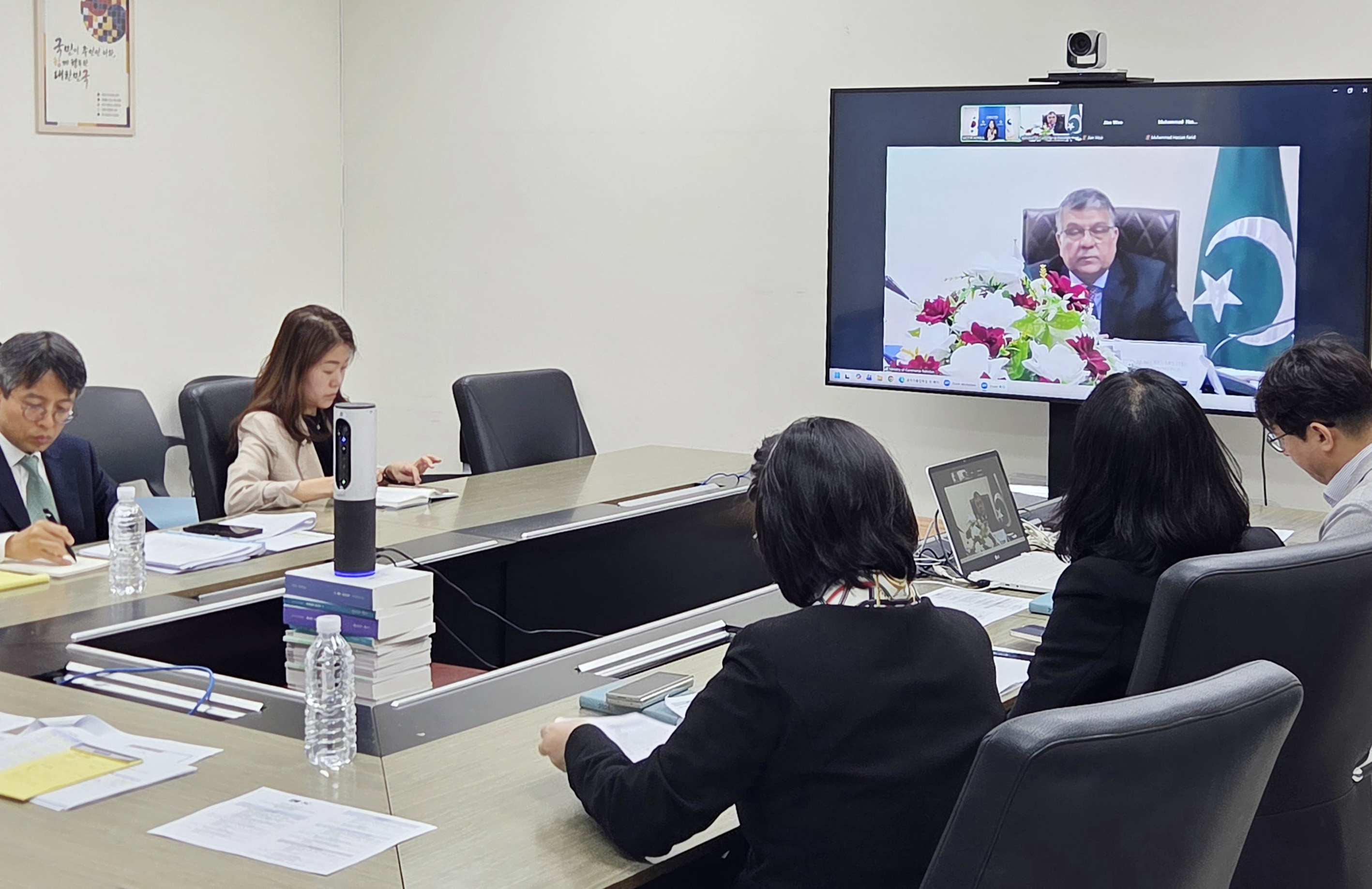
Kim Jang-hee, acting Director General for Trade Agreement Negotiations at the Ministry of Trade, Industry and Resources (MOTIR, Minister JK Kim), attended the first official round of negotiations for the Korea–Pakistan Comprehensive Economic Partnership Agreement (CEPA) via videoconference on May 4, 2026. The meeting was joined by government negotiators from both countries, including Nasir Hamid, Additional Secretary for Trade Diplomacy at Pakistan’s Ministry of Commerce. The two sides held negotiations in seven areas, including goods, rules of origin, investment and intellectual property rights. “This first official round marks the formal start of Korea–Pakistan CEPA negotiations,” acting Director General Kim said. “We will engage constructively so that the CEPA can support expanded trade and investment and help Korean companies enter Southwest Asian markets.” date2026-05-04